The world's tallest statue, a 182 metre figure of Sardar Vallabhbhai Patel facing the Sardar Sarovar Dam on the Narmada.
At a glance
What: A 182 metre statue of Sardar Vallabhbhai Patel with a viewing gallery, museum and surrounding attractions.
Where: Sadhu Island below the Sardar Sarovar Dam, Ekta Nagar, Gujarat.
When: Inaugurated on 31 October 2018; open to visitors through the year except on its weekly closing day.
How: Travel by road or rail to Ekta Nagar and use online tickets and shuttle buses.
By whom: A project of the Gujarat government through a dedicated trust, designed by sculptor Ram V. Sutar and built by Larsen and Toubro.
For whom: Citizens, students, families and travellers interested in India's unification and in large engineering works.
About the monument
The Statue of Unity is the tallest statue in the world. Standing 182 metres high on a small island in the Narmada valley near Kevadia, now widely called Ekta Nagar, it depicts Sardar Vallabhbhai Patel, India's first deputy prime minister and home minister. Patel is remembered above all for bringing hundreds of princely states into the Indian Union after Independence, and the name of the monument refers to that achievement.
The project was announced in 2010, when Narendra Modi was Chief Minister of Gujarat. Construction by the engineering company Larsen and Toubro began in October 2013, and the statue was inaugurated on 31 October 2018, the anniversary of Patel's birth. The sculptor Ram V. Sutar, whose studio has produced many of India's large public statues, designed the figure. Patel stands in simple dress with a shawl over his shoulders, as if about to step forward, looking across the river towards the Sardar Sarovar Dam.
The scale is difficult to grasp until you walk towards it. From the approach bridge the figure rises above the surrounding hills, and visitors at its feet look tiny beside the sandals. The structure combines concrete cores, a steel frame and a skin of bronze cladding panels, and it was designed to withstand strong winds and earthquakes.
Inside, high speed lifts carry visitors to a viewing gallery at roughly chest height. Through its openings you see the dam, the reservoir, the long line of the Satpura and Vindhya hills and the landscaped grounds below. Space in the gallery is limited, so tickets for it are sold in timed slots and often sell out on holidays. A museum and audiovisual displays at the base tell the story of Patel's life, the freedom movement and the integration of the states, and they also explain how the statue was built.
The surroundings have grown into a large tourism complex. Visitors can see the Sardar Sarovar Dam from viewpoints, walk in the Valley of Flowers along the river, and visit attractions that have included a jungle safari park, a children's nutrition park, cactus and butterfly gardens and boat rides. Electric buses and shuttle services connect the sites. In the evening a projection show lights up the statue and narrates Patel's life, and the dam is illuminated. Not every attraction runs every day, so check the current list when booking.
Plan for a full day at the least. Arrive in the morning, visit the museum and gallery while the light is clear, explore the dam viewpoints and gardens after lunch, and stay for the show if you are not driving far that night. Two days allow a more relaxed pace and time for the safari park or river activities. The open areas are exposed, and summer heat in this part of Gujarat is severe, so carry water, wear a hat and comfortable shoes, and use the covered walkways where available.
Security is similar to an airport, with limits on bags and prohibited items. Follow the published rules on cameras and drones; flying a drone near the statue and dam is not permitted without authorisation. Wheelchair facilities and moving walkways help older visitors, but distances remain considerable.
The monument has raised public debate, including questions about its cost and its effect on local communities in the dam area. Visitors who want a fuller picture may like to read about the history of the Narmada projects before they go.
Accommodation ranges from tent cities and government run lodging near Ekta Nagar to hotels in Vadodara, which is the usual gateway. Rajpipla, the district headquarters, is closer and quieter. October to February brings pleasant days, while the months after a good monsoon show the dam and the green hills at their most impressive, with water sometimes released through the gates.
The man at the centre
Vallabhbhai Patel was born in 1875 in Nadiad, Gujarat, trained as a lawyer in England and became one of Mahatma Gandhi's closest colleagues. His leadership of the Bardoli peasant campaign in 1928 earned him the title Sardar, meaning leader. As Home Minister after Independence, working with the civil servant V. P. Menon, he persuaded or pressed more than five hundred princely states to join the Union, including difficult cases such as Junagadh and Hyderabad. He also supported the creation of the all India administrative services. He died in 1950 and received the Bharat Ratna posthumously in 1991. His birthday, 31 October, is observed as National Unity Day.
Stories from the making
The project invited public participation through a campaign that collected iron, much of it from used farm tools, and soil from villages across the country, linking the memorial to farmers whom Patel had championed. The collected metal was used within the wider works. Sculptor Ram Sutar studied photographs and consulted people who knew Patel in order to capture the walk, the shawl and the expression. Engineers had to place an enormous figure with a relatively narrow base, at the feet, in a river valley exposed to wind and earthquake, and the walking pose posed its own structural challenge. Thousands of workers took part.
Talk, controversy and facts
A frequent claim is that the statue was made in China. The accurate position is more limited: the bronze cladding panels were cast by a foundry in China under a subcontract, while design, the concrete and steel structure and assembly were carried out in India by the main contractor and sculptor's team.
Other debates concern cost and the effect on tribal communities in the Narmada valley. Supporters point to tourism, employment and the honouring of a national leader; critics argue that the money could have been used differently and raise issues of land and rehabilitation linked with the wider dam and tourism projects. Visitors may hear both views from reading and conversation, and fair accounts mention both.
It is the tallest statue in the world at the time of writing, and announcements of taller projects elsewhere appear from time to time; a planned figure is not a completed one. Rumours also circulate about free entry or closure on particular days. Use the official ticketing channels, check the weekly holiday, avoid unofficial agents and note that drones are forbidden near the statue and dam. Views from the gallery depend on weather and on timed tickets, and water releases from the dam, a spectacle visitors hope for, depend entirely on rainfall and operating decisions.
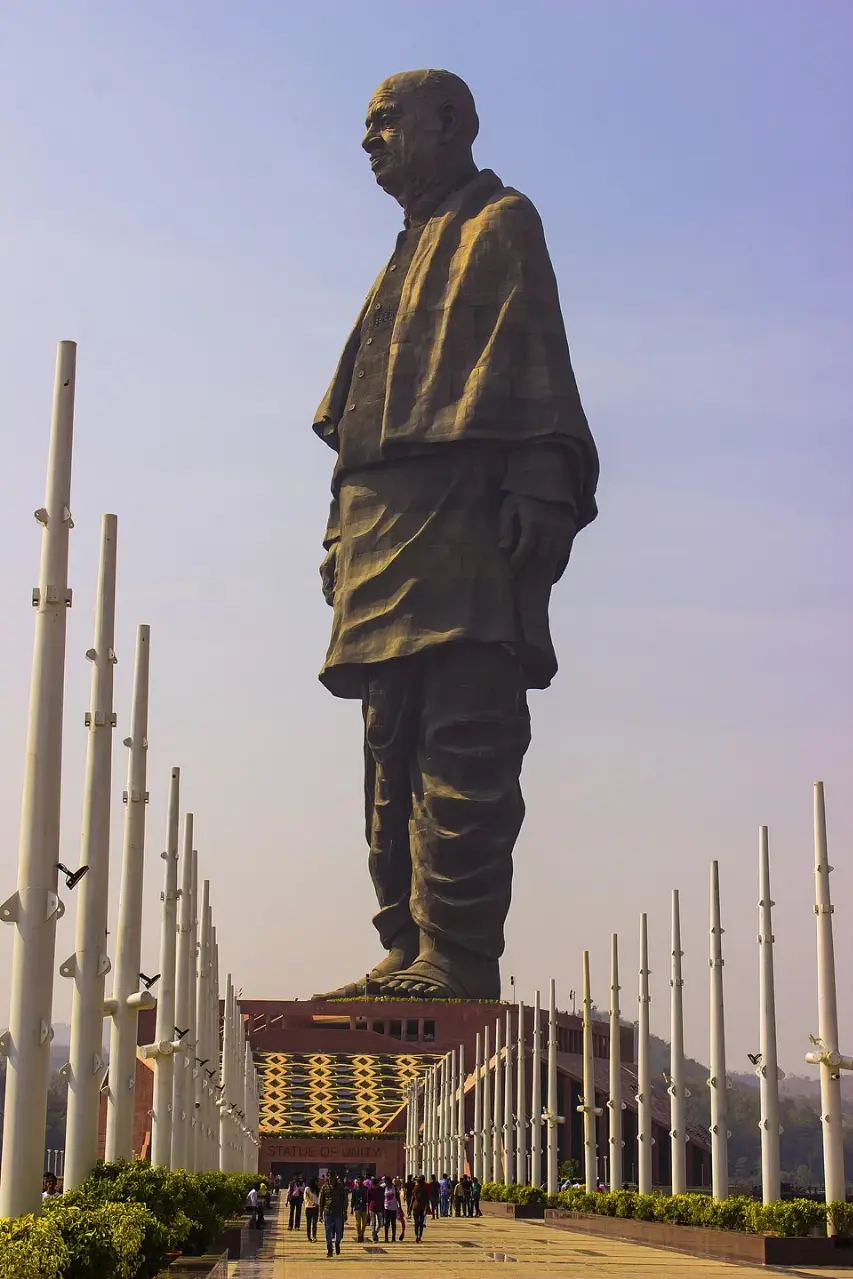 Photo: Snehrashmi · CC BY-SA 4.0