
The Maruti Zen occupies a unique place in India’s automotive history. It was not the first small car, nor the cheapest, nor the most practical. Instead, it was the first mass-market Indian car that made people talk about handling, balance, and driving pleasure. At a time when most buyers judged cars by mileage and maintenance costs, the Zen quietly introduced the idea that a car could be enjoyable simply to drive.
Launched in 1993, the Zen arrived at a moment when India was opening up economically and culturally. Roads were improving, global influences were growing, and buyers were beginning to look beyond mere necessity. The Zen fit perfectly into this transitional phase.
Global Roots: Suzuki Cervo and the Cult of “ZEN”
Internationally, the Zen was inspired from the Suzuki Cervo, a long-running global nameplate. In India, Maruti deliberately branded it as “Zen”, emphasizing simplicity, purity, and balance.This naming was not accidental. It reflected the car’s design approach: minimal weight, compact dimensions, and mechanical clarity.Because, Zen was an acronym of “Zero Engine Noise” highlighting the refined, quiet performance of its all aluminium engine compared to its predecessors.
Unlike the utilitarian Maruti 800, the Zen was positioned as a premium small car, aimed at urban professionals and young enthusiasts.
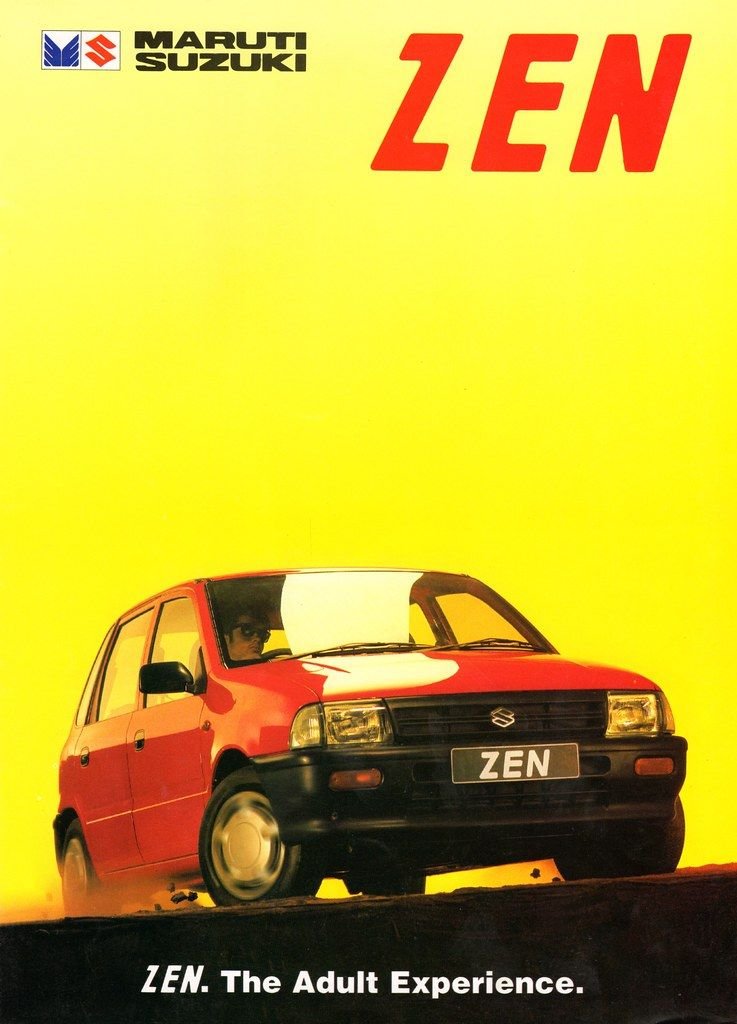

Design Philosophy and Proportions
The Zen stood out immediately due to its wide stance and short height. It looked planted, sporty, and confident compared to the taller, narrower hatchbacks of its time. Large glass areas, a simple grille, and clean body lines gave it a timeless appearance that aged far better than many contemporaries.
Its compact footprint made it ideal for city use, while its width contributed to excellent stability at higher speeds — a rare trait in early 1990s Indian cars.
Engine Evolution: The Heart of the Zen
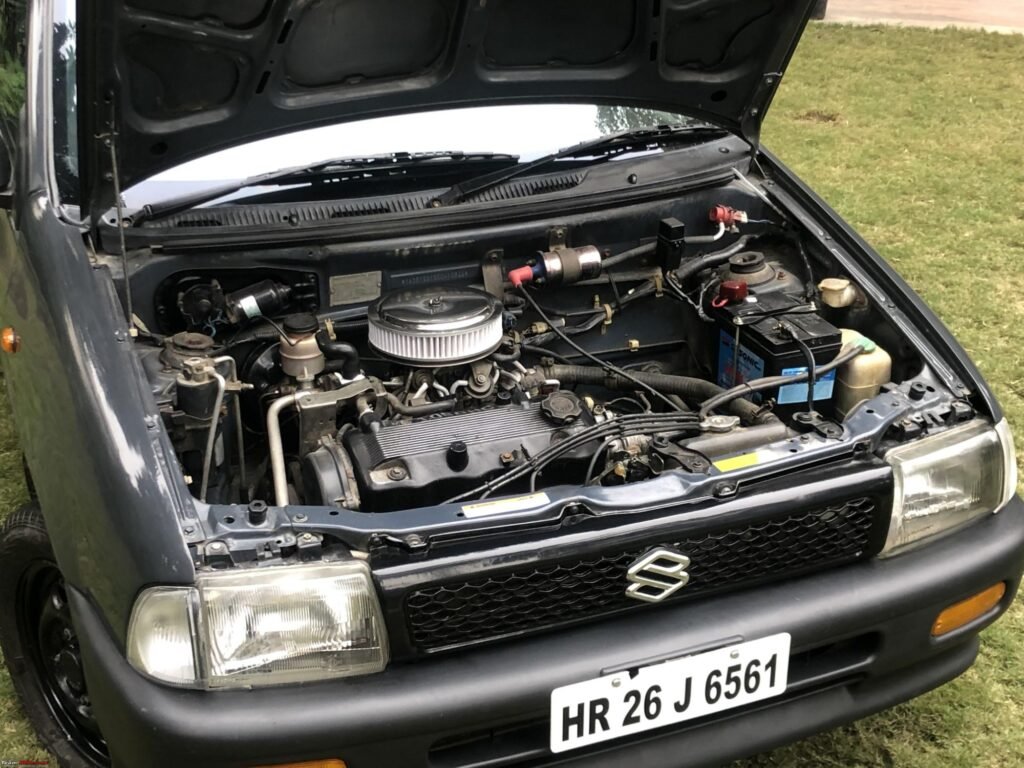
The original Maruti Zen was powered by a 993 cc, four-cylinder, carbureted petrol engine producing around 50 bhp. This engine was smooth, free-revving, and paired with a 5-speed manual gearbox, a combination that felt genuinely modern in its era.
Later, Maruti introduced the 1.0-litre MPFi engine, improving throttle response, emissions, and refinement. Despite modest power figures, the Zen’s light kerb weight of approximately 770 kg made it quick and responsive, especially in city driving conditions.
In the early 2000s, the Zen received a significant mechanical upgrade with the introduction of the 1.1-litre MPFi engine, borrowed from the international Suzuki lineup. This engine produced around 63 bhp, making the Zen one of the quickest cars in its segment. Acceleration improved noticeably, and highway cruising became far more comfortable.
Driving Dynamics: Why Enthusiasts Loved It
What truly set the Zen apart was its handling. The low center of gravity, wide track, and well-tuned suspension gave it exceptional cornering ability. Steering feedback was direct and communicative, allowing drivers to feel connected to the road — something rarely experienced in budget cars of the time.
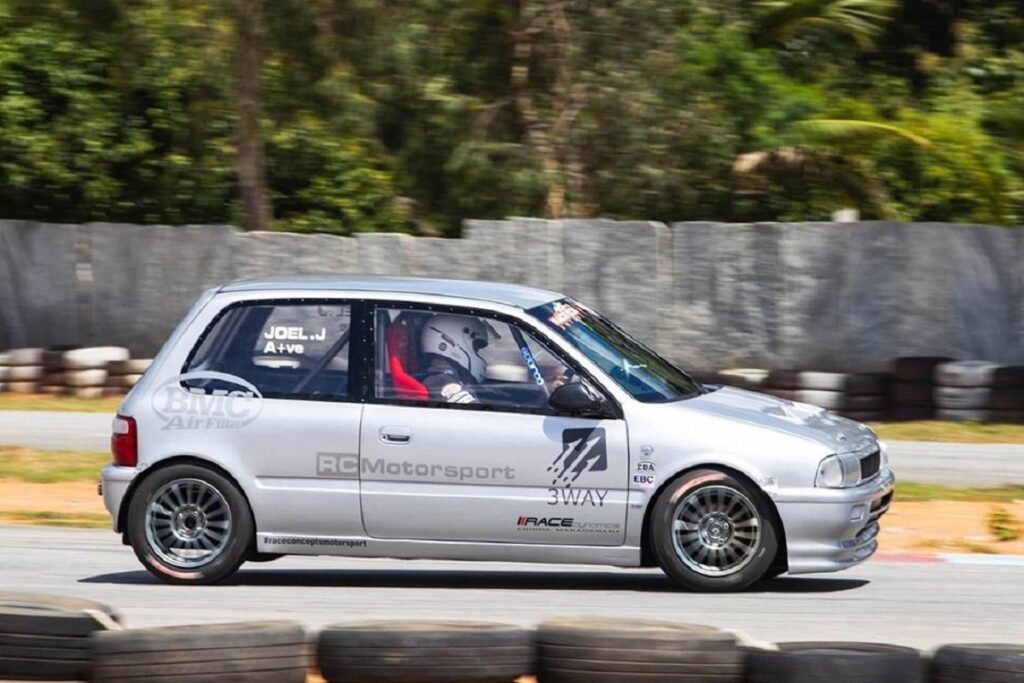
This made the Zen a favorite among driving enthusiasts and rally teams. Modified Zens competed in grassroots motorsports, autocross events, and even professional rallying, earning the car a cult following.



Variants and Trim Levels
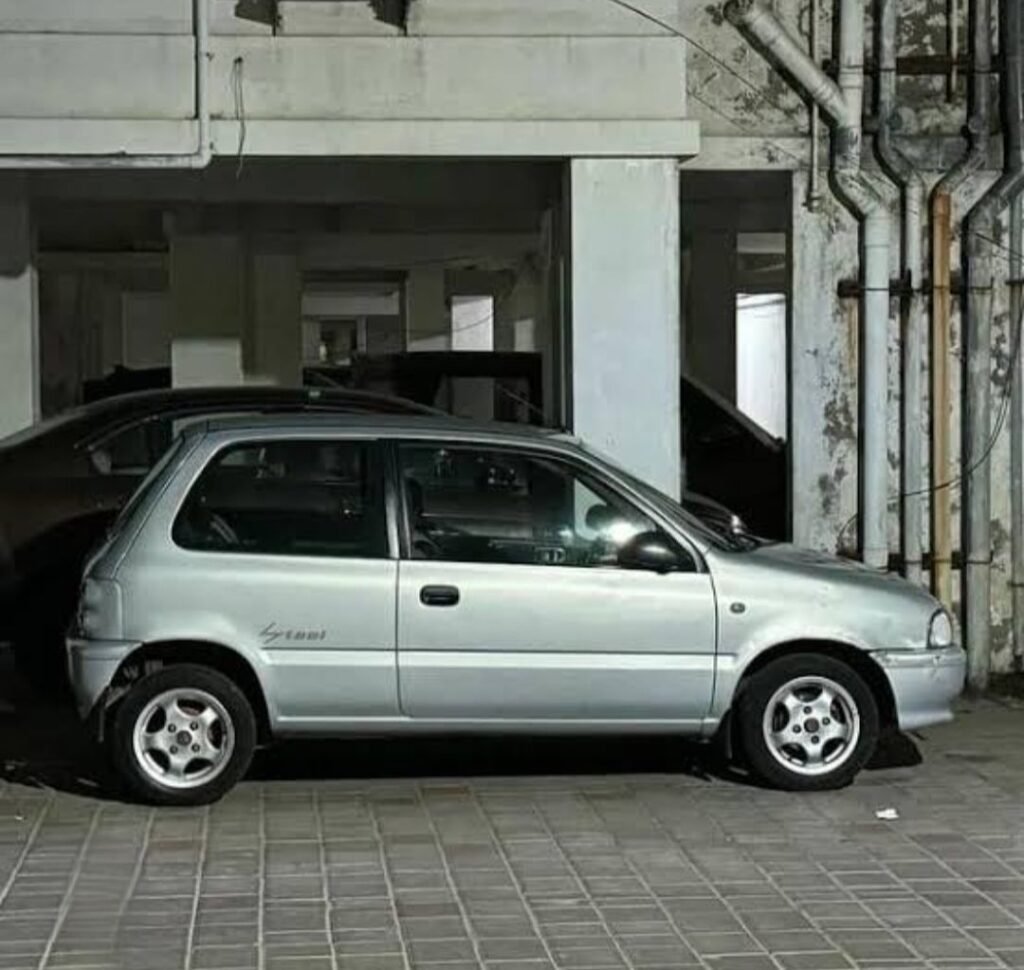
Over its lifetime, the Zen was offered in multiple variants, including Zen LX, Zen VX, Zen D, Zen Carbon, and Zen Steel. Higher trims offered features like power steering, air conditioning, body-colored bumpers, alloy wheels, and improved interior fabrics.
The Zen Carbon and Zen Steel editions were particularly notable for their sportier styling cues, including darker paint schemes and alloy wheels, reinforcing the car’s enthusiast image.

The Zen Diesel: A Rare Experiment
In an unusual move, Maruti introduced the Zen Diesel, powered by a 1.5-litre Peugeot-sourced diesel engine. While fuel-efficient, this engine was heavy and dulled the Zen’s sharp handling, making it less popular among enthusiasts. Nevertheless, it remains an interesting footnote in the Zen’s history.
Interiors and Build Quality
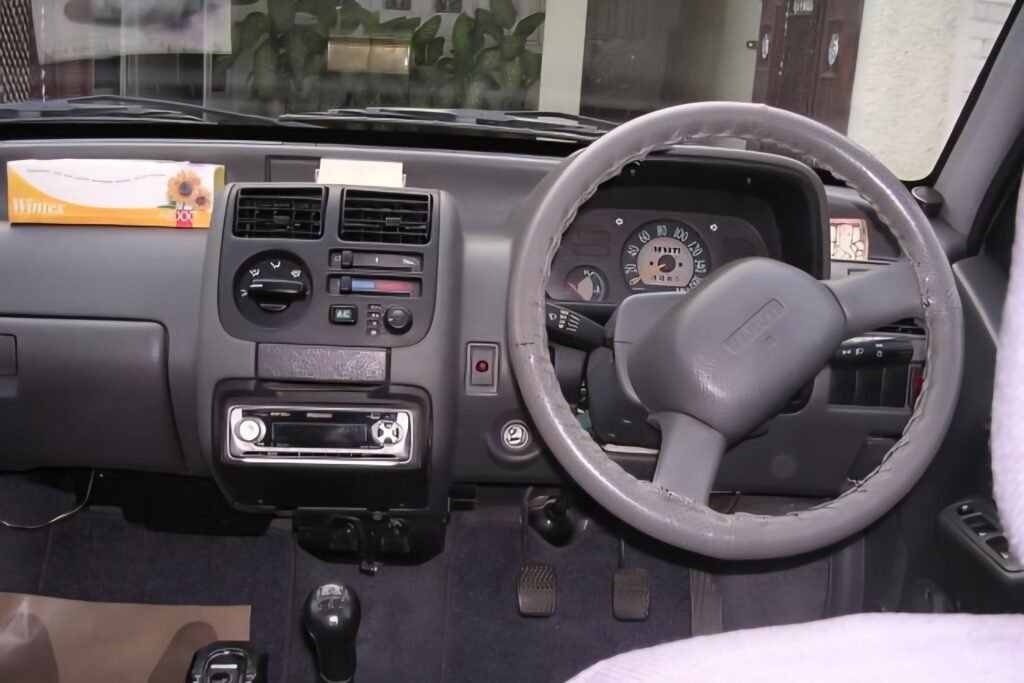
The Zen’s interiors were simple but functional. The dashboard was cleanly laid out, the seats offered decent lateral support, and the driving position was low and sporty. Build quality, especially in later MPFi models, was considered excellent by Indian standards of the time.
Decline and Replacement
As safety norms tightened and consumer preferences shifted toward larger cars, the Zen’s aging platform struggled to keep up. Maruti eventually replaced it with the Zen Estilo, a taller, more practical hatchback that sacrificed the original Zen’s driving purity for mass appeal.
Production of the original Zen ended in 2006, quietly marking the end of an era.
Legacy: India’s First Driver’s Hatchback
The Maruti Zen did something no car before it had done in India — it taught buyers that driving feel matters. It paved the way for future enthusiast favorites like the Baleno, Swift, and Polo.
Even today, a well-maintained Zen is cherished by enthusiasts, proving that good engineering and thoughtful design never go out of style.
