A baroque basilica in Old Goa that holds the relics of Saint Francis Xavier.
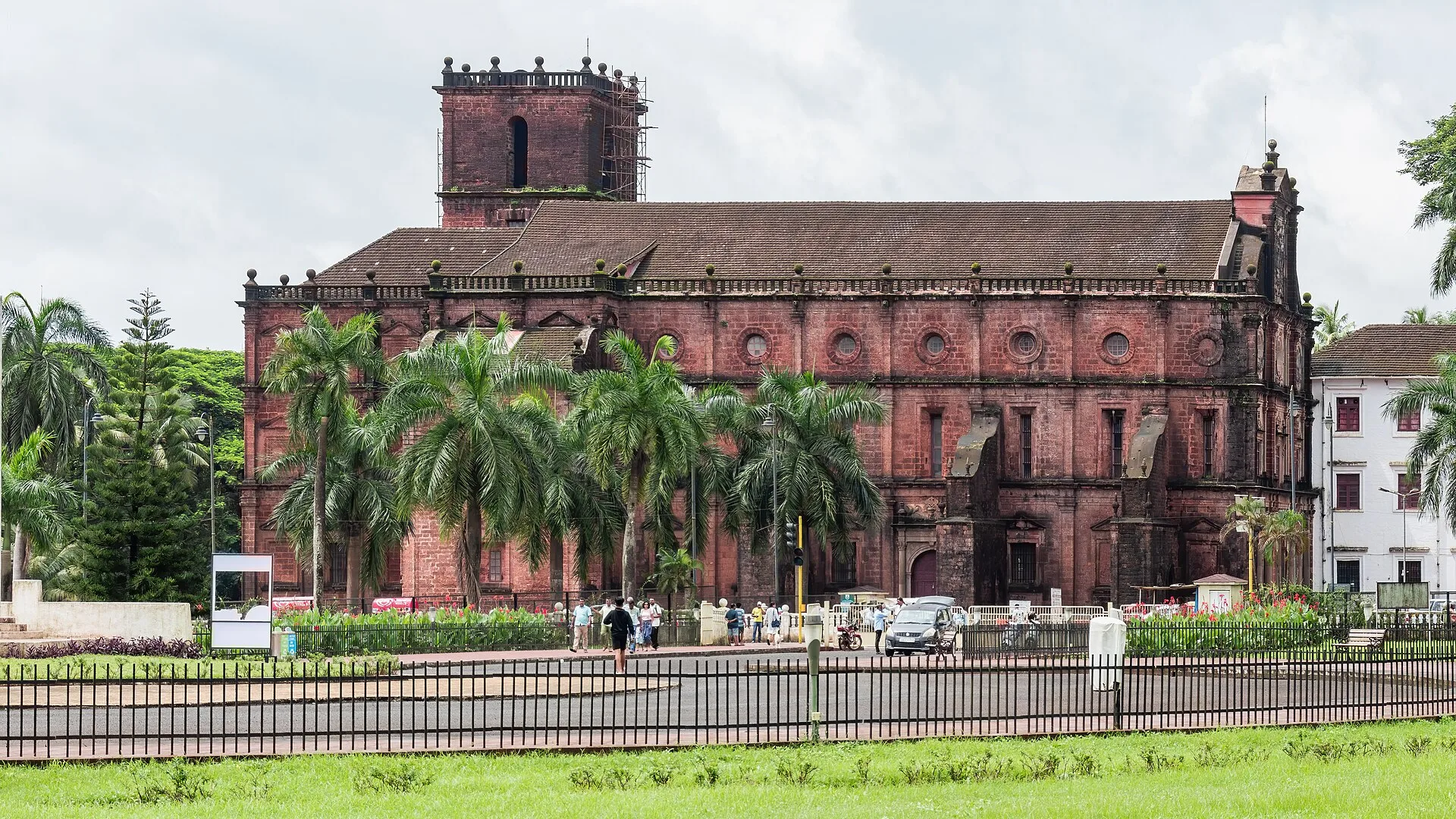
The Basilica of Bom Jesus is a baroque church in Old Goa that holds the relics of Saint Francis Xavier, one of the most venerated figures in Asian Christianity. Its name means Good or Infant Jesus. The dark red laterite front, left without plaster, rises beside a quiet square in what was once the capital of Portuguese India, a city so busy and wealthy that travellers compared it with the great ports of Europe. Today lawns and palms surround the surviving monuments, and the basilica remains a working place of prayer.
Construction began in 1594, and the church was consecrated in 1605. It belongs to the Society of Jesus, the Jesuit order that Francis Xavier helped to found. Born in 1506 in the kingdom of Navarre, in present-day Spain, he studied in Paris, joined Ignatius of Loyola and sailed to the east as a missionary, reaching Goa in 1542. He travelled along the southern coasts of India, to South-East Asia and to Japan, and died in 1552 on an island off the coast of China while hoping to enter that country. His body was later brought to Goa, and he was declared a saint in 1622.
The facade deserves a careful look. Three doorways lead in, and above them columns of several classical orders divide the surface into tiers, with circular and rectangular windows between. At the top a richly carved gable carries the letters IHS, the emblem of the Jesuits. Compared with this solid front, the interior is spacious and relatively plain until the eye reaches the far end, where a gilded high altar glows with twisting columns, angels and ornament. There the figure of the Infant Jesus stands beneath a large statue of Saint Ignatius.
To one side lies the chapel that draws pilgrims from across India and the world. The silver casket containing the saint's remains rests high upon a monument of coloured marble and jasper. This mausoleum was a gift of the Grand Duke of Tuscany, made by Florentine sculptors and assembled here at the end of the seventeenth century, and its bronze panels illustrate episodes from the saint's life. At intervals of about ten years the relics are brought out for a public exposition, when very large numbers of devotees come to venerate them.
Together with the neighbouring buildings, the basilica forms part of the Churches and Convents of Goa World Heritage Site. Across the road stands the Se Cathedral, vast and white, known for its great bell. The Church of Saint Francis of Assisi and the archaeological museum beside it, the domed Church of Saint Cajetan and the ruined tower of Saint Augustine are all within comfortable walking distance, so a single morning can become a journey through four centuries of art and faith. An art gallery attached to the basilica displays religious paintings and objects.
The year reaches its high point with the Feast of Saint Francis Xavier on 3 December, preceded by nine days of prayer. Pilgrims arrive in great numbers, many of them walking from their villages, open-air Masses are celebrated and a fair of stalls and food grows up around the grounds. The atmosphere is memorable, but expect crowds, traffic restrictions and queues. For quieter sightseeing, come on an ordinary weekday morning.
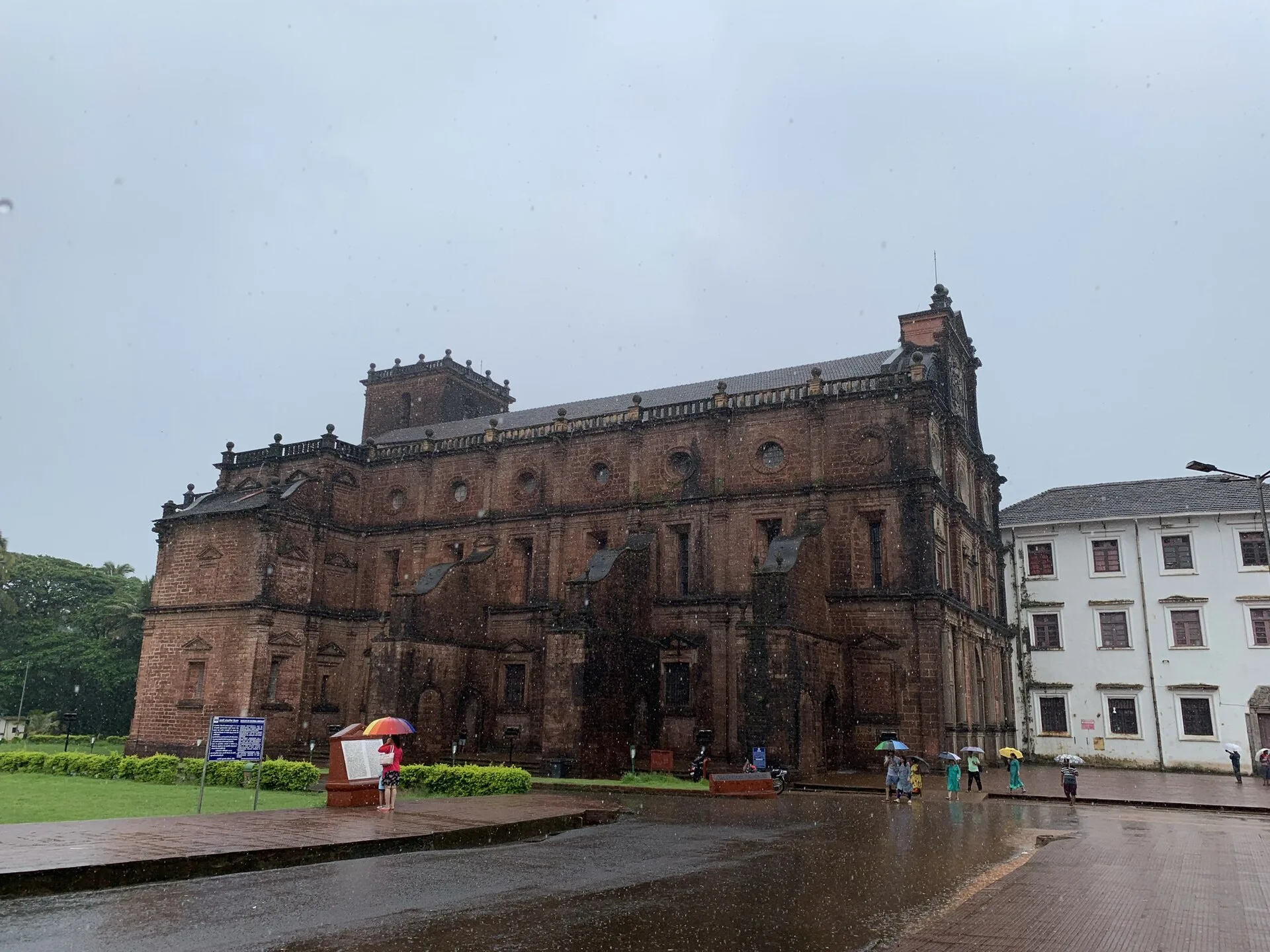
Dress respectfully with shoulders and knees covered, remove caps, keep silence and switch your phone to silent. This is first of all a church, so visiting is limited while Mass is being celebrated, and photography may be restricted in certain areas. One to two hours is enough for the basilica itself. November to February brings the pleasantest weather, while the monsoon paints the old stones a deep red against vivid green.
Old Goa has its own bus stop, Karmali is the nearest railway station, and both Dabolim airport and Manohar International Airport at Mopa serve the state. Drinking water, a hat and comfortable shoes are useful for walking between monuments. Afterwards, sit down to Goan fish curry and rice, buy soft poi bread from a local bakery, and finish with a slice of bebinca, the layered coconut pudding that appears at every celebration.
The silver casket of Saint Francis Xavier
Baroque altar and carved facade
Part of a World Heritage group of churches
The great December feast
Photos (3)
The front of the Basilica of Bom JesusThe laterite walls and towerThe basilica in the monsoon
Construction began in 1594 and the church was consecrated in 1605. The marble base of the saint's tomb was a gift of the Grand Duke of Tuscany. The basilica is part of the Churches and Convents of Goa World Heritage Site.
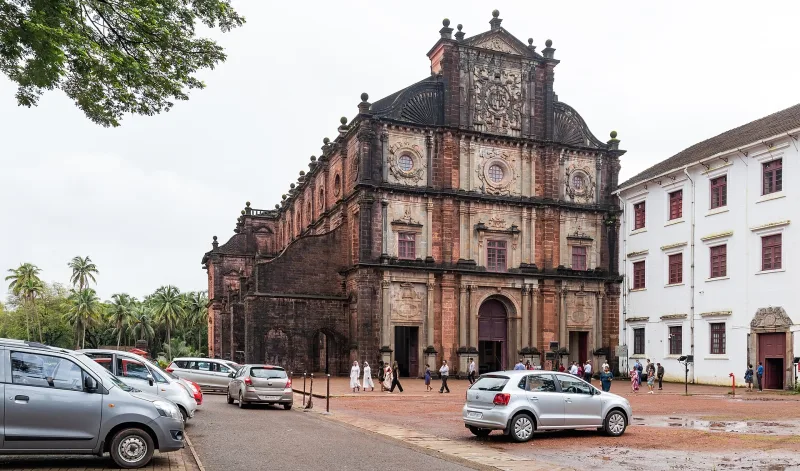
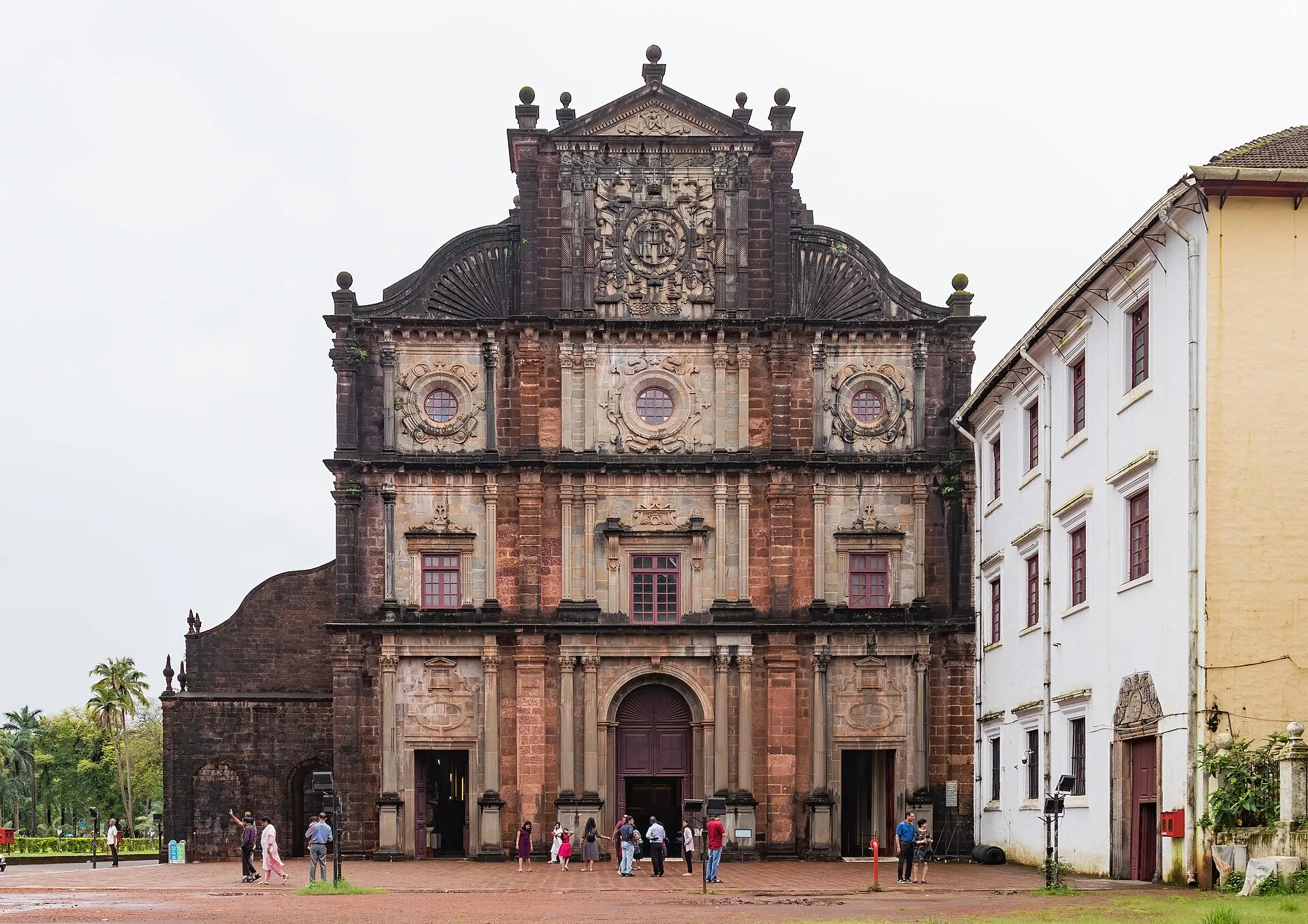 Photo: iMahesh · CC BY-SA 4.0