The former seat of the Wadiyar dynasty and the centre of the Dasara celebrations.
Mysuru Palace, also known as Mysore Palace or Amba Vilas Palace, is the former seat of the Wadiyar dynasty and the heart of the celebrated Mysuru Dasara. Standing in the middle of the city behind broad gardens and ceremonial gateways, it gathers domes, arches, turrets and colonnades into one confident composition in the Indo-Saracenic style. For visitors to Karnataka it is both a grand work of architecture and a living symbol of a royal city whose festivals, crafts and manners still carry the memory of the old court.
The Wadiyars ruled the kingdom of Mysore from this site for centuries. Earlier buildings rose and fell here, and the wooden palace that preceded the present one was destroyed by fire in 1897. The royal family commissioned the British architect Henry Irwin to design its successor, and the new palace was completed in 1912. Irwin combined Hindu, Islamic, Rajput and European ideas, using stone, iron and masonry in place of the timber that had proved so vulnerable. The result is theatrical without being confused: a long arcaded front, a tall central tower crowned with a gilded dome, and pink marble domes at the corners.
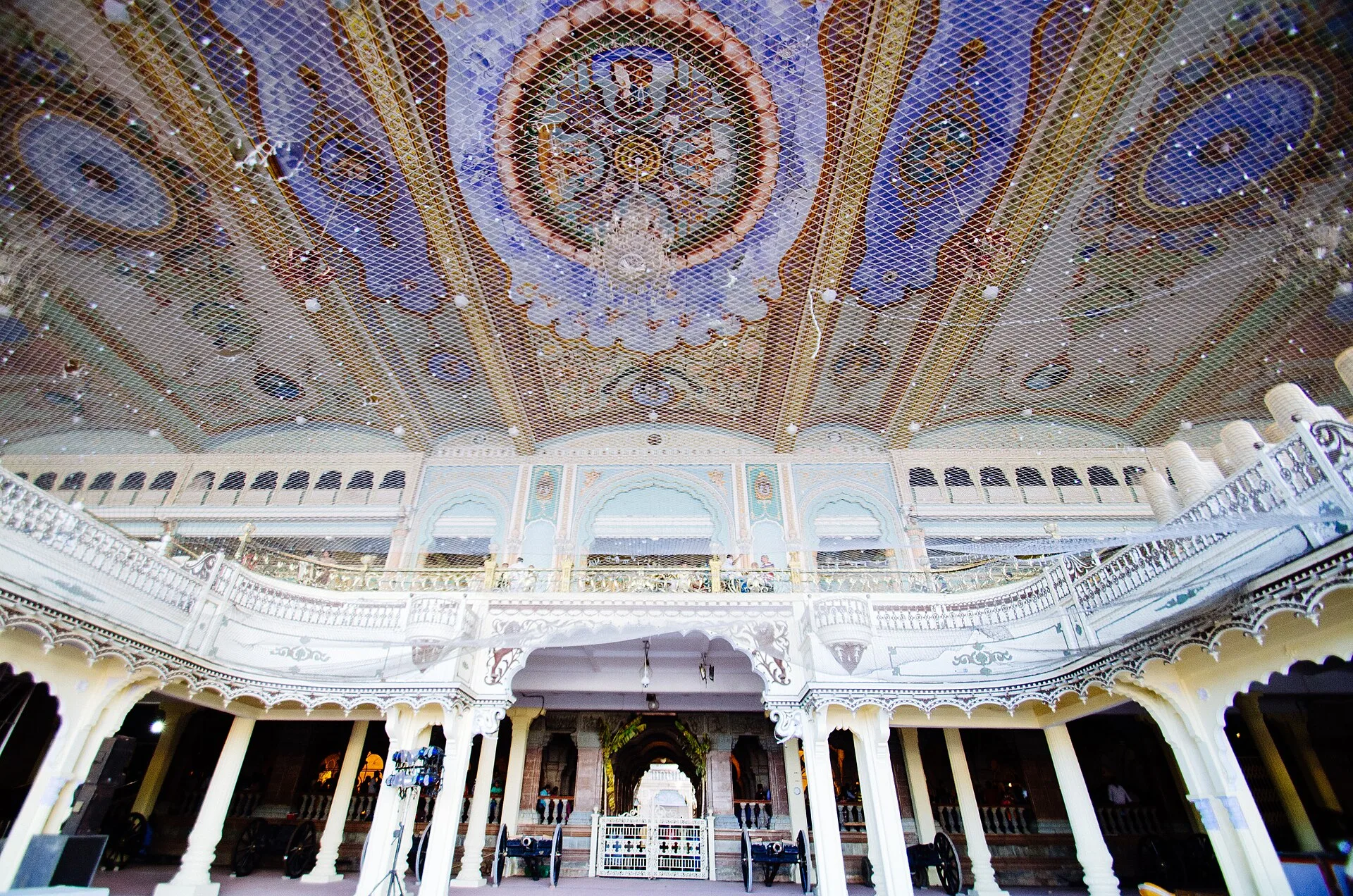
Inside, the visit unfolds as a sequence of surprises. The Kalyana Mantapa, the marriage pavilion, is an octagonal hall where slender cast-iron pillars carry a ceiling of stained glass patterned with peacock motifs, and the tiled floor repeats the same sense of colour. Painted panels along the walls record Dasara processions of the royal era in careful detail, showing horses, elephants, soldiers and spectators almost like a photographic album. The Durbar Hall, approached through rich doorways, is lined with ornate columns and painted ceilings and opens towards the grounds, where the ruler once appeared before assembled crowds. Carved rosewood doors, inlaid ivory work, silver-clad entrances and old portraits reward anyone who pauses to look closely.
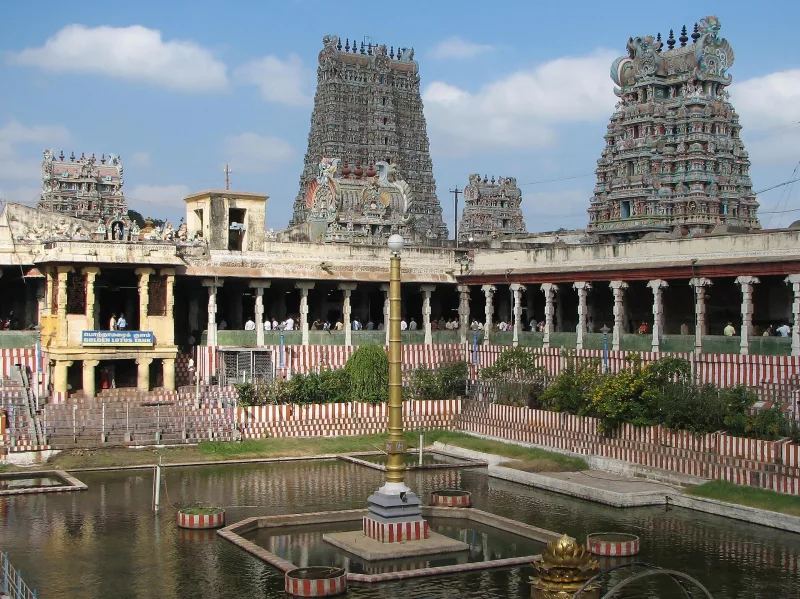
The compound also contains temples that have served the royal household for generations. Their gopurams rise near the walls and remind visitors that the palace was never only a residence or an office of government; ritual and kingship were closely bound together, and many ceremonies of the royal family continue to be observed during the festival season.
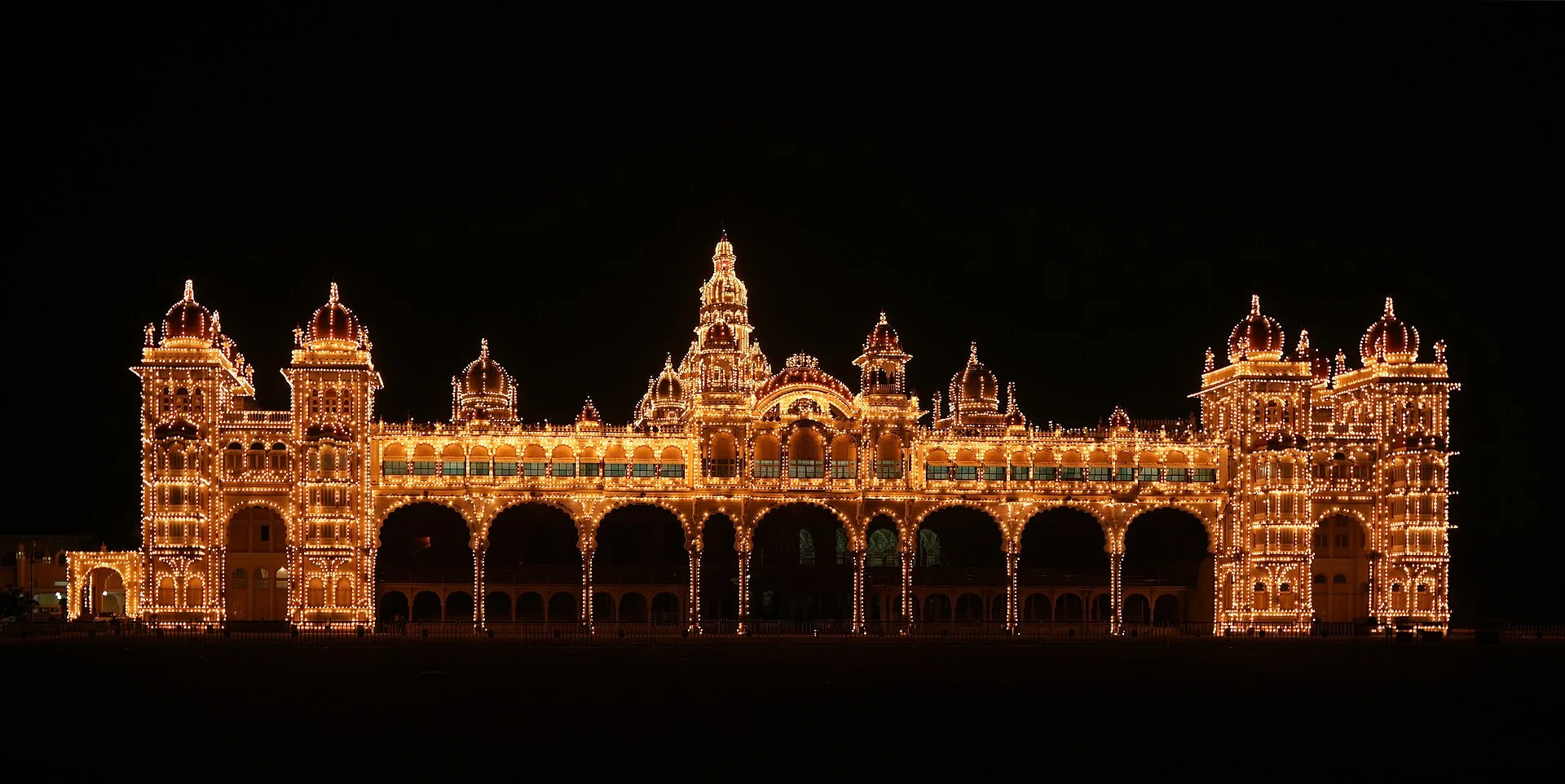
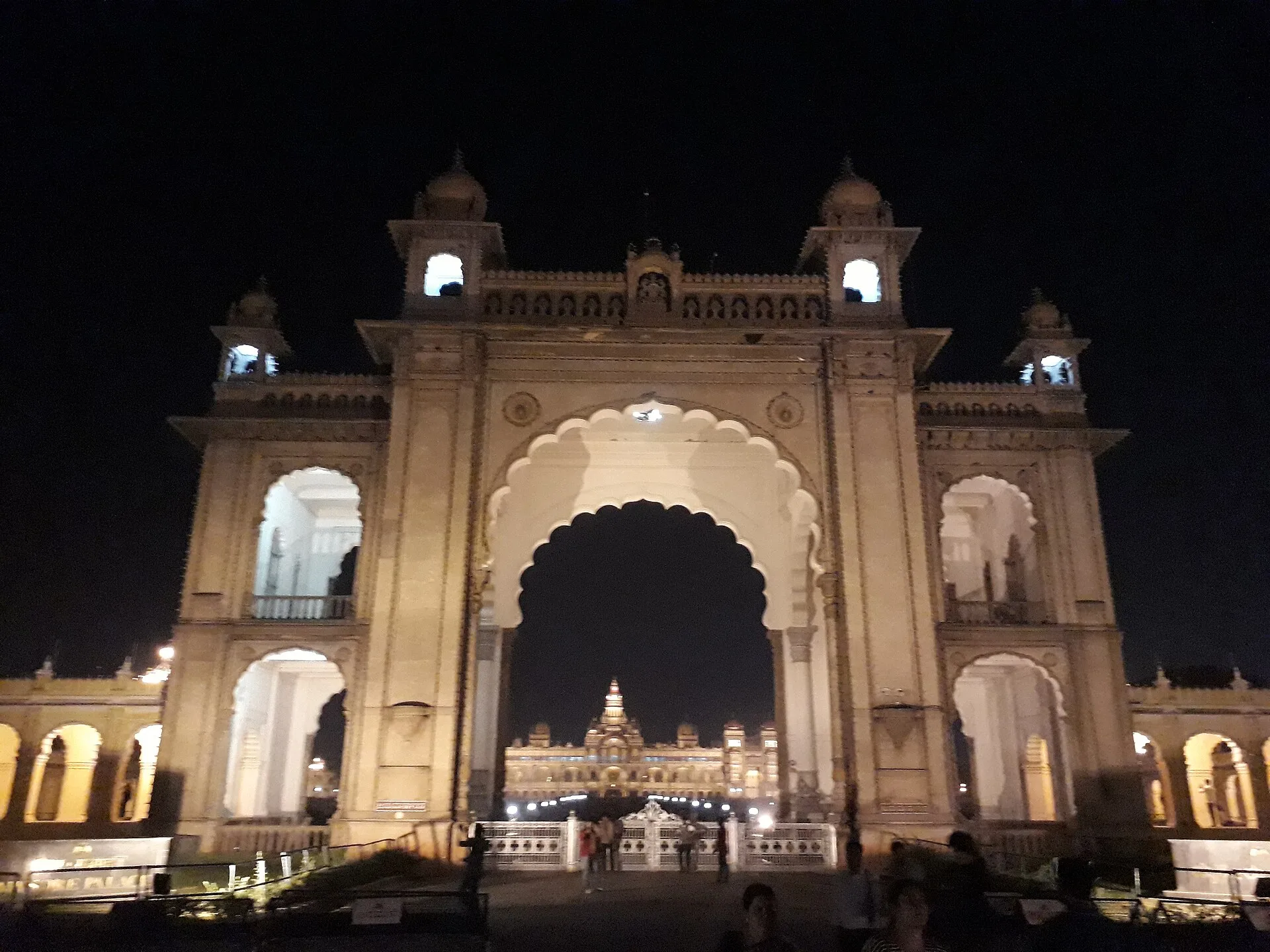
Evening brings the sight for which the palace is most loved. On Sundays, public holidays and through the Dasara season the whole building is outlined in thousands of lamps. When the switches are thrown, domes and arches that looked solid in daylight turn into a drawing made of gold light, and a murmur passes through the crowd. Since timings and days of illumination can change, confirm them on the spot or from official announcements before you plan your evening. Arriving a little early gives you room to find a good view from the lawns.
Dasara is the grandest time of all. Over the ten days of Navaratri the city fills with music, dance, exhibitions, wrestling and food fairs, and on Vijayadashami the Jamboo Savari procession sets out from the palace. A richly decorated elephant carries the idol of the goddess Chamundeshwari in a golden howdah through streets packed with spectators. If you wish to attend, reserve rooms and transport months in advance and buy passes only from authorised sources.
Allow around two hours for an unhurried tour, ideally in the morning for the interiors, followed by a return after dusk on an illumination day. Footwear must be left at the counter before entering the halls, so socks can be comfortable on warm or cool floors. Check the current rules on photography indoors, keep a respectful distance from the walls and painted surfaces, and hold children close in the busier corridors. September to February is the most pleasant period to explore the city.
Mysuru has its own airport, with wider connections through Bengaluru, and Mysuru Junction links the city by rail. City and suburban bus stands are within easy reach. Complete your visit with a trip to Chamundi Hill for the temple and a sweeping view over the town, shop for Mysore silk and sandalwood products from reputable outlets, and sit down to Mysore masala dosa, strong filter coffee and the soft, buttery sweet called Mysore pak.
The evening illumination of the palace
Stained glass and cast-iron pillars of the Kalyana Mantapa
The ornate Durbar Hall overlooking the grounds
Temples within the palace compound
Photos (6)
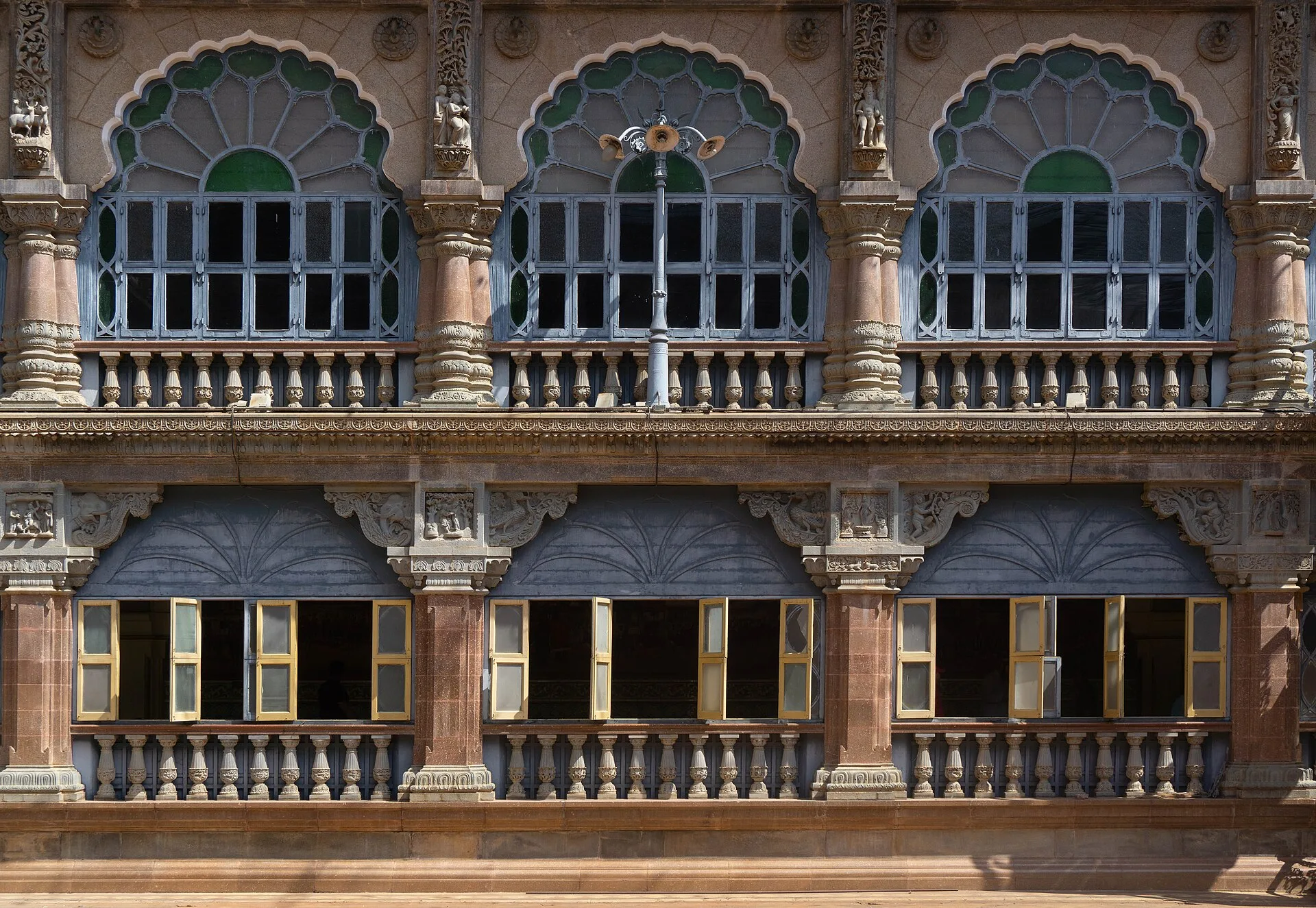
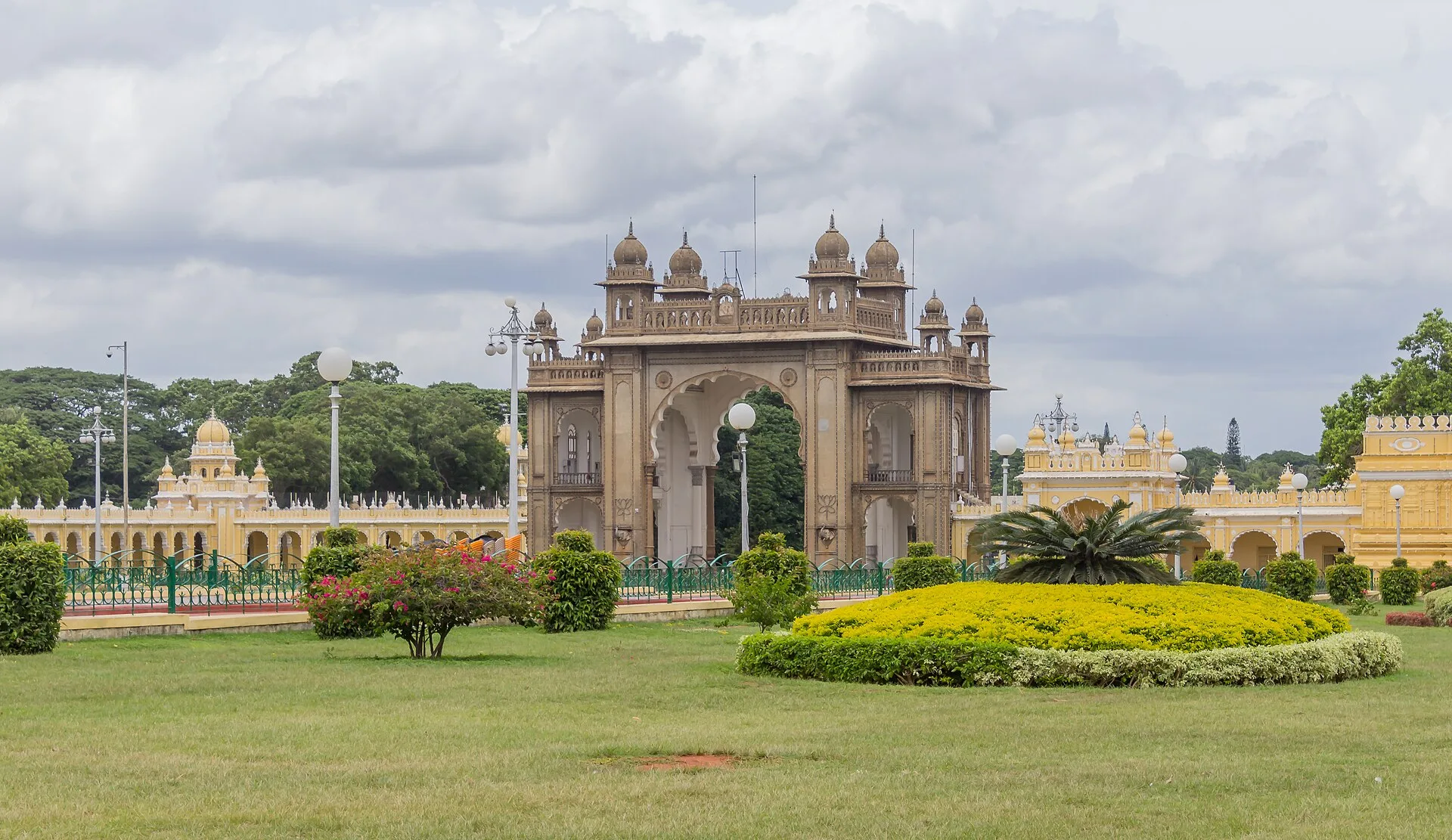
Mysuru PalaceThe palace illuminated at nightWindows and carved balconiesA painted ceiling inside the palaceA palace gateThe gateway at night
The Wadiyars ruled the kingdom of Mysore from this site for centuries. After a fire destroyed the earlier wooden palace in 1897, the present building was designed by the British architect Henry Irwin and completed in 1912.
It remains the starting point of the Jamboo Savari procession that closes Mysuru Dasara.
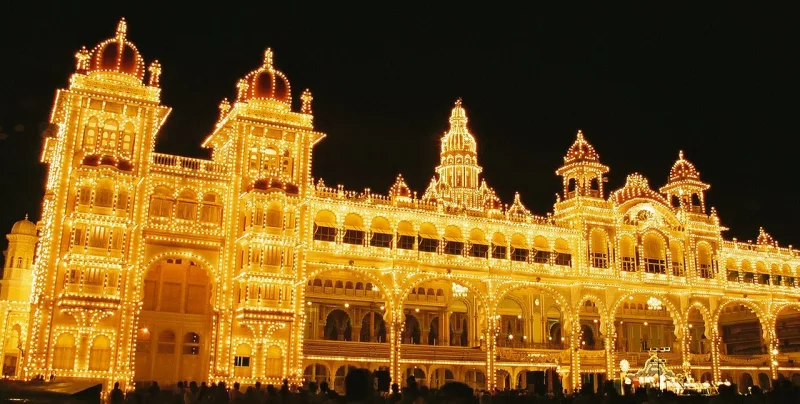
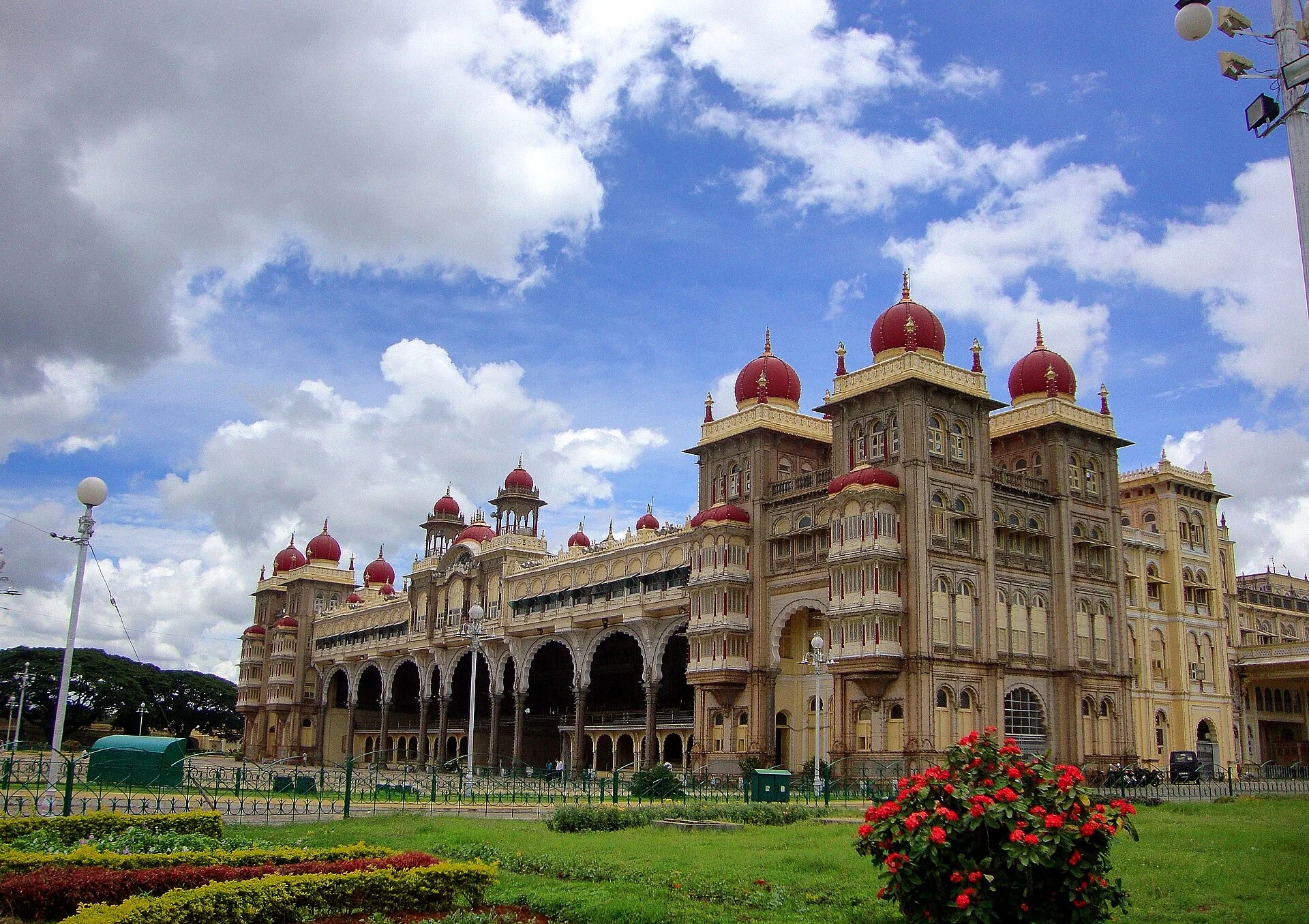 Photo: Whistleraja · CC BY-SA 4.0