The temple of Meenakshi and Sundareswarar, known for its towering painted gopurams.
Meenakshi Amman Temple in Madurai is the great shrine of the goddess Meenakshi and her consort Sundareswarar, famous for its towering painted gopurams. The temple, also called Meenakshi Sundareswarar Temple, is the point around which one of the oldest living cities of India is arranged. Streets run in concentric rings about its walls, several of them named after Tamil months, and for centuries processions have followed these routes so that the deities may be seen by the whole town.
Worship at Madurai is described in early Tamil literature, and the city's association with the Pandya kings, with poetry and with learned assemblies gives the place a depth that goes well beyond its stones. According to tradition, Meenakshi was born from a sacrificial fire to a Pandya ruler who longed for a child, grew up as a warrior queen, and met her match in Shiva, who came to wed her as Sundareswarar. The temple celebrates this marriage every year during the Chithirai Festival. Many other legends of Shiva's divine play in Madurai are recalled in sculpture and painting around the complex.
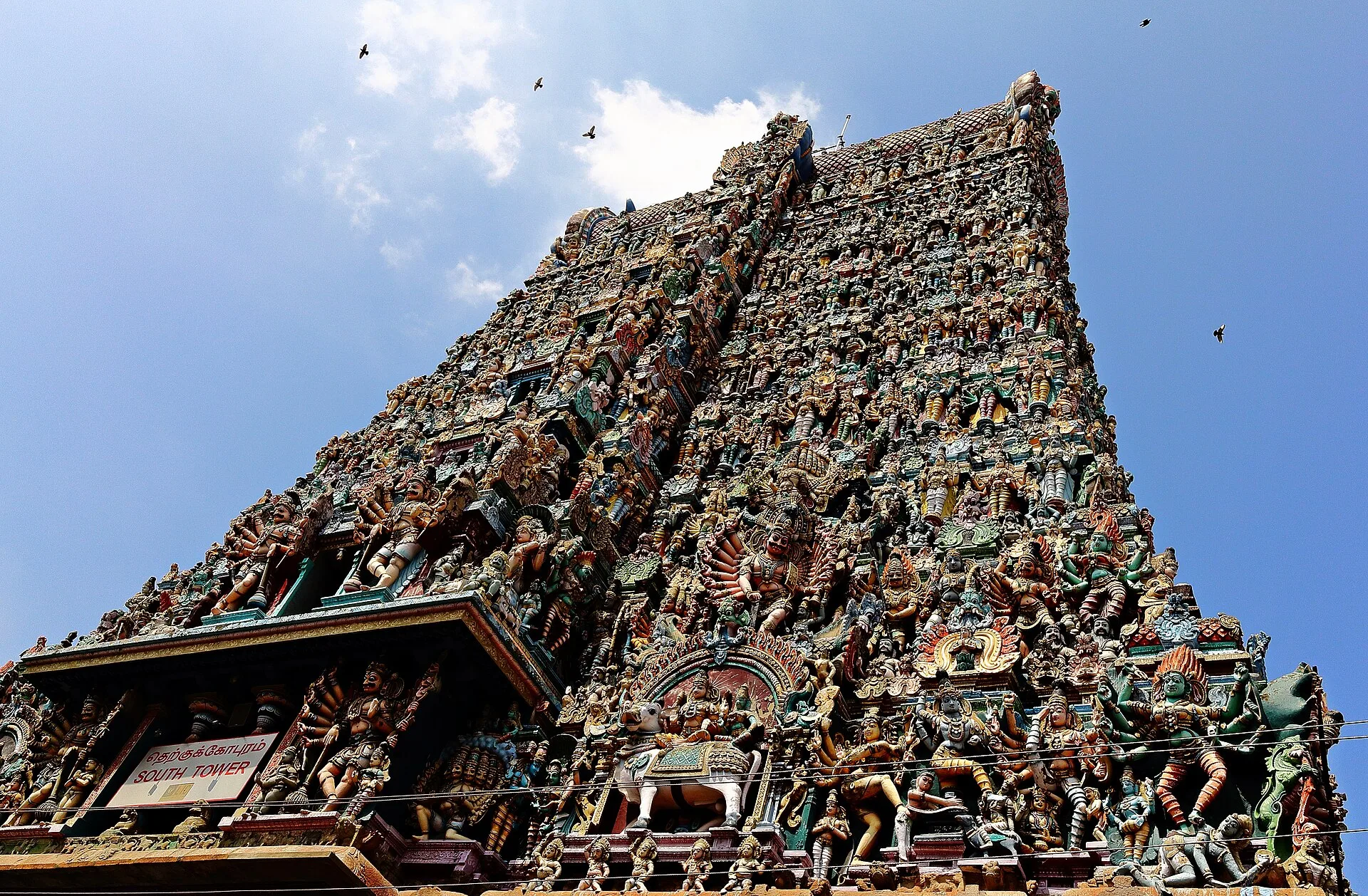
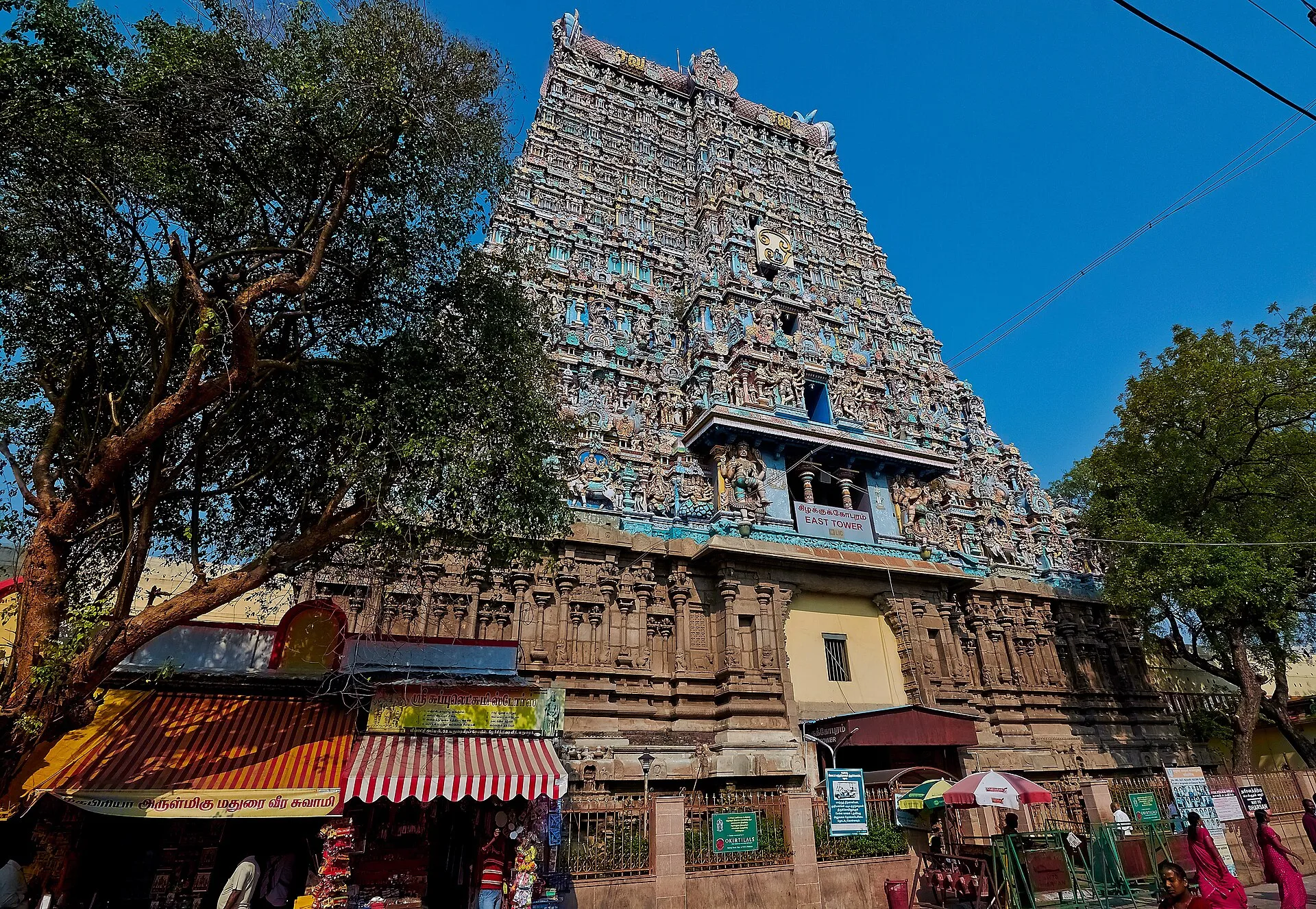
Much of what visitors see today was built or enlarged in the sixteenth and seventeenth centuries under the Nayak rulers of Madurai. Their craftsmen raised gateway towers that climb in diminishing tiers, each crowded with brightly coloured gods, guardians, saints and mythical creatures. The towers are repainted and reconsecrated at intervals, which keeps their colours vivid. Look up from the street at different hours and you will notice that the tiers seem to change with the angle of the sun.
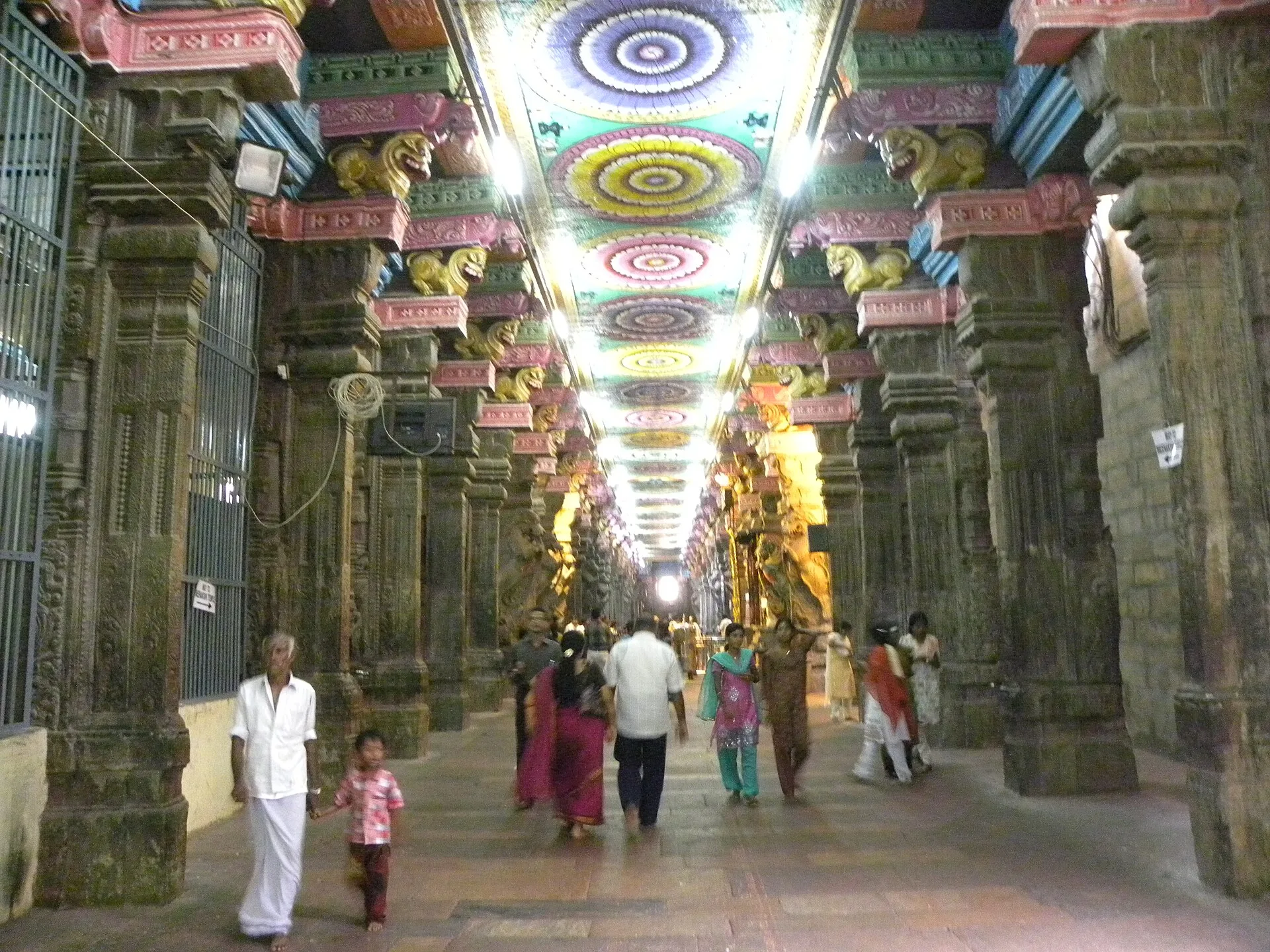
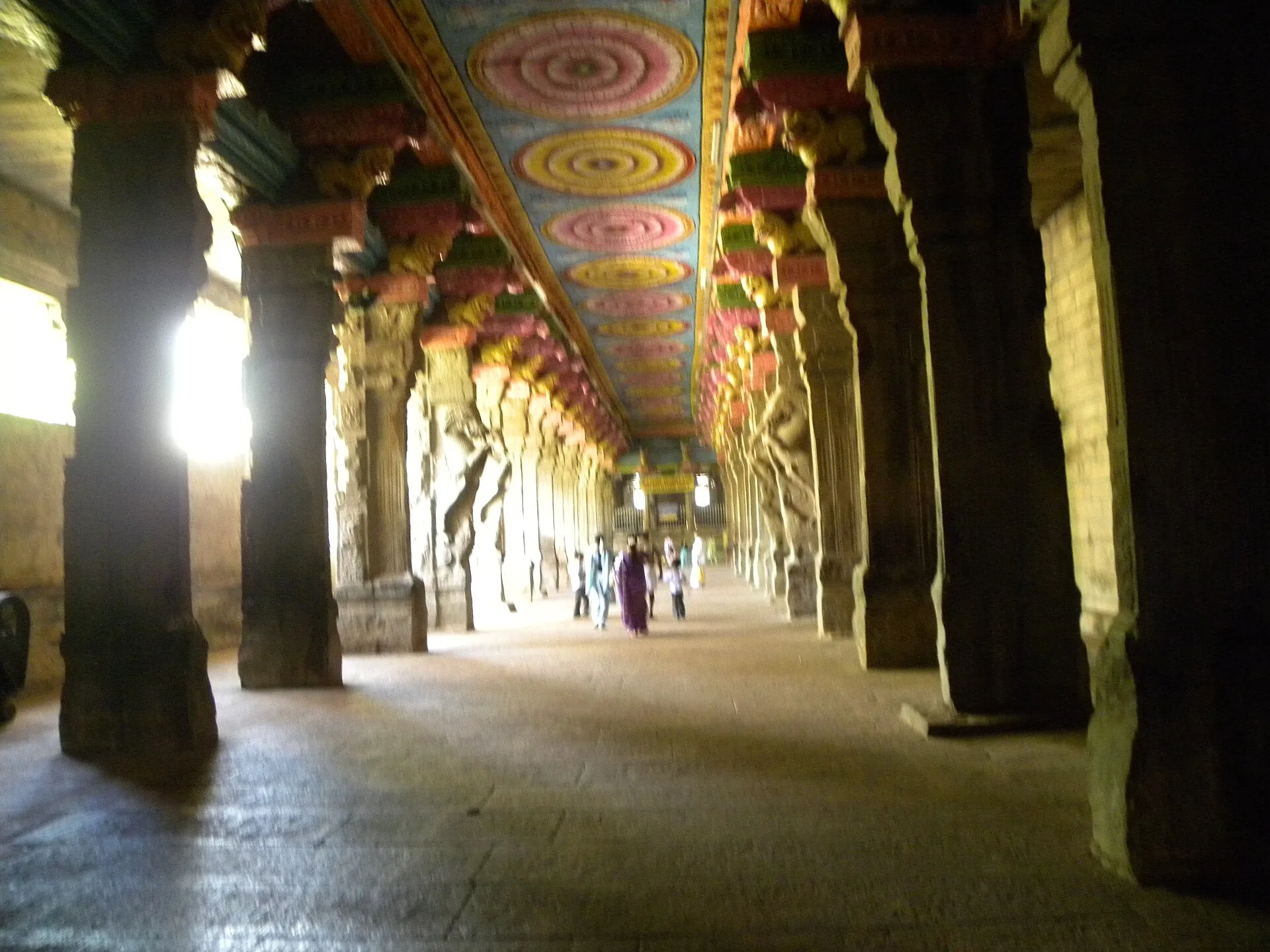
Inside, long corridors lead through halls of carved pillars. The celebrated Hall of a Thousand Pillars displays figures cut with extraordinary skill and now houses a museum of bronzes, stone images and other objects. Elsewhere, slender stone columns that give out musical notes are a favourite curiosity. The Porthamarai Kulam, or Golden Lotus tank, offers the most serene view in the complex, with steps going down to the water, a golden lotus at its centre and gopurams rising beyond the colonnade. Devotees usually pay their respects to Meenakshi first and then to Sundareswarar, whose shrine has the famous silver hall associated with the cosmic dance.
The day at the temple follows an ancient rhythm. Early morning darshan is comparatively calm, with the scent of jasmine, the sound of the nadaswaram and priests beginning their duties. At night a much loved ceremony takes place as the image of Sundareswarar is carried in procession to the chamber of Meenakshi, where the divine couple rest. Watching it, you understand that for worshippers the temple is a household of living deities. The shrines may close for a few hours in the middle of the day, so confirm the current timings before you set out.
Allow two to three hours, and more on Fridays and festival days when queues lengthen considerably. Dress modestly, with shoulders and legs covered. Mobile phones, cameras and footwear are left at the counters near the entrances, so keep your token safely and note which gate you used. The stone floors can become very hot by noon in summer, and some areas of the inner shrines are reserved for Hindus, as notices explain. October to March offers the most comfortable weather, while April or May rewards those who want to join the crowds for Chithirai.
Madurai International Airport, Madurai Junction and the Periyar bus stand make the temple easy to reach, and the railway station is a short ride away. Stroll the Chithirai streets outside the walls, browse the stalls of textiles, flowers and brass in the old market halls, and visit Thirumalai Nayakkar Palace nearby to see the secular side of Nayak splendour. Food is one of the pleasures of this city, which is known for staying awake late: try soft Madurai idli with a choice of chutneys, flaky parotta chopped on a hot griddle, and a cold glass of jigarthanda before you leave.
Gopurams crowded with painted sculpture
The Hall of a Thousand Pillars and its museum
The Golden Lotus tank
The night ceremony as the deity is taken to rest
Photos (5)
The Golden Lotus tank and gopuramsSculpture on the south gopuramA painted pillared corridorA temple gopuramStone pillars inside the temple
Worship here is described in early Tamil literature. Much of what visitors see today was built or enlarged in the sixteenth and seventeenth centuries under the Nayak rulers of Madurai, including the famed Hall of a Thousand Pillars.
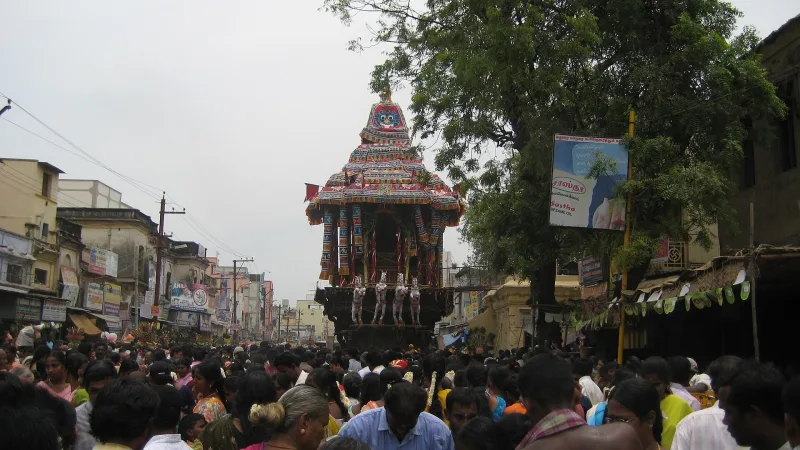
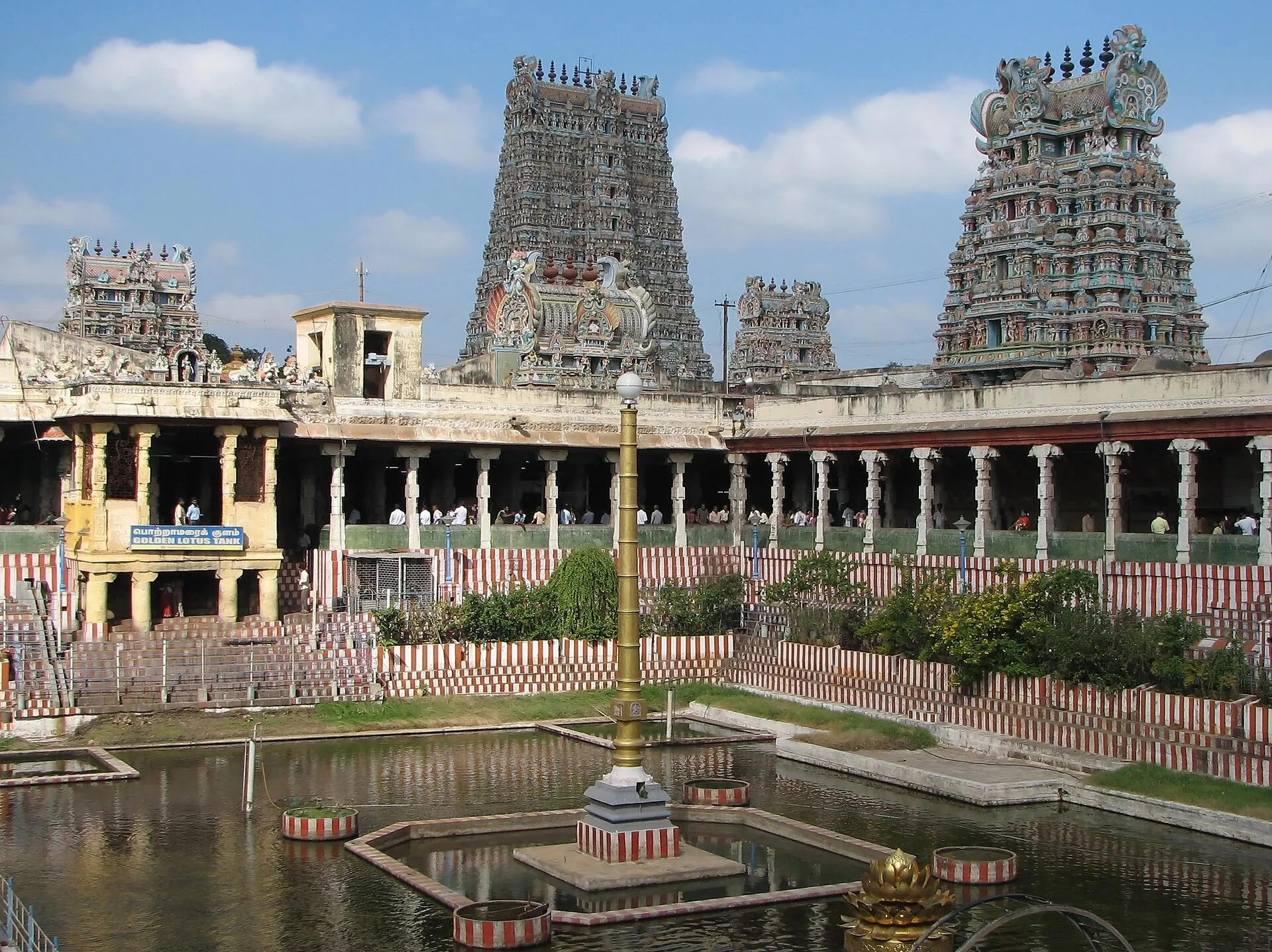 Photo: Bernard Gagnon · CC BY-SA 3.0