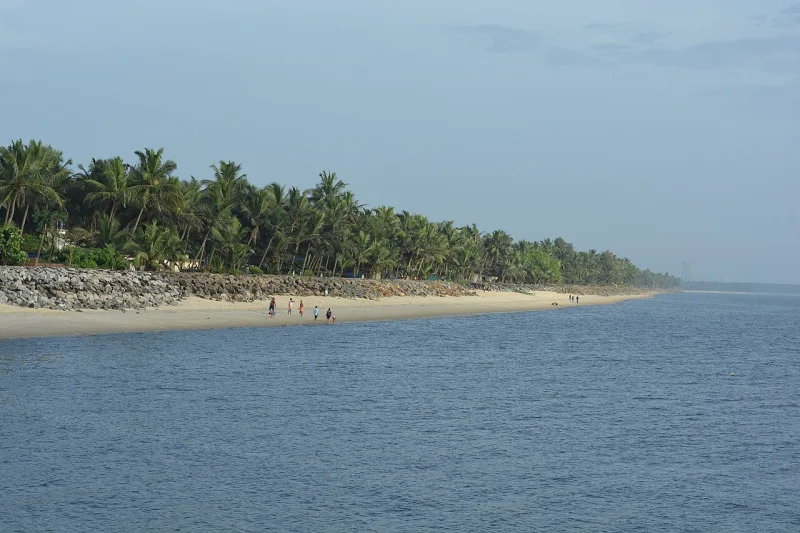
Mangrove fringed islets where the Kadalundi river meets the sea, a winter home for terns, gulls, sandpipers and other birds.
Where the Kadalundi river reaches the Arabian Sea, it spreads among a cluster of small islands, mudbanks and mangroves. This estuary, shared between Kadalundi panchayat in Kozhikode district and Vallikkunnu panchayat in Malappuram district, is a haven for birds and one of the most rewarding natural spots near the city of Kozhikode, about nineteen kilometres from its centre.
More than a hundred species of resident birds have been recorded here, along with around sixty kinds of migrants that arrive seasonally. Terns, gulls, herons, sandpipers and cormorants are among the groups most often seen. The whimbrel, a long billed wader that travels enormous distances, and the brahminy kite, with its chestnut body and white head, are notable favourites. A low hill nearby, rising to about 200 metres, gives a vantage over the wetland.
The richness of the estuary begins underwater and in the mud. Fish, mussels, crabs and countless small creatures flourish where fresh and salt water mix, providing food for birds and a livelihood for people. Mussel collecting and fishing are traditional work, and visitors often see canoes moving along the channels. Mangrove trees, standing on tangled roots, shelter young fish and protect the shore from erosion. Their value as a natural barrier is increasingly recognised, and the local community has taken an important part in conservation through a community reserve covering mangrove areas of the neighbourhood.
Timing makes all the difference. The migratory season runs roughly from November to April. Within each day, low tide exposes the feeding grounds and gathers the waders, while high tide pushes them to roost. Ask a local boatman about the tide and aim for early morning. A slow country boat is the best way to explore; confirm the fare, insist on a life jacket and ask the boatman to keep a respectful distance from feeding flocks.
Bring binoculars, a hat, drinking water and sun protection. Dress in quiet colours. Walk only on firm paths, since the mud is soft and can trap feet, and mangrove roots are easily damaged. Do not make noise to force birds into the air for photographs. Take back all waste, especially plastic, which harms both birds and fish.
There are few formal facilities. Small shops and eating places in the village serve local food, including mussels prepared in the Malabar style when in season. Respect private property and ask before photographing people at work.
Access is very convenient. Kadalundi has its own railway station on the main coastal line, one of the oldest rail routes in Kerala, and buses run from Kozhikode, Feroke and Parappanangadi. Calicut International Airport is close by road.
The visit pairs well with Beypore, a short drive to the north, where wooden vessels are built beside the river mouth and a breakwater offers a sunset walk. A day that begins with birds at Kadalundi and ends with shipbuilders at Beypore shows two ways in which people have lived with Malabar's rivers.
For children, the sanctuary is a patient teacher. Give them a notebook, ask them to count the different beak shapes and talk about why each bird feeds in a different depth of water. A two hour outing is enough to leave them with a new curiosity about wetlands. Kadalundi may look like an ordinary stretch of mud and mangrove at first glance, yet to a bird that has flown thousands of kilometres it is a welcome table and resting place, and that is reason enough to treat it tenderly.
Photographers should carry a long lens and be ready to wait quietly. The soft light after sunrise and before dusk shows plumage best. Boatmen know where the flocks usually gather in each month, and a fair payment for their time and knowledge helps to keep local support for protecting the birds strong. Allow extra time if the tide is slow to fall.
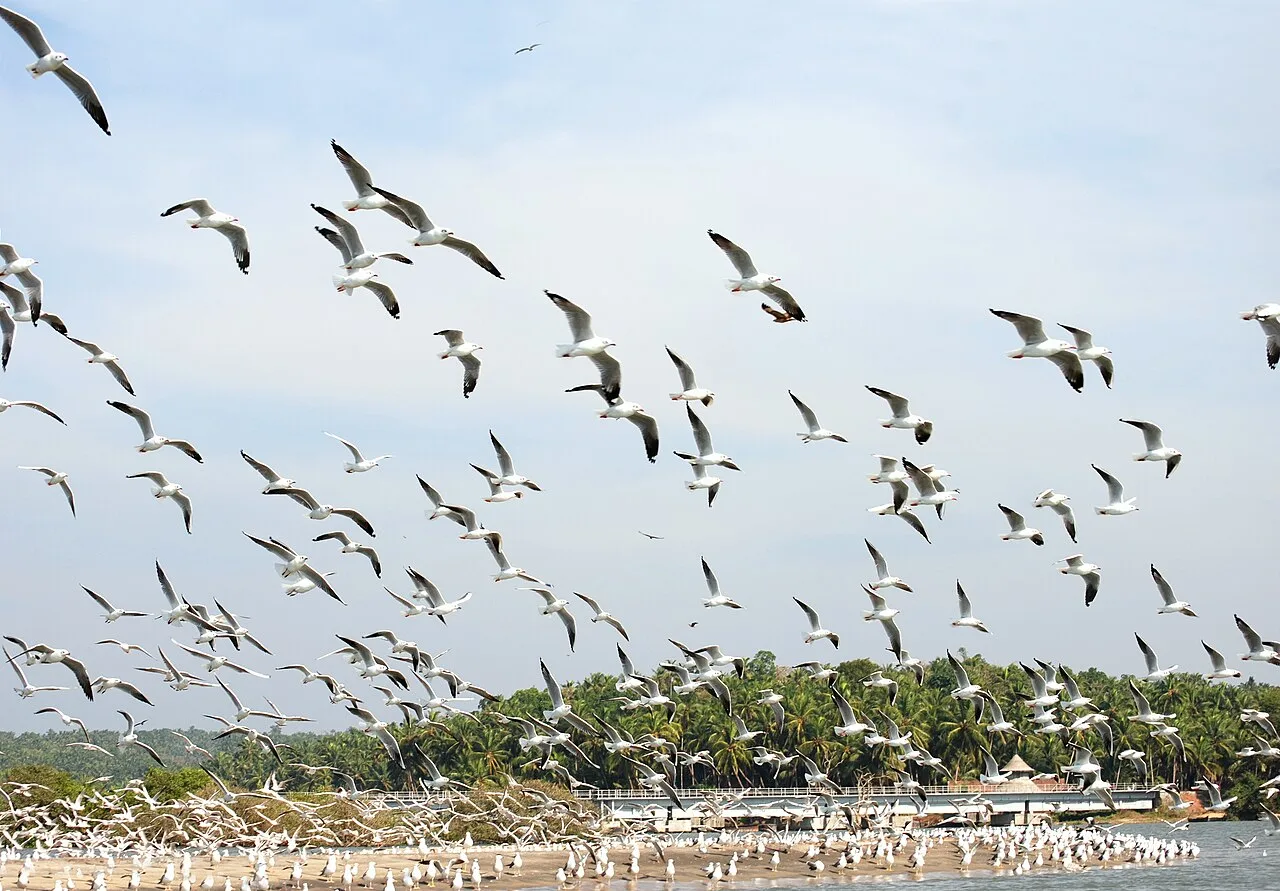 Photo: Dhruvaraj S · CC BY 2.0