Grassland and wetland reserve famous for the one-horned rhinoceros.
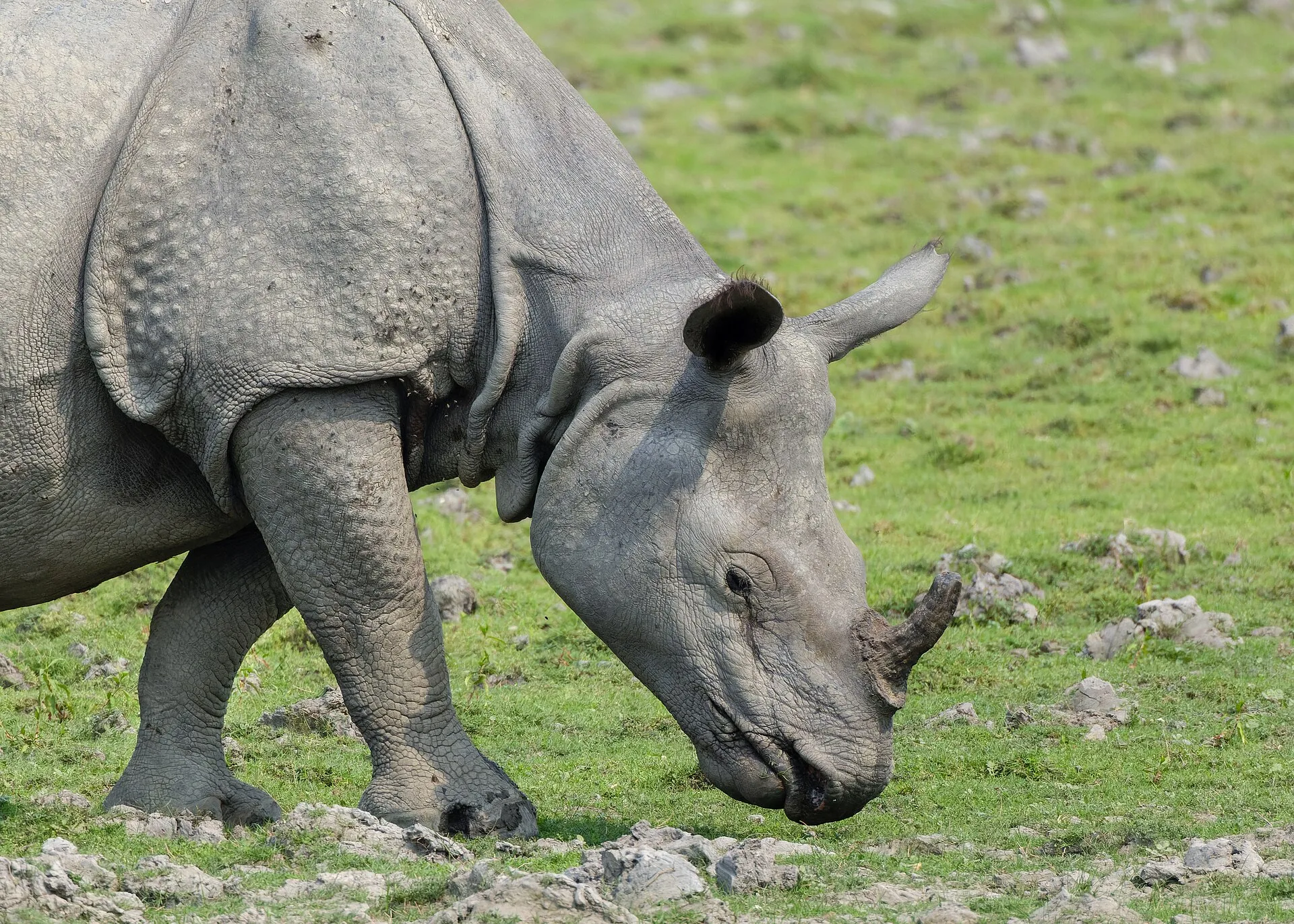
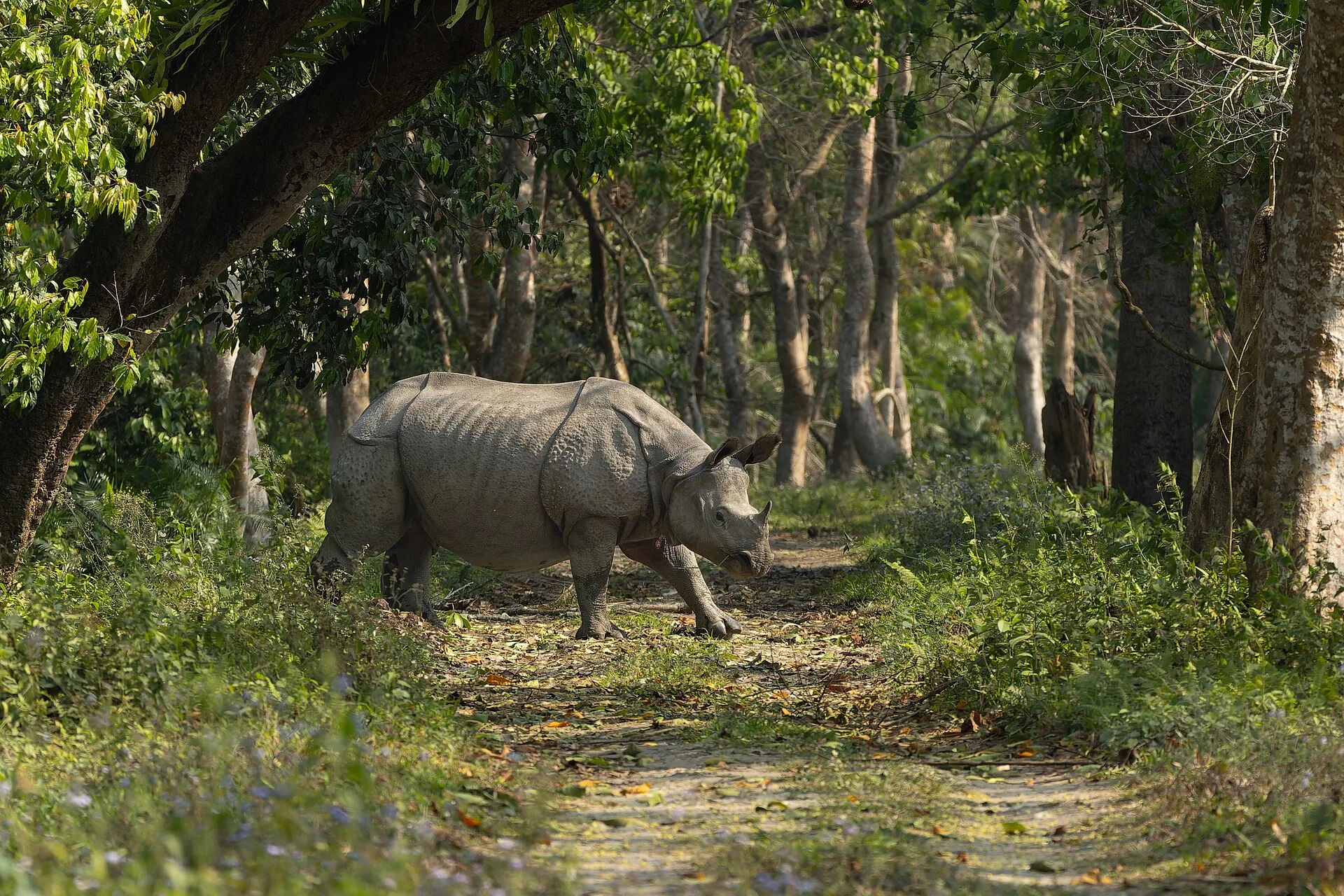
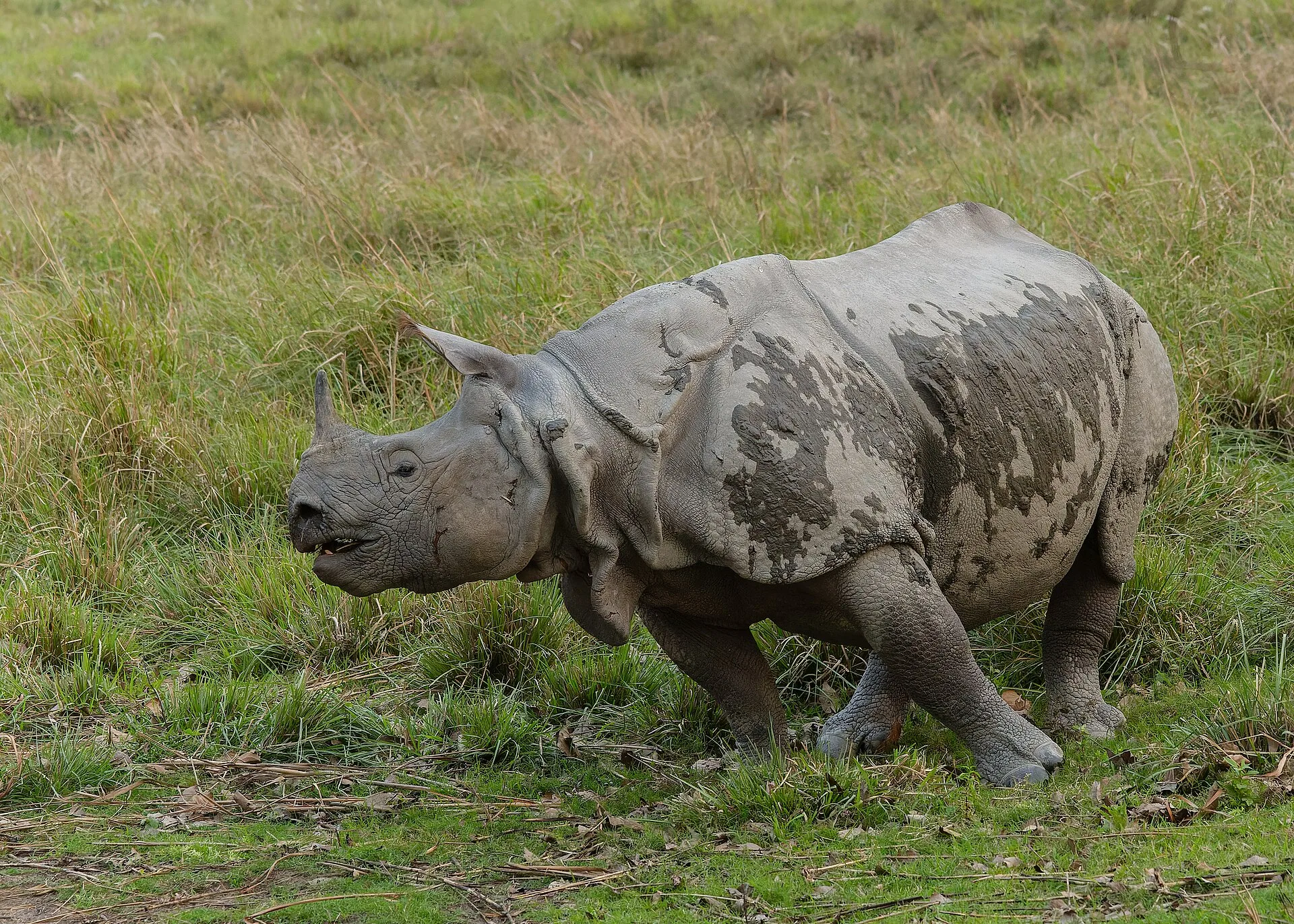
Kaziranga National Park in Assam is a grassland and wetland reserve famous around the world for the greater one-horned rhinoceros. Spread along the southern bank of the Brahmaputra, it is a landscape of elephant grass taller than a person, shallow lakes called beels, patches of tropical forest and sandy river channels. Here large animals can still be watched in open country, grazing and wallowing much as they did when such flood plains stretched across northern India.
Protection began in the early twentieth century, when concern grew that hunting had left very few rhinos in the area. A popular account credits Lady Curzon with urging action after a visit in which she saw footprints but no animals. The forest was reserved, later strengthened as a sanctuary, and declared a national park in 1974. In 1985 it was inscribed as a World Heritage Site, and it has since also been recognised as a tiger reserve. Today Kaziranga holds most of the world's greater one-horned rhinoceroses, a recovery that stands among the major successes of wildlife conservation, achieved through the daily work of forest guards who patrol on foot and by boat in difficult conditions.
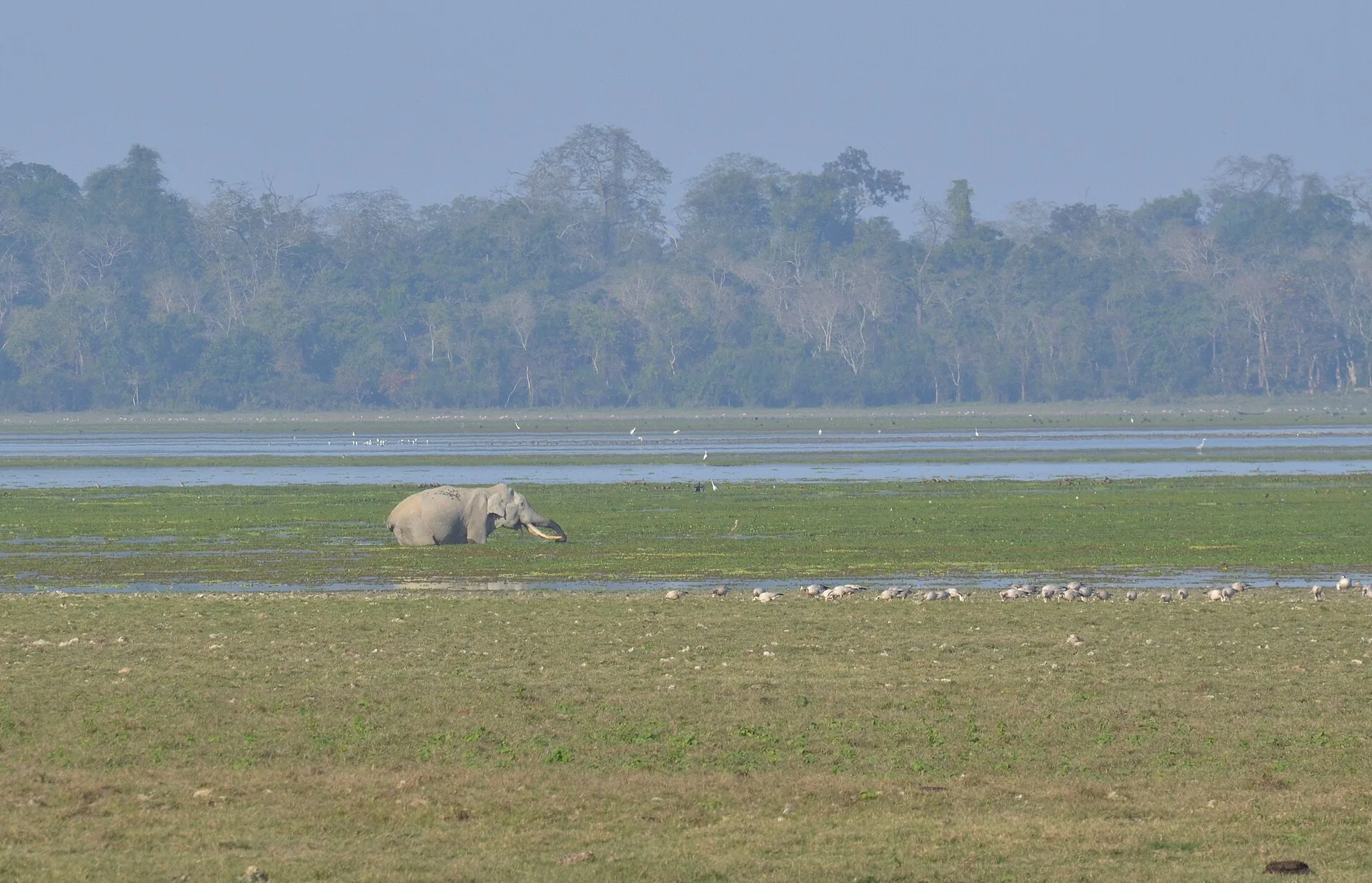
The rhinoceros, with its folded grey hide that looks like plates of armour, is only the beginning. Herds of wild Asian elephants move through the grass, and wild water buffalo with sweeping horns stand in the marshes. Swamp deer, hog deer and wild boar are frequently seen, and the reserve supports a notably dense population of tigers, though the thick cover means that sightings require luck. Birdwatchers find pelicans, storks, eagles, ducks and waders gathered on the winter wetlands, along with grassland species such as the rare Bengal florican. In the wooded fringes, hoolock gibbons may be heard calling.
The river writes the calendar here. Each monsoon the Brahmaputra spills over its banks and covers much of the park, renewing the grasslands, filling the beels and bringing fish. The same floods force animals to move towards higher ground, including the hills of Karbi Anglong to the south, which is why drivers on the highway beside the park are required to slow down. Understanding this cycle explains why the park is largely closed to visitors during the rains.
Most visits are made by jeep safari in the ranges open to tourism, commonly the central range reached from Kohora and the western range around Bagori, with the eastern range prized for its birdlife. Other ranges and activities, including elephant rides where permitted, open according to conditions. Book through the forest department or authorised counters, carry identification, and confirm the current timings, because routes can change after heavy rain. Morning drives often begin in mist, which lifts to reveal rhinos feeding close to the tracks.
Respect makes the experience better for everyone. Stay inside the vehicle except at permitted viewing points, speak softly, never urge your driver to approach or cut off an animal, and carry out every scrap of litter. Wear neutral colours and bring warm layers for winter mornings, along with a hat, sunscreen and binoculars. A camera with a long lens will serve you better than any attempt to get nearer.
November to April is the season, with the later months offering shorter grass and good visibility before the heat builds. Plan one to two days so that you can explore more than one range. Jorhat is a convenient airport, Guwahati offers many more flights, Furkating Junction is a useful railway station and Kohora, on the national highway, is the usual bus stop and base for lodges. Between safaris, visit tea gardens near the park, meet weavers and craftspeople in surrounding villages, and enjoy an Assamese meal of rice, greens, tangy fish tenga and rice cakes called pitha. Choosing locally run stays and guides helps the communities who share the land with its wildlife to benefit from protecting it.
Greater one-horned rhinoceros in the wild
Wild elephants and water buffalo in open grassland
Rich birdlife on the winter wetlands
Views along the Brahmaputra flood plain
Photos (5)
A greater one-horned rhinocerosA rhinoceros grazingA rhinoceros on a forest trackWetland in KazirangaA rhinoceros in the grassland
Protected since the early twentieth century and declared a national park in 1974, Kaziranga holds most of the world's greater one-horned rhinoceroses. It was inscribed as a World Heritage Site in 1985.
Things to see and do
Take a jeep safari in the central or western range
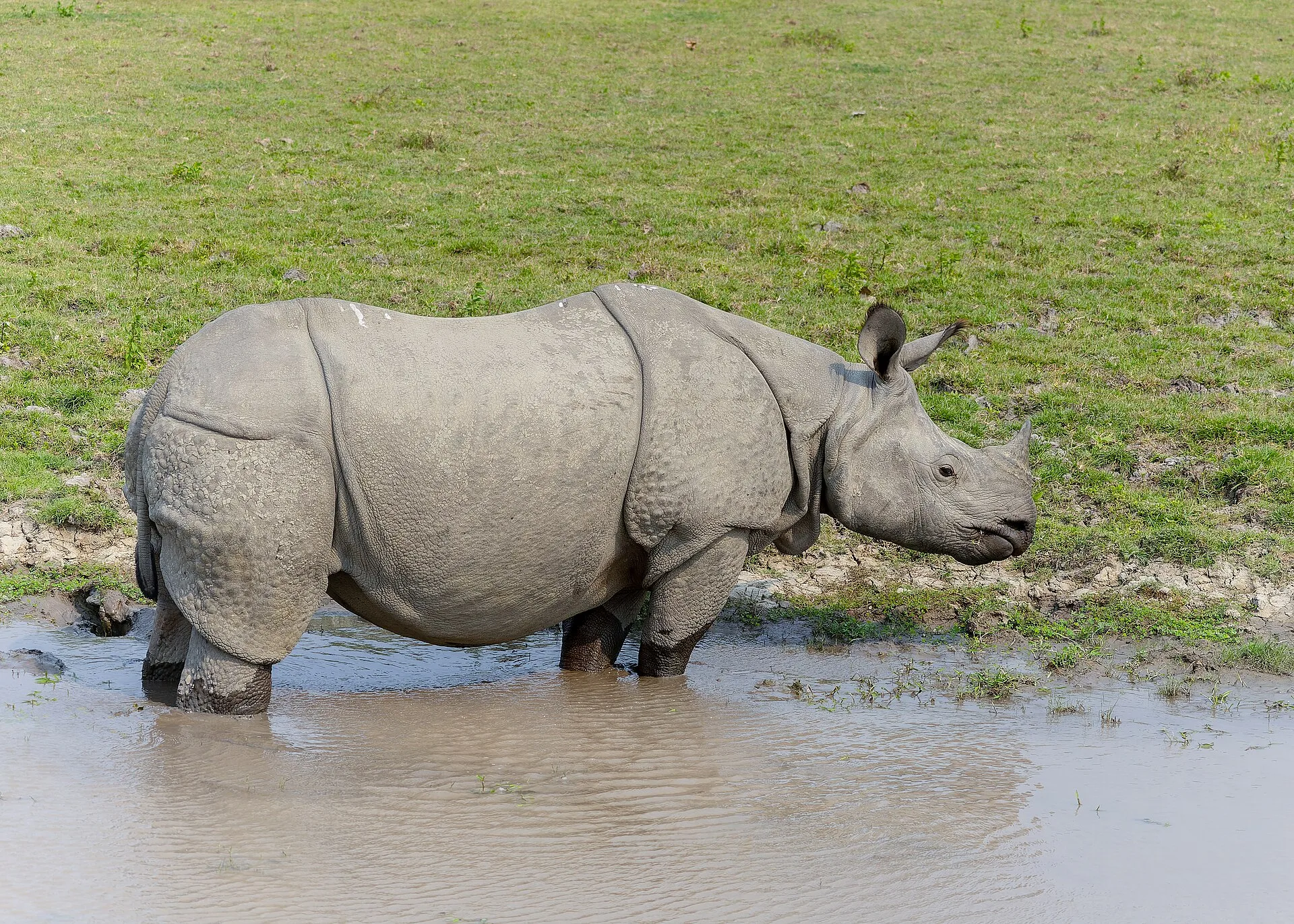 Photo: Tisha Mukherjee · CC BY-SA 4.0