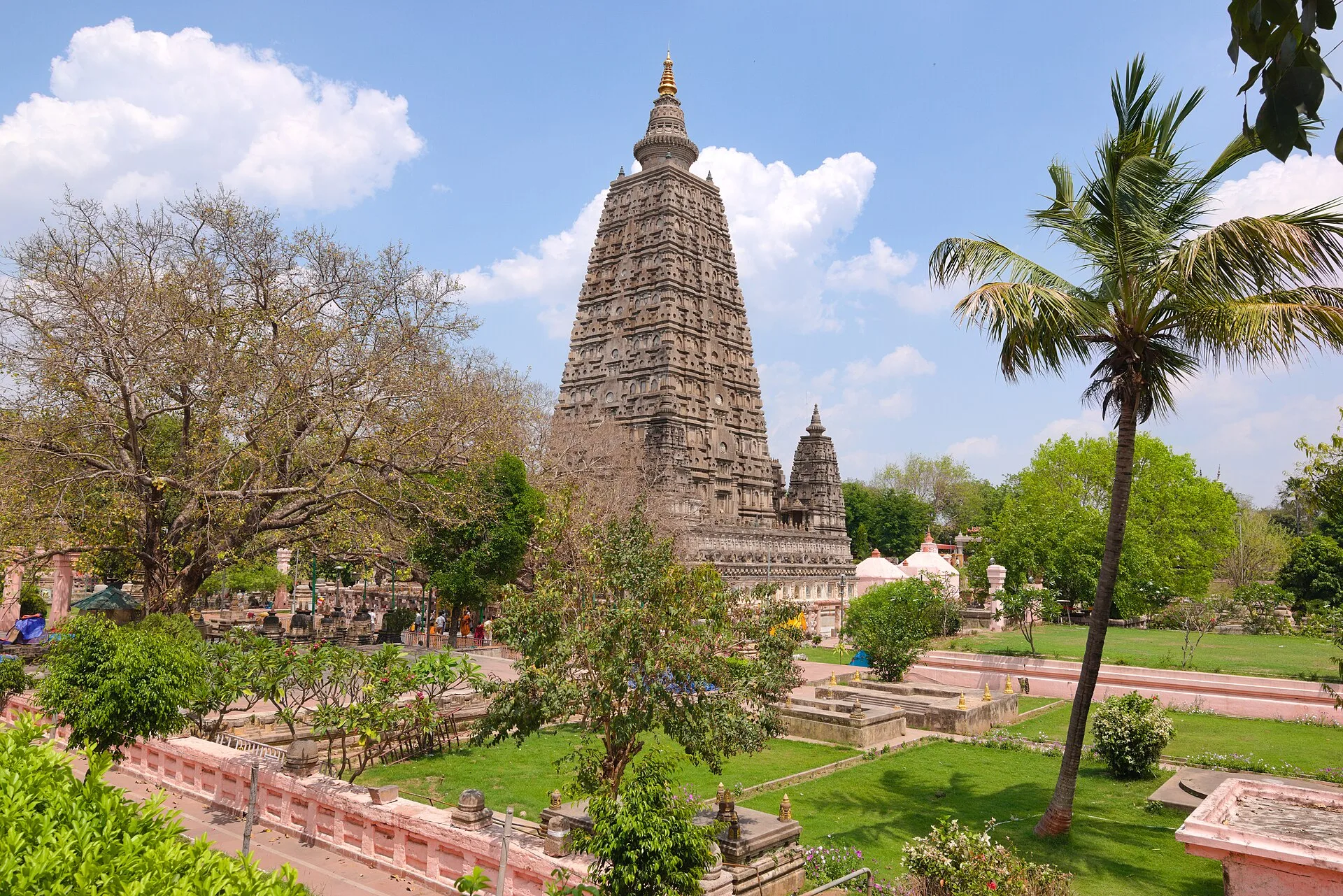
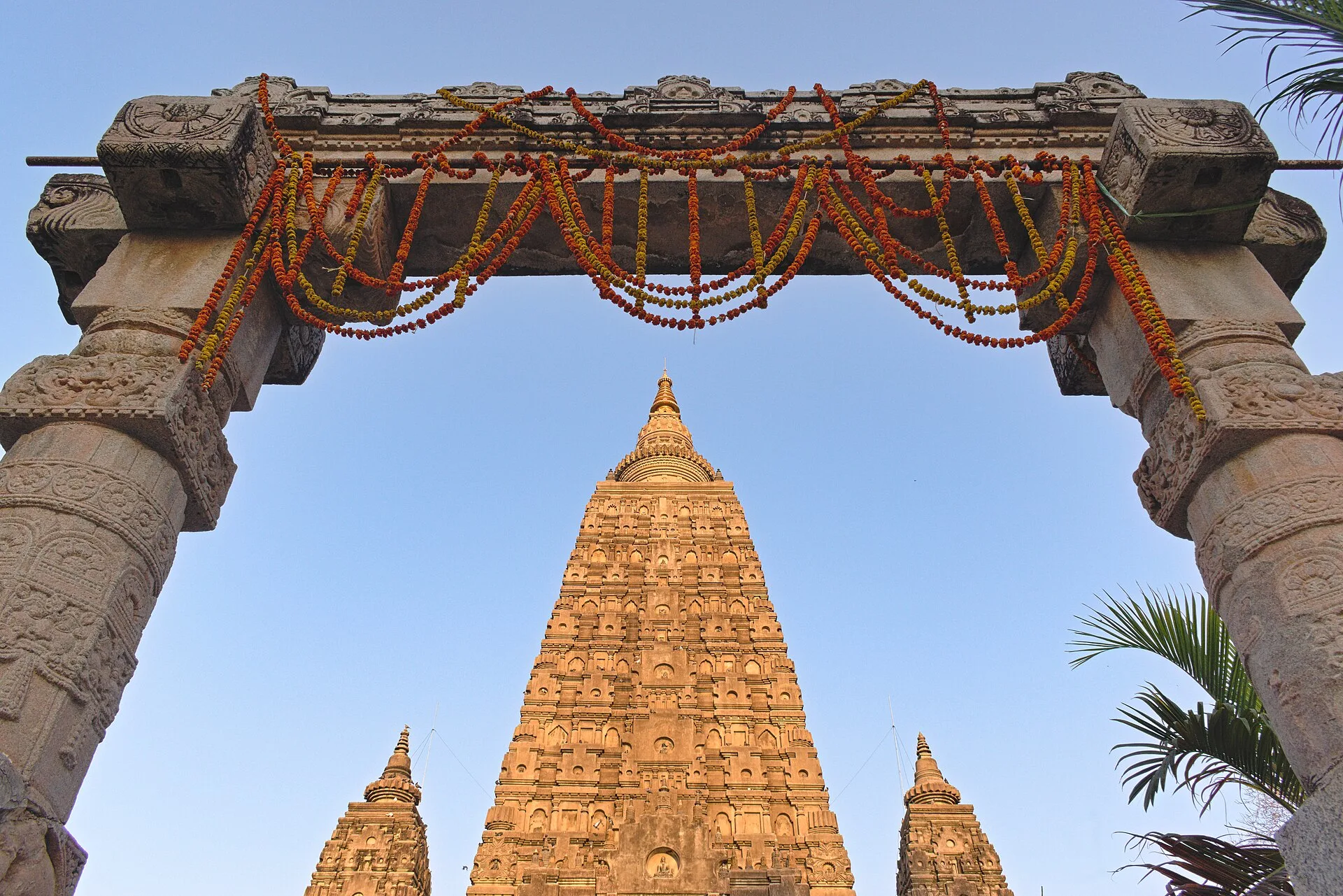
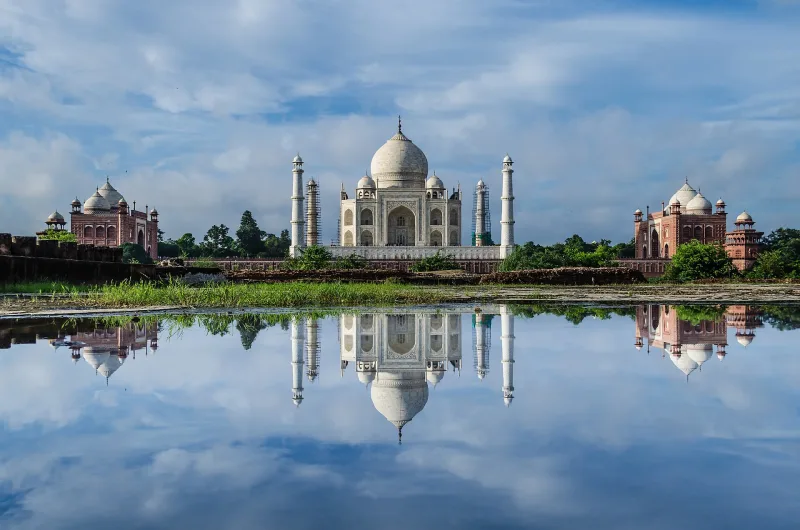
The temple at Bodh Gaya marking the place where the Buddha attained enlightenment.
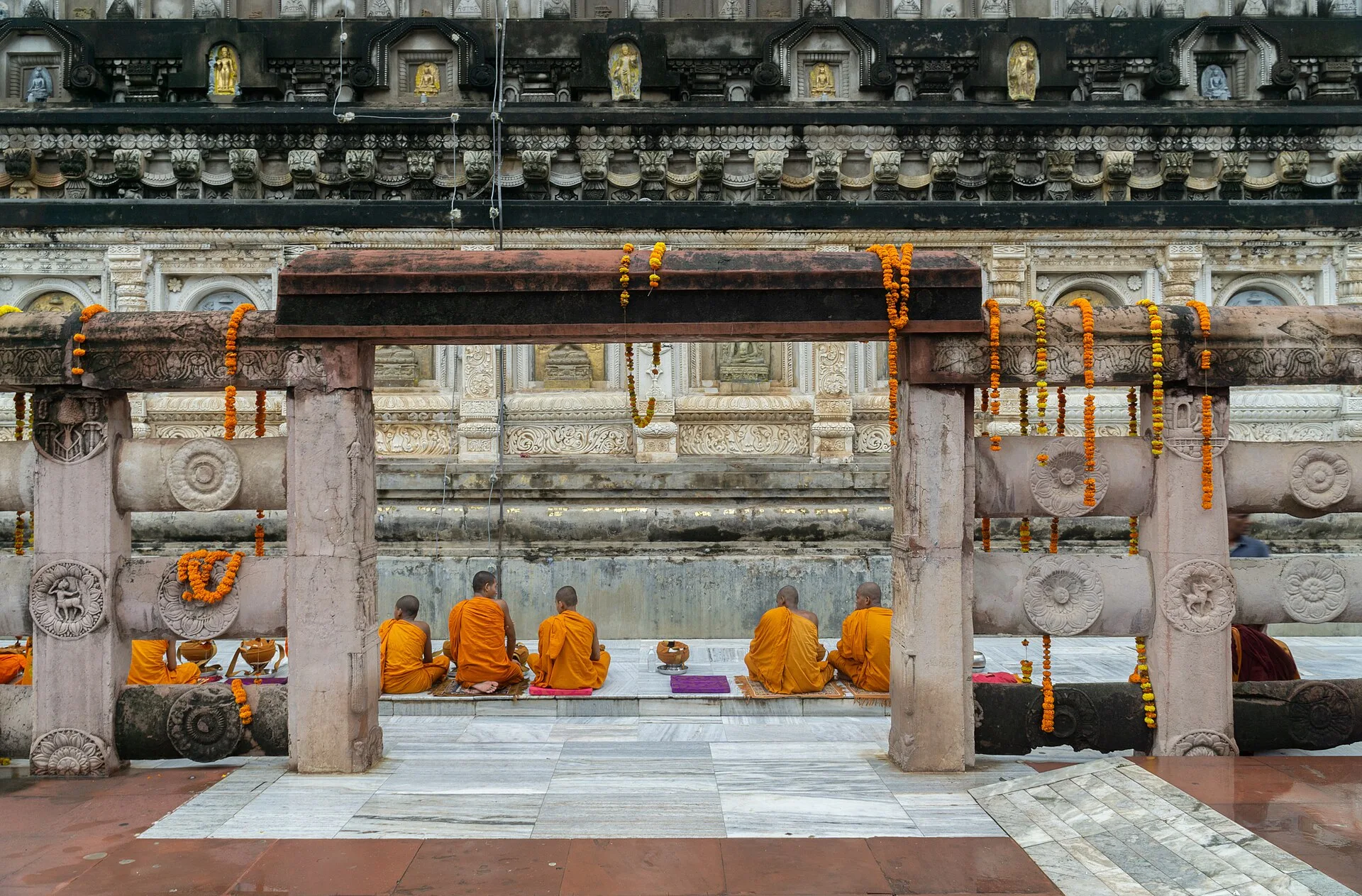
The Mahabodhi Temple at Bodh Gaya in Bihar marks the place where Siddhartha Gautama attained enlightenment and became the Buddha. For Buddhists everywhere this is the most sacred of the great places of pilgrimage. A tall brick tower, tapering gracefully and surrounded at its shoulders by four smaller towers, rises beside the spreading Bodhi Tree. Around it, monks in maroon, saffron, grey and brown robes chant, prostrate, meditate and walk in quiet circles from before dawn until night.
The tradition tells that Siddhartha, born a prince, left his home to search for an end to suffering. After years of severe austerity he accepted a bowl of milk rice from a village woman named Sujata, recovered his strength, sat beneath a pipal tree facing east and resolved not to rise until he had understood the truth. At the end of that night he awakened. The weeks he then spent nearby are remembered at particular spots within the compound, including the jewelled walk where he is said to have paced in meditation, the shrine of the unblinking gaze from which he contemplated the tree, and the lotus pond associated with the serpent king Muchalinda who sheltered him from a storm.
The emperor Ashoka is credited with building the first shrine here in the third century BCE, and the stone platform known as the Vajrasana, or Diamond Throne, is associated with that early period. The present temple dates largely from around the fifth or sixth century and is one of the earliest great brick temples still standing in India. Chinese pilgrims described it with admiration. In later centuries the site declined and was partly buried, until major restoration in the nineteenth century revealed and repaired the structure. It was inscribed as a World Heritage Site in 2002.
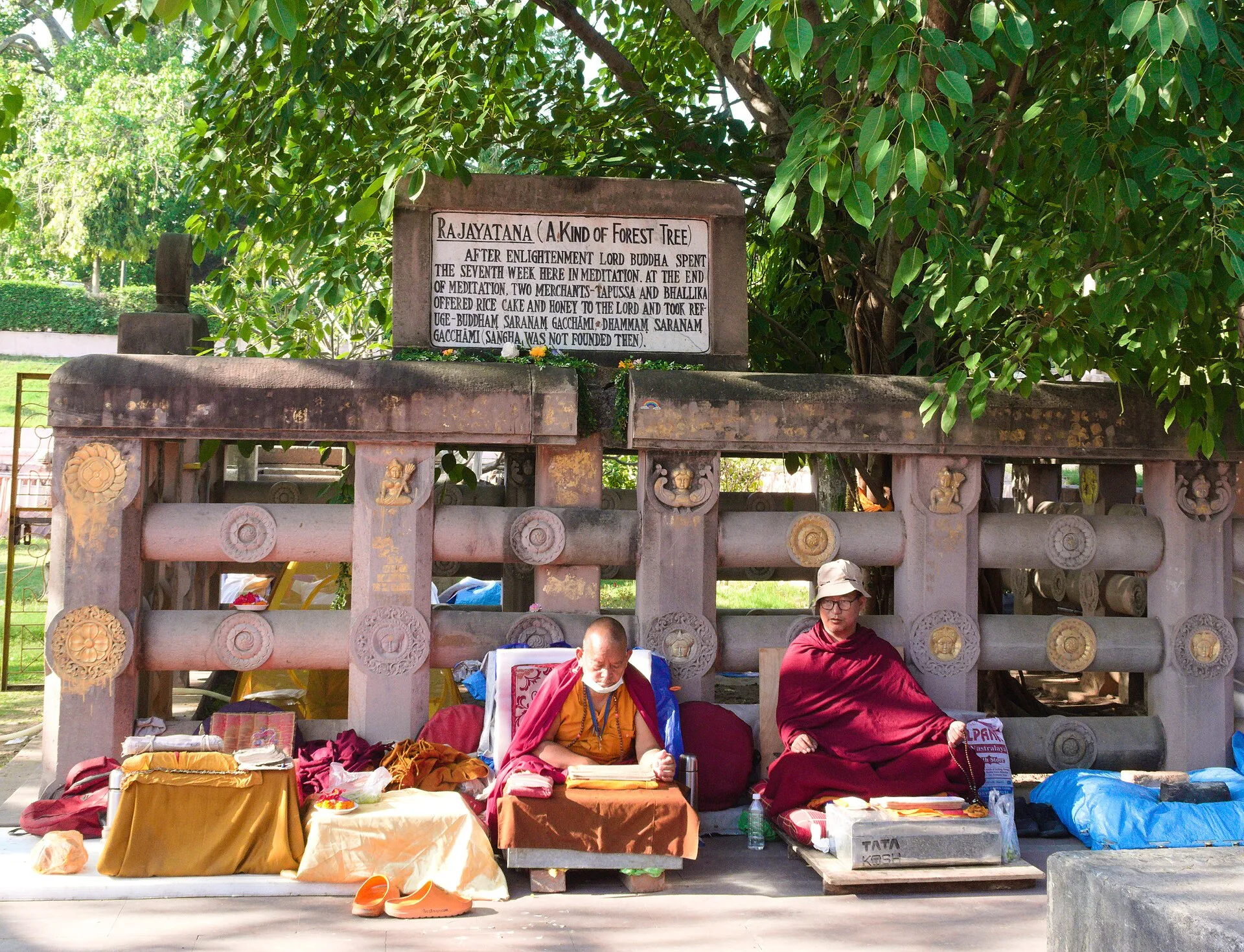
The Bodhi Tree seen today is regarded as a descendant of the original. According to Sri Lankan tradition, a sapling carried to Anuradhapura by Sanghamitta, the daughter of Ashoka, preserved the sacred line. Stone railings surround the tree, prayer flags and offerings decorate the space, and the fallen leaves are treasured by pilgrims. Inside the temple, a gilded image of the Buddha sits in the earth-touching gesture, calling the earth to witness his awakening.
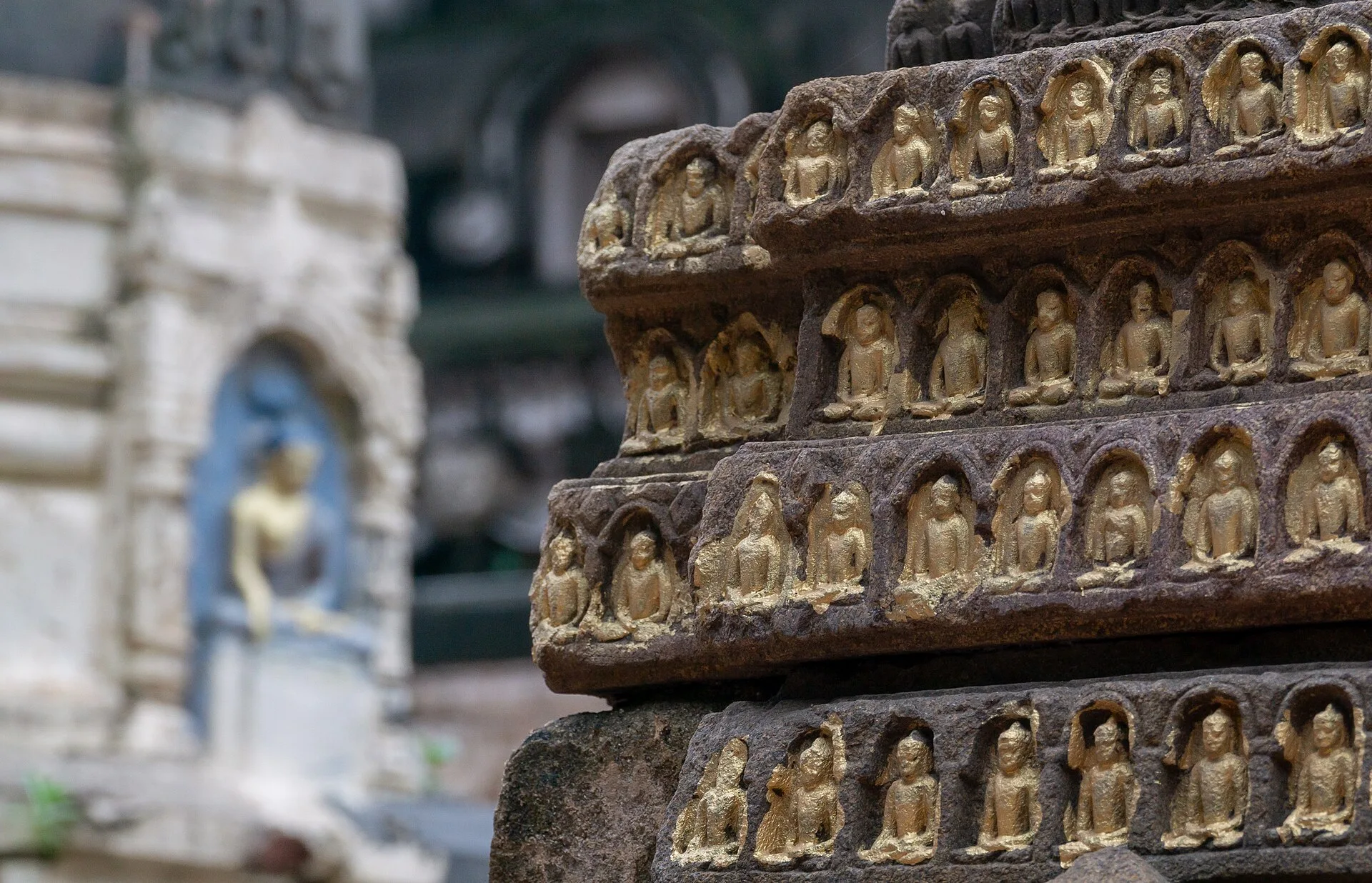
The best way to know the place is to slow down. Walk clockwise around the shrine on the circumambulation paths, pause at the votive stupas given by devotees across the centuries, and find a quiet corner of the garden to sit. Early morning brings soft light and steady chanting; in the evening hundreds of butter lamps and electric lights make the compound glow. During the winter months large international prayer gatherings are often held, filling Bodh Gaya with visitors from the Himalayas, East and South-East Asia and beyond.
Keep quiet, dress modestly and remove footwear before entering. Rules on mobile phones, cameras and bags change with security needs, so check them at the gate and use the cloakroom. Avoid touching the old carvings, and never take leaves or soil from around the tree. Two to three hours is a good first visit, though many travellers return morning and evening for several days. October to March is the comfortable season; April and May are very hot, although Buddha Purnima in that period is celebrated with special devotion.
Beyond the walls, the town is dotted with monasteries built by Buddhist communities from Thailand, Japan, Bhutan, Tibet, Myanmar, Sri Lanka and other lands, each with its own architecture and style of practice. The great seated Buddha statue in town is a favourite stop, and across the river lies the village area associated with Sujata. Gaya International Airport and Gaya Junction connect Bodh Gaya with the rest of the country, and the town has its own bus stand. Try litti chokha, the hearty Bihari dish of stuffed roasted dough with mashed vegetables, the sesame sweet called tilkut, and the Tibetan soups and dumplings served in small cafes.
The sacred Bodhi Tree and the Diamond Throne
Chanting and meditation by pilgrims from many lands
Monasteries of different Buddhist traditions
Butter lamps and lights in the evening
Photos (6)
The Mahabodhi TempleThe temple gardensMonks at prayer at Bodh GayaThe temple seen through its gatewayMonks beside the templeVotive stupas
The emperor Ashoka is credited with the first shrine here in the third century BCE. The present temple dates largely from around the fifth or sixth century and has been restored since. It became a World Heritage Site in 2002.
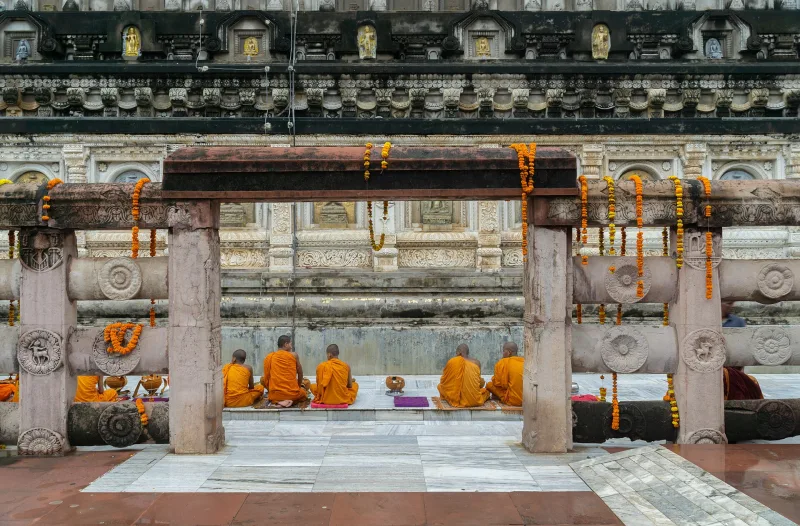
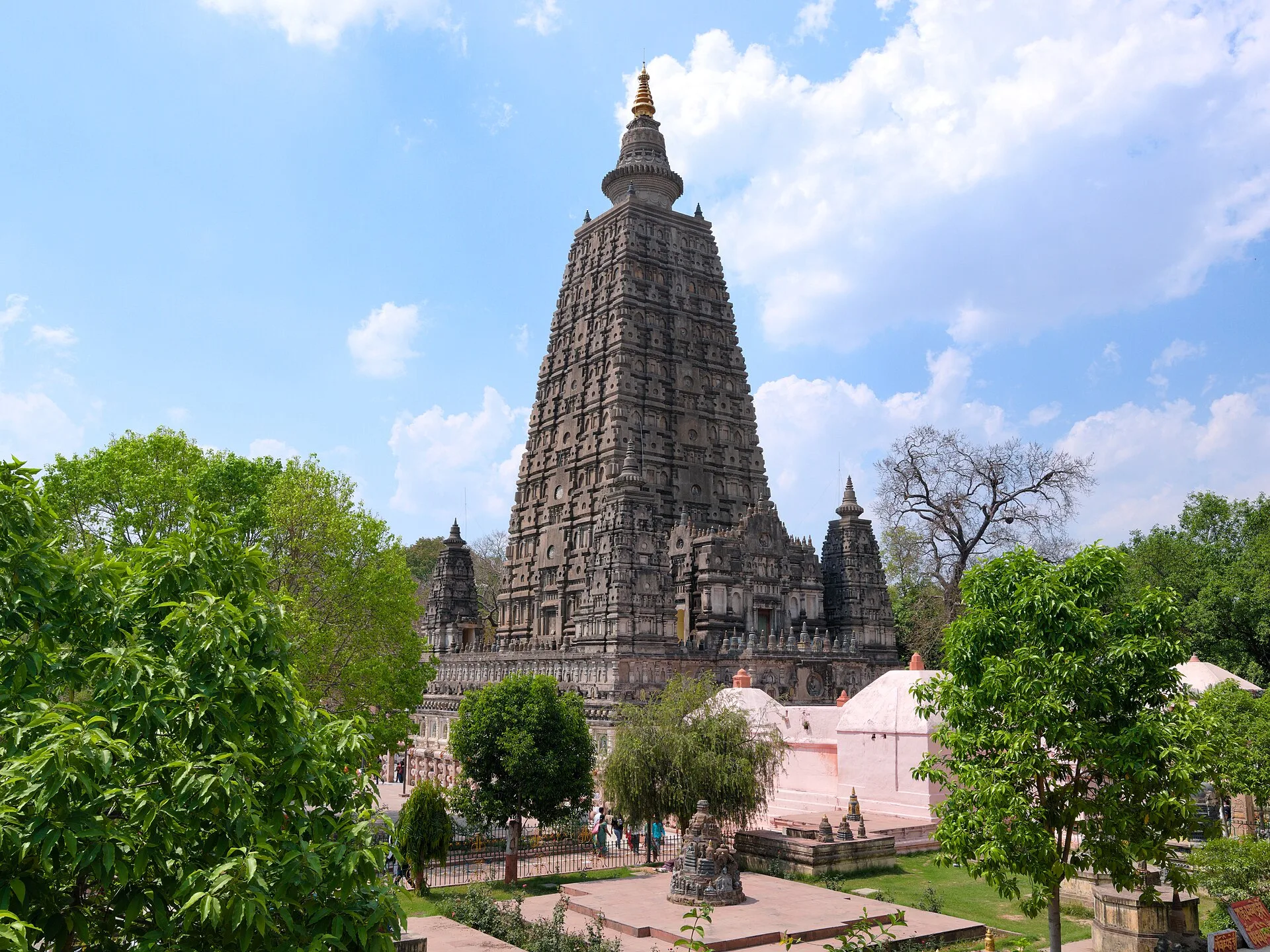 Photo: Rohit Sharma · CC BY-SA 4.0