The white marble mausoleum built by Shah Jahan on the bank of the Yamuna.
The Taj Mahal is the white marble mausoleum that Shah Jahan built in Agra, on the bank of the Yamuna, in memory of his wife Mumtaz Mahal. It is a UNESCO World Heritage Site, listed in 1983, and for many travellers it is the single image that stands for India. Yet no photograph quite prepares you for the moment when you walk through the shadow of the great gateway and the building appears at the far end of the garden, pale, balanced and strangely light for something so large.
The story begins in 1631, when Mumtaz Mahal died in childbirth at Burhanpur, where she had travelled with the emperor on a military campaign. Shah Jahan resolved to raise a tomb worthy of her. Work on the main building took more than a decade, and the mosque, gateways, courtyards and gardens continued for years afterwards. Ustad Ahmad Lahori is generally regarded as the chief architect. Thousands of masons, stone cutters, inlay workers and calligraphers gathered for the work, white marble was carried from the quarries of Makrana in Rajasthan, and red sandstone came from the country nearer Agra.
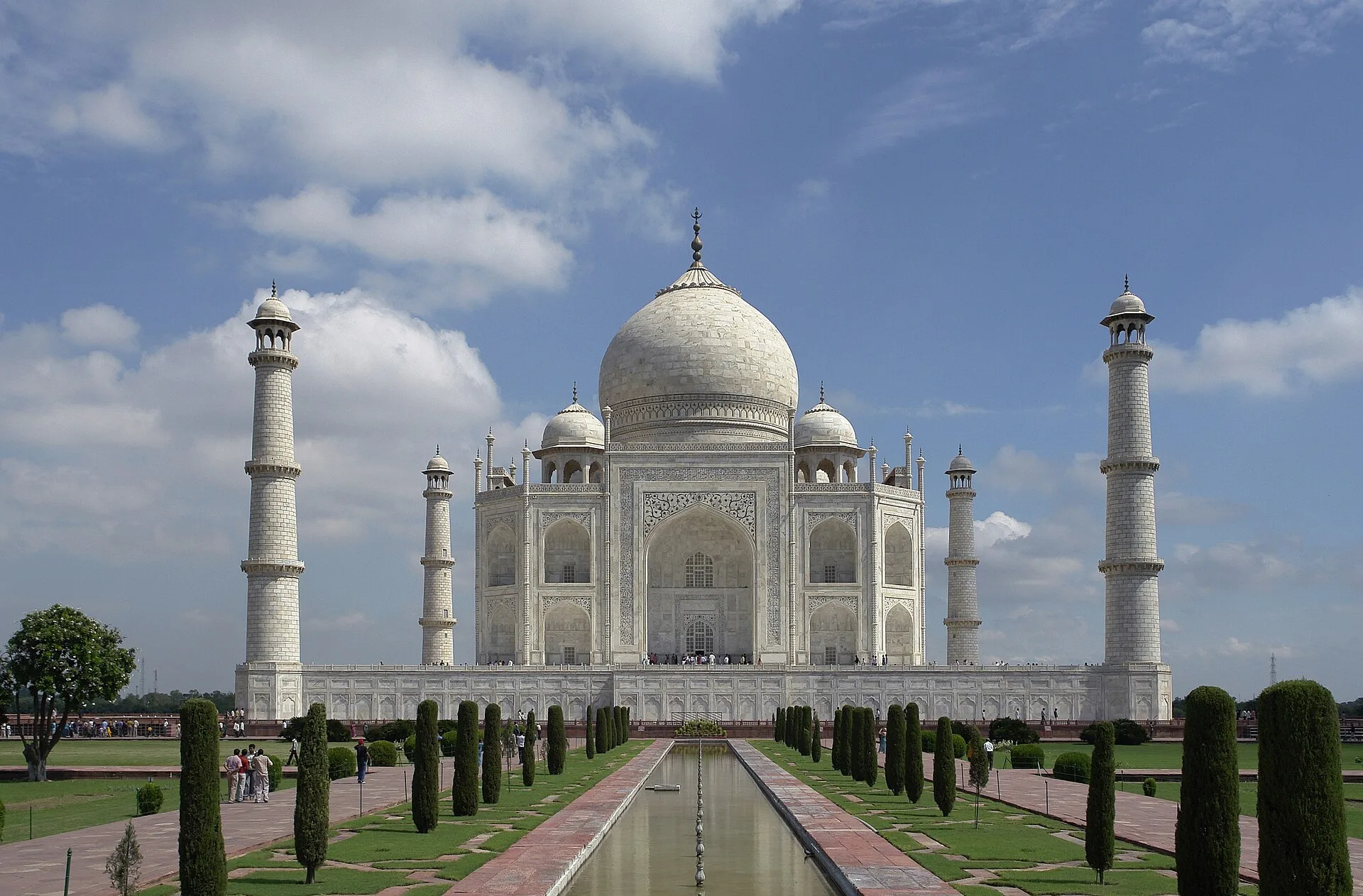
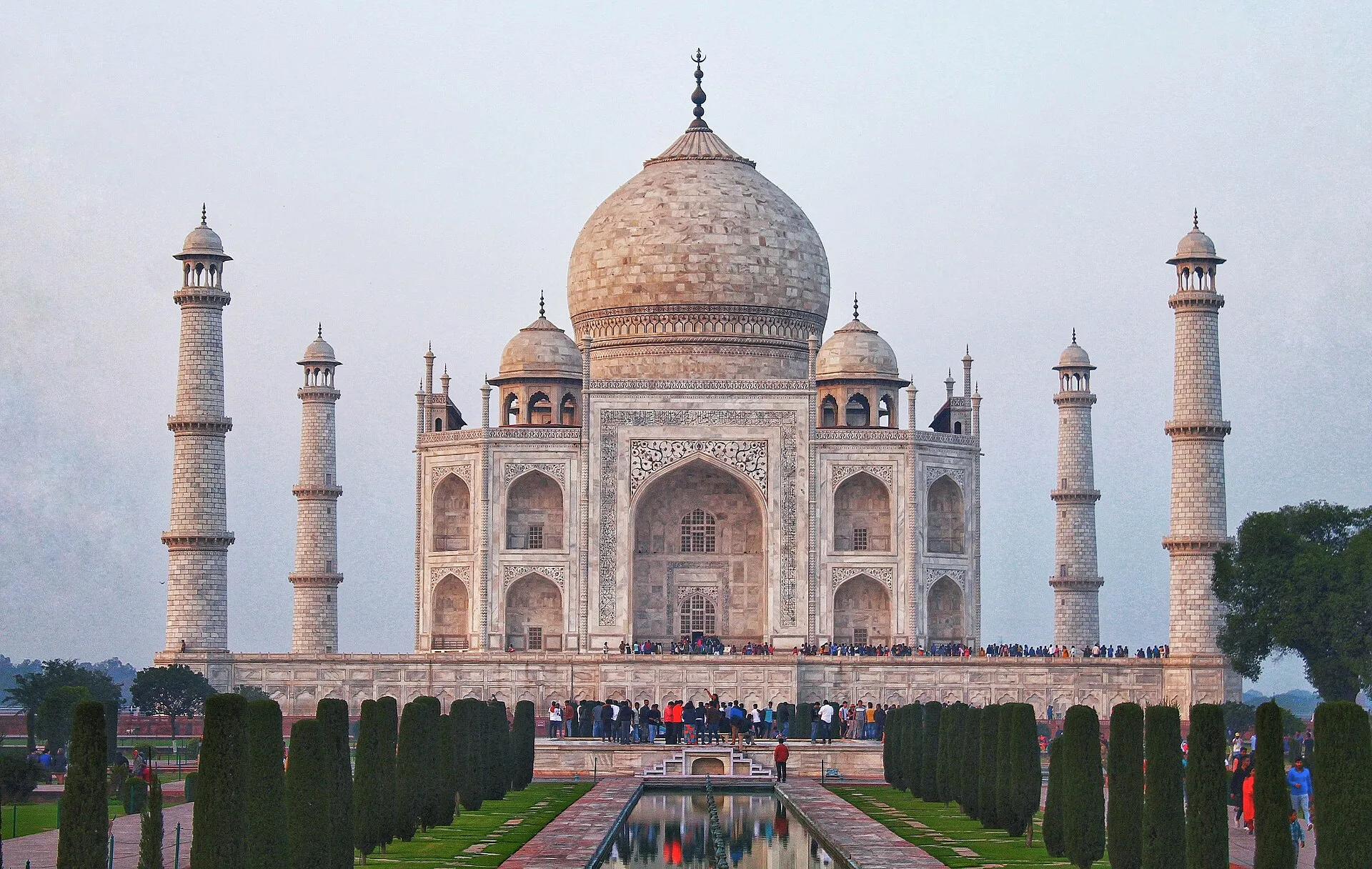
The design rewards slow looking. The tomb stands on a raised platform with a minaret at each corner, and the minarets lean very slightly outwards, so that the eye reads them as upright. The central dome rises above a deep arched portal, framed by smaller domed kiosks. Verses from the Quran run around the arches in black lettering, sized so that the script appears even to a person standing on the ground. Flowers of carnelian, lapis lazuli, jade and other semi-precious stones are set flush into the marble by the technique known as pietra dura. Bring your face close to a single blossom and you will see that its shades are made from many tiny, separately cut pieces.
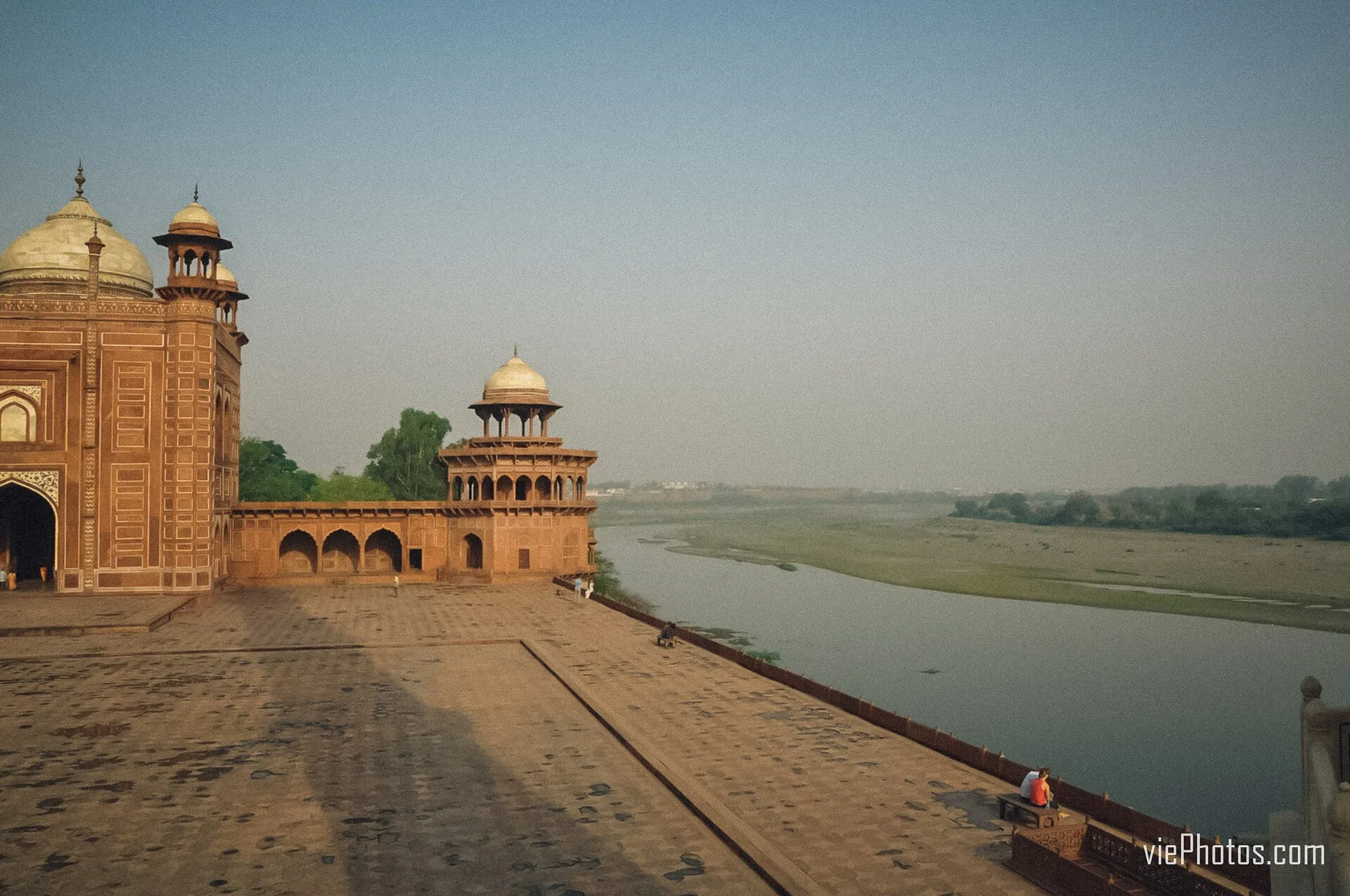
In front lies a charbagh, the Persian garden divided into quarters by walks and water channels that recall the rivers of paradise. The long central channel holds the reflection that appears in so many pictures, best seen when the air is still. To the west of the tomb stands a mosque of red sandstone, and to the east its mirror image, often called the jawab or answer, which completes the symmetry. Inside the mausoleum, finely pierced marble screens surround the cenotaphs of Mumtaz Mahal and Shah Jahan, while the actual graves lie in a chamber below. The emperor's own memorial is the one element that breaks the perfect balance of the plan, for it was placed beside hers after his death. He had spent his final years confined in Agra Fort, from where the tomb can be seen across the bend of the river.
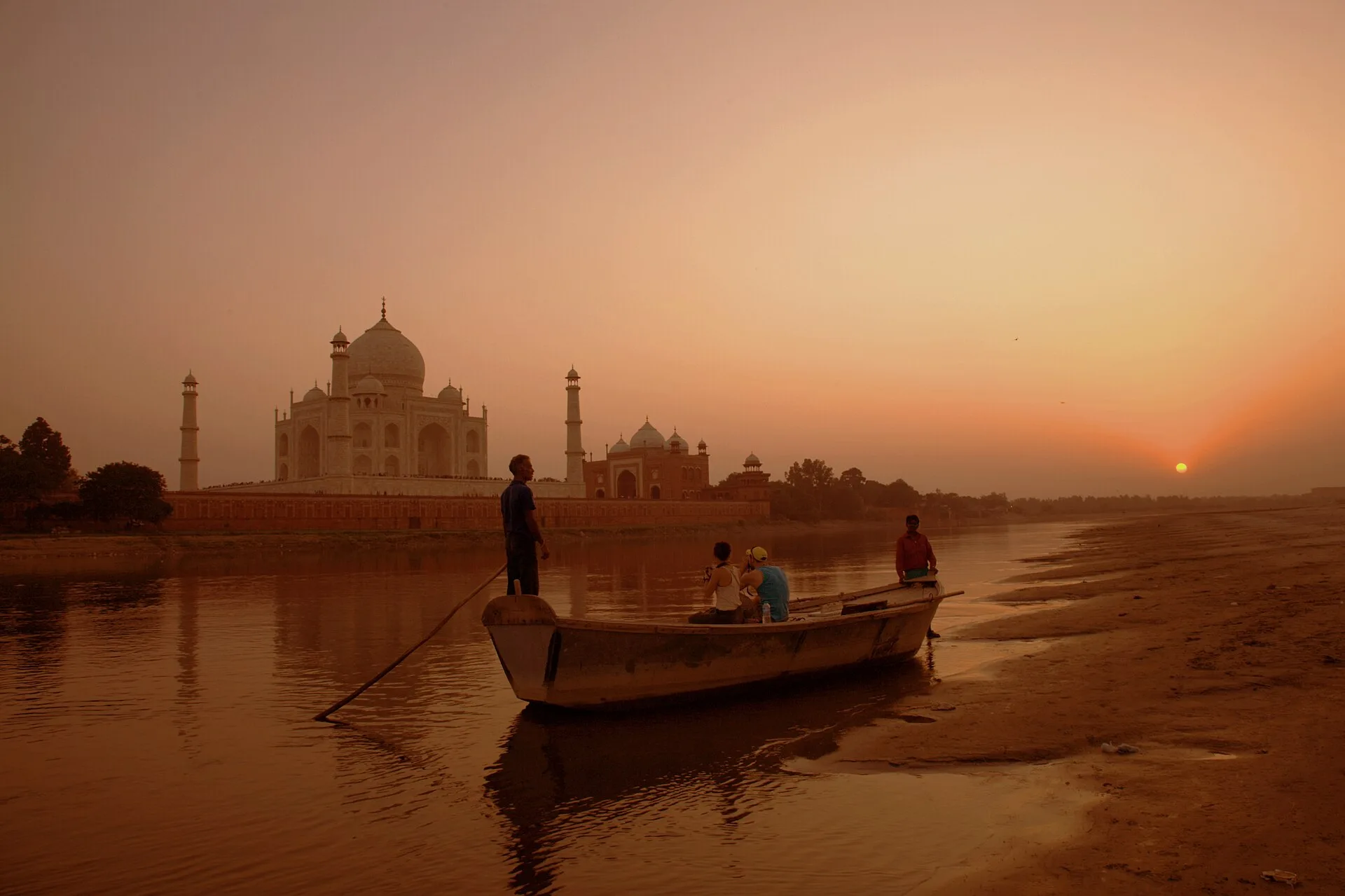
The light is the other half of the experience. At sunrise the marble often takes on a soft pink, at noon it turns a dazzling white, and towards evening it warms to gold. Arriving early brings cooler air, thinner crowds and the gentlest colours. Winter mornings can be foggy, when the dome may emerge only gradually from the mist. October to March is the most comfortable season, while the summer months are fierce and the open marble throws back the glare.
Plan on two to three hours. Opening and closing follow sunrise and sunset, and the monument is closed to general visitors on Fridays, so check your dates before booking transport. Security is careful: bags are checked and many articles are not permitted, so carry as little as possible. Wear footwear that is easy to cover or remove for the mausoleum, keep your voice low inside, and note that photography is not allowed in the main tomb chamber. Buy tickets only from the official counters or the official online system, and agree on a fee in advance if you engage a guide, preferably one carrying recognised identification.
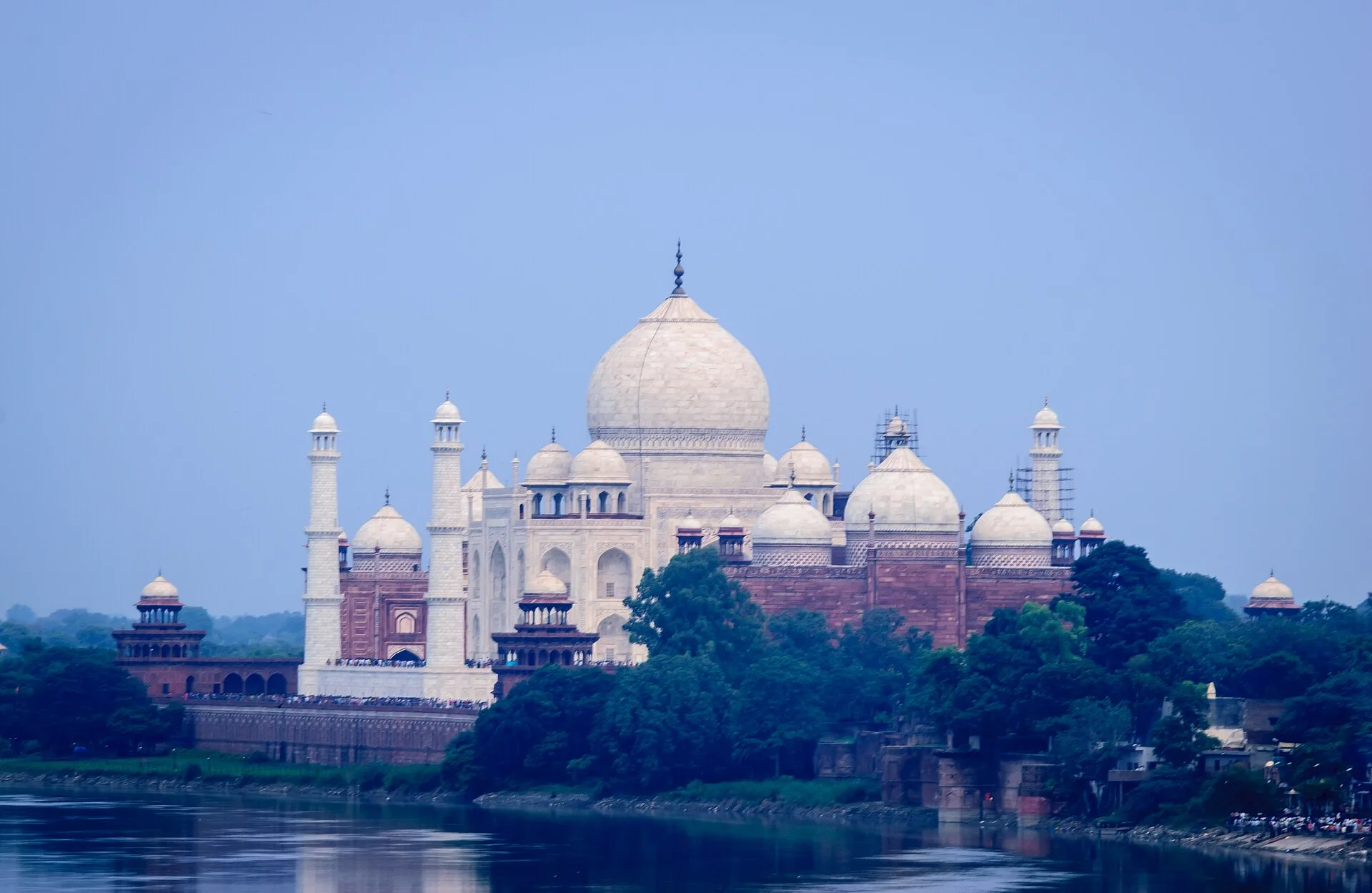
Agra has its own airport at Kheria, with many more flights available through Delhi, and Agra Cantt is a major railway station on busy routes from the north and south. Give the city more than a single morning if you can. Agra Fort, a short drive away, tells the political story behind the tomb, and the garden of Mehtab Bagh across the Yamuna offers a calm sunset view of the Taj from the opposite bank. Between visits, taste the city's famous petha, try bedai with potato curry and jalebi for breakfast, and look for workshops where inlay craftsmen still practise the skill you admired on the walls.
Sunrise light on the marble from the main garden
Inlay work of semi-precious stones seen up close
The reflection in the long central water channel
The river view from the terrace behind the tomb
Photos (6)
The Taj Mahal reflected in the YamunaThe Taj Mahal from the gardenEvening on the river behind the Taj MahalThe Taj Mahal and the Yamuna at duskSunset light on the marbleThe river terrace beside the Taj Mahal
The Mughal emperor Shah Jahan commissioned the tomb after the death of his wife Mumtaz Mahal in 1631. Work on the main building took more than a decade, and the surrounding courtyards and gardens continued for years afterwards. Ustad Ahmad Lahori is generally regarded as the chief architect.
Craftsmen set semi-precious stones into the marble in the technique known as pietra dura, and the calligraphy above the arches is sized so that it appears even from the ground. The monument was listed as a World Heritage Site in 1983.
Things to see and do
Enter early and walk to the central platform for the classic view
Study the carved marble screens around the cenotaphs
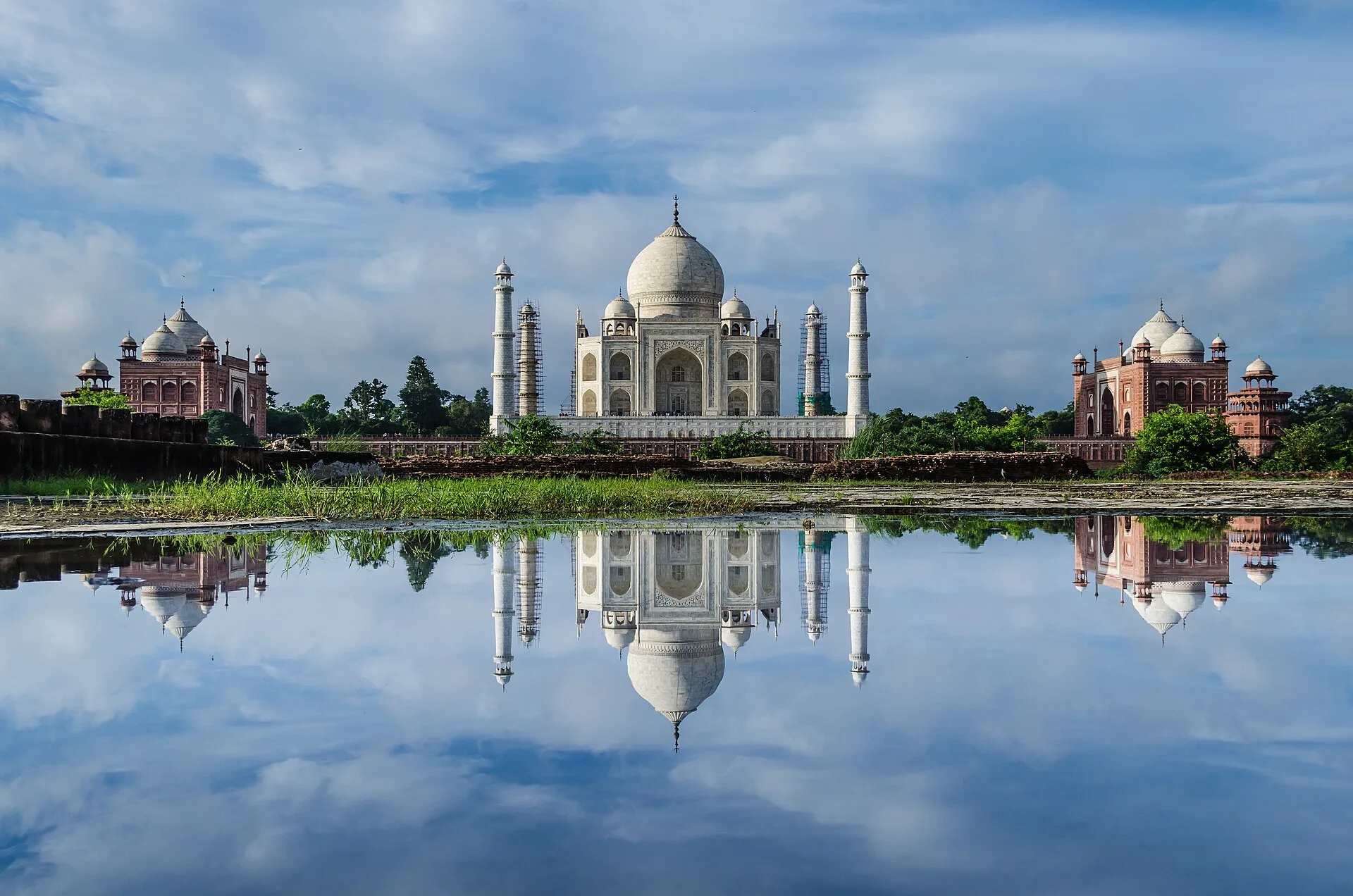 Photo: Antrix3 · CC BY-SA 4.0