The holiest gurdwara of the Sikhs, set in the Amrit Sarovar, with a community kitchen open to all.
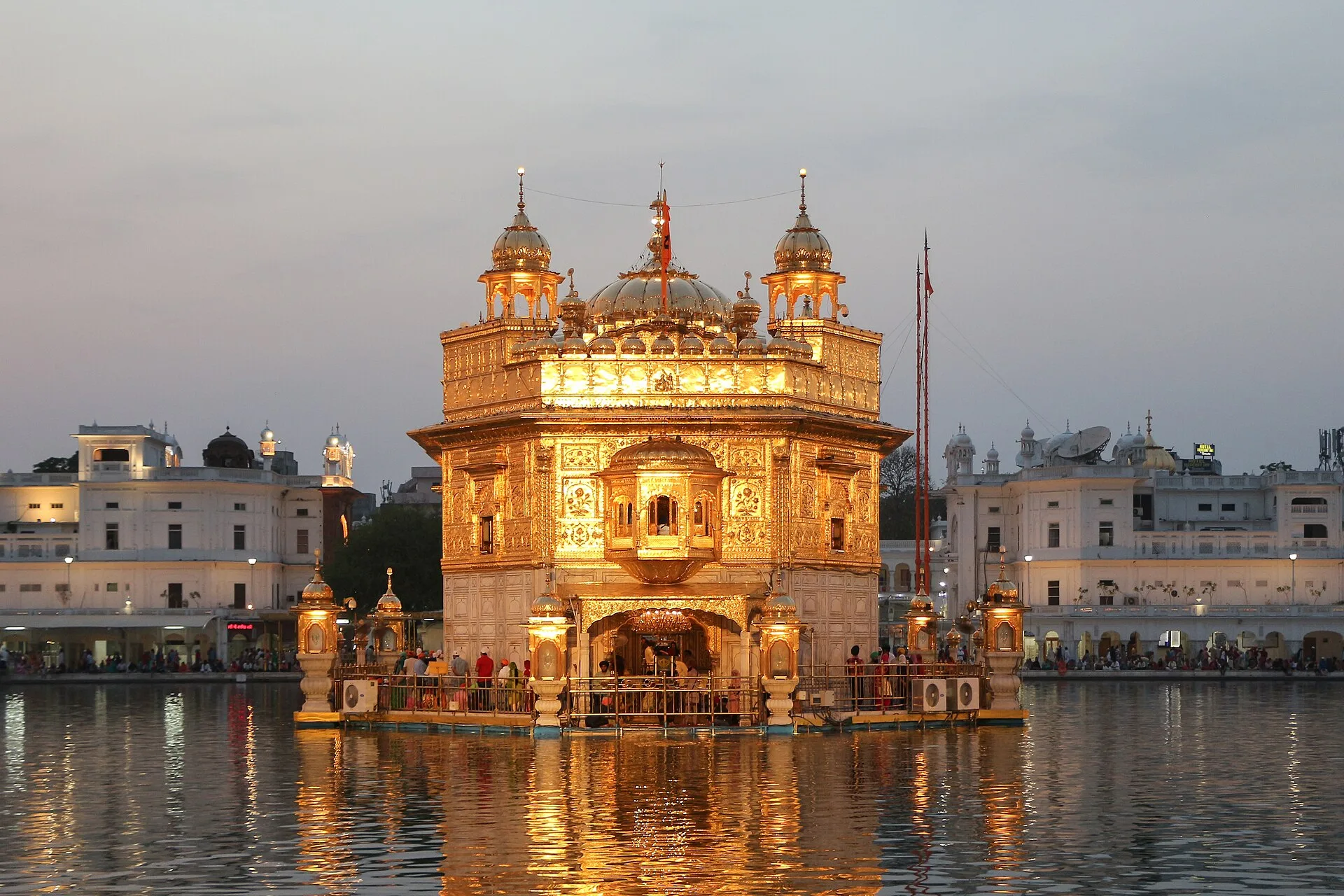
The Golden Temple in Amritsar, Sri Harmandir Sahib or Darbar Sahib, is the holiest gurdwara of the Sikhs, set in the middle of a sacred pool. Its gilded upper storeys seem to float on the water, joined to the surrounding walkway by a single causeway. The pool is called the Amrit Sarovar, the tank of nectar, and it gave the city of Amritsar its name. People of every faith and background come here, and the welcome they receive is not an afterthought but one of the founding ideas of the place.
Guru Ram Das, the fourth Sikh Guru, began the sacred pool in the sixteenth century, and a town grew up around it. His son Guru Arjan completed the Harmandir Sahib and in 1604 installed there the Adi Granth, the scripture he had compiled from the compositions of the Gurus and of saints from several traditions. A cherished account says that the Sufi saint Mian Mir was invited to lay its foundation stone. The shrine was built with entrances on all four sides, a plain statement that it stood open to people from every direction and every community, and visitors step down towards it as an act of humility.
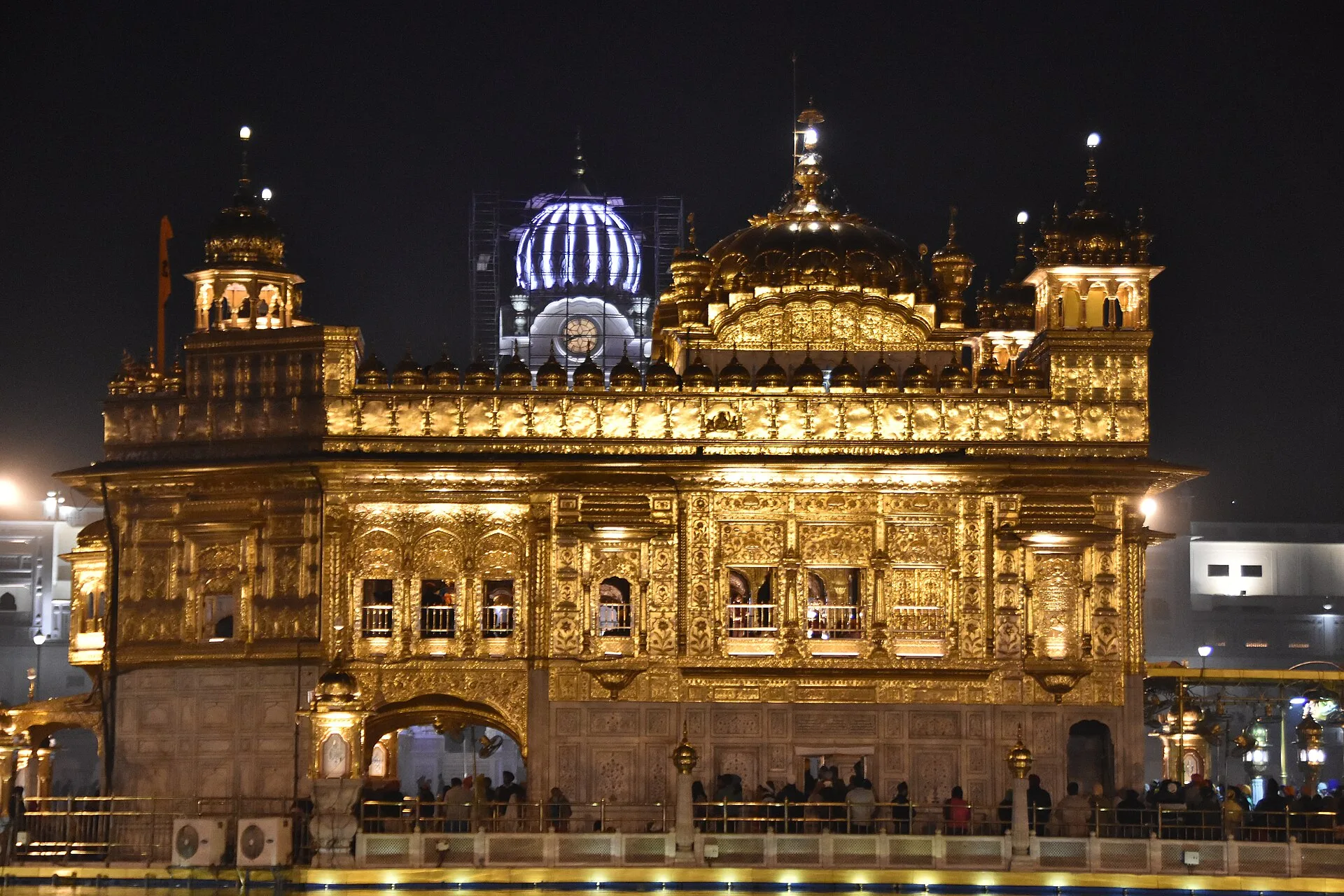
The sanctuary suffered repeatedly in the troubled eighteenth century, when invading armies damaged it and filled the pool, and each time the Sikhs restored it. In the early nineteenth century Maharaja Ranjit Singh had the upper storeys covered in gilded copper and enriched the interior, giving the shrine the popular name by which the world knows it. Marble inlay, painted floral designs and gold leaf now surround the hall where the Guru Granth Sahib is attended with great reverence.
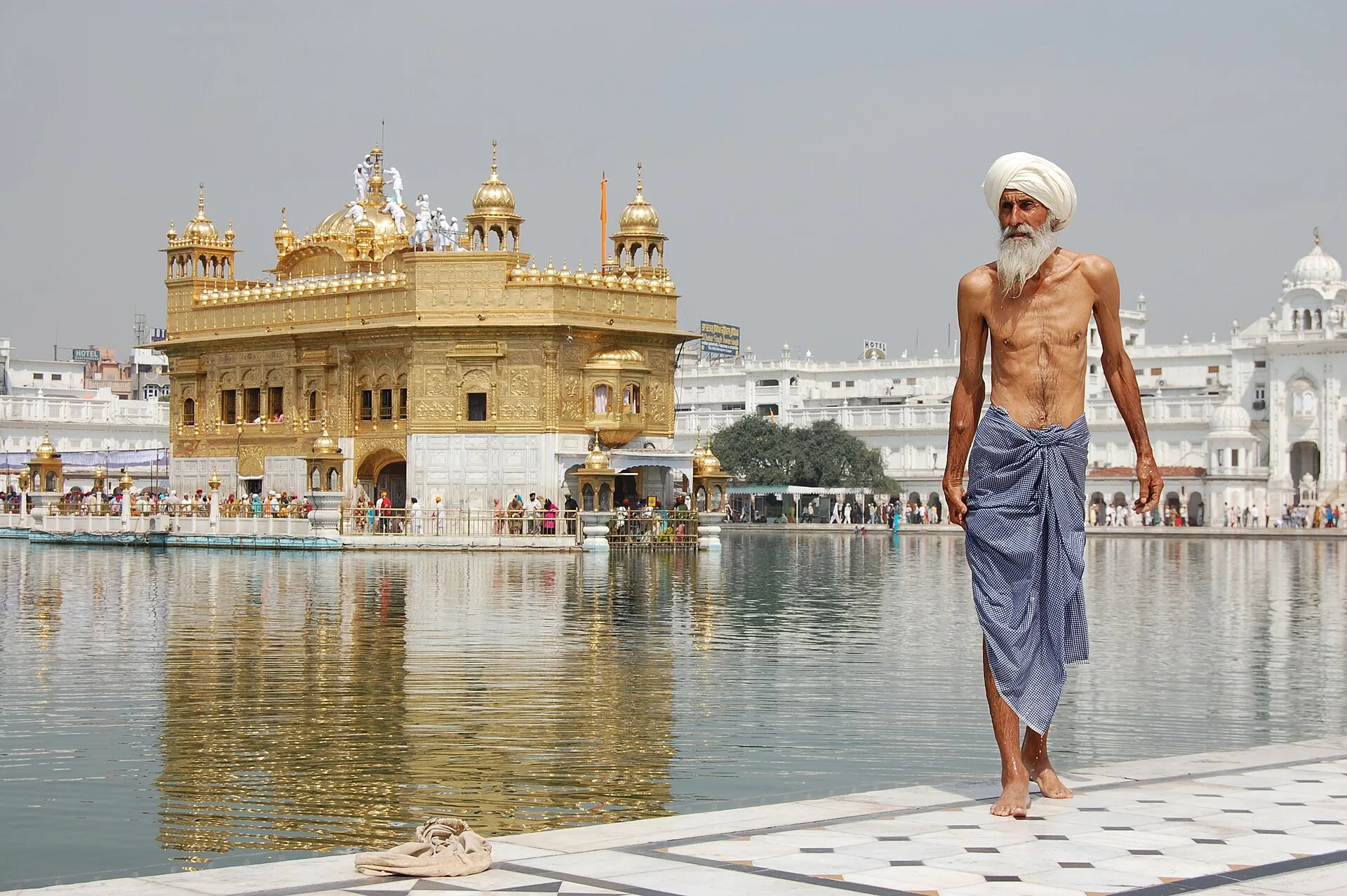
What stays with most visitors is sound. Kirtan, the singing of sacred hymns, flows from the sanctum through much of the day and carries across the water to the marble parikrama. Pilgrims walk this circuit slowly, bow, sit by the edge or bathe in the pool. Near the causeway stands the Akal Takht, the seat of temporal authority of the Sikhs, established by Guru Hargobind. In the evening the Guru Granth Sahib is carried in procession in the Palki Sahib to its place of rest, and it returns before dawn. Both moments are deeply moving and worth arranging your visit around.
The langar, or community kitchen, is the other living heart of the complex. A simple vegetarian meal is served free to anyone who comes, with everyone seated together on the floor as equals. Tens of thousands may eat here in a single day. Volunteers peel vegetables, roll bread, ladle dal and wash mountains of steel plates in an atmosphere that is brisk, noisy and joyful. You are welcome to eat, and just as welcome to offer seva, voluntary service, for as long as you wish.
Before entering, deposit your shoes and socks at the free counters, wash your hands and walk through the shallow channel that cleans your feet. Cover your head; scarves are usually available at the gates. Tobacco and alcohol are strictly forbidden, including carrying them. Sit with your feet turned away from the shrine, do not take photographs inside the sanctum, and accept karah prasad with cupped hands. Queues for the causeway can be long, especially on weekends and gurpurabs, so be patient and carry water in hot weather.
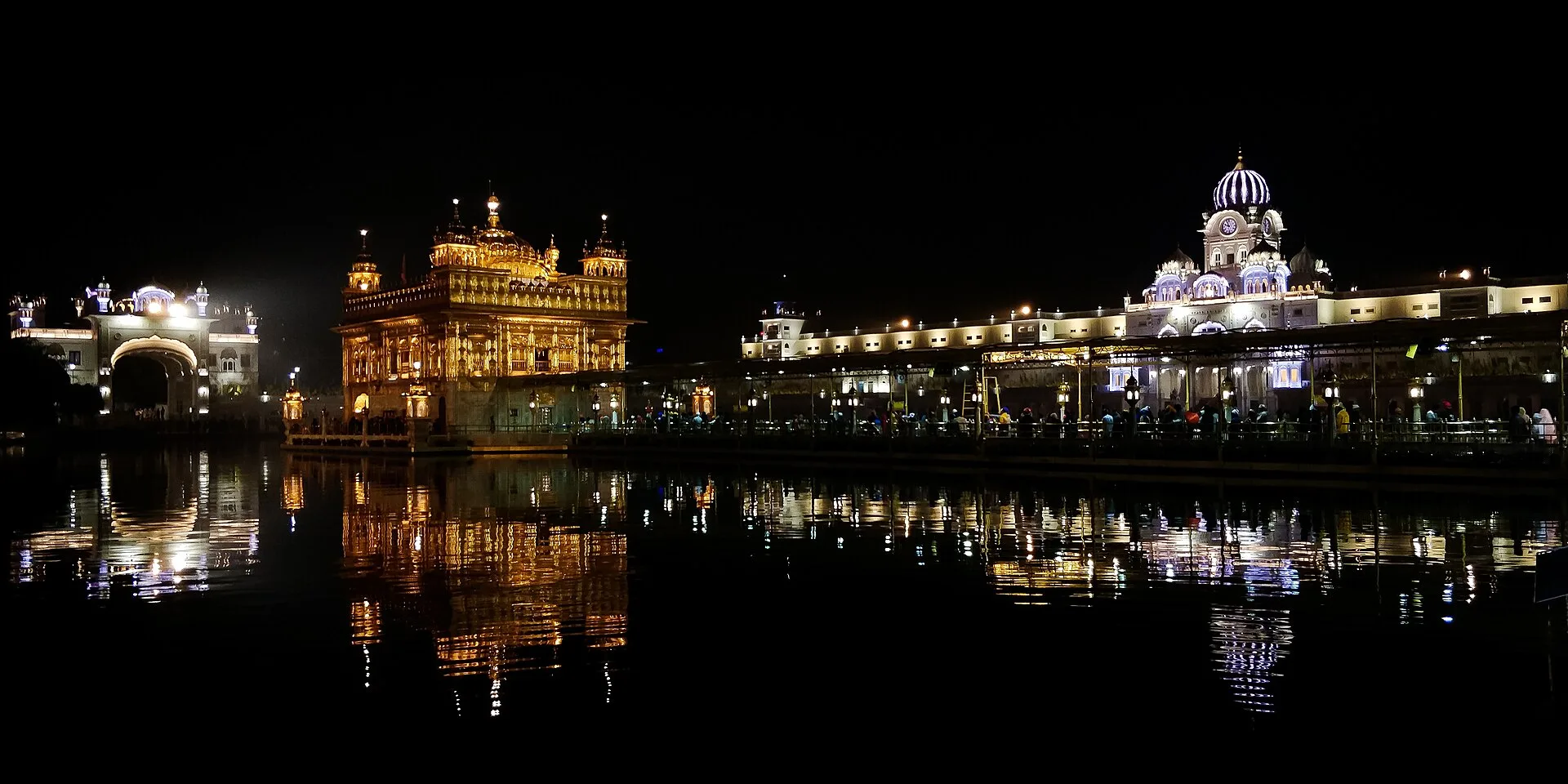
The complex is open for most of the day and night. Three hours is a sensible minimum, and many people come twice, once at dawn and again after dark when the lit shrine is mirrored in the water. October to March is the most comfortable season, though winter nights are cold on bare marble. Amritsar has the Sri Guru Ram Dass Jee International Airport, a busy railway junction and a bus terminal. Close by, Jallianwala Bagh preserves the memory of the 1919 massacre, and the Central Sikh Museum explains the history of the community. The old city lanes then offer crisp Amritsari kulcha, thick lassi and slow-cooked dal.
The sanctum reflected in the Amrit Sarovar at dawn and after dark
Live kirtan through the day
Langar: a free community meal for everyone
The evening Palki Sahib procession
Photos (6)
Harmandir Sahib and the Akal TakhtThe sanctum in evening lightHarmandir Sahib at nightLights on the sacred poolA pilgrim on the parikramaA misty morning on the Amrit Sarovar
Guru Ram Das began the sacred pool in the sixteenth century, and Guru Arjan completed the Harmandir Sahib, installing the Adi Granth there in 1604. In the nineteenth century Maharaja Ranjit Singh had the upper storeys covered in gilded copper, giving the shrine its popular name.
Things to see and do
Walk the parikrama around the pool
Share a meal in the langar, and help with seva if you wish
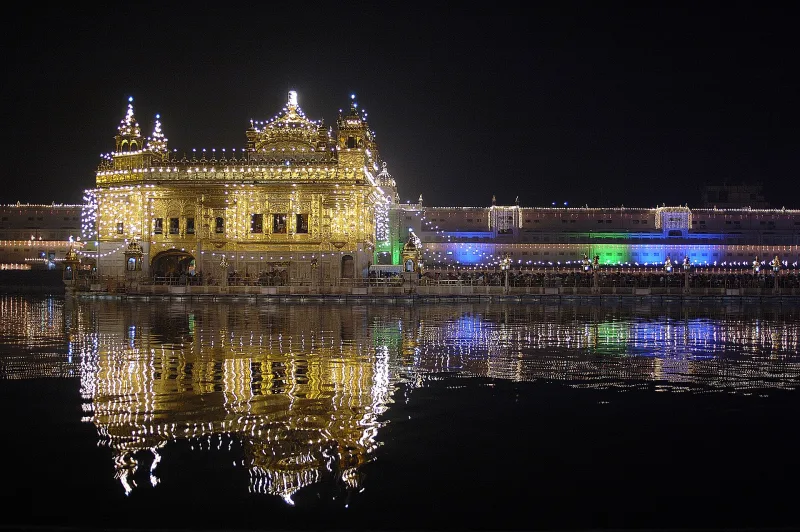
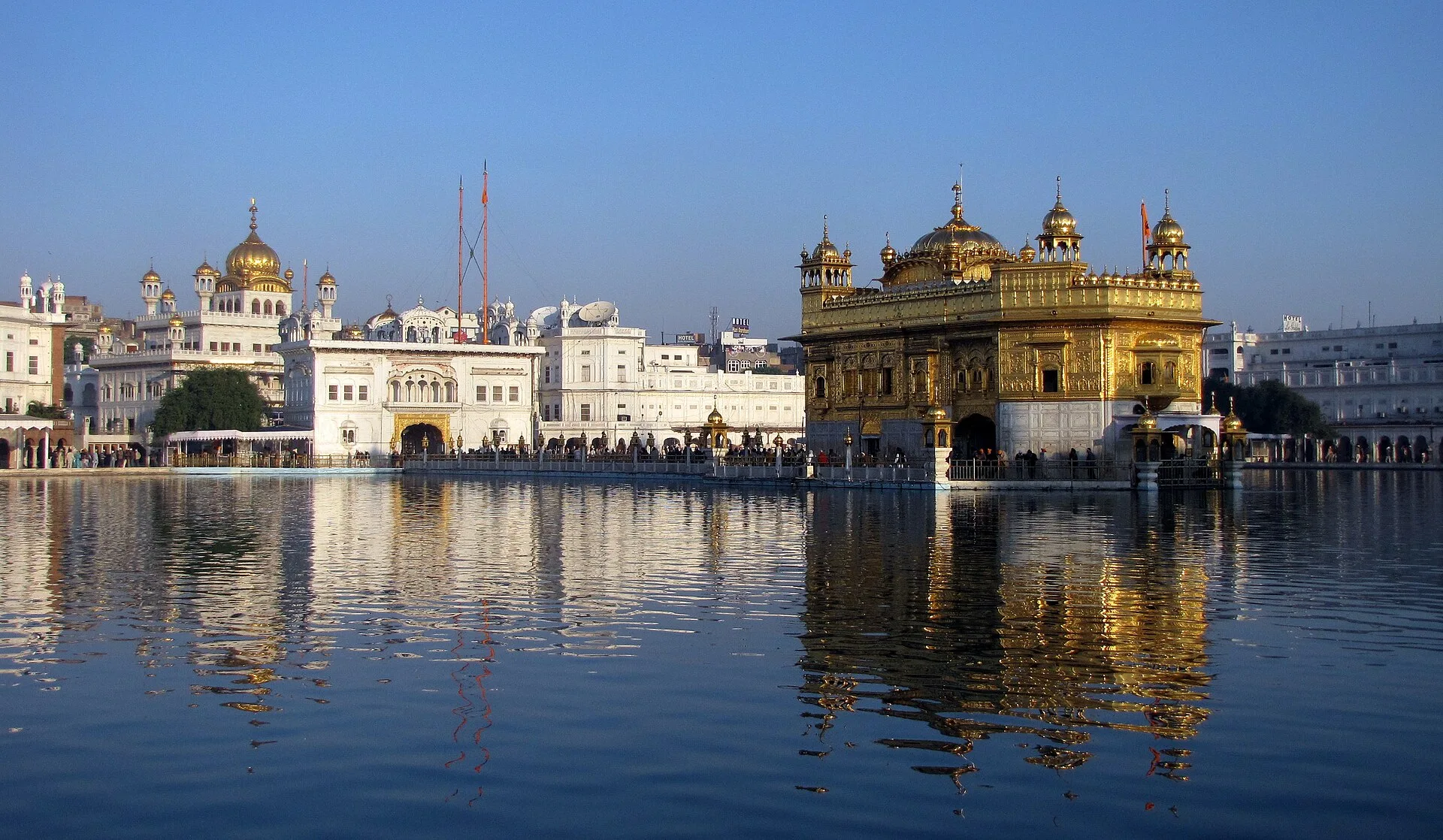 Photo: Jasleen Kaur · CC BY-SA 2.0