Reopened in a new home in December 2025: train simulators and tunnelling models that show how Delhi’s Metro was built.
The Delhi Metro Museum at Supreme Court station, reopened in its new home in December 2025, uses train simulators and tunnelling models to show how the capital's Metro was built. About twelve thousand square feet in its first phase, it lets visitors try a train driving simulator and study working models of a tunnel boring machine and a launching girder. It is compact, inexpensive and very easy to reach, an excellent short outing for children, students and curious adults.
The museum moved from Patel Chowk station and opened at Supreme Court station on 19 December 2025, inaugurated by Chief Minister Rekha Gupta. The new setting gives the story of the system more space and brings it to a station close to several other institutions of learning and public life.
The Delhi Metro began carrying passengers in 2002 and has since grown into one of the largest urban rail networks in the world, linking the capital with neighbouring cities. Building it meant tunnelling beneath crowded neighbourhoods, historic areas and busy roads, and raising viaducts above traffic while the city continued to move. The museum helps visitors understand the engineering behind journeys that millions now take for granted.
A tunnel boring machine is a huge rotating cutter that advances underground, removing soil and rock while segments are fitted behind it to form the tunnel lining. A launching girder is a long steel frame used to lift and place sections of an elevated bridge from pier to pier, with little disturbance to the road below. Seeing working models makes these methods clear in a way that words cannot. Ask children to explain how the machine moves forward and where the removed earth goes.
The driving simulator is usually the favourite. Seated as if in the cab, a visitor can sense how a train starts, runs and stops, and learn why drivers and control systems must work with precision. Expect a short wait at busy times, follow the attendant's instructions and give others their turn. Other displays may include signals, safety systems, historical photographs and information on how stations are designed for passengers.
Allow one to two hours. The museum is closed on Mondays and public holidays. The entry fee is ten rupees, described as introductory, so it may change. Check current opening hours and any booking arrangements before travelling.
Carry as little as possible, since metro stations have security screening, and keep identification handy for school or group visits. Follow rules on photography, which can differ between the museum and the working station. Do not touch exhibits unless invited, hold children close near platforms and escalators and keep out of the way of commuters. Peak hours on trains are very crowded, so travel late in the morning or early afternoon.
The easiest way to arrive is naturally by metro, alighting at Supreme Court station on the network. Buses and autos also serve the area. Wheelchair users can generally use station lifts, though it is wise to ask about access within the museum.
Combine the visit with the National Science Centre nearby for a full day devoted to science and technology. Purana Qila, the zoo, India Gate and the National Crafts Museum are also within a short ride. Food options range from street snacks to restaurants in the central districts. The cooler months from October to March are the most comfortable for sightseeing in Delhi, though this indoor museum is useful in summer heat and monsoon rain. Small as it is, the museum encourages visitors to look differently at their next ride: at the tunnel walls sliding past, the signals along the line and the many people whose skill keeps the city moving safely.
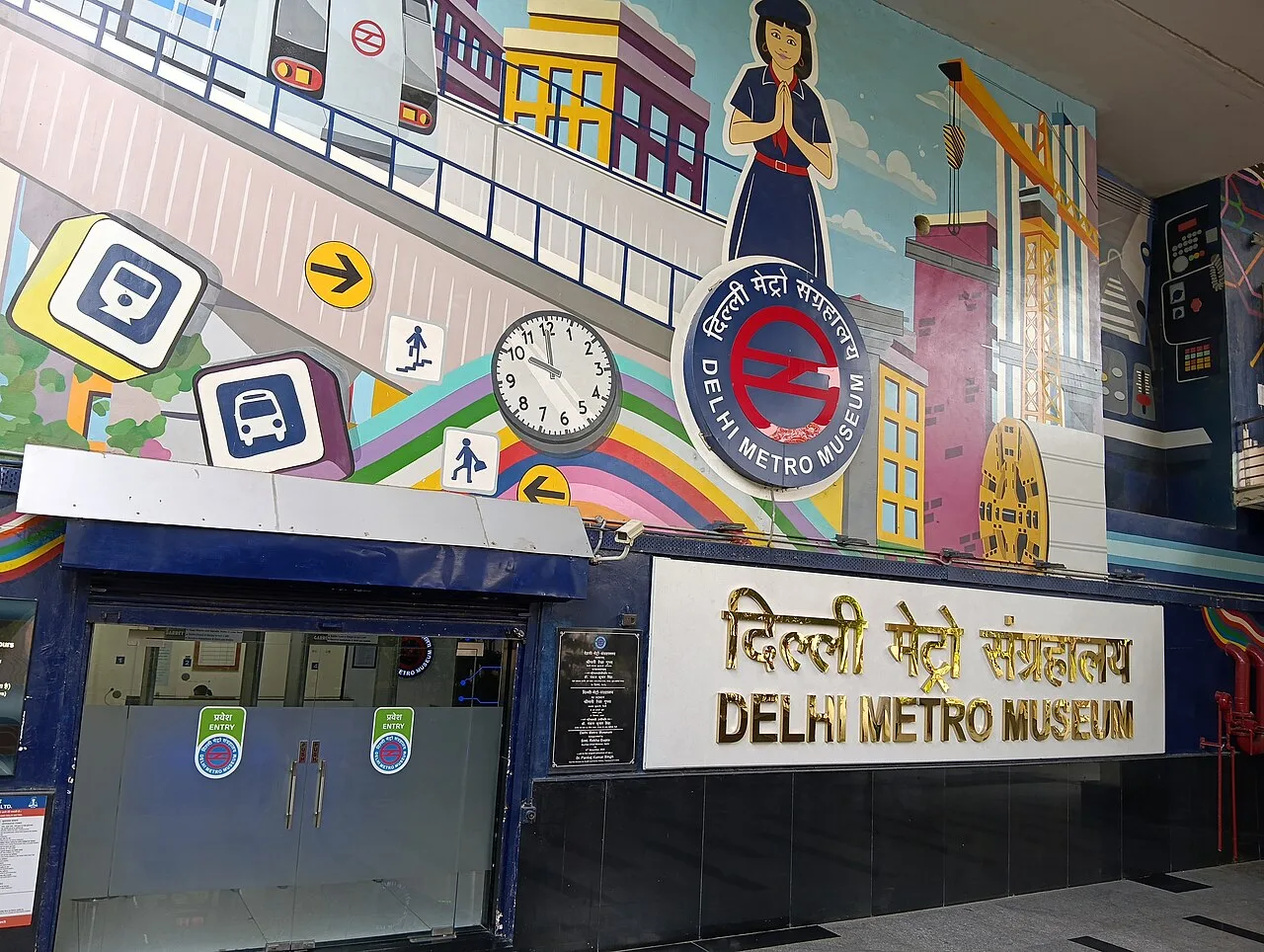 Photo: VartamanVarta · CC BY 4.0