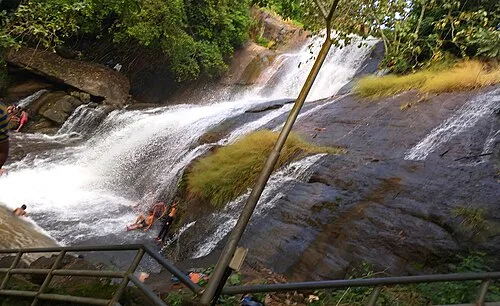
A shaded rural spot of natural caves, great tree roots and a spring near Pampakuda, usually visited with Areekkal waterfall.
At a glance
What: Caves with a spring in a grove of large trees.
Where: Kochareekkal, Pampakuda area, Ernakulam district.
When: Green and fresh in and after the rains.
How: By road from Piravom or from Areekkal.
By whom: A local natural site featured by the state tourism department.
For whom: Curious visitors, families with sure footed children and photographers.
What you will find
Kochareekkal is often spoken of together with waterfalls, but its attraction is a different one. Here are natural caves, a spring, deep green shade and trees whose enormous roots pour over the rock and frame the openings. Water is present as a gentle source, not as a tall cascade. Visitors expecting a large fall should go to Areekkal; those who enjoy mysterious, quiet corners will be glad they came on to this one.
The roots
The most photographed feature is the web of roots that grips the stone, descends past the cave mouths and meets the ground below. Trees of the fig family are masters of this habit, sending roots through cracks in search of water and, over many years, thickening into living pillars. The effect is of a hall built partly of stone and partly of wood. Do not swing on the roots or cut your name into them.
The caves
The openings lead into hollows in the rock that are cool even on a warm day. They are natural, formed where water has worked through the stone over long ages. Light fades quickly inside. Bats and insects live there. Enter only where passage is clearly safe, take a torch and do not squeeze into narrow gaps. No survey of their length was found, so claims about how far they run should be doubted.
Name
Kocha or kochu means small, so Kochareekkal is the little Areekkal, a sister site of the waterfall a short distance away. The sharing of names has led some lists to call both of them waterfalls. This page records Kochareekkal as caves with a spring, which is how current descriptions present it.
Fame through film
Newspaper writing in 2024 said that interest in the caves rose after the success of the film Manjummel Boys, whose story turns on a cave far away in Tamil Nadu. Local people and travellers were reminded that Ernakulam too had a cave sanctuary, and photographs spread. The film has no recorded link with this site beyond that surge of curiosity.
Getting there
Kochareekkal lies in the Pampakuda area, roughly 12 kilometres from Piravom, and can be reached from the Ernakulam side without passing through that town. Piravom Road is the nearby railway station and Cochin International Airport the closest airport. The last part is by village road; a car or autorickshaw is practical.
Facilities
One guide notes that there are no shops nearby except a small tea stall, and that food, cash machines and hospitals are found at Ramamangalam. Entry has been described as free with no fixed hours. Treat these details as liable to change and arrive in daylight with what you need.
Visiting with Areekkal
The tourism department's suggested plan is simple: the waterfall in the morning, the caves in the afternoon, with a slow drive through rubber country between. The contrast between the open noise of the fall and the hush of the grove is the pleasure of the day.
Ramamangalam and music
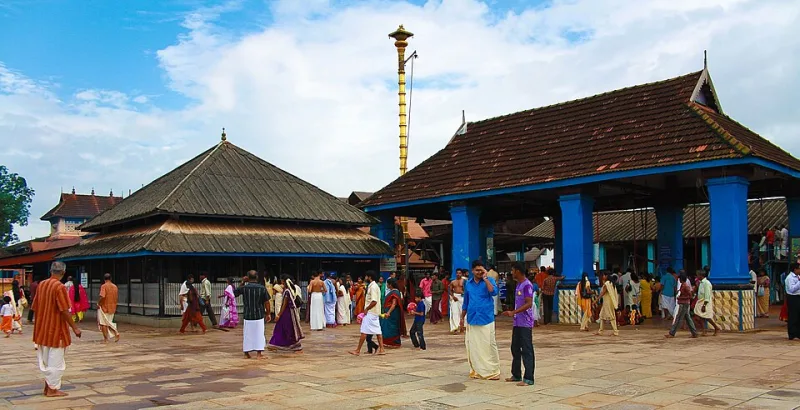
Ramamangalam, close by on the Muvattupuzha river, is remembered in Kerala's temple arts, particularly as the home of the poet and musician Shatkala Govinda Marar, famed for singing at six degrees of tempo. A visit to the riverside and its temple adds a cultural note to a nature outing. This belongs to the village, not to the caves.
History and legend
No documented legend of the caves was found. Caves across Kerala are commonly linked in local talk with hermits, with the Pandavas in exile or with treasure. Unless a resident tells such a story as their own tradition, there is no reason to assume one here, and none should be presented as fact.
Rumours
Tales of tunnels that come out at distant temples are told of many caves. They are not supported. An older blog calls the caves unknown to tourists, which is no longer accurate after recent publicity.
Safety
Floors are uneven and may be slick. Low rock can strike the head. Snakes and scorpions favour cool crevices, so look before placing a hand. Avoid entering during heavy rain, when water may rise and stones loosen. Do not light fires or incense inside. Never explore alone. The emergency number is 112.
Care
Leave no litter, make little noise and do not paint or scratch the rock. Spring water supports plants and animals, and perhaps households, so keep soap and food out of it. Remember that a grove like this took generations to form and can be damaged in a season.
How a grove like this works
Shade, water and rock together make a small world with its own climate. The canopy blocks the sun, the spring keeps the air moist and the stone stores coolness through the day. Ferns, mosses and liverworts coat damp faces, while geckos, frogs, spiders and snails find shelter in cracks. Birds come to drink and to feed on figs when the trees fruit. Step softly and you will notice more of it. Shining a bright torch on roosting bats or poking into holes drives creatures from places they depend on. The value of the grove lies in being left whole.
Photography
Light under the trees is dim, so hold the camera steady against a rock. The roots show best from a little distance, with a person standing outside the cave mouth for scale. Avoid flash inside.
Seasons
From June the rains freshen the moss and strengthen the spring, though paths grow muddy. September to December is a good time for green shade without heavy downpours. In summer the grove remains a refuge from the heat, with less water.
Questions visitors ask
Is it a waterfall? Not in the usual sense. Is it suitable for small children? With close supervision at the openings and no deep exploration. How long is enough? About an hour. Is it crowded? It is usually quieter than the waterfall, though weekends and holidays bring more people.
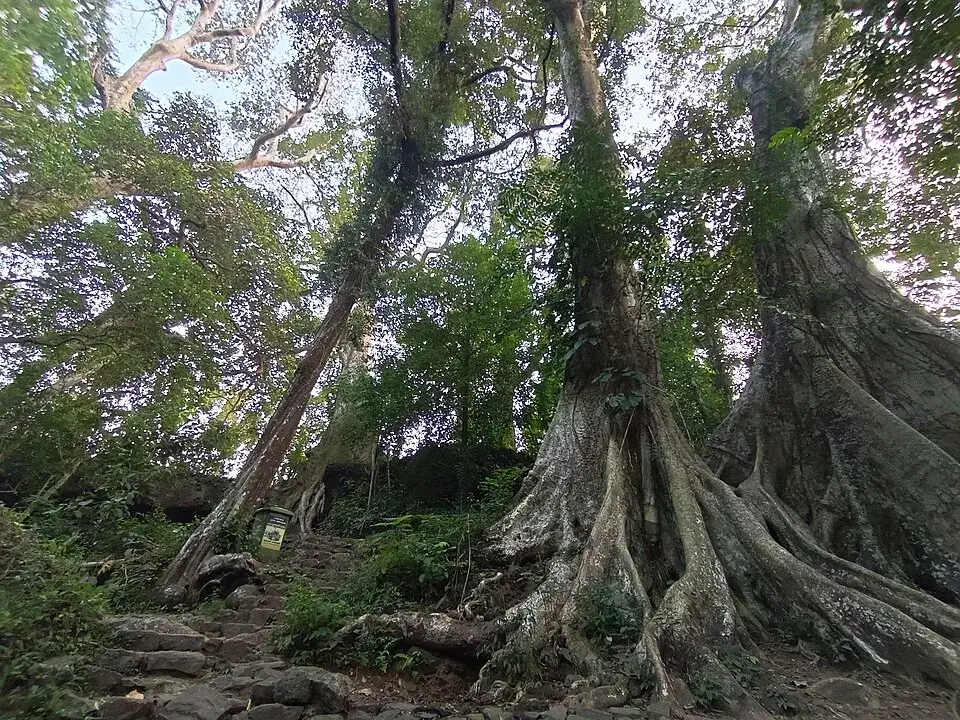 Photo: Gnoeee · CC BY-SA 4.0