The great Vishnu temple of Thiruvananthapuram, where the deity reclines on the serpent Anantha behind a tall gopuram in East Fort.
Sree Padmanabhaswamy Temple stands inside the old East Fort area of Thiruvananthapuram and is the spiritual heart of the city. It is dedicated to Vishnu in the form of Anantha Padmanabha, who rests in yogic sleep on the coils of the many hooded serpent Anantha, also called Shesha. The city's own name is usually explained through this serpent: the sacred town of Lord Anantha. For devotees this is one of the 108 Divya Desams, the shrines praised by the Tamil Vaishnava saints, and for the visitor it is the building around which the history of Travancore turns.
The temple is mentioned or associated with a number of Puranic and epic traditions, and Hindu texts are often cited in accounts of its antiquity. Its present form owes much to the rulers of Travancore. The foundation of the tall gopuram dates to 1566, and in the eighteenth century King Marthanda Varma carried out a major renovation. On his orders a huge single slab of stone, the Ottakkal Mandapam in front of the sanctum, was cut at Tirumala, a few kilometres north of the temple, and brought to the shrine. Marthanda Varma also dedicated his kingdom to the deity, and later rulers governed as servants of Sree Padmanabha. The head of the former royal family continues to act as trustee.
The architecture blends the Kerala style with the Dravidian style seen across the border in Tamil Nadu. The eastern gopuram rises in tiers above the Padma Theertham, a stepped tank that gives photographers a classic reflection from outside. Inside are long granite corridors with rows of carved pillars, many bearing lamp holding figures, along with a golden flagstaff and subsidiary shrines. The main idol is so long that it is viewed through three doorways: through them devotees see the face with a hand resting over a Shiva linga, the navel from which the lotus of Brahma rises, and the feet.
The temple drew worldwide attention in 2011, when an inventory of its underground vaults, ordered by the Supreme Court, revealed an extraordinary quantity of gold, jewels and offerings built up over centuries. In 2020 the court upheld the role of the former royal family in the management of the temple. The treasures are not on public display, and visitors should be wary of anyone claiming to offer access to them.
Planning a visit takes a little care. Darshan takes place in set sessions during the morning and evening, with closures in between for rituals, and the sessions change on festival days, so check the current timings at the temple or on its official channels. The dress code is traditional and strictly applied. Men generally wear a mundu or dhoti and remain bare above the waist, while women wear a sari, a long skirt with a blouse or similar traditional clothing; wraps are commonly available for hire near the entrance. Electronic devices, bags and footwear must be left behind. Entry is limited to Hindus, though anyone may admire the gopuram, the tank and the surrounding streets.
Two major ten day festivals mark the year, one around March and April and one around October and November, each ending with a procession to the sea at Shankumugham for the ritual bath of the deity. The much rarer Murajapam, a cycle of Vedic recitation held once in six years, concludes with the lighting of thousands of lamps called Lakshadeepam.
Allow time for the surroundings. The Kuthiramalika Palace Museum is a short walk away and explains the world of Maharaja Swathi Thirunal. The old fort gates, the market streets and small eating houses make the quarter worth exploring on foot. The best months are the drier ones from October to February. During the monsoon carry an umbrella and take care on wet stone. Visitors who come early, dress correctly and stay patient in the queue usually find the experience quiet, solemn and memorable.
Reclining form of Vishnu on the serpent Anantha
Tall stone gopuram beside the Padma Theertham tank
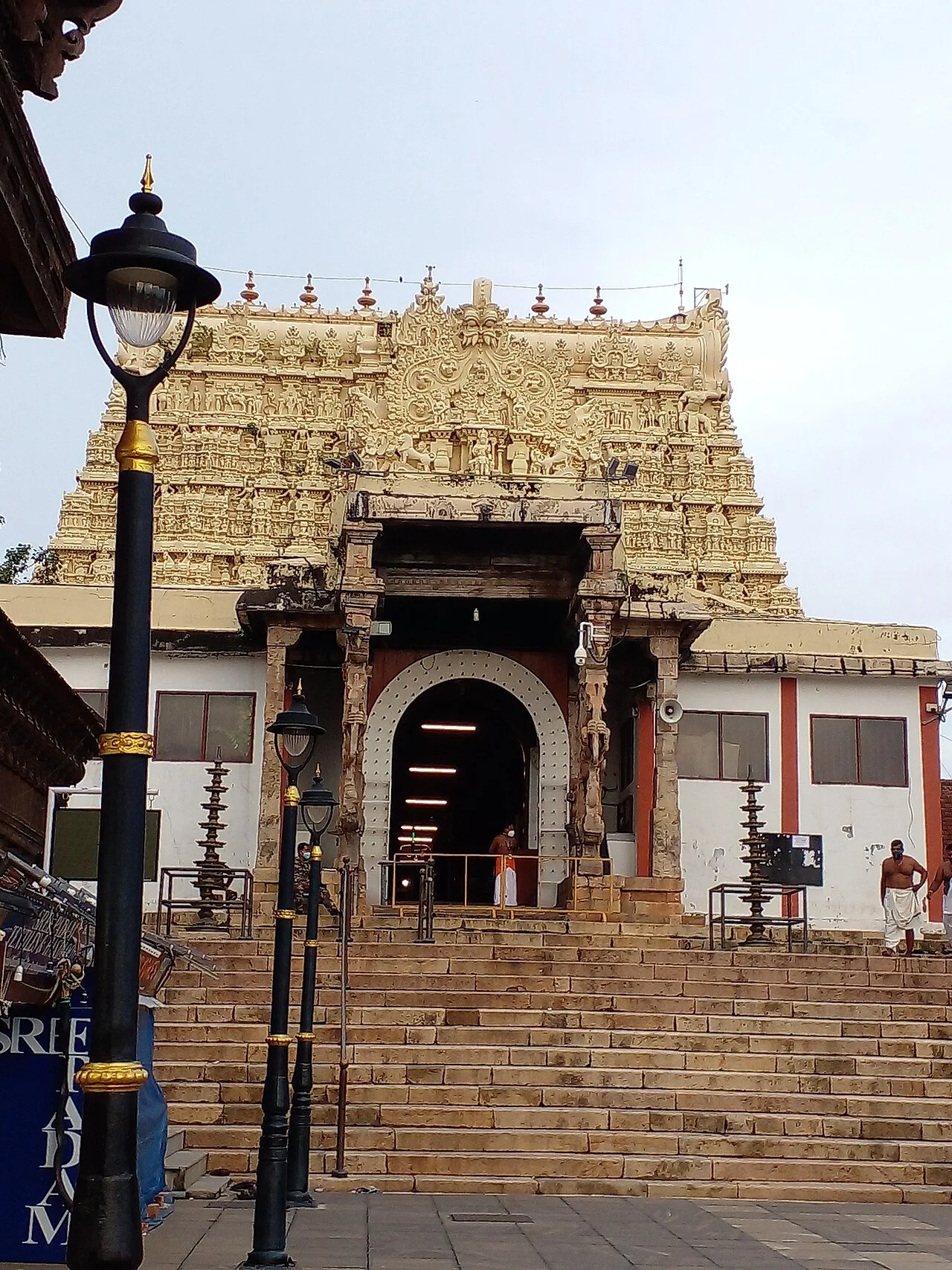 Photo: Rahulrnath001 · CC BY-SA 4.0