A seven storey marble meditation centre at Umraha, opened in December 2023, with thousands of verses of the Swarved carved on its walls.
On the outskirts of Varanasi, at Umraha, rises a large white and pink structure crowned with domes shaped like lotus petals. The Swarved Mahamandir is a meditation centre associated with the Vihangam Yoga tradition, and it was inaugurated by the Prime Minister in December 2023. It is promoted as the largest meditation centre in the world.
Unlike most temples, it is not built around an image of a deity. Its focus is the Swarved, a spiritual text composed by Sadguru Sadafaldeo Ji Maharaj, who founded the tradition in the twentieth century. More than three thousand verses from the work are engraved on the walls, many of them on Makrana marble from Rajasthan, the same celebrated stone used in several of India's great monuments. Reading, or simply seeing the long procession of carved lines, is part of the experience.
The building has seven storeys and can hold around twenty thousand people for meditation. Architects used motifs from the lotus, which in Indian thought often represents spiritual unfolding. Carved sandstone, decorative railings, wide stairways and broad halls give a sense of order and space. Outside are gardens and fountains, and the compound is designed to receive large gatherings, particularly during the annual celebrations of the organisation.
Visitors of any background are generally welcome to walk through the open areas in a respectful manner. Expect to remove footwear before entering the halls, to keep your voice low and to switch phones to silent. Some floors or sections may be closed, and photography may be limited. Volunteers can explain the teachings; you are free to listen and ask questions, and any participation in practice or donation is a personal choice.
Opening times usually include a morning and an afternoon or evening period, but they may change during festivals and maintenance. Confirm with the centre before making a special journey. There is no need for elaborate preparation: wear comfortable, modest clothing, carry water and allow time for security or crowd management on busy days. Ask about lifts or assistance if climbing is difficult.
The marble floors become hot in summer sunshine, and winter mornings can be foggy and cool. Children enjoy the gardens, but should be kept from running in quiet spaces or climbing decorative features.
The road trip can be joined with Sarnath, which lies between the centre and much of the city. There you can see the Dhamek Stupa, the ruins of old monasteries, the archaeological museum with the celebrated Lion Capital of Ashoka, and temples built by Buddhist communities from several countries. Closer to the river, the Markandey Mahadev temple at Kaithi, where the Gomti meets the Ganga, is another pilgrimage point further along the same side of the district.
Back in Varanasi, the Kashi Vishwanath Dham, the ghats and the evening aarti offer a very different style of devotion, full of bells, crowds and ritual. Experiencing both in one visit illustrates the breadth of spiritual life in the region, from public worship to silent practice.
October to March is the most pleasant season. Traffic near the centre can become heavy during large events, so check dates and leave early. For travellers interested in contemporary religious architecture, or anyone who would value an hour of calm away from the old city's bustle, the Mahamandir is a worthwhile detour. Combine it with unhurried time in the gardens, where the scale of the building can be appreciated from a distance and its lotus crown seen clearly against the sky. Keep a little time for the return drive, which slows near the city.
Visitors who are curious about the carved text can ask for an explanation of selected verses or look for published translations. Even without knowing the language, a slow walk past the panels shows the care that went into arranging so large a body of writing on stone.
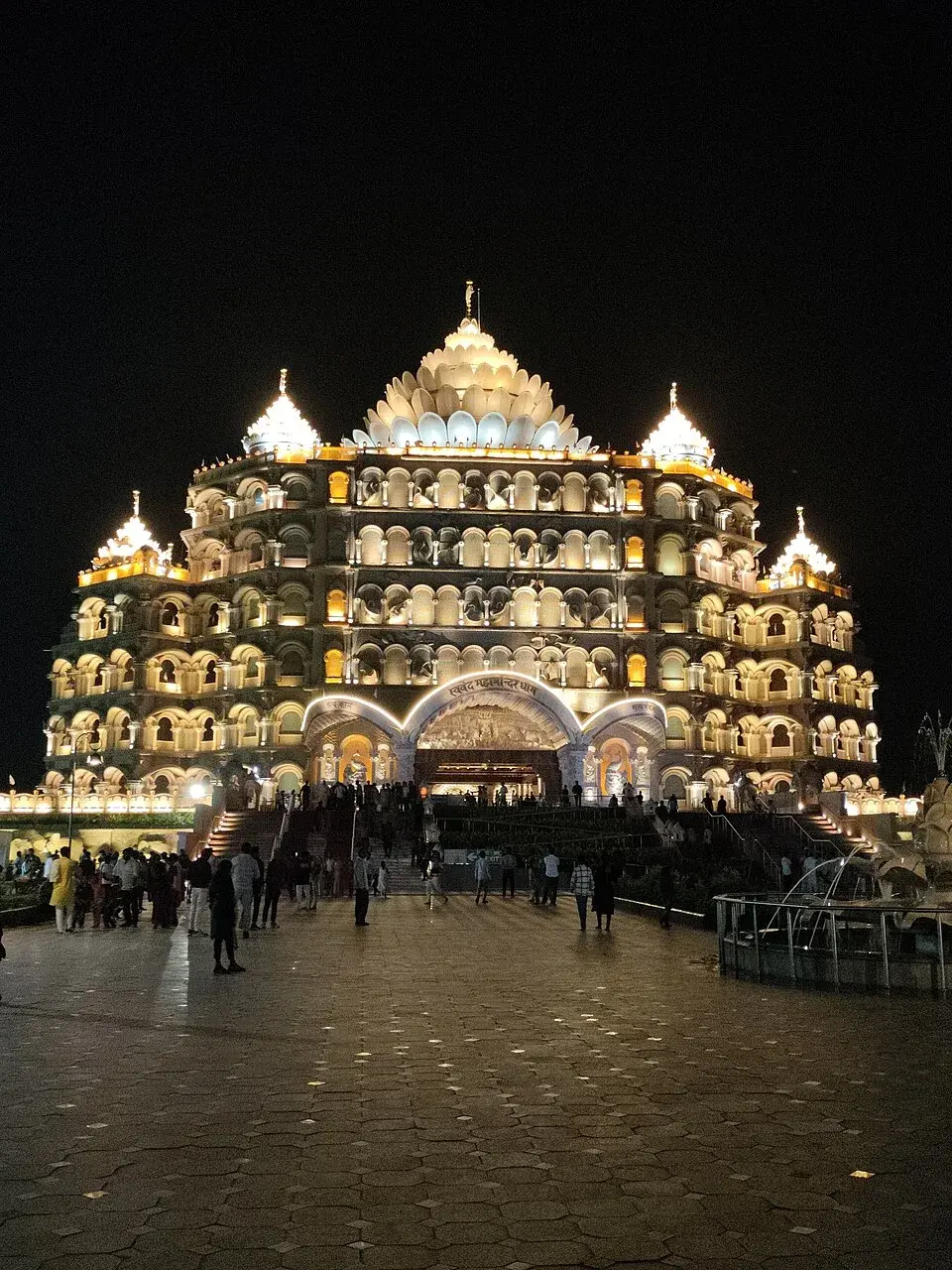 Photo: Naveen K Gautam · CC BY-SA 4.0