A small, richly carved Qutb Shahi mosque of 1671 with two slender minarets.
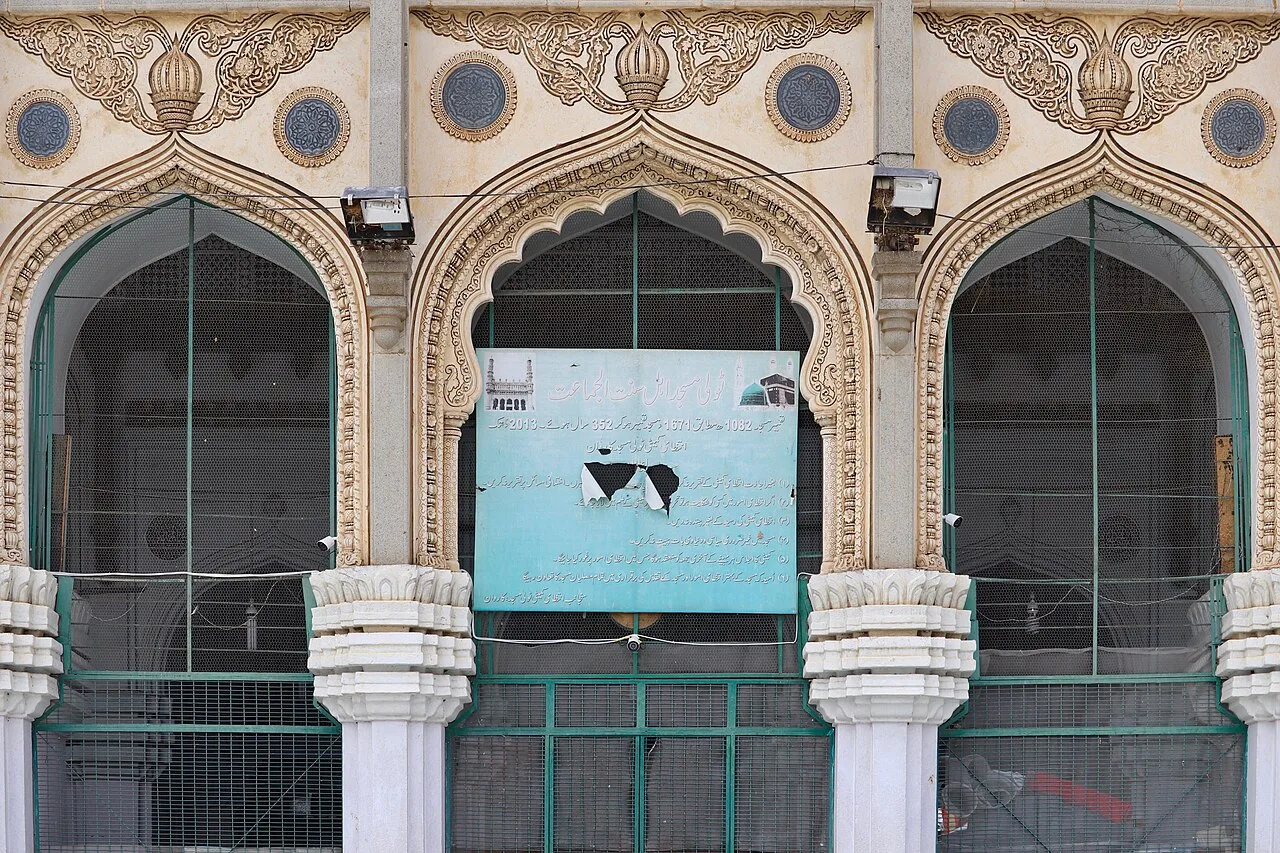
Toli Masjid is a small, richly carved Qutb Shahi mosque of 1671 with two slender minarets, standing on the road from the Old City to Golconda. Also known as Damri Masjid, it is passed every day by thousands of people, many of whom never stop to look. Those who do find a jewel of late Qutb Shahi craftsmanship, where scalloped arches, stucco medallions and finely worked ornament are gathered on a modest and graceful building.
Musa Khan, a chamberlain of Sultan Abdullah Qutb Shah, commissioned the mosque, and it was completed in 1671 and 1672, in the last decades of the dynasty. An old chronicle tells a charming story about its funding. Musa Khan was supervising work on the great Mecca Masjid and was allowed a damri, a very small coin, on every rupee spent. He saved these small amounts and used them to build a mosque of his own. Hence the other name, Damri Masjid. Whether or not every detail is exact, the tale sets an appealing contrast between the vast granite hall near Charminar and this intimate work raised from careful savings.
The beauty of the building lies in its detail. Stand a little way back to take in the front, with its arches rising to a decorated parapet and the two minarets, about eighteen metres tall, framing the composition. The minarets carry projecting galleries supported by carved brackets, and their shafts are divided by bands of ornament. Move closer and look at the medallions set above the arches, the lotus forms, the fretted panels and the miniature arcades along the roofline. Several motifs show Hindu craft traditions at work in a mosque, a reminder that the masons and stucco workers of the Deccan brought a shared vocabulary of design to buildings of many kinds. The contrast between plain wall surfaces and concentrated carving is handled with great confidence.
Toli Masjid is a state protected monument and is still used for prayer. Its protection has not removed every threat. Reports from 2008 and 2015 described encroachment on land endowed to the mosque and neglect of the structure. Visitors who show an interest, treat the place gently and speak well of it help to remind the city that such smaller monuments deserve attention along with the famous ones.
Because this is a working place of worship, dress modestly, with legs and shoulders covered, and remove your footwear before entering prayer areas. Avoid prayer times unless you have come to pray, particularly around midday on Fridays. Ask before photographing people, keep your voice low and do not climb on any part of the structure. Women may wish to carry a scarf, and should follow local guidance about which areas are open to them.
Twenty to thirty minutes is usually enough for a visit, though lovers of architecture may take longer with a camera or sketchbook. Morning and late afternoon light bring out the relief of the carving, while the harsh noon sun flattens it. The mosque stands close to a busy road, so cross with care and be considerate about where your vehicle waits. There are no elaborate visitor facilities, so carry drinking water in warm weather.
The mosque is on the Karwan road between the old city and Golconda, which makes it an easy halt on a day out. A cab or auto can pause here on the way to Golconda Fort, and from there the domed Qutb Shahi Tombs are only a little further. Seen together, they trace the architecture of the dynasty from fortress and royal mausoleum to this delicate neighbourhood mosque built near its close. Taramati Baradari, the arched pavilion associated with music, also lies on the Golconda side of the city. After sightseeing, return towards the old quarter for Irani chai, biryani or kebabs. The months from October to February offer the most comfortable weather for exploring this historic road, and an early start helps you avoid the heaviest traffic. Reading even briefly about Qutb Shahi architecture beforehand will help you recognise the family resemblance between this front and other buildings of the dynasty.
Carved arches and medallions
Twin minarets
Photos (2)
Toli Masjid and its minaretsCarved entrance arches
Musa Khan, a chamberlain of Abdullah Qutb Shah, commissioned it; it was completed in 1671–72. It is a state-protected monument and still in use.
Stories worth knowing
The mosque built from small change
An old chronicle says Musa Khan, supervising work on the Mecca Masjid, was allowed a damri on every rupee spent, and used those small savings to build this mosque. Hence its other name, Damri Masjid.
A monument under pressure
Reports from 2008 and 2015 describe encroachment on the mosque’s endowed land and neglect of the building.
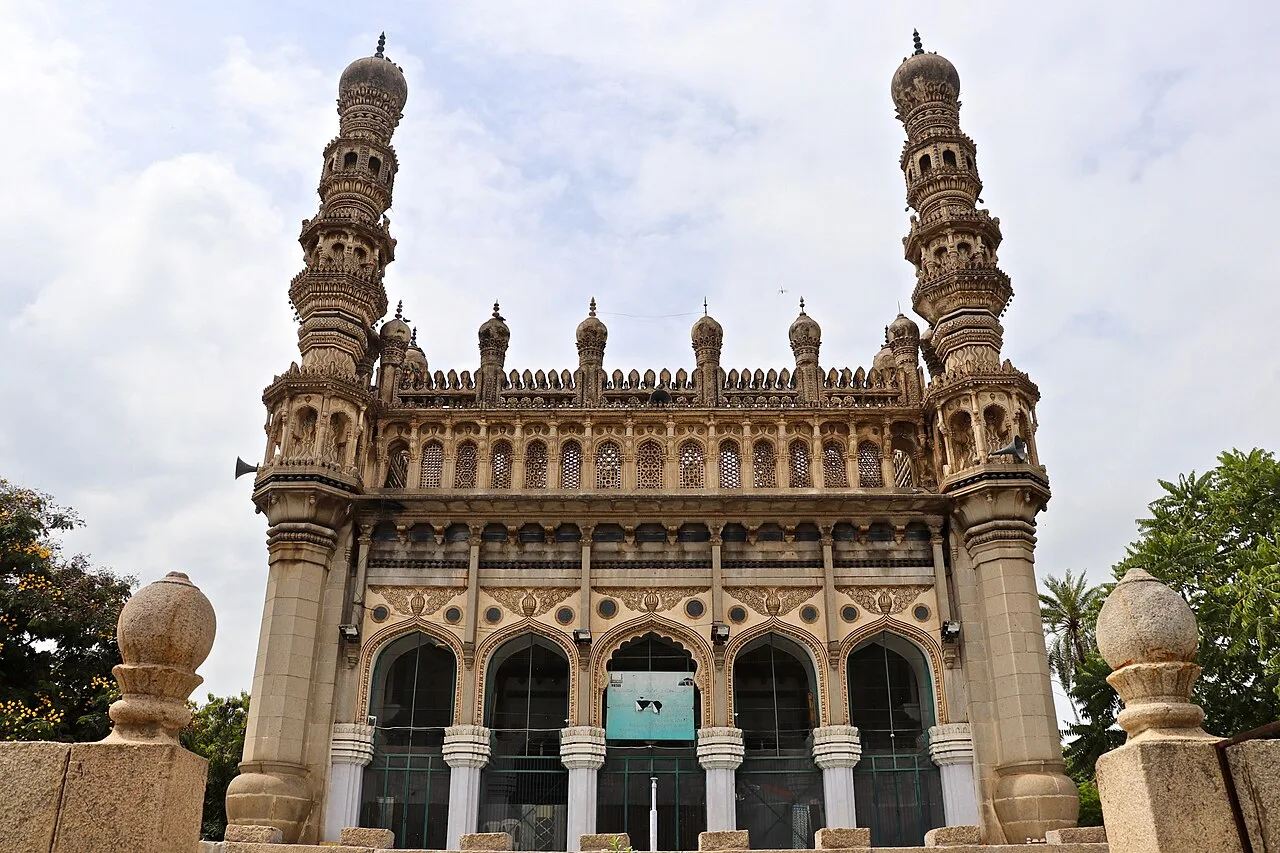 Photo: iMahesh · CC BY-SA 4.0