A royal house of mourning from 1594, covered in some of the Deccan’s finest tile mosaic.
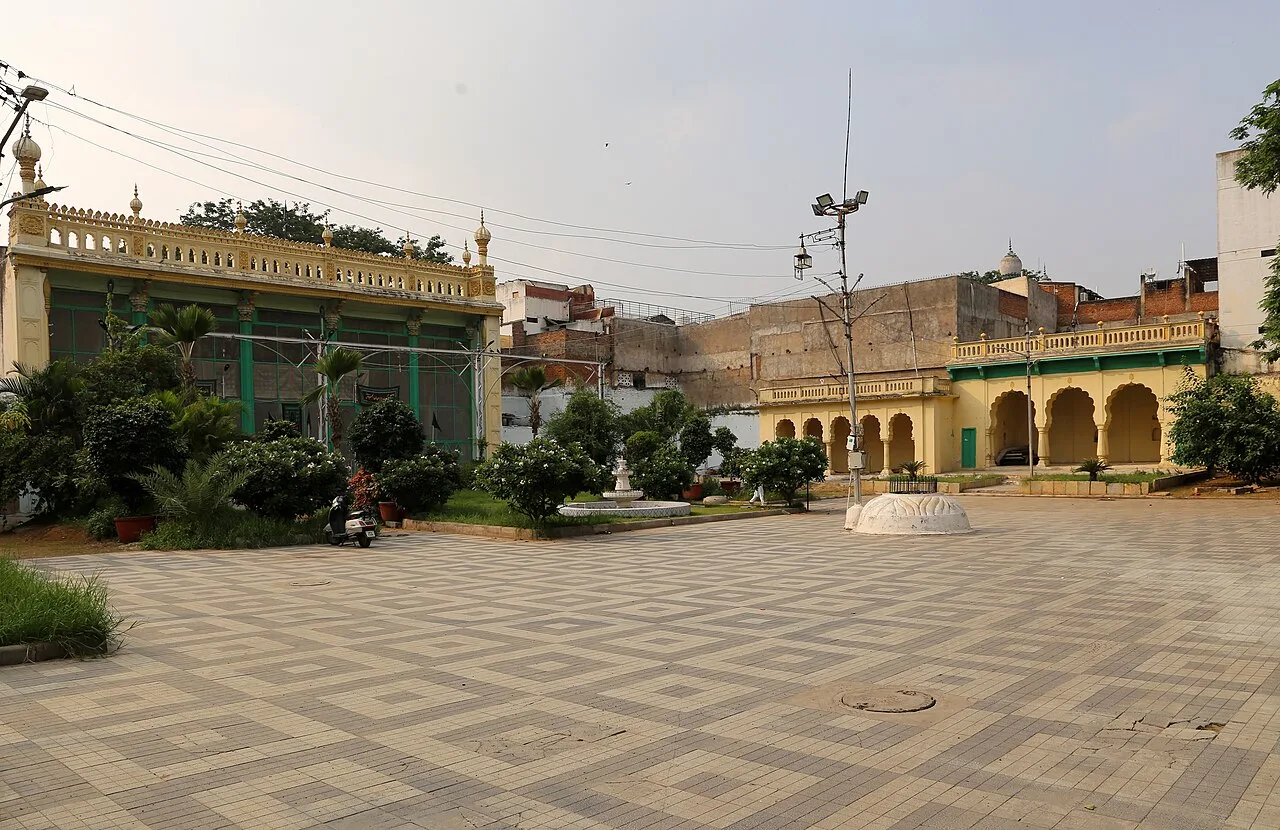
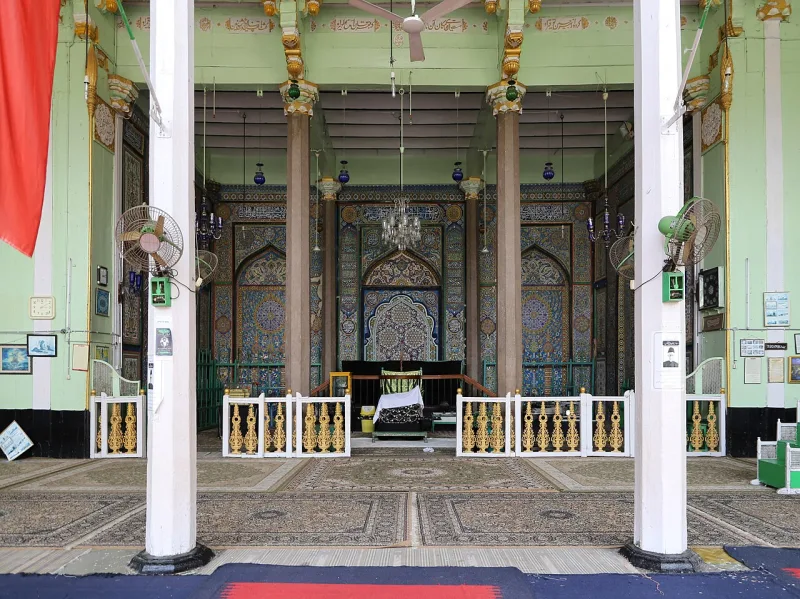
The Badshahi Ashurkhana is a royal house of mourning built in 1594, whose walls carry some of the finest enamel tile mosaic in the Deccan. Standing near Pathargatti in the Old City of Hyderabad, it is a place where Shia Muslims remember the martyrdom of Imam Hussain, grandson of the Prophet, and his companions at Karbala. Behind a modest approach lies a hall where whole walls shimmer in yellow, turquoise, white and brown behind slender wooden pillars.
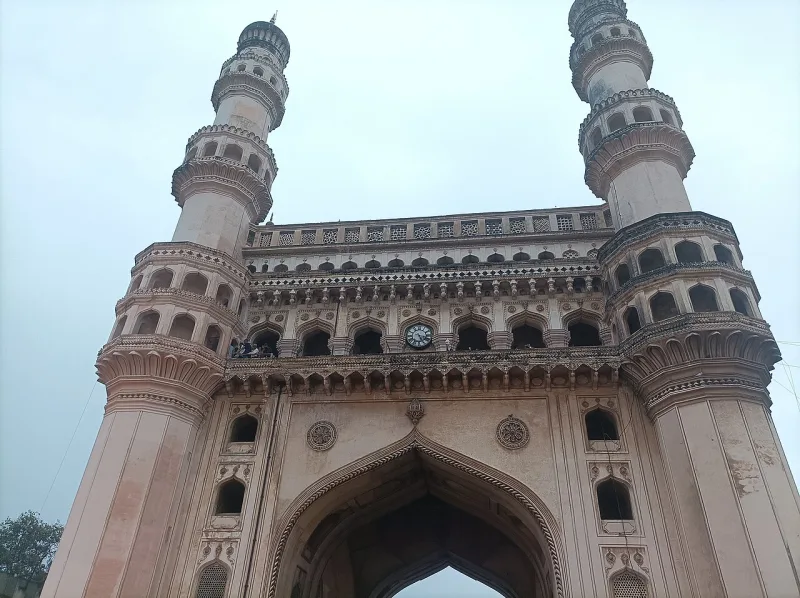
Muhammad Quli Qutb Shah built it in 1594, only three years after Charminar, which shows how central the remembrance of Muharram was to the court that founded the city. The Qutb Shahi rulers observed the mourning period with great seriousness, and the word badshahi marks this as the royal ashurkhana. The celebrated tile mosaic was completed under Abdullah Qutb Shah in 1611.
The decoration deserves quiet study. Thousands of small glazed pieces are fitted together to form arches, medallions, vases of flowers, flowing calligraphy and sacred emblems known as alams, the standards carried in remembrance. The technique belongs to a tradition shared with Persia, yet the colour, especially the warm yellows, gives it a distinctly Deccani character. The glaze catches the light differently as you move, and it is remarkable that so much brilliance has survived four centuries. Above and around the tiles, the timber columns and high roof create a dignified, shaded space designed for gatherings.
The building has passed through hard times. It is recorded that during the time of Aurangzeb it was misused as a stable, and that the second Nizam restored it in 1764 and 1765. Today the state archaeology department oversees the monument, and a hereditary custodian family cares for it. The present mutawalli is counted as the eleventh generation entrusted with the shrine, a living thread running through changes of rulers and governments.
This is first and foremost a religious place. Prayers, vows and remembrance continue here through the year, and families who have visited for generations treat the hall with deep affection. Visit respectfully and, if you are coming for the architecture, choose a time outside mourning assemblies. Remove your footwear, dress modestly with arms and legs covered, and keep your voice low. Women may wish to carry a scarf. Do not touch the tiles or the standards, and always ask before taking photographs, particularly when worshippers are present. Accept without argument if a part of the building is closed to visitors.
During Muharram, especially in the first ten days of the month, the ashurkhana is a place of grief and devotion, not of sightseeing. Mourners gather for recitations and remembrance, and the alams are displayed with reverence. Those who attend should do so as guests who share in the solemnity, follow the guidance of the custodians and stay out of the way of the assembly. The great Muharram procession of the Old City is also part of this living tradition.
About half an hour is usually enough, though anyone with a love of tilework may wish to linger. Morning visits are cooler and quieter. No fixed visitor timings are recorded here, so ask locally or speak to the caretaker. Facilities are simple, and a small contribution towards upkeep may be welcomed if offered freely through the custodians.
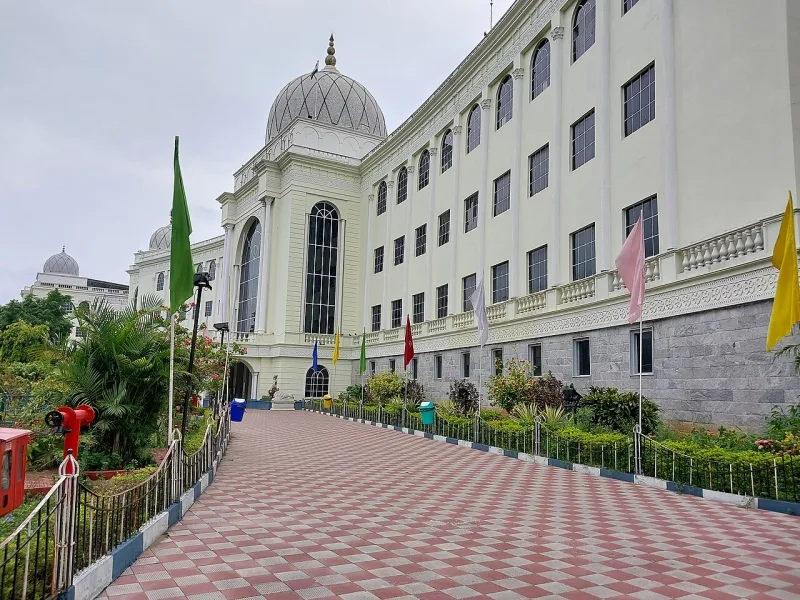
The site is best reached on foot from the Charminar area, or by auto, cab or TGSRTC bus, with the Mahatma Gandhi Bus Station metro interchange the nearest large hub. It fits naturally into a heritage walk with Charminar, the Mecca Masjid, Chowmahalla Palace and the Salar Jung Museum, helping visitors understand that the Old City is not only a collection of monuments but a community whose rituals continue. Afterwards, the lanes nearby offer tea, biscuits and traditional Hyderabadi dishes.
Muhammad Quli Qutb Shah built it in 1594, three years after Charminar, and the tile mosaic was completed under Abdullah Qutb Shah in 1611. It is recorded that the building was misused as a stable in Aurangzeb’s time, and that the second Nizam restored it in 1764–65. The state archaeology department oversees it, and a hereditary custodian family cares for it.
Stories worth knowing
Custodians across eleven generations
The present mutawalli is counted as the eleventh generation of the family entrusted with the shrine, a living thread through four centuries of changing rulers.
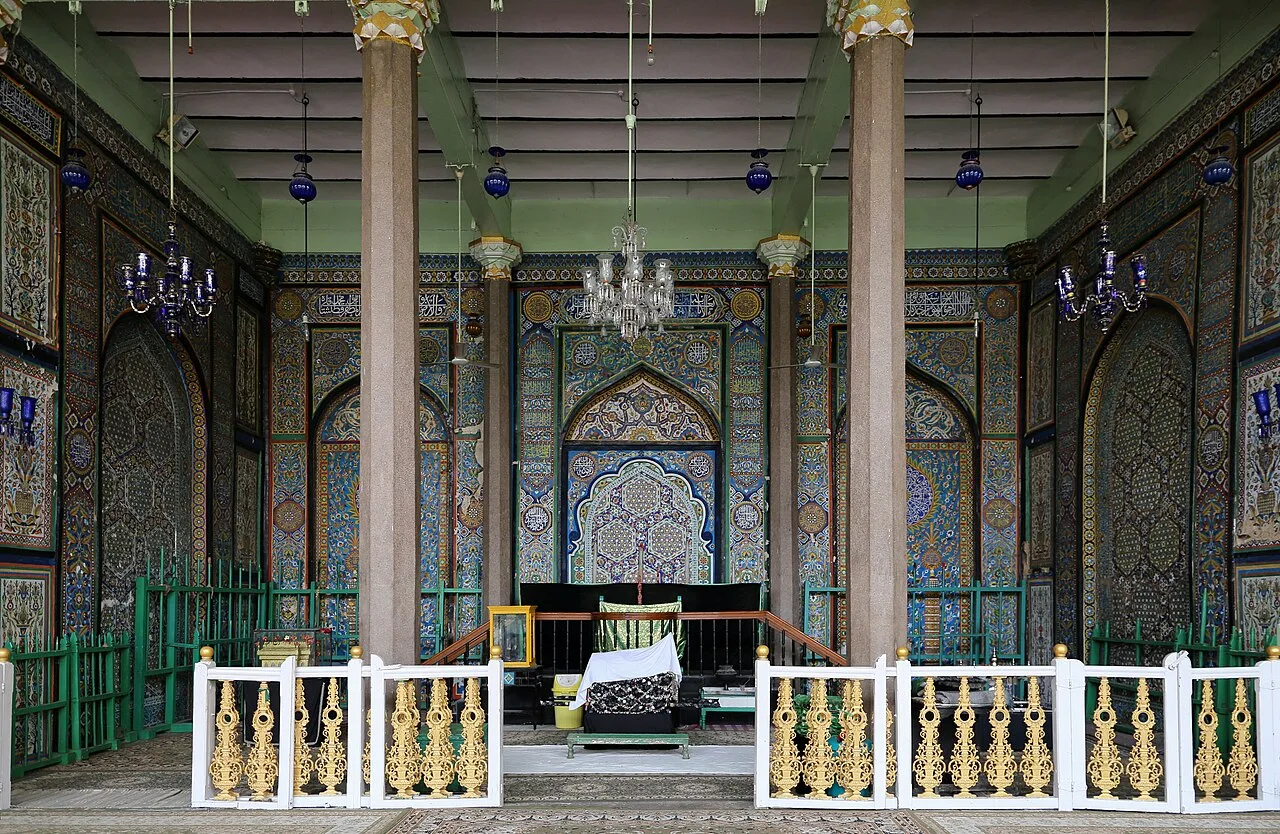 Photo: Sailko · CC BY 3.0