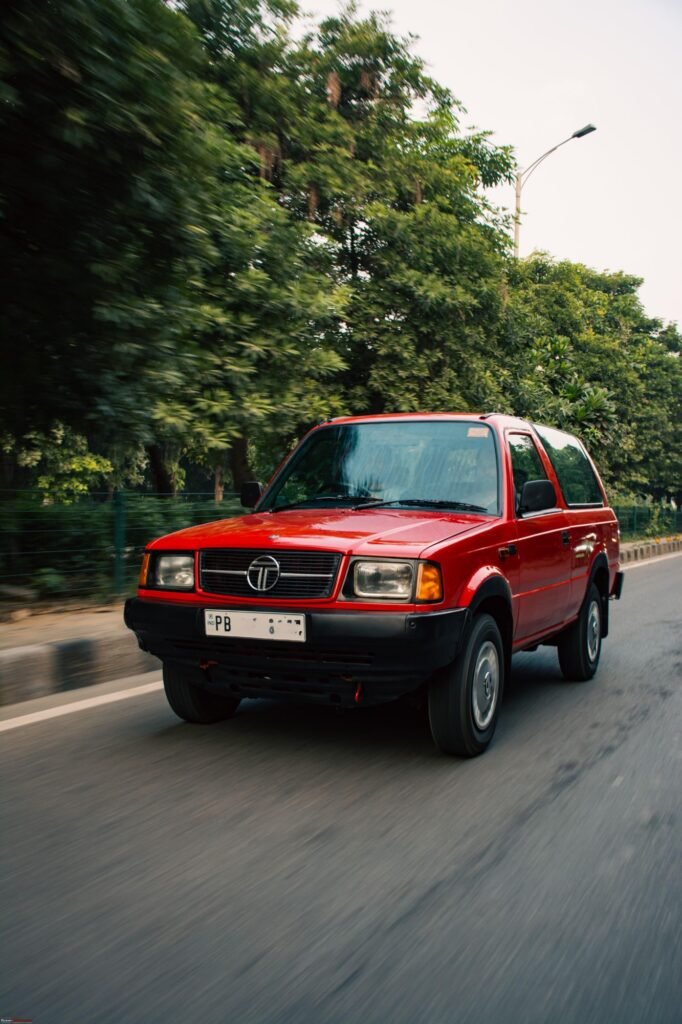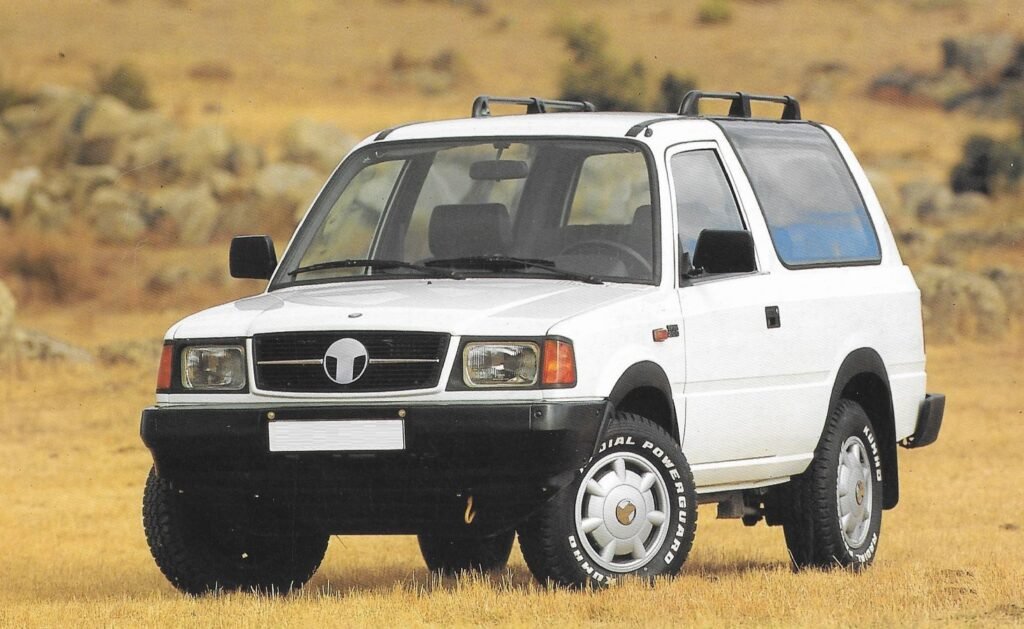
The Tata Sierra is one of the most misunderstood and underappreciated vehicles in Indian automotive history. Long before the words “lifestyle SUV” entered the market, the Sierra attempted to redefine what a personal vehicle could be. It was not designed as a rugged workhorse, nor as a traditional family car. Instead, it was conceptualized as a two-door, personal utility vehicle, blending comfort, style, and capability in a way that India had never seen before.
Launched in 1991, the Sierra was bold, unconventional, and futuristic — perhaps too much so for its time.
The Vision Behind the Sierra
In the late 1980s, Tata Motors (then TELCO) wanted to move beyond commercial vehicles and establish itself as a serious passenger car manufacturer. The Sierra was born as a statement vehicle, meant to showcase Tata’s engineering ambition and design capability.
Unlike the utilitarian Tata 407 or the rugged Tata Estate, the Sierra was aimed at urban buyers who wanted something different — a vehicle that looked adventurous without being crude.
Design: A Shape That Broke Every Rule
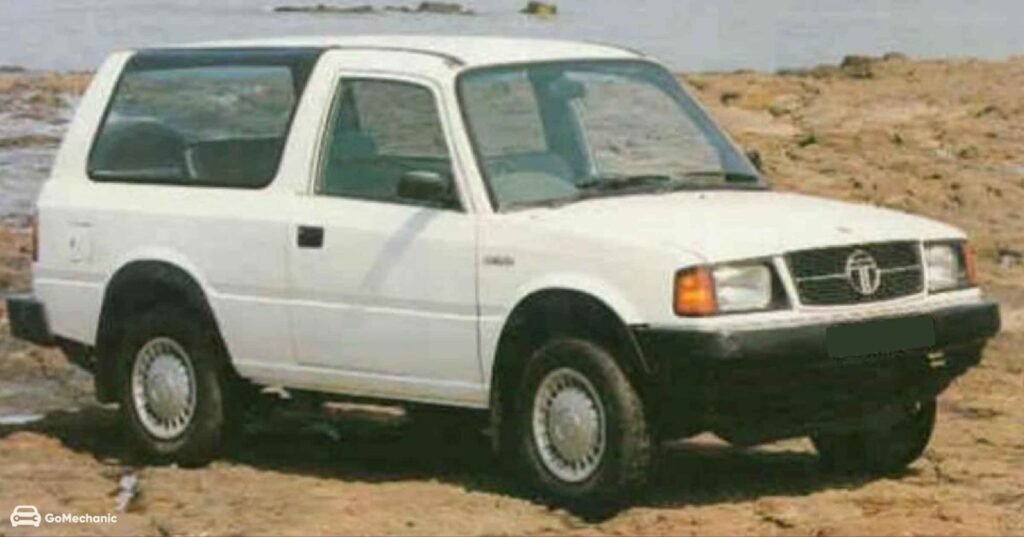
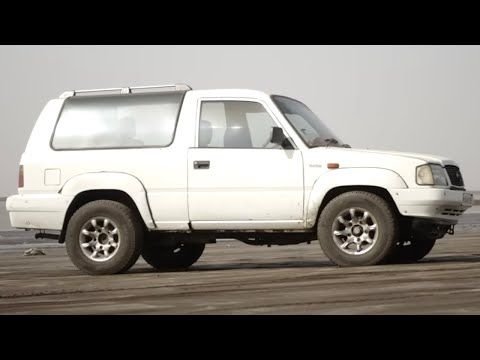
The Sierra’s most striking feature was its three-door layout and massive fixed rear glass panels on both sides. These windows, inspired by international SUVs like the Range Rover, flooded the cabin with light and gave rear passengers an unmatched sense of openness.
The tall stance, wide body, and slab-sided design made the Sierra look imposing yet elegant. It did not resemble any Indian vehicle before it. Even today, the Sierra’s proportions look distinctive and futuristic.
Platform and Chassis
The Sierra was built on a ladder-frame chassis, derived from Tata’s commercial vehicle expertise. This made it extremely strong and durable but also heavy. Suspension consisted of independent front suspension and a leaf spring rear setup, tuned more for comfort than hardcore off-roading.
Despite its SUV appearance, the Sierra was primarily rear-wheel drive, not a full-time off-roader. This positioning confused many buyers who expected rugged off-road capability.
Despite its SUV appearance, the Sierra was primarily rear-wheel drive, not a full-time off-roader. This positioning confused many buyers who expected rugged off-road capability.
Engine Line-Up: Diesel Dominance
At launch, the Sierra was offered only with a 1.9-litre, four-cylinder indirect injection diesel engine, producing around 68 bhp and 120 Nm of torque. This engine prioritized durability and fuel efficiency over performance.
Later, Tata introduced a 2.0-litre diesel engine, slightly improving power and torque. Both engines were paired with a 5-speed manual gearbox driving the rear wheels.
While reliable, these engines struggled with the Sierra’s weight, resulting in slow acceleration. This mismatch between design and performance became one of the Sierra’s biggest drawback.
The Sierra Petrol: A Short-Lived Experiment
Tata briefly introduced a petrol-powered Sierra, equipped with a 2.0-litre petrol engine. While smoother and more refined than the diesel, it suffered from poor fuel efficiency and high running costs, limiting its appeal in a diesel-dominated market.
As a result, the petrol Sierra remained extremely rare.
Interiors: Luxury Before Luxury Was a Thing
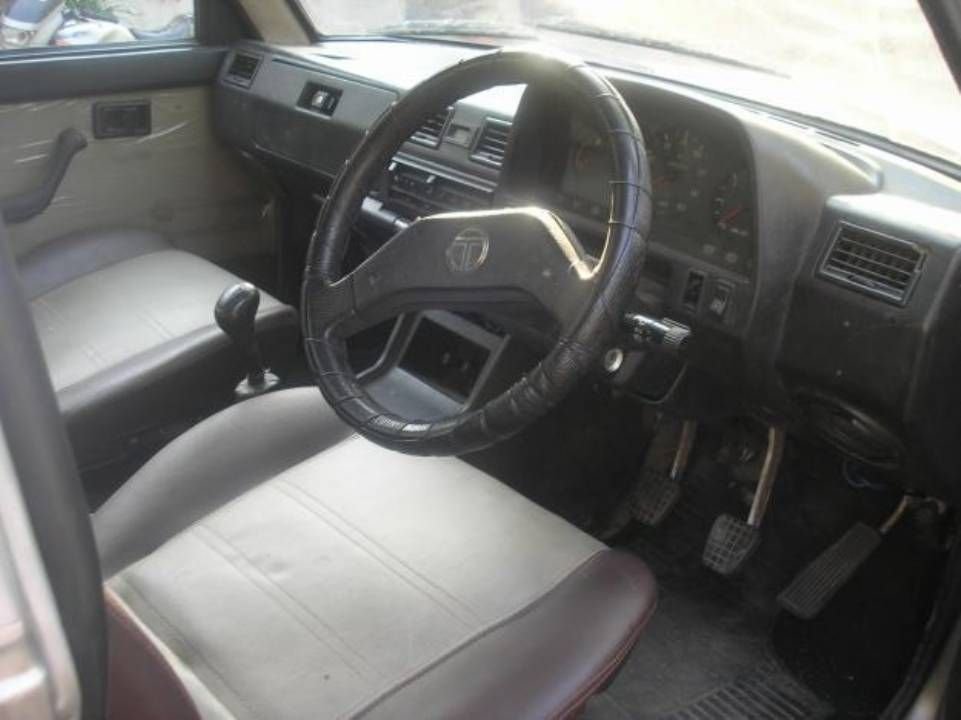
The Sierra’s cabin was arguably its strongest selling point. It featured individual rear seats, generous legroom, reclining backrests, and optional air conditioning — luxuries unheard of in early 1990s India.
The dashboard design was modern, ergonomically laid out, and solidly built. Materials were durable, if not premium, and the high seating position provided excellent road visibility.
The massive side glass panels made the rear seats feel more like a lounge than a conventional car interior.
Variants and Trim Levels
The Sierra was offered in multiple trims over its lifespan, including Standard, Turbo, and GX variants. Later models introduced features like power steering, improved upholstery, better sound insulation, and minor cosmetic updates.
The Sierra Turbo, introduced in the mid-1990s, featured a turbocharged diesel engine that improved drivability and made the vehicle more usable in real-world conditions.
Why the Sierra Failed Commercially
Despite its innovation, the Sierra struggled in the market. Its two-door design was impractical for Indian families, its diesel engine felt underpowered, and its premium pricing limited its appeal.
Most importantly, India in the early 1990s was not ready for a lifestyle vehicle. Buyers wanted either rugged utility or pure practicality — the Sierra offered something in between.
End of Production and Afterlife
Production of the Tata Sierra ended in 2000, quietly removing it from showrooms. However, its influence lived on. The Sierra’s design philosophy directly inspired the Tata Safari, which became one of India’s most successful SUVs.
Decades later, Tata Motors revived the Sierra name as an electric concept, acknowledging its importance and cult status.
Legacy: A Vision Ahead of Its Time
The Tata Sierra was not a failure of design or ambition — it was a failure of timing. Had it launched a decade later, it might have defined an entirely new segment.
Today, the Sierra is remembered fondly by enthusiasts as one of India’s boldest automotive experiments — a reminder that innovation often comes at a cost.