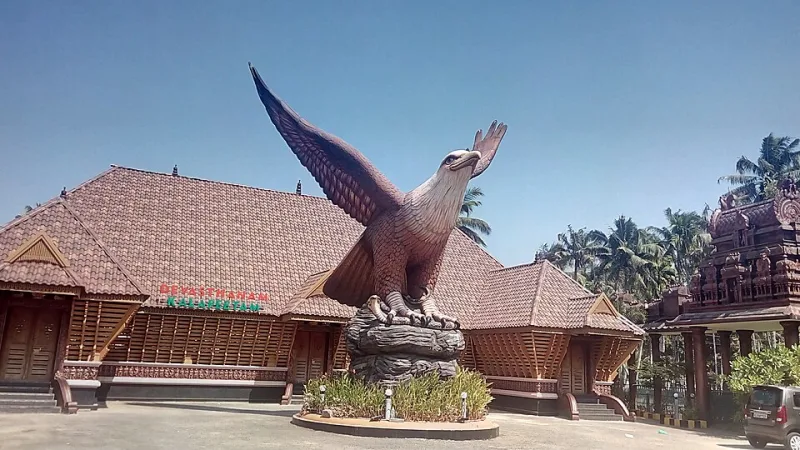
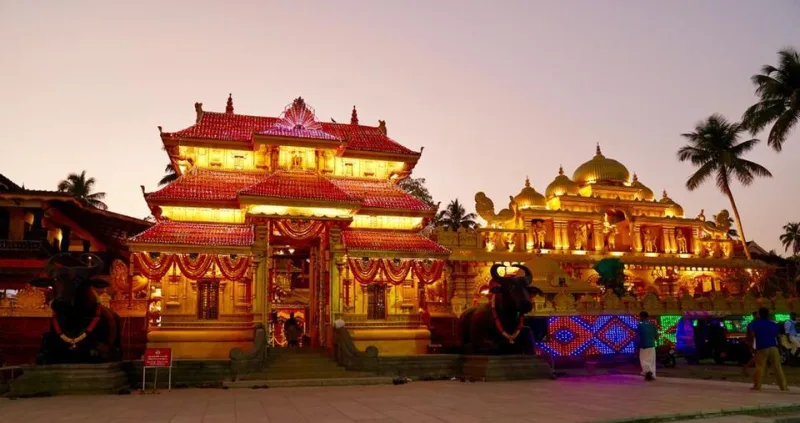
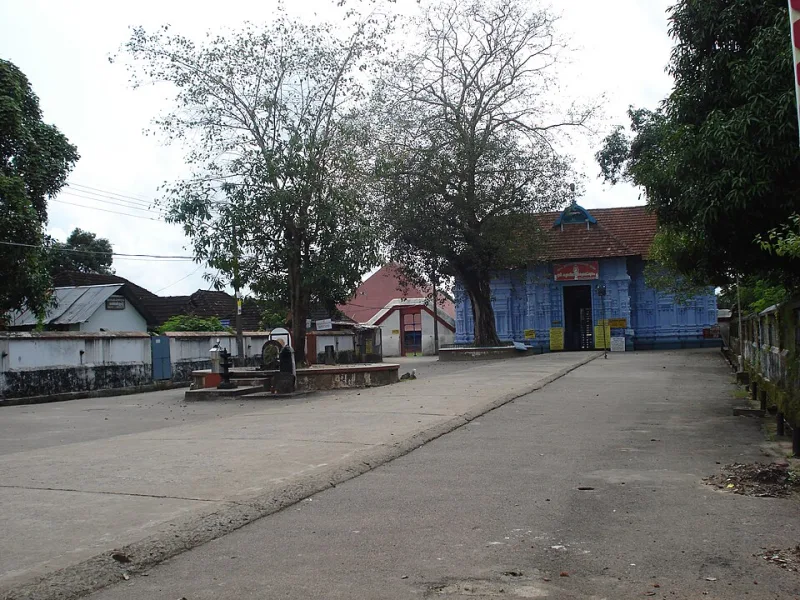
A well known temple of Vishnumaya Chathan at Peringottukara, grown from the shrine beside a family kalari and known for its distinctive rituals.
At a glance
What: A Hindu temple dedicated to Vishnumaya, also called Chathan or Kuttichathan.
Where: Peringottukara, in the western part of Thrissur district, Kerala.
When: Said to date from a remote past; no founding date is documented. Visit during the temple's open hours and festival days.
How: Travel from Thrissur by bus or taxi towards Peringottukara.
By whom: Tradition credits Kellunni Panicker with installing the idol; Panicker and Thiyya families hold ritual rights.
For whom: Devotees of Vishnumaya; the temple is reported to admit people of other religions.
About the temple
Among the green villages west of Thrissur, Peringottukara is known across Kerala and beyond for its temples of Vishnumaya. One of the most prominent is the Avanangattil Kalari Sree Vishnumaya Temple. Its followers regard it as the chief seat, or moolasthanam, of Vishnumaya worship, especially in the Malabar tradition.
The deity is shown facing east in a fierce form, holding a short staff known as the kuruvadi and a pot of the nectar of immortality, and riding a water buffalo. Devotees address him with a mixture of awe and familiarity. He is believed to answer prayers quickly, to protect those who seek his help and to act against injustice. People come with family disputes, illness, business troubles, delays in marriage and other worries.
Near the temple stands a mango tree with a small rock shrine called the Valiyachan Kottil, which local belief treats as an important source of the deity's power. Priests drawn from Panicker and Thiyya families perform worship according to customs that are described as preserving old shakteya practices not commonly found in other Kerala temples.
The meaning of the name
The name carries a picture of the old landscape. Avanakku is the Malayalam word for the castor plant, and kadu means a forest. The area is said to have been thickly covered with castor, and over time Avanakku kadu changed into the form Avanangattil. The second part, kalari, refers to the training ground where kalaripayattu, the martial art of Kerala, was taught. Many temples in the state grew beside such family kalaris, where weapons, healing and worship were closely connected.
History as it is told
No inscription or dated record establishing the age of the temple has been found in the sources used for this page. The commonly repeated account is that it began as a small shrine, and that Kellunni Panicker installed the image of Vishnumaya close to one of his kalaris. The temple's own account connects the arrival of the deity with the Panicker brothers returning to their home village, and speaks of a ruler who, in consultation with those responsible for the Triprayar Sree Rama Temple, had a temple built nearby. These statements come from the institution and have not been independently confirmed, so they are best read as its tradition.
Myths and legends
According to the mythology of Vishnumaya, he is a son born to Shiva and Parvati when the goddess appeared in the form of a woman of the forest, remembered in many tellings as Koolivaka, who raised him. The young god was brave and playful. To help in the fight against a powerful demon, a great company of brother spirits came into being, so that Vishnumaya is spoken of together with hundreds of Chathans. The account associated with this temple says that some of the brothers gave their lives in the battle between Shiva's attendants and the demon before victory was won.
The name Chathan is often explained as a form of Sastha, and devotees sometimes link the traditions of Chathan and of Ayyappa, although they are worshipped as distinct forms.
Rumours, popular beliefs and caution
Few deities of Kerala are surrounded by as many tales as Kuttichathan. Stories speak of stones falling on roofs, clothes catching fire and other mischief blamed on an angry spirit, and films and comics have turned these into entertainment. There is also a popular notion that Chathan can be invoked to harm an enemy. Such claims have no evidence, and devotees at temples describe their worship as seeking protection and blessing.
Visitors should be careful with anyone, in person or online, who promises certain results, threatens misfortune or demands large sums for secret rituals in the name of any temple. Deal only with the official temple office, ask for charges in writing and keep receipts. Nothing offered at a place of worship should replace medical treatment, legal advice or police help.
Claims about which Vishnumaya temple in the village is the oldest or most authentic also differ, since more than one institution describes itself in such terms. This page does not decide between them.
Festivals and offerings
The Chathan tradition is known for vellattu, a ritual performance in which the deity is invoked with music and movement, for kalam drawings made with coloured powders, and for songs that narrate the deity's deeds. Offerings, their timing and charges vary, and some are booked in advance. Ask the office which rituals take place on the day of your visit.
Kalari and temple together
The link with a kalari deserves a moment's thought. In traditional Kerala a kalari was a school of body and mind. The floor was often sunk below ground level, a small raised shrine stood in one corner and students saluted it and their teacher before practice. The master, usually given the title of Panicker or Gurukkal, taught strikes and weapons and also treated injuries with massage and herbs. Worship and training were therefore not separate activities, and a family that kept a kalari might also keep deities whose protection was thought to guard its students. Over generations a shrine of this kind could draw worshippers from far beyond the family and grow into a public temple, which is the broad pattern suggested by this temple's name and tradition.
Questions visitors often ask
First time visitors ask whether they need an appointment. Ordinary worship generally does not, but particular rituals are booked in advance. They ask what to offer; the office can explain the options and their charges, and a simple prayer is as acceptable as an elaborate rite. They ask whether the deity is to be feared. Devotees answer that the fierce form is directed against harm and injustice, and that sincere visitors approach without anxiety. Anyone troubled by fear after hearing stories should speak calmly with family, and seek professional help if worry affects sleep or daily life.
Visiting respectfully
Dress modestly, leave footwear outside, switch off your phone near the shrines and follow the instructions of priests and staff. Some rituals are intense and personal; do not photograph people taking part without clear permission. Elderly visitors and children should avoid the most crowded hours. An hour or two is usually enough on an ordinary day.
Nearby places
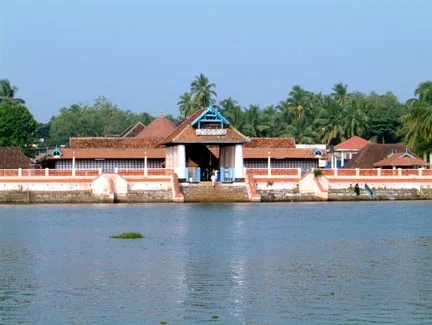
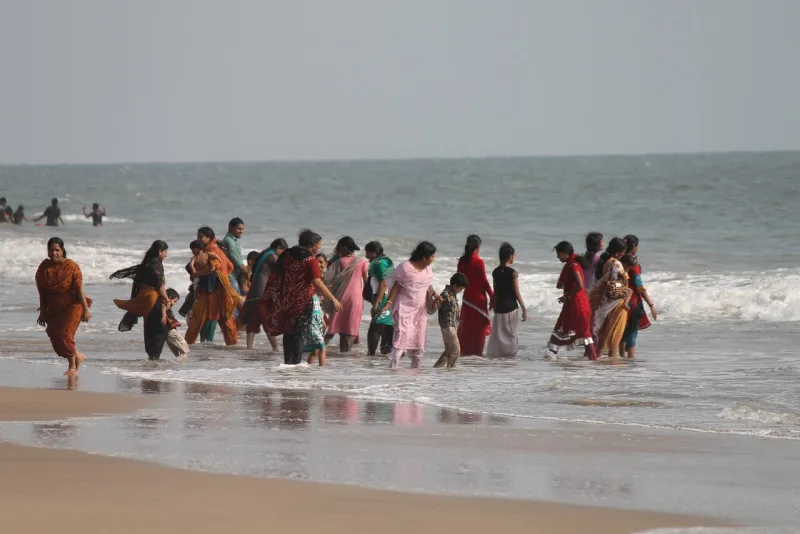
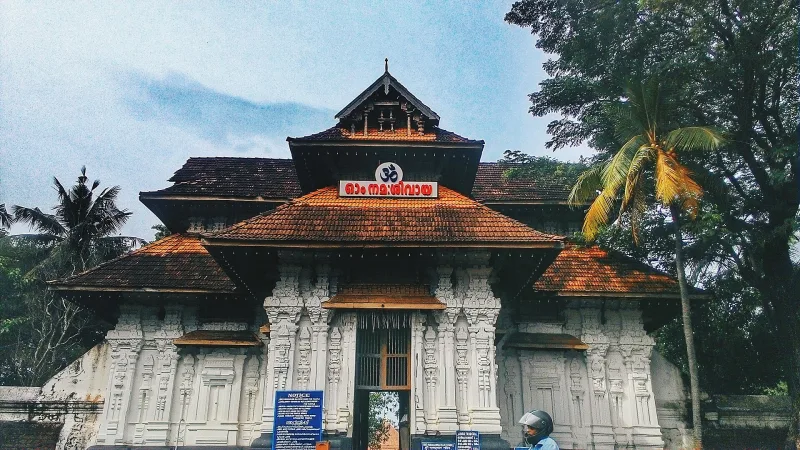
Peringottukara has other Vishnumaya temples, including Kanadikavu and the Peringottukara Devasthanam, each with its own management and customs. The Triprayar Sree Rama Temple on the river is a short drive away, Snehatheeram beach at Thalikulam offers an evening by the sea, and the city of Thrissur, with the Vadakkunnathan Temple, is within easy reach.
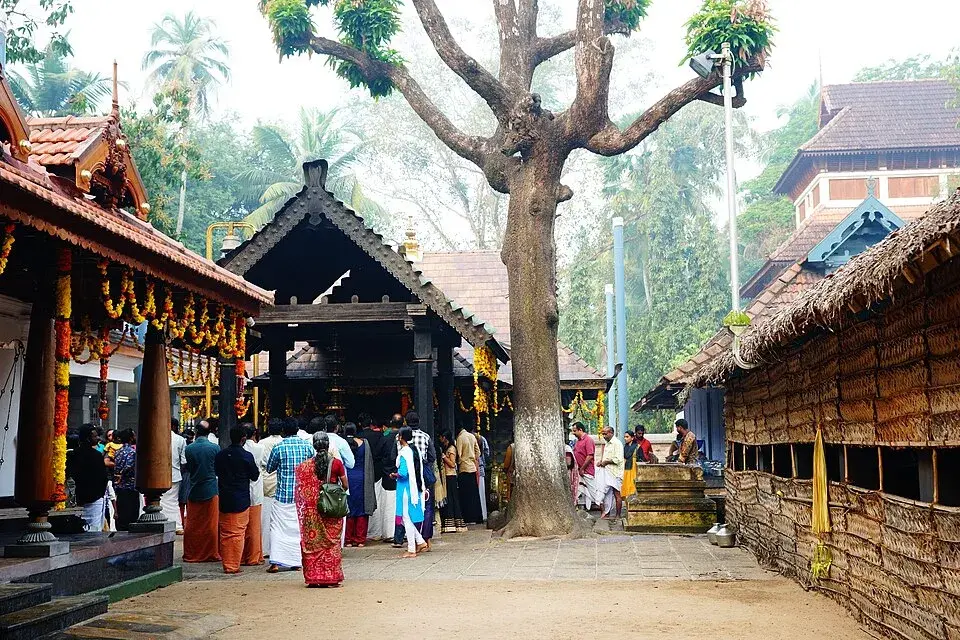 Photo: Mainowner · CC BY-SA 4.0