The colonial prison where India’s freedom fighters were held in solitary cells, now a National Memorial with a museum and an evening light and sound show.
The colonial prison where India’s freedom fighters were held in solitary cells, now a National Memorial with a museum and an evening light and sound show.
The Cellular Jail National Memorial is the colonial prison in the Andaman Islands where India's freedom fighters were held in solitary cells. Known to generations as Kala Pani, the black water, it stands above the sea at Atlanta Point in Sri Vijaya Puram, formerly Port Blair. Long three-storey wings of brick, row upon row of identical iron doors and a central watchtower from which a few guards could see down every corridor make this one of the most powerful historical sites in the country. Today it is a place of remembrance, with a museum and an evening light and sound show.
The British began using the Andamans as a penal settlement after the uprising of 1857, holding prisoners first on Ross Island and Viper Island. A review late in the nineteenth century recommended a harsher stage of punishment, and construction of a new prison began in 1896. It was completed in 1906 at a recorded cost of 5,17,352 rupees. The design drew on the panopticon idea, with seven wings spreading like spokes from a central tower. There were 696 cells, or 698 in some official accounts, each about four and a half metres by two point seven, with a small ventilator set high in the wall. No prisoner could easily see or speak to another, which gave the jail its name.
Among those held here were Vinayak Damodar Savarkar and his brother Ganesh, Batukeshwar Dutt, Barindra Kumar Ghosh, Ullaskar Dutta, Hemchandra Kanungo, Sachindra Nath Sanyal, Yogendra Shukla and Sohan Singh Bhakna, drawn from movements in Bengal, Punjab, Maharashtra and beyond. In May 1933 thirty three prisoners refused food in protest at their treatment. The authorities force-fed them, and Mahavir Singh, Mohan Kishore Namadas and Mohit Moitra died. Protest on the mainland, with Mahatma Gandhi and Rabindranath Tagore among the voices raised, led to political prisoners being repatriated from 1937, and the jail was emptied by 1939. During the Japanese occupation it was used again, and many residents suspected of helping the British were held, tortured or killed.
The building itself has suffered. It was damaged by the earthquake of 1941, two wings were pulled down during the occupation for materials to build bunkers, and two more were demolished after Independence despite protests. The watchtower and three wings survive. Prime Minister Morarji Desai declared the jail a National Memorial on 11 February 1979, and in 2014 it was placed on India's tentative list for UNESCO World Heritage.
Walk the surviving wings, step into a solitary cell including the one associated with Savarkar, see the gallows block and spend time in the museum, art and photo galleries. Pause at the eternal flames near the entrance and look for the statues in the garden. An authorised guide can bring the corridors to life. Return in the evening for the light and sound show, which tells the story inside the compound. The 1996 Malayalam film Kaalapani introduced this history to many viewers.
Book entry tickets online before you travel; the official portal allows booking up to fifteen days ahead for at most ten people, payment is online and tickets are non-refundable. Carry original government photo identification. Entry is listed at thirty rupees for Indians and one hundred for foreign visitors, with children up to five free, and the show at three hundred rupees for adults and one hundred and fifty for children. The memorial is closed on Mondays and public holidays. Official pages publish different hours and show timetables, with the portal closing entry at twenty minutes past four, so confirm when you book.
Dress modestly, remove footwear where asked, carry no food or drink inside, supervise children under twelve and note that drones are strictly prohibited. Allow two to three hours plus the show, in the October to May season. The Netaji memorial and Marina Park are close by. Walk quietly: behind each door lay years of a human life given for a free India.
The central watchtower and the radiating wings
A solitary cell, including the one associated with Savarkar
The gallows block
Museum, art gallery and photo gallery
The evening light and sound show
Photos (6)
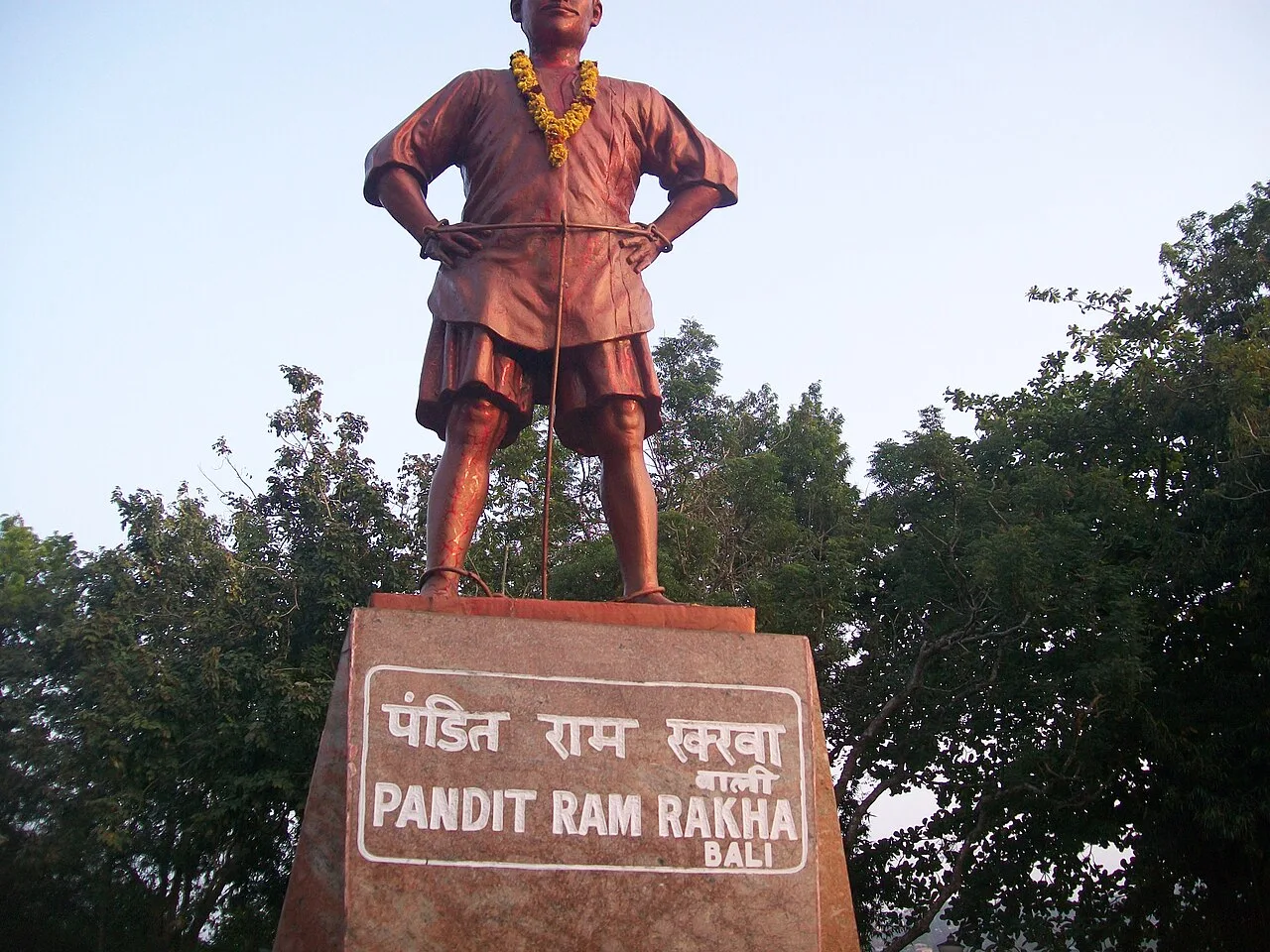
The entrance of the National MemorialTwo wings meeting at the central watchtowerThe courtyard between the wingsThe jail lit in the national colours at nightA cell block of the jailMemorial statue beside the jail
The British began using the Andaman Islands as a penal settlement after the uprising of 1857. Prisoners were first held on Ross Island and Viper Island. A late nineteenth-century review recommended a harsher “penal stage” of transportation, and construction of a new prison began in 1896. It was completed in 1906, at a recorded cost of ₹5,17,352.
The design drew on the panopticon idea: seven wings radiated like spokes from a central tower. There were 696 cells (some official accounts say 698), each about 4.5 by 2.7 metres with a small ventilator set high in the wall. No prisoner could easily see or speak to another, which is how the jail got the name “cellular”.
The building was damaged by the earthquake of 1941. During the Japanese occupation (1942–45) two wings were pulled down and the bricks reused for bunkers. Two more wings were demolished after Independence, despite protests from former prisoners and political leaders, and the Govind Ballabh Pant Hospital grew up on part of the site. The watchtower and three wings survive.
On 11 February 1979 Prime Minister Morarji Desai declared the jail a National Memorial. It was placed on India’s tentative list for UNESCO World Heritage in 2014.
Stories worth knowing
The prisoners of Kala Pani
To cross the “black water” was to be cut off from family, community and, for many, any hope of return. Among those held here were Vinayak Damodar Savarkar and his brother Ganesh, Batukeshwar Dutt, Barindra Kumar Ghosh, Ullaskar Dutta, Hemchandra Kanungo, Sachindra Nath Sanyal, Yogendra Shukla and Sohan Singh Bhakna, drawn from movements in Bengal, Punjab, Maharashtra and beyond.
Their names are recorded in the memorial, and statues of several of the revolutionaries stand in the garden beside the jail.
The hunger strike of 1933
In May 1933 thirty-three prisoners refused food in protest at their treatment. The authorities force-fed them. Mahavir Singh, Mohan Kishore Namadas and Mohit Moitra died.
Mahavir Singh was born in 1904 in Shahpur Tahla, in present-day Uttar Pradesh, joined revolutionary work as a student in Kanpur, and had helped Bhagat Singh’s circle in Lahore. He was 28 when he died. His statue stands in front of the jail.
How the jail was emptied
News of conditions in the Andamans stirred protest on the mainland, with Mahatma Gandhi and Rabindranath Tagore among the voices raised. Political prisoners were repatriated from 1937, and the jail was emptied by 1939. Its use as a place of imprisonment returned during the Japanese occupation, when residents suspected of helping the British were held and many were tortured or killed.
On screen
The 1996 Malayalam film Kaalapani, set in the jail in 1915, brought its story to a wide audience; parts of it were filmed here.
Things to see and do
Book entry tickets online before you travel
Walk the wings with an authorised guide
Spend time in the galleries and read the names of the prisoners
Stay for the light and sound show
Combine the visit with the Netaji memorial and Marina Park nearby
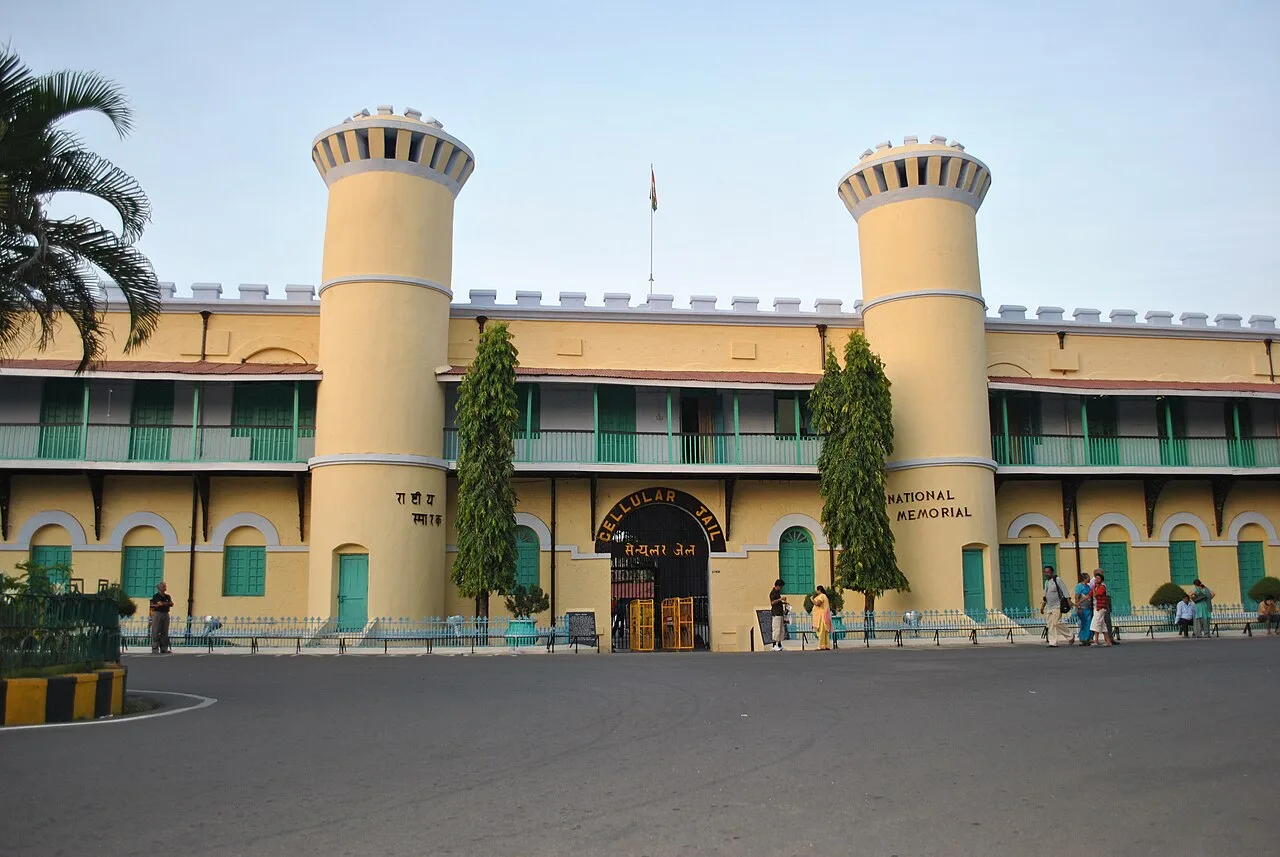 Photo: Jomesh · CC BY 3.0
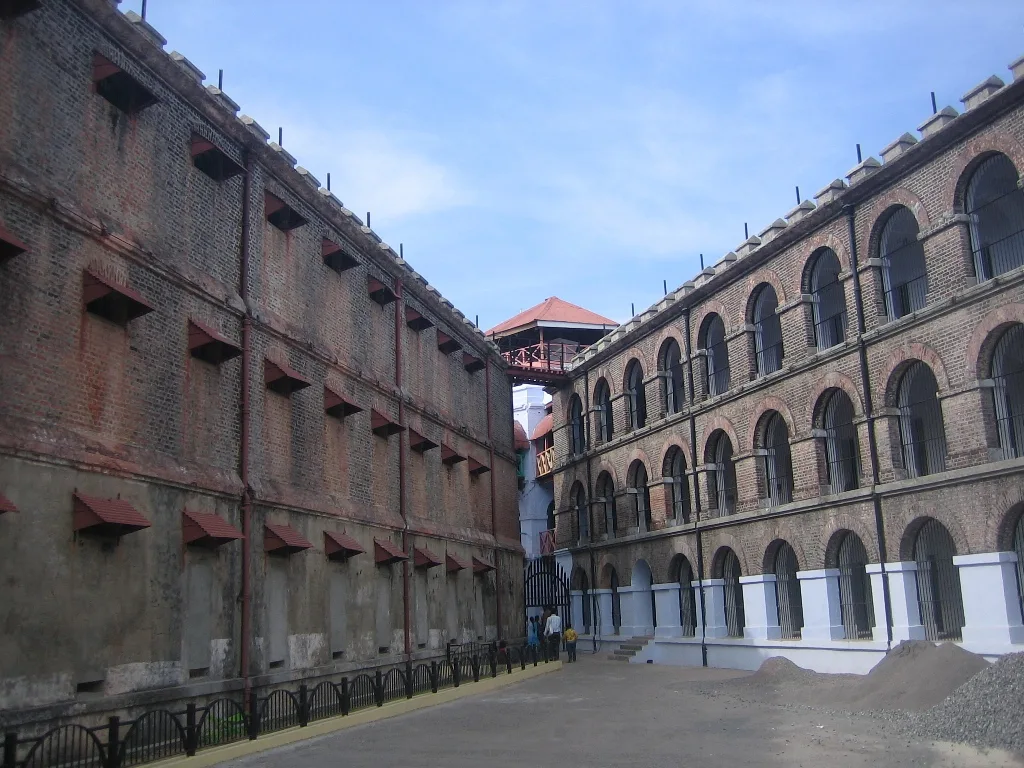 Photo: Jomesh at Malayalam Wikipedia · CC BY 3.0
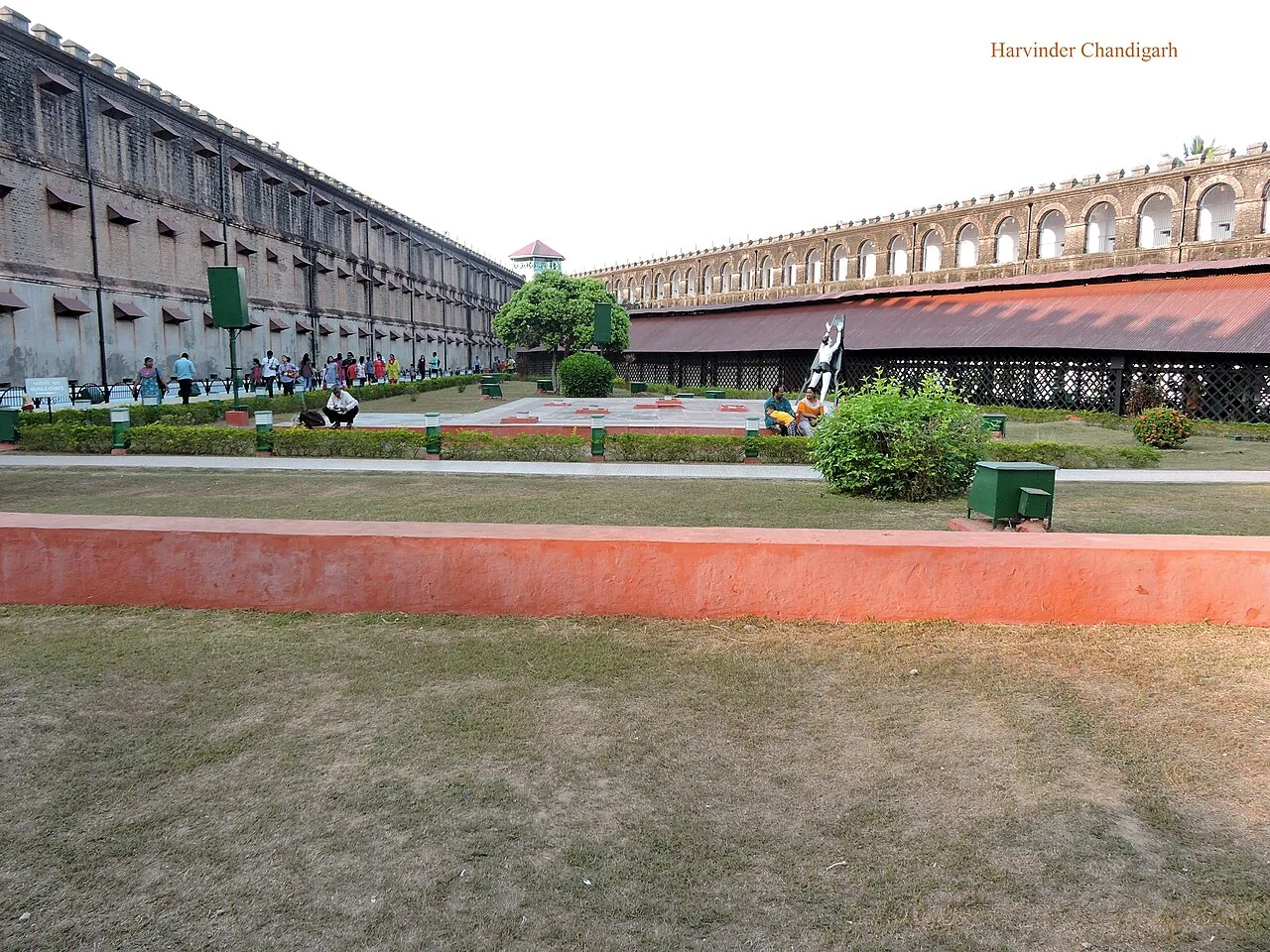 Photo: Harvinder Chandigarh · CC BY-SA 4.0
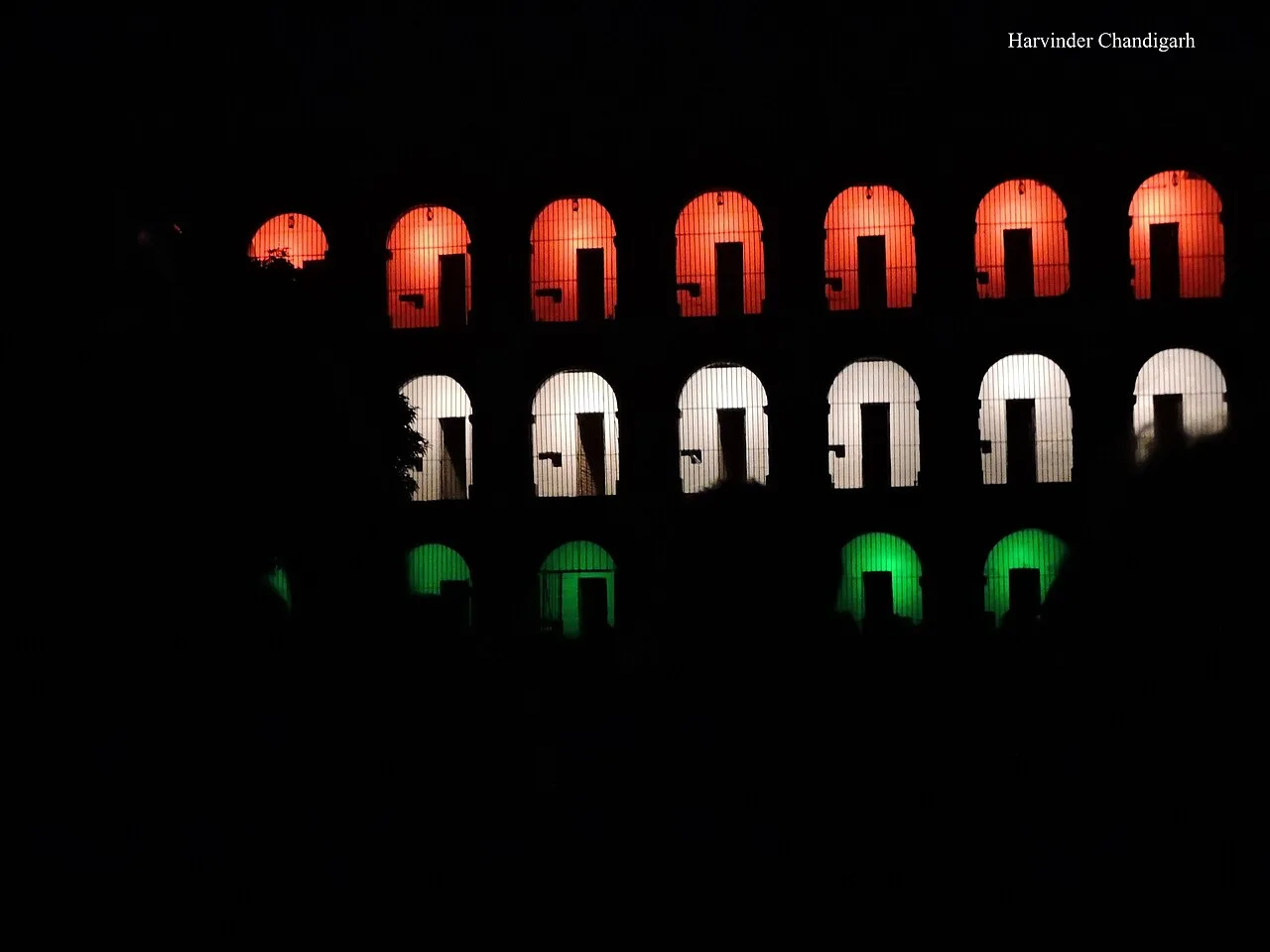 Photo: Harvinder Chandigarh · CC BY-SA 4.0
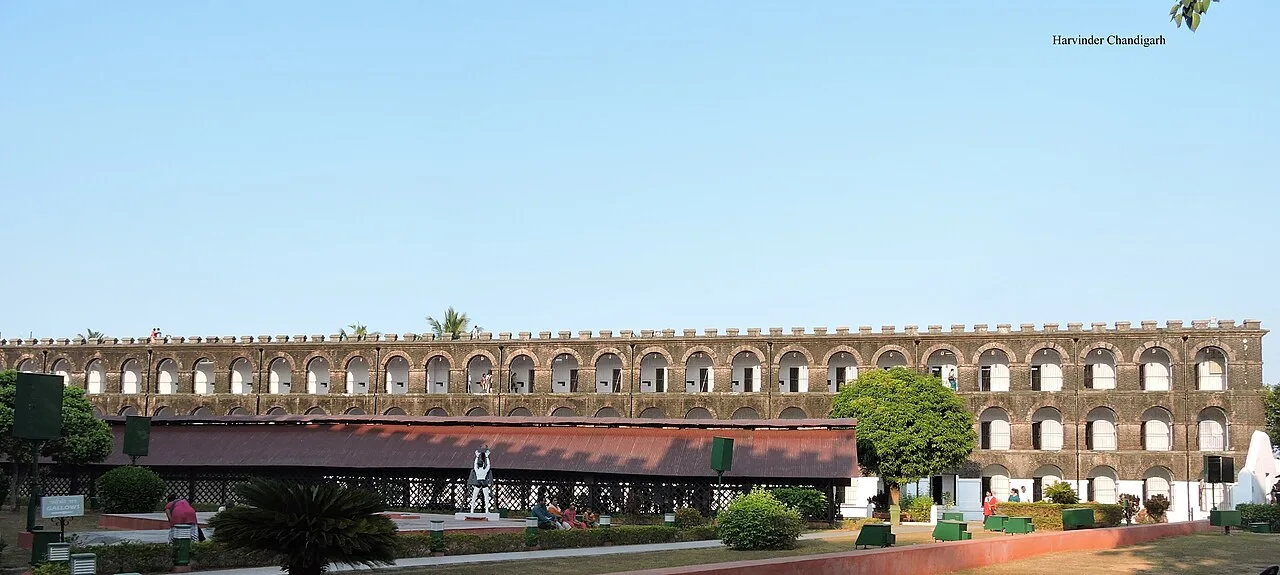 Photo: Harvinder Chandigarh · CC BY-SA 4.0