A large research garden in the foothills of the Western Ghats, holding tens of thousands of living plant collections.
At a glance
What: A botanic garden and research institute for tropical plants.
Where: Palode, in the foothills of the Western Ghats.
When: Established on 17 November 1979.
How: Travel by road from the capital towards Palode.
By whom: Founded by the Government of Kerala; it works under the state's council for science, technology and environment.
For whom: Students, botanists, gardeners, nature lovers and families.
About the garden
A botanic garden differs from a pleasure park. Its plants are collected, labelled, propagated and studied so that species can be understood and saved. The institute at Palode is regarded as one of the largest conservatory botanic gardens in India for tropical plant resources. Its annual report speaks of more than 50,000 live collections representing nearly 5,000 species, arranged in an arboretum, ornamental sections and thematic gardens.
Listings by the international network of botanic gardens mention about 600 species of orchids with some 150 hybrids, about 60 species of bamboo and around 800 species of trees and woody climbers. Numbers change as collections grow and records are revised. A tissue bank preserves threatened species, including at least one, Exacum atropurpureum, reported to be represented only there, and the nursery offers plants for sale.
History
The idea of a garden for the study and conservation of wild plant genetic resources is credited to Professor A. Abraham, a botanist remembered for his far sighted approach. The state government established the institute in November 1979. It later took the name of Jawaharlal Nehru. The location in the Ghats' foothills gave it heavy rainfall, forest surroundings and closeness to one of the richest floras in the country.
The story of arogyapacha
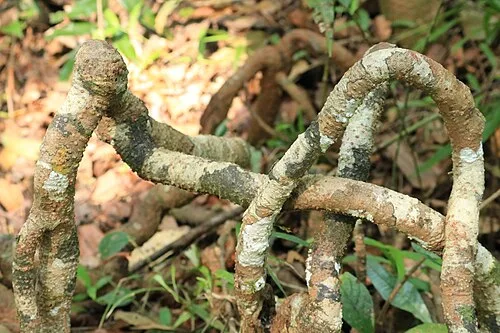
The institute is linked with a celebrated episode in the history of fair dealing with indigenous knowledge. On a botanical expedition, scientists learned from Kani guides about a plant, known as arogyapacha and scientifically as Trichopus zeylanicus, whose fruit was said to give strength and keep off fatigue. Research followed, a herbal formulation called Jeevani was developed, and when the technology was licensed for manufacture, a share of the fee and royalty was set aside for the Kani community through a trust. The arrangement received international recognition as an early example of benefit sharing. It also raised hard questions, about who speaks for a community, about supplies of the plant and about forest rules, which scholars continue to discuss. Both the achievement and the difficulties are instructive.
Plants and legend
Kerala's old traditions treat plants with reverence: sacred groves left uncut, the tulsi in the courtyard, the ten flowers gathered for Onam, and the Ayurvedic practitioner's knowledge of roots and leaves. A seventeenth century work compiled under the Dutch governor Hendrik van Rheede, the Hortus Malabaricus, described the plants of this coast with the help of local physicians, among them Itty Achuthan. It remains a landmark showing how much local healers knew. The garden at Palode continues, with modern methods, the effort to record and protect that wealth.
Claims and facts
Herbal products are often advertised with sweeping promises. A plant's traditional use is a starting point for research and not proof that it cures a disease. Do not taste, pick or brew anything from a collection; some attractive plants are poisonous. Consult a qualified doctor about treatment. Claims that the garden is an open park for picnics also mislead, since it is a working research campus with rules.
What to look for
In the arboretum compare bark, buttress roots and leaf shapes. In the orchid houses notice how many orchids live perched on supports, taking moisture from air, and how varied their flowers are. Among bamboos, giant clumps stand beside slender kinds. Read labels: family, scientific name and origin turn a pretty plant into a known one. Flowering changes with season, so a second visit shows a different garden.
Why living collections matter
Many plants of the Western Ghats grow nowhere else, and some survive only in small patches that a road, quarry or landslide could erase. A living collection keeps individuals safe, produces seed and cuttings and lets researchers discover how a species germinates and grows. Seed storage and tissue culture, in which new plants are raised from tiny pieces under sterile conditions, add further insurance. Where possible, nursery raised plants can be returned to suitable wild sites. None of this replaces protection of the forest itself, but it buys time and knowledge.
Gardening ideas to take home
Observe how shade lovers are grouped beneath trees and sun lovers in open beds, how mulch keeps soil moist and how climbers are given support. A visitor with a balcony may leave determined to grow a few native herbs, and one with land may think again before clearing a patch of old trees.
For students of botany
College groups find the garden useful for seeing in life the families they have met only in textbooks. Prepare a list of families to locate, such as the orchid, grass, ginger, nutmeg and legume families, record features in a field notebook and note the information on each label. Questions on research topics, internships or technical training should be addressed to the institute in writing, where the proper section can reply. Respect laboratories and restricted plots, since experiments can be ruined by a single careless touch. A careful drawing often teaches more than a hurried photograph, because the hand notices details the eye skims over.
Visiting
Confirm visiting days, hours, charges and the areas open to the public with the institute before travelling, particularly for groups. Educational visits are best arranged in writing. Stay on paths, keep voices low, carry water and an umbrella, and watch for insects and leeches in wet weather. Photography for personal use may be allowed in many areas; ask about restrictions. Do not carry in or out any plant material without authorisation.
Two to three hours gives a worthwhile visit.
Questions visitors ask
Can I buy plants? The nursery sells stock, and availability changes. Is it good for children? Yes, particularly with a simple task such as finding five leaf shapes. Is the whole campus walkable? It is extensive and sloping, so choose sections according to stamina.
Nearby
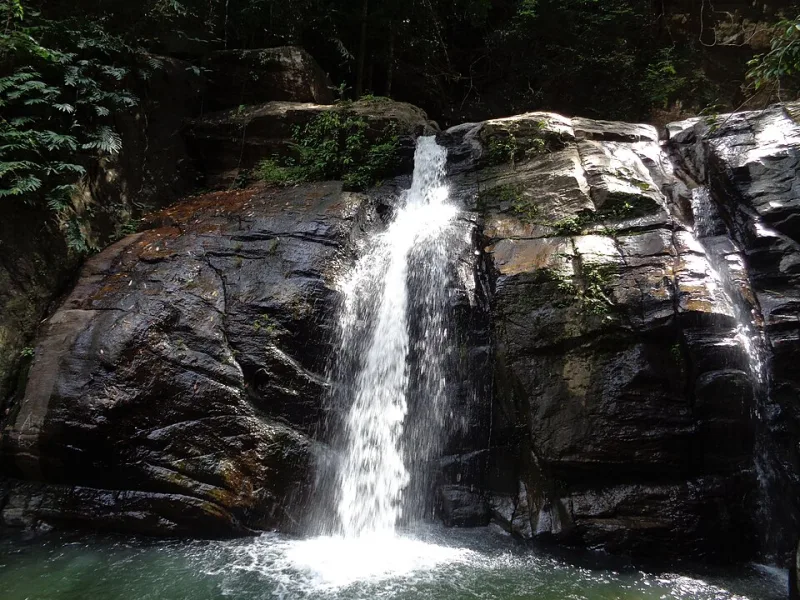
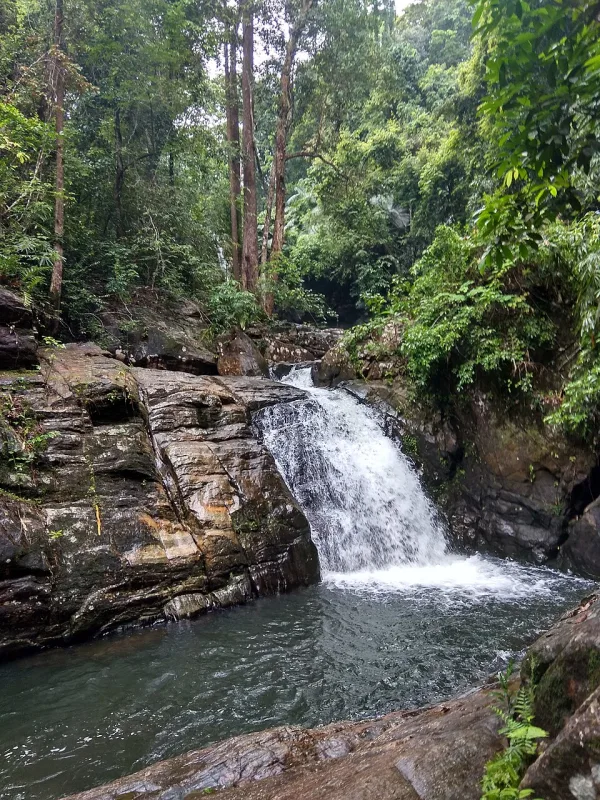
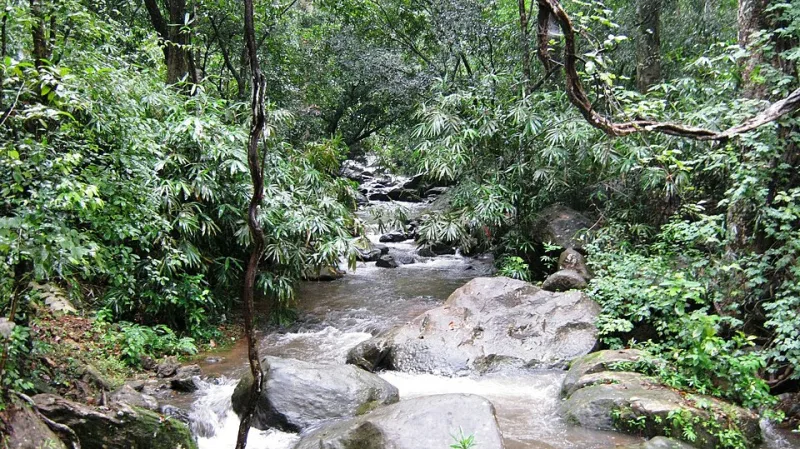
Ponmudi, the Peppara forests, the Kallar river, the Mankayam stream area and Koyikkal Palace at Nedumangad are within reach, making Palode a green stop on a hill district circuit.
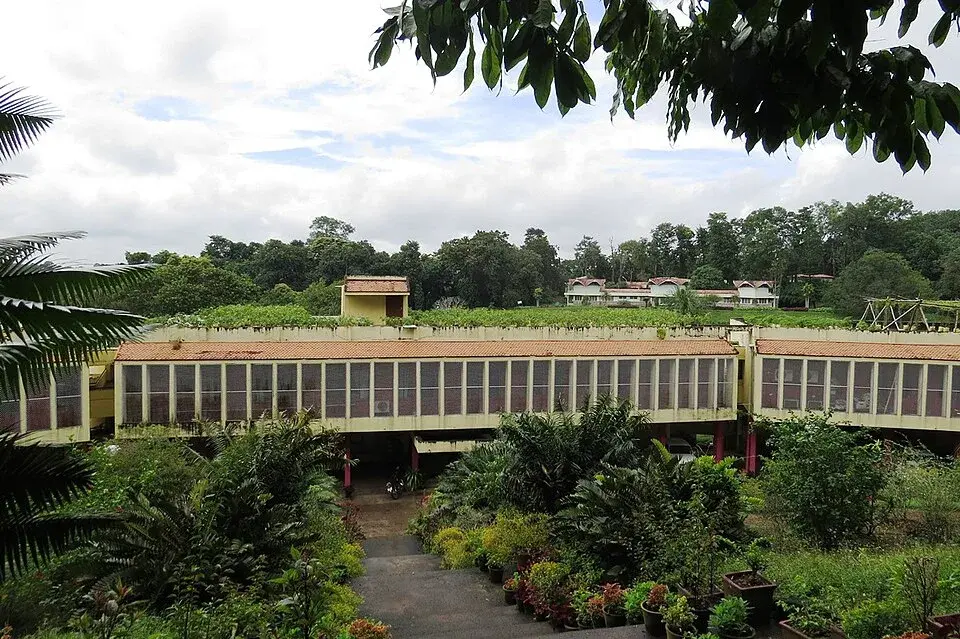 Photo: Westernghatsindia · CC BY-SA 4.0