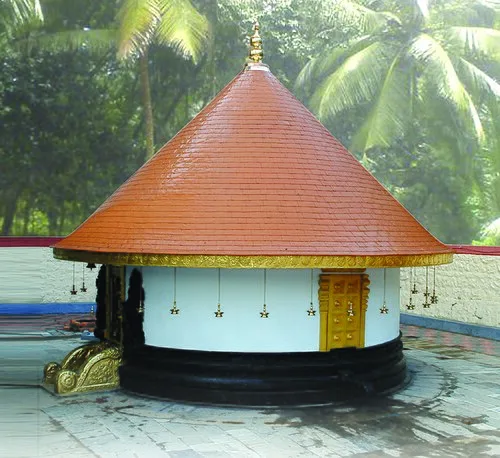
A Devaswom temple of Dharma Sastha in the green village of Pacha, linked by tradition with Sabarimala and known for its apsidal sanctum and its swimming pond.
At a glance
What: A temple of Dharma Sastha with a large pond.
Where: Pacha village near Nandiyode, west of the Agasthyamala hills.
When: Daily worship; busiest on Saturdays and on the first day of each Malayalam month.
How: By road through Nedumangad toward Palode.
By whom: The Travancore Devaswom Board, in its Ulloor group and Thiruchittoor sub-group.
For whom: Devotees of Sastha, Sabarimala pilgrims and travellers on the hill road.
The temple
Pacha means green, and the village lives up to its name, with paddy land, groves and a backdrop of hills. The temple of Dharma Sastha and its pond are the centrepiece. Hundreds of worshippers are said to come daily, and the temple is spoken of as closely connected with the Sabarimala tradition.
The setting
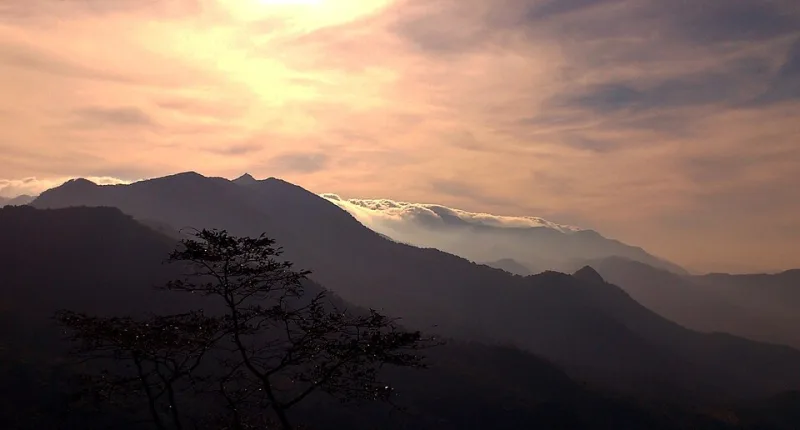
To the east lie the Vamanapuram river country, the Ponmudi hills and patches of forest, with the Agasthyamala range beyond. A published description imagines the site as an old hermitage grove, once alive with big cats, cuckoos, magpie robins and hornbills. Settlement has changed the picture, but the greenery remains.
Parashurama's Sasthas
Legend counts 108 Sastha images installed by Parashurama in the hill country wherever he perceived divine presence. According to the temple's tradition, Pacha was fifth in order, after Sabarimala, Achankovil, Aryankavu and Kulathupuzha. Other temples have their own listings, so the ranking should be received as this shrine's account of itself.
Eighteen miles
The same tradition says that these five temples lie at equal distances of eighteen miles from one another as the crow flies. Eighteen is a sacred number in Sastha worship, recalling the eighteen steps at Sabarimala. A map shows that the actual distances vary, so the statement is best understood as sacred geometry and not as a survey.
Self-manifested
The deity is believed to be swayambhu, arisen of itself and not carved or installed by human hands, with a person of spiritual insight later recognising it and performing the rites. An astrological enquiry held in 1994 is reported to have affirmed this. Devotees also say the stone image is slowly growing, a belief that has not been measured.
What a deva prashnam is
A deva prashnam is a Kerala method in which astrologers seek the deity's will through calculation and signs, often before renovations or to understand troubles at a temple. Committees frequently act on its recommendations. Its findings carry religious authority for believers; they are not historical or scientific evidence.
The elephant's back
The sanctum is built in the shape called gajaprishta, the elephant's back, with a rounded rear. The temple's account calls it the only one of its kind in Kerala, built by the old rules of carpentry. Apsidal sanctums are indeed unusual, though a few others are reported in south India, so the claim of uniqueness is open to checking.
Apsidal architecture
Buildings with a curved back are very old in India, seen in rock-cut Buddhist halls and early brick temples. In Kerala the form survives mainly at some Sastha and Shiva shrines. Walk round the permitted path and notice how roof timbers are fitted to follow the curve, a demanding piece of joinery.
Antiquity
The raised position of the shrine and the form of its front structures are offered as signs of great age. The account even places its story in very remote times. Such language expresses reverence. No dated inscription or archaeological report was cited, and the age of the present building is not established.
The temple pond
The pond once served irrigation. It has since been developed as a swimming pool of competitive standard, and many swimmers trained here are reported to have reached national events. Few temples can claim such a contribution to sport. It shows how a community can give an old water body a new and healthy use.
Swimming safely
Ask who may use the pool, at what hours and under whose supervision. Do not assume visitors may jump in. Where bathing steps are separate from training areas, use the right place, shower before entering if facilities exist, and use no soap or oil in the water. Children need watching.
The harvest festival
Surrounded by fields, the village held its festival after the Makaram harvest, in January or February. Landowners brought paddy and rice to the temple for the community meal, which was a chief part of the celebration. The custom ties worship to gratitude and sharing. Confirm the present festival dates locally.
Annadanam
Giving food is among the most honoured acts in temple life. At an annadanam all sit in rows and are served the same meal, usually rice with curries and payasam. Join if invited, take only what you can eat, and clear your place according to local practice.
Saturdays
Saturday is Sastha's day and also associated with Saturn, whose troubling influence devotees seek to soften by lighting sesame oil lamps. The first day of each Malayalam month is another popular occasion. On such days expect queues and fuller roads, and plan an early start.
The Mandala season
From the first of Vrischikam in mid-November, pilgrims keep forty-one days of discipline before visiting Sabarimala: wearing a garland of beads, dressing in dark or saffron cloth, eating simply and addressing one another as Swami. Temples like Pacha fill with their chanting at dawn and dusk.
Sastha's meaning
Sastha means teacher or ruler, one who guides according to dharma. He is envisioned variously as a youth, a householder with two consorts, or a forest guardian. In the hill belt of south Kerala he protects travellers, farms and herds, which explains the many shrines along old forest routes.
Visiting with respect
Observe the dress code, remove footwear and keep the pond and compound clean. Photography inside is not permitted without authority. Swimwear belongs only at the pool and nowhere near the worship area. Make offerings against receipts at the Devaswom counter.
Getting there
Buses from Thiruvananthapuram and Nedumangad toward Palode pass Nandiyode. The main station and airport are in the capital, around thirty-five to forty kilometres away. Autorickshaws cover the last stretch. A car lets you continue to the botanic garden or Ponmudi.
When to come
November to February combines mild weather with the vow season. Early morning is lovely in the fields. The monsoon is very green but wet, and hill roads beyond may be restricted during heavy rain.
Nearby places
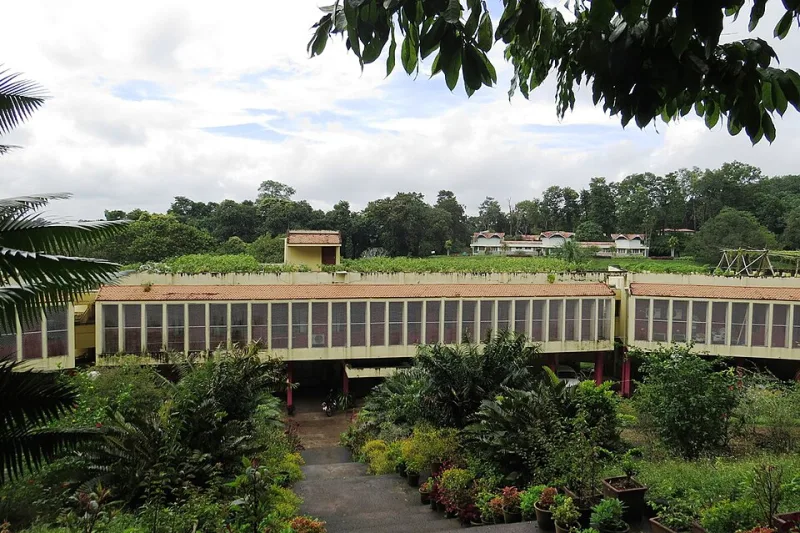
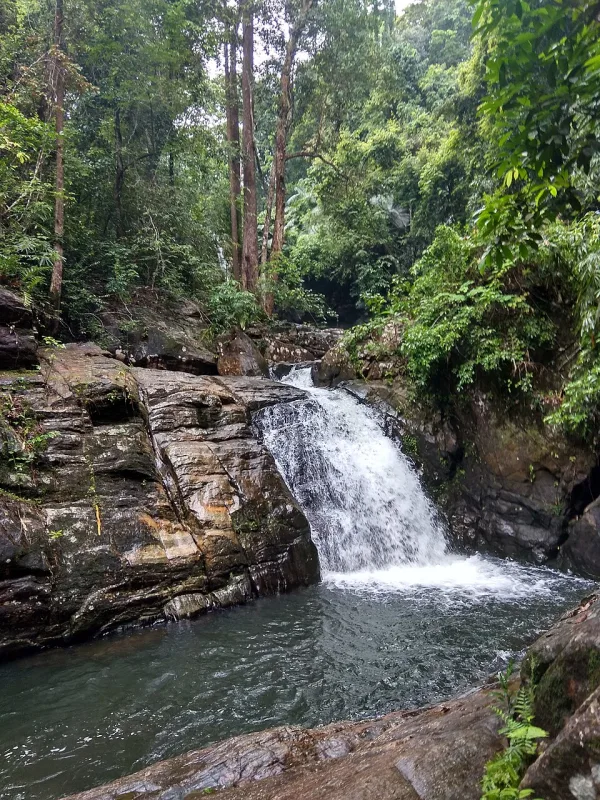
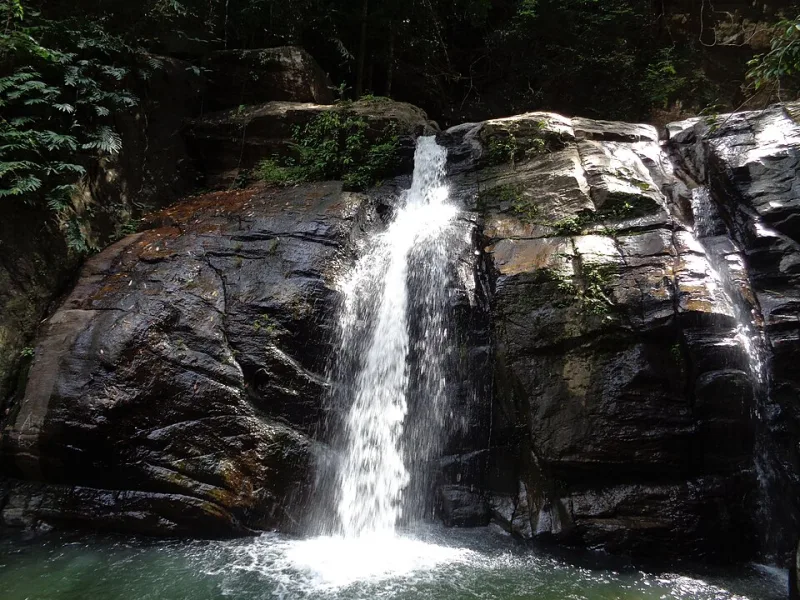
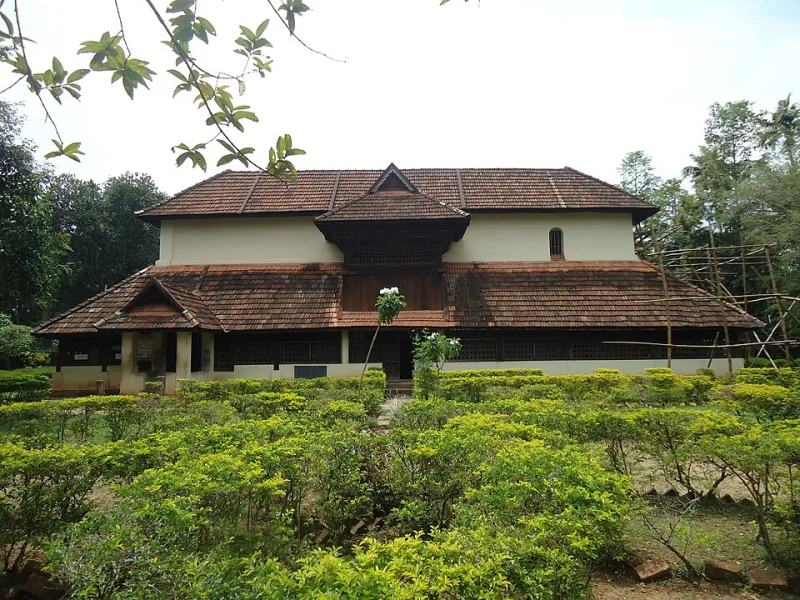
Palode's tropical botanic garden, Ponmudi hill station, the Kallar stream, Meenmutty falls subject to opening, and Koyikkal Palace at Nedumangad are on or near the route.
Facilities
Village shops and refreshments are near; Palode and Nedumangad offer fuller services. There is no entry fee for worship.