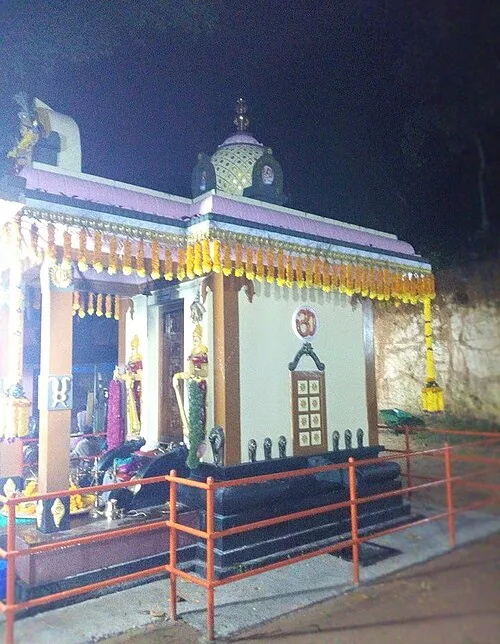
A Devaswom Vishnu temple at Mukhavur with old stone inscriptions, a dark-stone four-armed image and a cradle offering made by couples hoping for children.
At a glance
What: A temple of Maha Vishnu.
Where: Mukhavur in Nedumangad taluk.
When: Daily worship; the festival begins on the Thiruvonam star in Meenam, around March or April.
How: By road from Nedumangad.
By whom: The Travancore Devaswom Board.
For whom: Devotees, families making vows and those interested in inscriptions.
The temple
Mukhavur is a village shrine of Vishnu whose stones preserve more history than visitors expect. The deity, affectionately Mukhavurappan, faces east. The temple is administered by the Travancore Devaswom Board and keeps both a local festival and a long-running annual reading of the Bhagavata Purana.
The image
A four-armed Vishnu carved in dark granite, the stone Kerala calls krishnasila, is enshrined here. The account also speaks of the presence of the Lord reclining on the serpent Ananta. Dark stone images acquire a deep sheen from years of oil and water used in worship.
The inscriptions
Granite slabs in the temple courtyard carry inscriptions that the Kerala State Archaeology Department has studied. According to the report as quoted, the sanctum was made as a benefaction in the Kollam year 700, about 1525, by a person whose name is given in the record in a form read as Param Paramjyothi Othanan.
The script
The lettering is described as Vattezhuthu, the rounded script long used in the southern Chera country for Tamil and early Malayalam. It appears on copper plates, hero stones and temple walls. Over centuries it gave way to other scripts, surviving longest in records and accounts in the south.
How old is the shrine?
The published note states that the age of the inner chamber cannot be determined. The inscription of about 1525 gives a date for a work of construction or gift, and a shrine may well have existed earlier. Careful wording matters: the record tells us what was done then, not when worship first began.
Caring for inscriptions
Lettered stones set in courtyards are vulnerable. Feet wear them, oil stains them and concrete may cover them. Visitors should step around such slabs where possible, never chalk or rub them to bring out the letters, and leave copying to trained people with permission. A photograph in slanting light, if allowed, is harmless.
The festival
The annual festival starts on the Thiruvonam star in the month of Meenam. Thiruvonam is the star of Vishnu, and Onam itself is named from it. Rites, processions and cultural programmes mark the days. Ask the office for the current year's schedule.
The Bhagavata week
For two decades or more the temple has held a seven-day recitation and exposition of the Bhagavata, from the second day of the festival period to the seventh as described. Scholars read the Sanskrit and explain it in Malayalam. Listeners hear the stories of the incarnations, above all Krishna's.
Why seven days
The Bhagavata is framed as the teaching given to King Parikshit, who had been told he would die in seven days. He spent them listening to the sage Shuka. The weekly reading imitates that sitting, inviting listeners to ask what is worth hearing when time is limited.
The cradle offering
On the fourth day, after the narration of Krishna's birth, couples without children place a cradle before the deity in a rite called thottil vaippu. Reciters and listeners pray together on their behalf. The temple's account says many who took part were later blessed with children.
Faith and medicine
The rite offers comfort and community to people carrying a private sorrow, and that is a real good. Testimonies are acts of gratitude and cannot show cause and effect. Couples facing infertility should also see a qualified doctor, since many causes can be treated. No one should be blamed for childlessness.
Other deities
Ganapati, the Devi and the serpent deities are installed. Worshippers generally salute Ganapati, approach the main sanctum and then complete their round of the others. Lamps and flowers are the usual gifts at the smaller shrines.
Offerings
At Vishnu temples common offerings include milk payasam, butter, tulsi garlands, lamps and archana. Thulabharam, in which a devotee is weighed against a chosen substance that is then donated, is practised at many Kerala temples; ask whether it is offered here.
Neighbouring shrines
The Malayalam account names the Karippoor Bhadrakali temple and the Kottappuram Mahadeva temple as nearby places of worship. Together with Mukhavur they allow a short local round honouring Devi, Shiva and Vishnu.
Visiting with respect
Wear traditional modest dress, remove footwear and keep the courtyard clean. Silence is expected during the reading. Do not photograph couples performing vows. Make payments at the counter and keep the receipt.
Getting there
Nedumangad, about eighteen kilometres from the capital, is the nearest large town and bus hub. Local buses and autorickshaws reach Mukhavur. Thiruvananthapuram Central is the main railway station and the city airport the nearest airport.
When to come
The Meenam festival is hot but lively. November to February suits an easy visit. Morning light helps in viewing the stones. Monsoon showers can make the courtyard slippery.
Nearby places
Koyikkal Palace and its folklore and coin museums at Nedumangad, Aruvikkara on the Karamana and the road toward Ponmudi are natural additions.
Facilities
Village shops are close; Nedumangad has food, banks and hospitals. There is no entry fee.
Help complete this page
Photographs of the inscriptions taken with permission, and the full wording of any official report, would be valuable additions.
Reading the date
The Malayalam calendar counts from 825 CE, so a Kollam year of 700 falls in the 1520s. That was a time when Portuguese traders had already established themselves on the Kerala coast, while the interior south remained under several branches of the Venad family. Placing the inscription in this setting gives a sense of how long people have been walking across this courtyard.
A teacher's visit
School groups studying local history could ask permission to see the slabs and learn what an inscription usually records: the giver, the gift, the date and sometimes a warning to those who would misuse it. Such a visit turns a textbook idea of sources into something that can be seen. Arrange it in advance and keep the group small.
The quiet days
Outside the festival and the weekly reading, the temple is peaceful. Those who prefer stillness will find an ordinary weekday morning rewarding.
Before leaving
A last look at the courtyard stones, from a respectful step back, is time well spent.
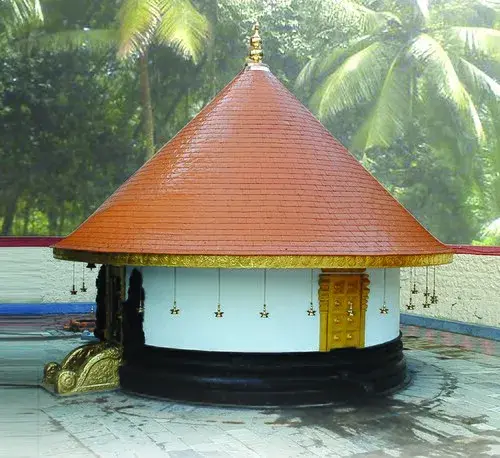 Photo: Sarath nedumangad · CC BY-SA 3.0