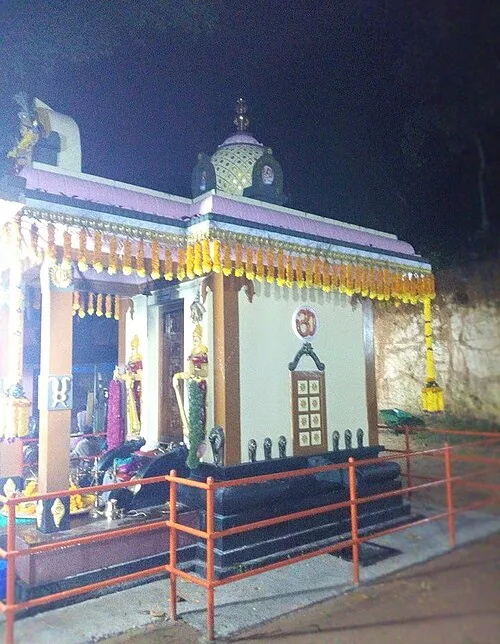
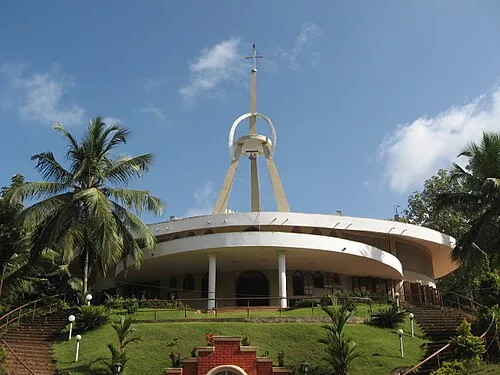
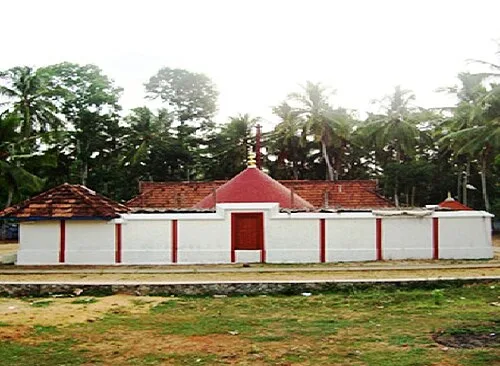
A rock-side goddess temple on the Karamana river near Aruvikkara dam, where visitors feed the large fish as an offering.
At a glance
What: A Bhagavathy temple on a riverbank known for its sacred fish.
Where: Aruvikkara, on the Karamana river below the dam area.
When: Daily worship; the Thrikkarthika festival is a highlight.
How: By bus or car from Thiruvananthapuram or Nedumangad.
By whom: Temple management; confirm on site.
For whom: Devotees, families and visitors to the dam.
The temple
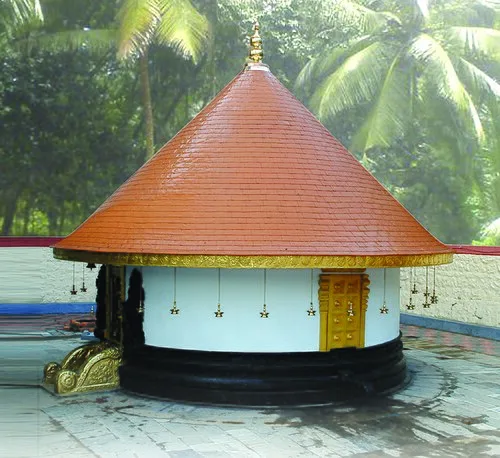
Aruvikkara temple sits on rock at the edge of the Karamana, where the sound of water accompanies worship. The goddess Bhagavathy is the chief deity. The combination of river, rock, trees and the nearby dam makes it one of the more popular short outings from the capital for families.
The name
Aruvi means a waterfall or rushing stream and kara a bank, so Aruvikkara suggests the bank by the cascade. The description fits a place where the river once tumbled over rocks before the dam altered its flow.
Mysterious beginnings
A travel account remarks that the origins of the temple are shrouded in mystery. No firmly dated record of its founding was located. It is better to enjoy that openness than to fill it with a made-up date. Elders may relate how the goddess came to be honoured at this rock.
The fish
The most talked-of custom is the feeding of fish in the river as an offering. The pool before the temple teems with large fish, which are regarded as sacred and are not caught. Worshippers drop food from the steps and watch the surface come alive.
A belief about warts
A local belief holds that feeding the fish here helps cure skin growths such as warts. Similar beliefs exist at other river temples. There is no medical evidence for it. Warts often disappear in time, and a doctor can treat those that persist or spread.
Feeding responsibly
Offer only the food sold or permitted by the temple, in modest quantity. Bread, fried snacks and large amounts of puffed grain can foul the water and harm fish. Do not throw packaging into the river, and do not try to touch or net the fish.
Sacred fish elsewhere
Kerala has a few places where river fish are protected by devotion, the best known being the Sastha temple at Kulathupuzha. Such customs have unintentionally created small sanctuaries where fish grow large and breed unmolested, which scientists sometimes note with interest.
The dam
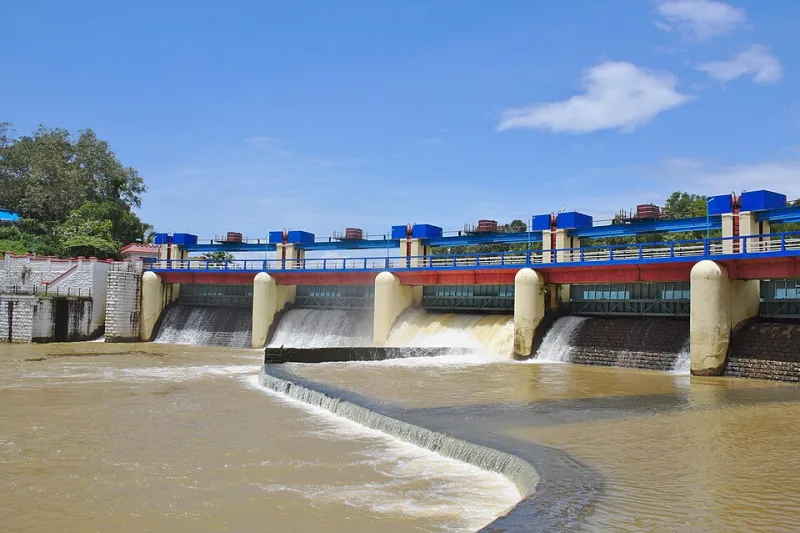
The Aruvikkara dam, a masonry gravity structure about fourteen metres high and eighty-three metres long, spans the Karamana. It belongs to the city's water supply scheme, begun in the early 1930s, and is supported by the larger Peppara dam upstream, built in 1983.
Water for the capital
The waterworks formed here were named after Viceroy Lord Willingdon. Water drawn from the reservoir is treated and pumped to storage on high ground in the city. Because this is drinking water, restrictions apply around intake works, and the river deserves special care.
River safety
Levels below a dam can change quickly when gates are opened, especially in the monsoon. Obey sirens, barriers and officials, stay off slippery rocks and never swim in posted areas. Several outings turn to tragedy through a single careless step.
Thrikkarthika
The temple's listed festival is the Thrikkarthika Mahotsavam, tied to the Karthika star, which in the month of Vrischikam, November or December, is the great festival of lamps for the goddess. Lamps are lit along walls, steps and doorways. Confirm the temple's current dates.
The lamp evening
Karthika evenings are celebrated in homes as well, with rows of clay lamps and a sweet dish. At a riverside temple the reflections double the spectacle. Arrive before dusk, choose a safe place to stand and keep loose clothing away from flames.
Offerings
Lamps, flowers, kumkumam, archana, payasam and the fish offering are the common choices. Buy from authorised counters. Keep receipts and respect the queue.
Trees and shade
Old trees by the river give shelter and keep the bank firm. Visitors should not break branches, nail signs or pile waste at their roots. Monkeys may be present; do not feed them, and hold food and bags securely.
A family outing
Many people combine worship with a stroll near the dam and a simple meal. Plan for steps and uneven ground, carry drinking water and bring a bag for rubbish. Footwear with grip is useful until you reach the temple entrance.
Sources and caution
Most accessible descriptions come from travel and temple listing sites, which sometimes disagree, one even naming a different river. The dam and temple are on the Karamana. Details of timings and customs should be confirmed locally.
Visiting with respect
Dress modestly, remove footwear where required, keep quiet near the shrine and do not photograph the sanctum. Separate the picnic mood from the worship area.
Getting there
Aruvikkara is about fifteen kilometres from the city, by way of Peroorkada and Vazhayila or through Nedumangad. Buses run from East Fort and Nedumangad. The central railway station and airport are in the capital.
When to come
October to February offers safe water levels and pleasant weather. Morning is calm; weekends are busy. Heavy rain may close access to the steps.
Nearby places
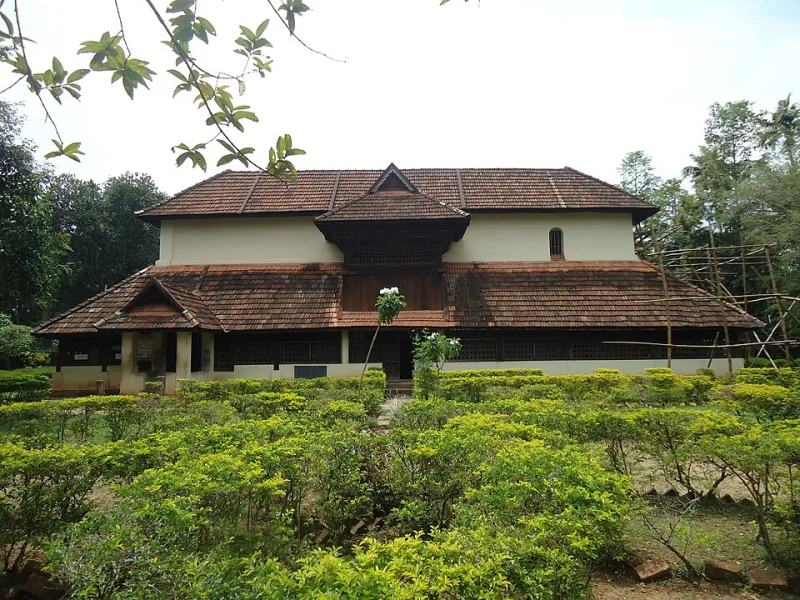
Koyikkal Palace at Nedumangad, Mukhavur temple, Peppara and the road toward Ponmudi and Neyyar can be added.
Facilities
Small shops and parking are found near the temple and dam; Nedumangad has full services. There is no entry fee for worship.
Help complete this page
Share darshan hours, the temple's own history and photographs through the links here.
Watching the river
Spend a few minutes simply looking. Note where the water runs fast and where it lies still, how the rock shows the marks of higher floods and which birds fish along the edge. Kingfishers, egrets and cormorants are common sights on Kerala rivers. This attention is safer than clambering about for a better picture, and more rewarding.
Older visitors
Steps and wet rock can be difficult for those with weak knees. Ask for the easiest approach, use a companion's arm and choose a dry day.
Respect for the water supply
Since the city drinks from this river, treat every scrap of waste as if it would reach your own tap.
Choosing the day
Weekdays are far calmer than weekends and holidays, when families fill the steps and the parking area. If a quiet prayer matters more than a picnic, come early on a working day, make your offering, watch the fish for a while and leave before the midday heat. Check weather warnings in the monsoon, as heavy rain in the hills soon reaches this stretch of river.