A goddess temple among old trees near Nedumangad, said to be over three centuries old, where the Devi was first worshipped in a sambar antler.
At a glance
What: A village temple of Sree Durga Bhagavathy.
Where: Mannamkonam, near Nedumangad.
When: Special openings on the first of each Malayalam month, on Tuesday and Friday evenings and on festival days.
How: By road along the Tenkasi highway to Valikode, or from Karakulam by the Kizhakkela road.
By whom: Temple management and devotees.
For whom: Worshippers, women offering Pongala and visitors who enjoy shaded village shrines.
The temple
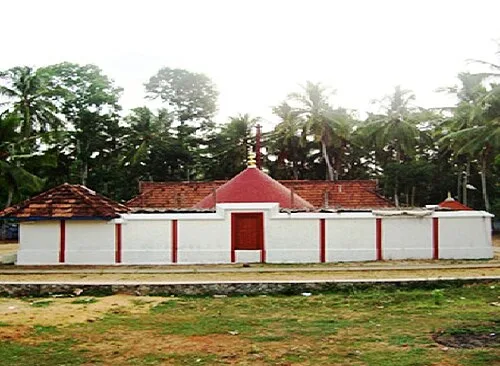
Mannamkonam Sree Bhagavathy temple stands in a village near the hill-country town of Nedumangad. A Malayalam account describes it as a very old and historically known shrine, with Sree Durga Devi as the chief deity. Its setting, shaded by banyan, palmyra and bilva trees, is praised for natural beauty.
Three centuries
The temple is said to be more than three hundred years old. No record is quoted, so this is the community's reckoning. It would place the beginnings around the early eighteenth century or before, when the Nedumangad region had its own ruling house and was later drawn into the expanding Travancore state.
The antler
In the earliest times, it is said, the goddess was worshipped in the antler of a kalaman, the sambar deer. The detail is unusual and evocative. It points to a forest-edge community for whom an antler shed in the woods could be received as a sign and a seat of divine presence.
From antler to pedestal
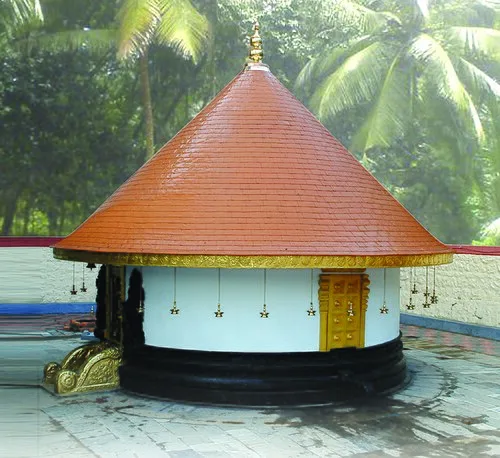
Later the devotees built a shrine to the south and installed the goddess on a pedestal. In time renovation followed and an image was consecrated. The sequence from natural object to seat to sculpted image is a clear picture of how worship at many village sites developed.
The trees
The banyan with its hanging roots, the tall palmyra and the bilva dear to Shiva give the compound its character. Old temple trees host owls, bats, squirrels and many insects. Respect them: do not drive nails, tie plastic or light fires at their bases.
The sambar
The sambar is the largest deer of India, with rugged three-pointed antlers that are shed and regrown. It still lives in the forests of the Western Ghats. Collecting or keeping antlers today is restricted under wildlife law, so the story should inspire wonder and not imitation.
Attendant deities
Ganapati, Bhadrakali, Madan Thampuran, Yakshiamma and Nagaraja are installed as subsidiary deities. Together with the Devi they provide for the needs a village traditionally brought to its temple: a good beginning, protection, the welfare of households and the health of children.
Monthly worship
The first day of every Malayalam month brings worship both morning and evening. Tuesdays and Fridays are observed in the evening. Ayilyam Puja for the serpents takes place on the morning of the Ayilyam star. Knowing these days helps a visitor arrive when the doors are open.
Mandala season
In the month of Vrischikam, from mid-November, the Mandala Chirappu festival of lamps and songs is kept. Chirappu means a special adornment with lamps and offerings sponsored day by day. Families take turns, so each evening has its own hosts.
Onam and Pooja Vaypu
Special worship also marks Onam in August or September, and Pooja Vaypu during Navaratri, along with other holy days of the Hindu calendar. Onam in a village temple is a homely affair, with flower designs and visiting relations.
The Meenam festival
The chief annual celebration runs for three days, arranged to close on the Karthika star in the month of Meenam, usually March or April. It draws devotees from around Nedumangad. Confirm the days each year, since they are reckoned by the star.
Chattu pattu
In former days chattu pattu was performed as part of the festival. Songs of this kind accompanied rites invoking the goddess and were handed down in particular families. The account speaks of it in the past tense. Anyone who remembers the verses or performers could preserve a fragile piece of heritage.
Nercha Pongala
One of the main offerings is the votive Pongala. It can be offered on the first of each month and other puja days, but the great occasion is the Karthika day of the Meenam festival, when many devotees arrive with pots, rice, jaggery and firewood.
Offering Pongala
Arrive early, choose a place shown by volunteers and set three bricks as a hearth. Light the fire from the temple flame at the announced time. Remain until the priest has blessed the pots. Carry water, wear cotton and watch for drifting sparks.
Nedumangad
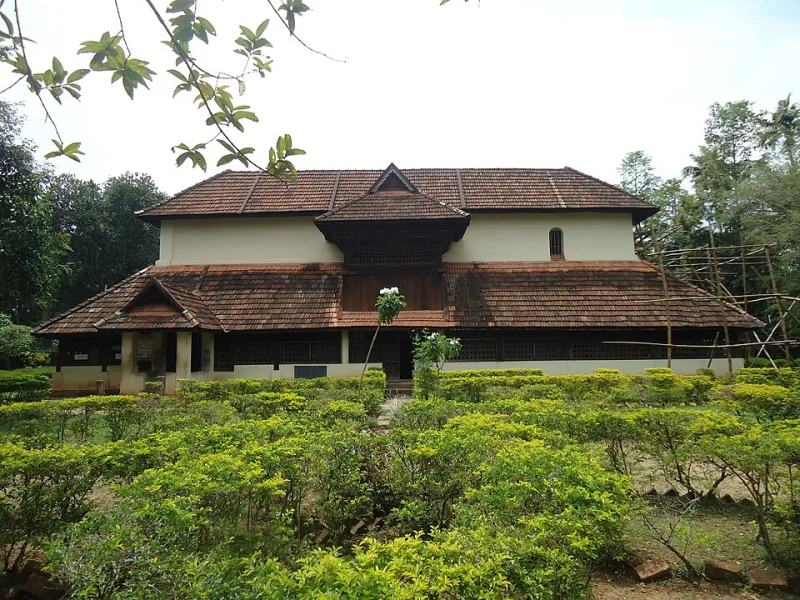
Nedumangad is the market town of the eastern midlands, where hill produce meets city demand. Its Koyikkal Palace, a tiled courtyard house, holds museums of folklore and coins. A visit to the temple pairs well with an hour there.
The Tenkasi road
The highway from Thiruvananthapuram toward Tenkasi runs through Nedumangad, Palode and the hills into Tamil Nadu. For centuries traders crossed these passes with bullocks. Shrines near the route received their prayers, and some of their customs travelled with them.
Belief and record
The antler worship is told as tradition. The present calendar of worship and the access roads are practical facts. Keep the two apart when retelling, and both will be valued.
Visiting with respect
Dress modestly, leave footwear outside, keep silent near the sanctum and avoid photographs inside. Follow the clockwise path and give priority to local worshippers on busy evenings.
Getting there
From the city follow the Tenkasi state highway to Valikode junction and turn toward Kaippady; the temple is about half a kilometre from Thottumukku. Another route comes from the Keltron junction at Karakulam by the Kizhakkela road. The airport is about twenty-five kilometres away.
When to come
November to February is cool and the season of lamps. The Meenam festival is warm and busy. Rains make the village green but the paths slippery.
Nearby places
Koyikkal Palace, Mukhavur and Panchami Devi temples, Aruvikkara and the Atamoozhi temple at Tholicode are within reach.
Facilities
Village shops are near; Nedumangad provides food, banks and hospitals. There is no entry fee.
Under the banyan
Pause beneath the old trees after worship. A banyan spreads by dropping roots that become new trunks, so that one tree can shade a whole gathering. Village meetings, lessons and rests between field work have long taken place in such shade. Temple custom that protects the tree also protects this meeting place.
Returning home
Buses on the highway are frequent by day but thin out at night, so arrange the last leg of an evening visit before the lamps are lit.
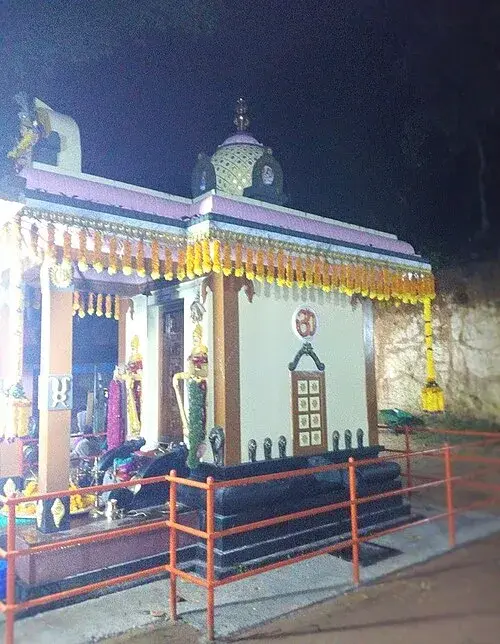 Photo: Satheeshmannamkonam · CC BY-SA 4.0