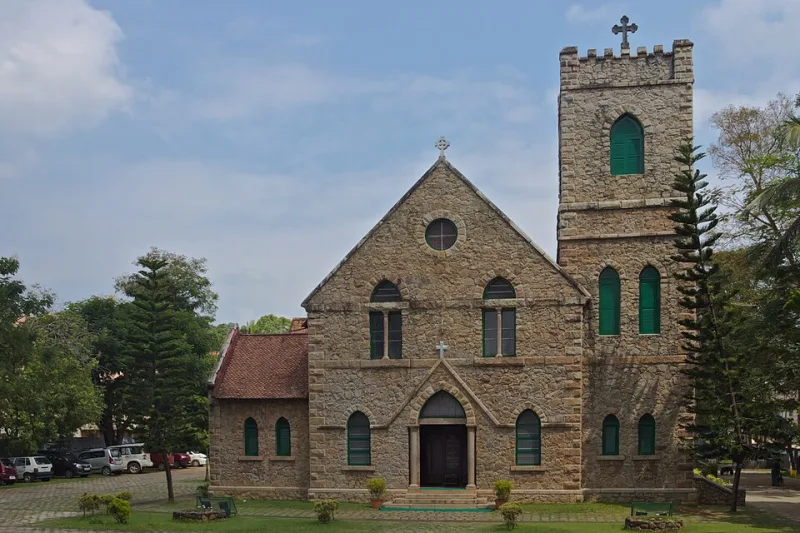
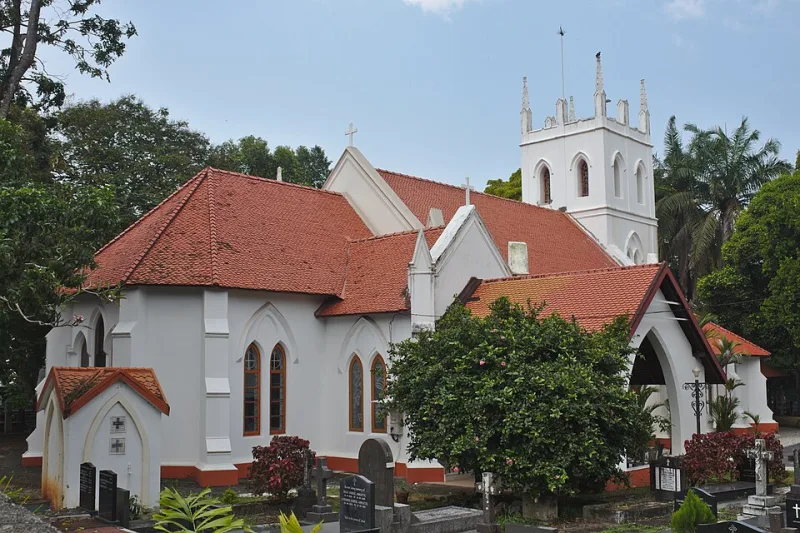
The private residence of the Travancore royal family, completed in 1934; it can be seen only from outside.
At a glance
What: The royal family's residence, a private home and not a museum.
Where: Kowdiar, a leafy quarter north east of central Thiruvananthapuram.
When: Completed in its present form in 1934.
How: Travel to Kowdiar junction; view only from public roads.
By whom: Built by Maharaja Sree Chithira Thirunal Balarama Varma.
For whom: Those interested in Travancore history; there is no public admission.
Important: this is a private home
Before planning a visit, know that entry to Kowdiar Palace is restricted. It is the residence of members of the Travancore royal family. There is no ticket counter or tour. A traveller can glimpse the gate and surroundings from the road, and should do no more without an invitation.
About the palace
The broad avenue climbing to Kowdiar is one of the handsomest approaches in the city, ending near the walls and gate of a large palace that has more than 150 rooms. Its architecture is celebrated, reflecting a period when Travancore's rulers combined local traditions with European ideas of space, light and formal grounds. Unlike the compact wooden palaces of earlier centuries near the old fort, this is a residence designed for the twentieth century.
History
The palace was built by Sree Chithira Thirunal, the last ruling Maharaja of Travancore. It took its present form in 1934, the same year in which his only sister, Karthika Thirunal Lakshmi Bayi, married G. V. Raja, who later became a leading figure in the development of sport in Kerala.
Travancore followed a matrilineal system of succession, in which the crown passed through the female line, from a ruler to the son of his sister. Two senior queens, Sethu Lakshmi Bayi and Sethu Parvathi Bayi, headed the two branches in the early twentieth century; Sethu Lakshmi Bayi governed as regent while Chithira Thirunal was a minor, and he was the son of Sethu Parvathi Bayi. After the constitutional amendment of 1971, which ended the recognition of princely titles and privy purses, the family's properties were partitioned between the two branches. Kowdiar passed to the heirs of Sethu Parvathi Bayi, since it had been built by her son.
The ruler who built it
Chithira Thirunal assumed full powers in 1931. His reign is remembered especially for the Temple Entry Proclamation of November 1936, which opened the state's temples to Hindus previously excluded on grounds of caste, a measure that followed years of campaigning by reformers and that Mahatma Gandhi welcomed warmly. The period also saw the founding of a university and the growth of transport and industry. It saw severe political conflict too, as people demanded responsible government, and the state's repression of these movements is part of the same record. Travancore acceded to the Indian Union, and the princely state merged with Cochin in 1949.
Devotion to Padmanabha
The Travancore rulers styled themselves servants of Sree Padmanabha, the reclining Vishnu of the great temple, having formally dedicated the kingdom to the deity in 1750 under Marthanda Varma. That tradition continues to shape the family's public role in temple ceremonies. During the Painkuni and Alpasi festivals, the head of the family accompanies the ritual procession to the sea.
Rumours and facts
A residence closed to the public inevitably attracts speculation about hidden riches, passages and mysteries, all the more since the discovery of great treasure in vaults of the Padmanabhaswamy temple became world news in 2011. Those vaults belong to the temple, which is the subject of its own legal history, and not to this house. No claim about secrets inside Kowdiar should be believed without evidence, and curiosity never justifies trespass or intrusion on a family's privacy.
A household in the public eye
Members of the Travancore family have remained visible in the cultural life of the state long after losing political power. Princess Gouri Lakshmi Bayi and Princess Gouri Parvathi Bayi, among others, are known for writing, cultural patronage and public engagements, and the family's patronage of Carnatic music has deep roots, going back to Maharaja Swathi Thirunal, the nineteenth century ruler and composer whose songs are still sung. The annual music festival held in his honour at the Kuthiramalika is one place where the public encounters that inheritance.
Palaces of Travancore compared
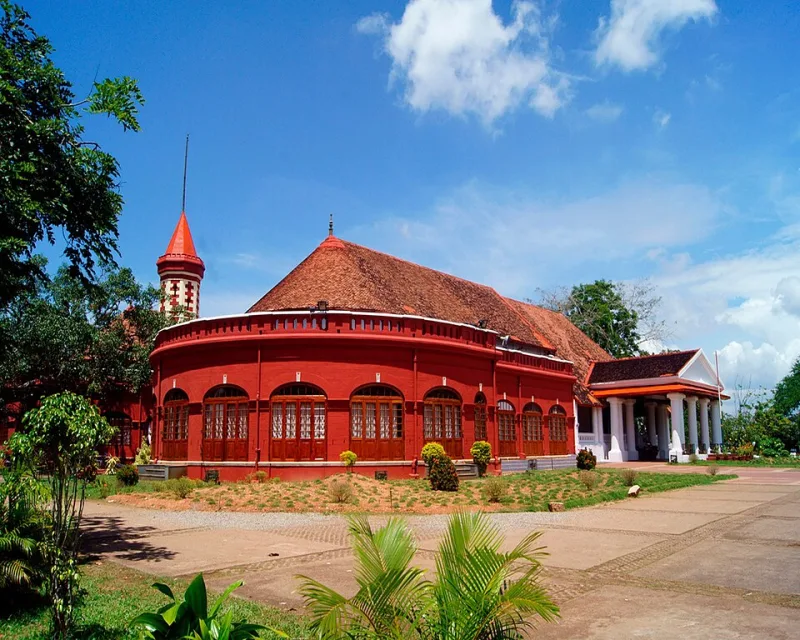
Seeing Kowdiar alongside earlier royal buildings shows how taste changed. Padmanabhapuram is a labyrinth of carved timber and cool courtyards suited to a fortified capital. Kuthiramalika, from the nineteenth century, keeps wooden brackets and sloping roofs beside the great temple. Kanakakkunnu served entertainment in the colonial era. Kowdiar represents the spacious, planned residence of modern times. Taken together they form a short history of how rulers wished to live and to be seen.
What the visitor can reasonably expect
A glimpse of walls, gate, trees and portions of the roofline is all that is usually possible, and views change with vegetation and security arrangements. If that seems too little, give your time to the open museums, where objects are displayed for the public to study closely.
How to see it respectfully
Pass along the avenue by day. Stay on the pavement, do not block the gate, and follow any instruction from guards or police. If photography is discouraged, put the camera away. Drones are subject to aviation rules and should not be flown over private homes. The junction carries heavy traffic, so stop only where parking is lawful.
A few minutes is enough for the view.
Where to learn more
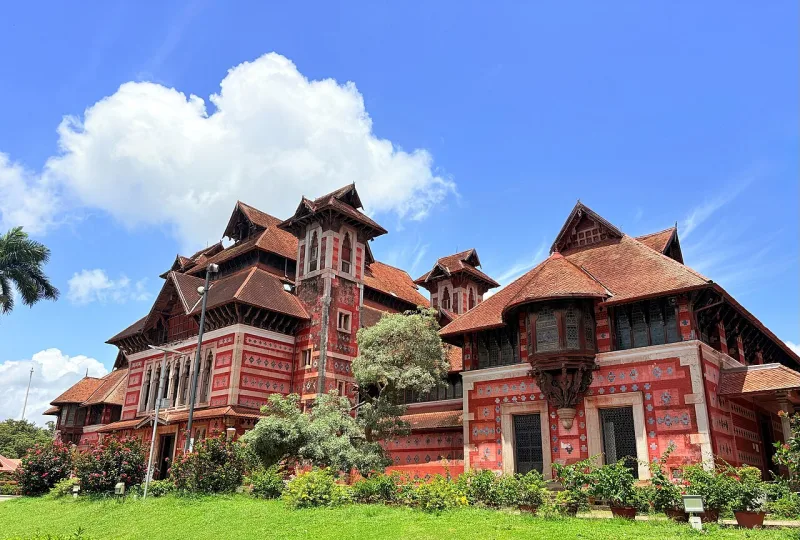
For interiors and objects connected with the royal house, go to places that are open: the Kuthiramalika Palace Museum beside the Padmanabhaswamy temple, the Napier Museum and Sree Chitra art gallery, with its collection that includes paintings by Raja Ravi Varma, Koyikkal Palace at Nedumangad, and the great wooden palace at Padmanabhapuram across the border in Tamil Nadu, which was the earlier seat of the rulers. Timings and closing days differ, so check each before travelling.
Around Kowdiar
The Vellayambalam area, Kanakakkunnu Palace and its grounds, the museum campus, the science museum and numerous restaurants lie along the way back to the centre. An evening walk on the avenue followed by a performance at Kanakakkunnu makes a pleasant ending to a day.
Names and usage
Local people use Kowdiar for the palace, the junction and the neighbourhood alike, so specify which you mean when asking directions. Autorickshaw drivers know all three well.
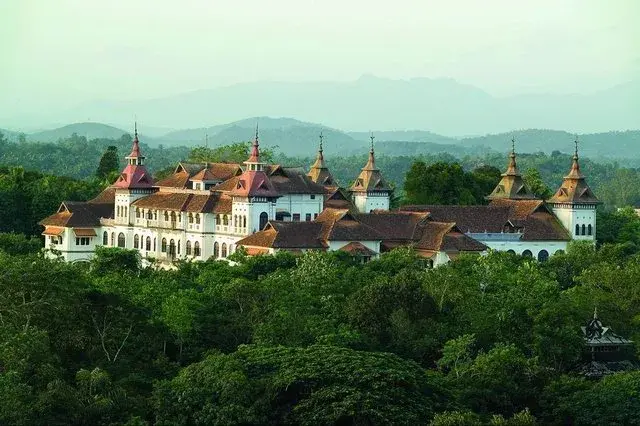 Photo: Manu rocks at English Wikipedia · CC BY-SA 3.0