A royal reception palace on a green hill, now the city's favourite ground for dance, music and cultural festivals.
At a glance
What: A former palace and its grounds, used for cultural programmes.
Where: Kanakakkunnu, beside the museum district of Thiruvananthapuram.
When: Built in the reign of Sree Moolam Thirunal, 1885 to 1924.
How: Walk from the Napier Museum or take a city bus.
By whom: Raised under the Travancore Maharaja with traditional craftsmen; now looked after by the government and tourism authorities.
For whom: Heritage lovers, families, walkers and audiences of the arts.
About the palace
Kanakakkunnu means something like the golden hill, and on an evening when lamps glow among the trees the name seems fair. The palace and its spacious grounds occupy a rise in the middle of the capital. Where guests of the Maharaja once dined, residents now walk, children run on the lawns and audiences gather for dance and music. It is among the last substantial architectural reminders of the colonial period court in the city, and the Indian National Trust for Art and Cultural Heritage has listed it as a heritage monument.
History
The palace was built during the reign of Sree Moolam Thirunal, who ruled Travancore from 1885 to 1924, with the skill of traditional artisans. It served chiefly as a place of royal banquets and entertainment. An often repeated explanation is that the royal family kept a vegetarian household, so meals containing meat for visiting guests were served here, away from the family residence.
His successor in the next generation, Sree Chithira Thirunal, renovated the buildings, laid out tennis courts and for some years used the palace as a summer retreat. It also served as one of the official residences of Sir C. P. Ramaswami Iyer during his term as Dewan, the chief minister of the state. After the end of princely rule the property passed to government care, and the Kerala Tourism Development Corporation has been associated with its protection.
The stages and the festival
Two auditoriums on the premises carry the names of flowers. Nishagandhi, the night blooming cactus flower that opens for a single night, names the open air theatre, and Sooryakanthi, the sunflower, the other hall. The Nishagandhi dance festival, arranged by the tourism department, brings performers of classical Indian forms to this outdoor stage. Published accounts give differing durations and months, so check the current year's announcement. Fairs, exhibitions, food festivals and Onam celebrations also use the grounds, when the trees are hung with lights.
A garden that talks
The grounds are noted as the first digital garden in India. Labels with codes on trees allow a visitor with a phone to read about each species, a project developed by Akhilesh S. V. Nair and A. Gangaprasad of the botany department of the University of Kerala. It turns an ordinary stroll into a lesson in plants. Whether every label is in working order on a given day depends on upkeep.
Stories and screen memories
Older residents tell of the days when the hill was out of bounds to ordinary people and carriages climbed to lit verandahs. The building's atmosphere has also attracted film makers: the Malayalam film Lucifer and its sequel L2 Empuraan, written by Murali Gopy, directed by Prithviraj Sukumaran and starring Mohanlal, included scenes shot here, and some visitors come looking for the settings they recognise.
Claims and facts
Old palaces gather tales of secret tunnels and ghosts. No reliable source consulted for this page supports such stories, and visitors should not enter closed rooms or drains in search of them. Online descriptions sometimes call it the residence of the present royal family; the family's residence is Kowdiar Palace. Not all interiors are open to the public, since use depends on bookings and conservation.
The shape of a royal entertainment house
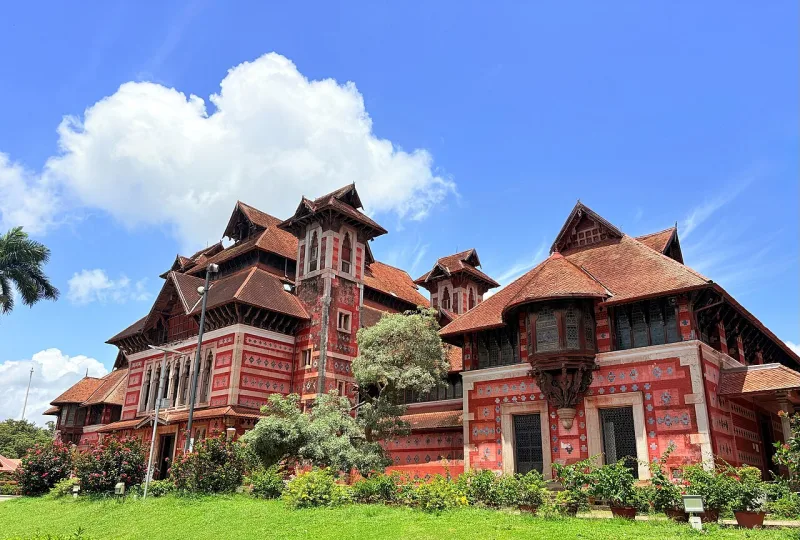
A building meant for receptions has different needs from a home. It requires broad verandahs where guests can gather, large halls that can be laid for a meal, kitchens and service areas set to one side and a setting that impresses on arrival. Placing it on a rise gave breezes and a view, and the sloping tiled roofs suited the rains. As you walk around, imagine lamps along the drive, servants moving between kitchen and hall, and conversation in several languages among officials and visitors.
A green space in a growing city
The value of the grounds today goes beyond history. Large trees cool the air, shelter birds and bats and soak up monsoon water. Public discussion in the city from time to time turns to how the land should be used, between commercial events, new construction and quiet conservation. Visitors can help by treating the place as a living garden and heritage site, and not merely as a venue.
Planning an evening
Check the programme, arrive before sunset to walk the lawns, eat before or after at one of the restaurants nearby, and arrange the return journey in advance when a popular show is on.
For photographers and walkers
The lawns, old trees and tiled roofs give pleasing compositions in the soft light of morning and late afternoon. Ask before taking pictures of people exercising or rehearsing, and do not climb on walls, sculptures or the building to find a higher view.
Visiting
The grounds are pleasant in the early morning and evening. Follow the posted hours, keep to paths, do not damage plants or write on walls, and take rubbish away or use bins. Charges may apply for particular events or parking. During large festivals expect security checks, crowds and traffic restrictions. Wear comfortable shoes, and carry protection against mosquitoes after dusk.
An hour is enough for a walk around; a performance or fair takes the evening.
Questions visitors ask
Can I go inside the palace? Access varies with events, so view it as a venue first and a museum only if an exhibition is announced. Is it suitable for children? The open space is welcome, but watch them near roads and slopes. Is photography allowed? Casual pictures outdoors are usual; commercial shoots need permission.
Around Kanakakkunnu
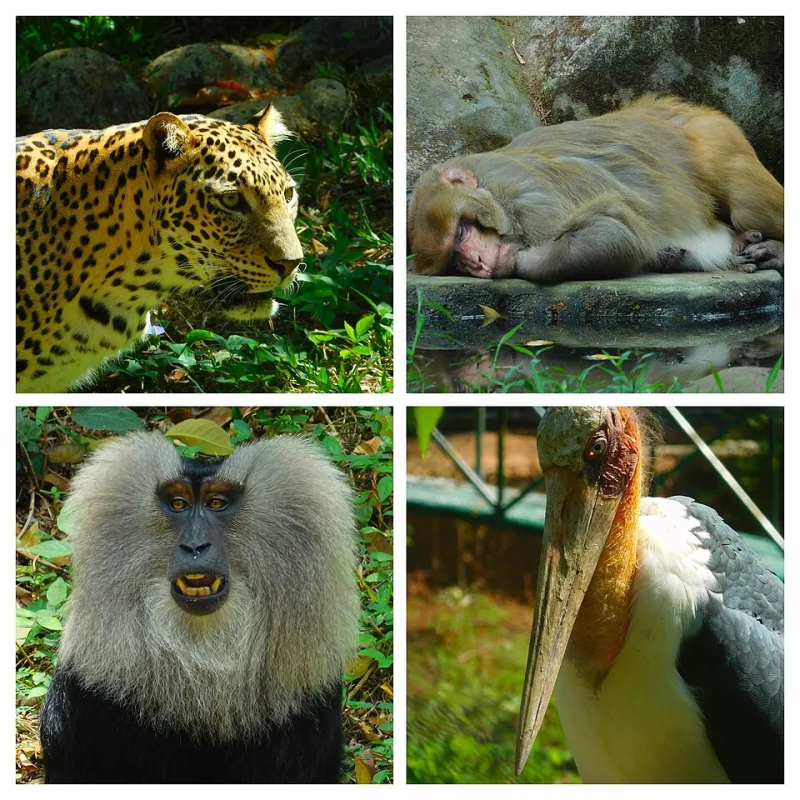
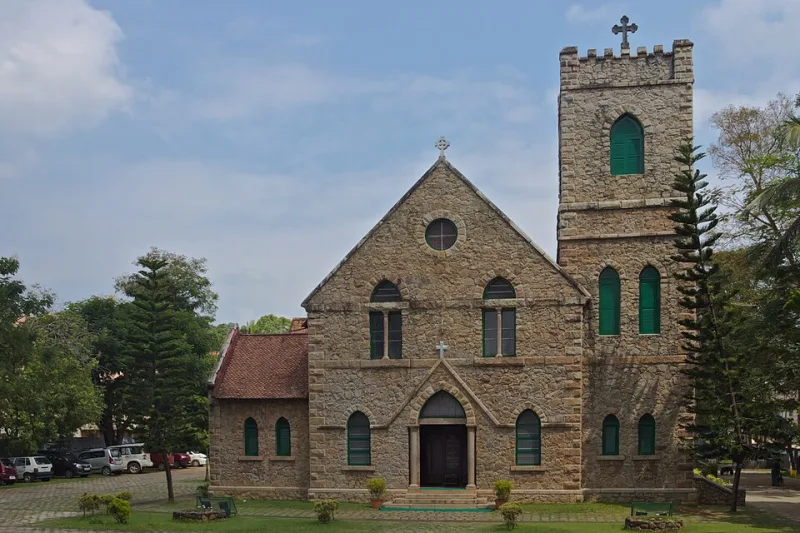
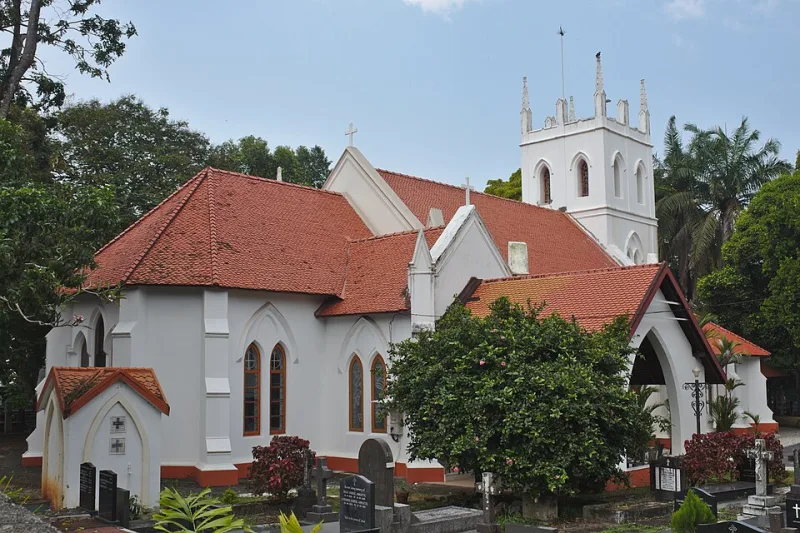
The Napier Museum, Sree Chitra art gallery, natural history museum and zoo adjoin the area, while the Science and Technology Museum with its planetarium, the Mateer Memorial Cathedral and Kowdiar Palace's gateway are a short distance away. A full day can easily be spent without leaving this green quarter of the city.
Why it matters
A building made for exclusive dinners now shelters public celebration. That change in who may enjoy it is perhaps the most telling part of its history.
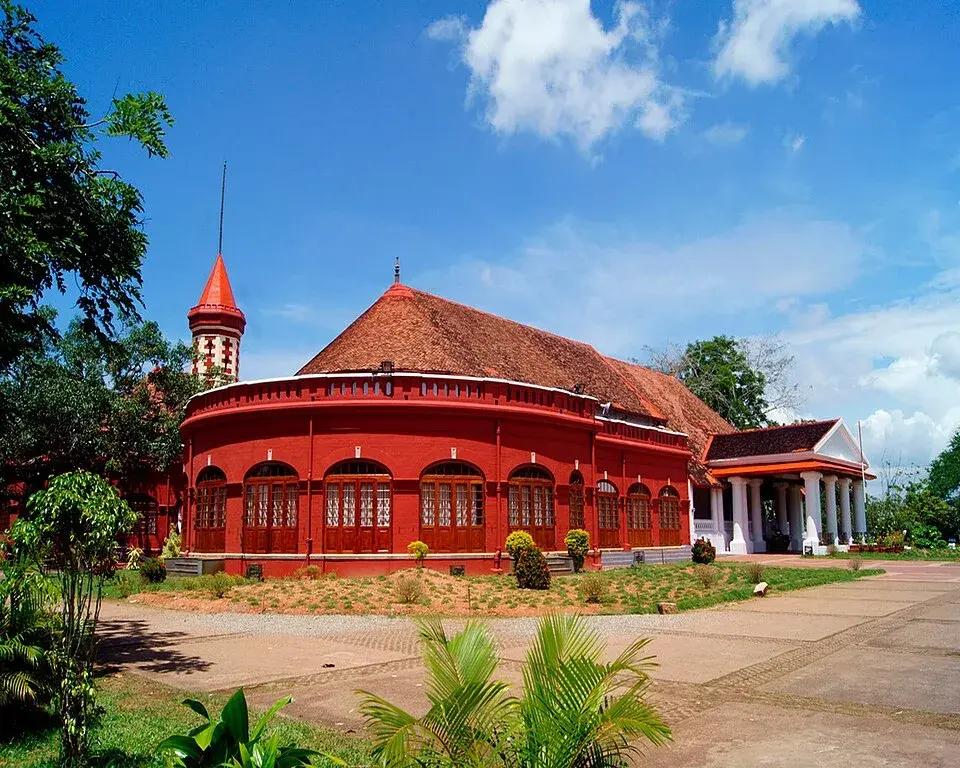 Photo: Jkurkure · CC BY-SA 4.0