A hill temple of Uma Maheshwara by the Killi river, said to be over 700 years old and once visited by the rulers of Travancore.
At a glance
What: A temple of Shiva as Uma Maheshwara.
Where: A hill at Sasthamangalam in Thiruvananthapuram city.
When: Daily worship; ten-day festival in Dhanu ending with arattu.
How: By city bus or autorickshaw through Vellayambalam.
By whom: The Travancore Devaswom Board.
For whom: Devotees and anyone seeking an old, peaceful shrine within the capital.
The temple
Sasthamangalam temple stands on rising ground a little apart from the rush of the city, a setting said to favour calm devotion. According to available records it is more than seven hundred years old. The kings of Travancore visited it regularly, which gave it standing among the temples of the capital.
The bleeding stone
Legend tells that when the place was grassland, a woman cutting grass sharpened her sickle on a rock, and the rock bled. It was recognised as a Shivalinga of its own accord, consecrated, and sheltered by a temple. Stories of this type are told at many Kerala shrines; they explain why a particular spot was held to be sacred.
Uma Maheshwara
Shiva is worshipped here together with his consort Uma, or Parvati. There is no separate image of her, yet she is understood to be present, a belief supported by an old verse recited at the temple. The idea that the divine couple can be adored in a single linga is central to this shrine's identity.
Other shrines
Within the temple are Ganapati, Murugan and Dharma Sastha. Outside the compound, on the bank of the Killi river, are images of Bhadrakali, Veerabhadra, Nagaraja and Nagayakshi. The fierce deities are thus given their place near the water, apart from the tranquil sanctum on the hill.
Veerabhadra and Bhadrakali
In Shaiva mythology, Veerabhadra and Bhadrakali arose from the anger of Shiva and the goddess after Daksha insulted him and Sati gave up her life. The pair destroyed Daksha's sacrifice. Their worship asks for protection and courage, and their shrines often stand at a boundary.
The Killi river
The Killi is a tributary of the Karamana and winds through the city. Several old temples, including Attukal, are associated with its banks. Urban growth and waste have troubled it, and clean-up efforts have been made. Worshippers can help by leaving no plastic or offerings in the water.
The festival
The annual festival lasts ten days. It begins on the Thiruvathira star with the hoisting of the flag on the golden flagstaff in the month of Dhanu, and ends on the tenth day with the arattu, the ritual bath of the deity. This usually falls in December and January.
Sacred days
Pradosham, Shivaratri and Makaravilakku are held to be especially holy here. Pradosham comes on the thirteenth lunar day; Shivaratri in February or March; and Makaravilakku in mid-January, linked to Sastha and the Sabarimala season. Expect additional pujas and longer queues.
Offerings
Devotees offer abhishekam with water, rose water, milk, tender coconut water or ghee, garlands of bilva leaves, Ganapati and Mrityunjaya homams, archana, a full covering of sandal paste called muzhukappu, and payasam. A community meal, annadanam, is served on festival days.
Mrityunjaya homam
The Mrityunjaya rite invokes Shiva as conqueror of death, using the well known Vedic verse addressed to the three-eyed one. It is performed for health and long life. It is a spiritual support and does not replace medical treatment for anyone who is unwell.
The circumambulation rule
In most Shiva temples devotees do not complete a full circle, turning back at the drain that carries the offered water from the sanctum. This temple is noted for its own customs on the matter. Watch regular worshippers or ask a temple servant, and follow the practice you are shown.
The golden flagstaff
The dhwajasthambham, or flagstaff, stands before the sanctum and is sheathed in gilded metal. It links earth and sky in temple symbolism and is the centre of the festival's opening and closing. Devotees salute it on entering, and no one should lean or hang things on it.
Name of the place
Sasthamangalam combines Sastha with mangalam, auspiciousness, a common ending for old settlements granted or consecrated for religious purposes. The temple's chief deity is Shiva, so the name may preserve an association with Sastha that predates present arrangements. This is an inference from the words, not a documented account.
Visiting with respect
Wear traditional modest clothes, leave footwear and leather outside, and switch off phones. Photography is not permitted inside Devaswom temples without authorisation. Queue patiently, receive prasadam with the right hand and avoid touching the priest.
Getting there
Sasthamangalam is on the road from Vellayambalam toward Vattiyoorkavu and Peroorkada. Buses are frequent. Thiruvananthapuram Central station is roughly four to five kilometres away and the airport within the city. Parking near the temple is limited at festival time.
When to come
Mornings offer the most serene darshan. The Dhanu festival gives the fullest experience of its rituals in mild weather. In the monsoon, the hill is green, and steps can be wet.
Nearby places
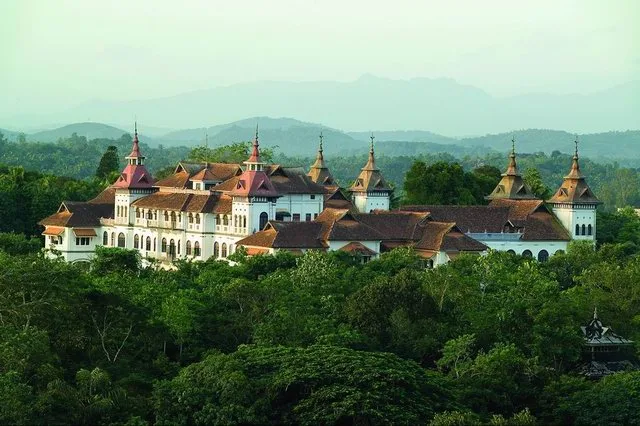
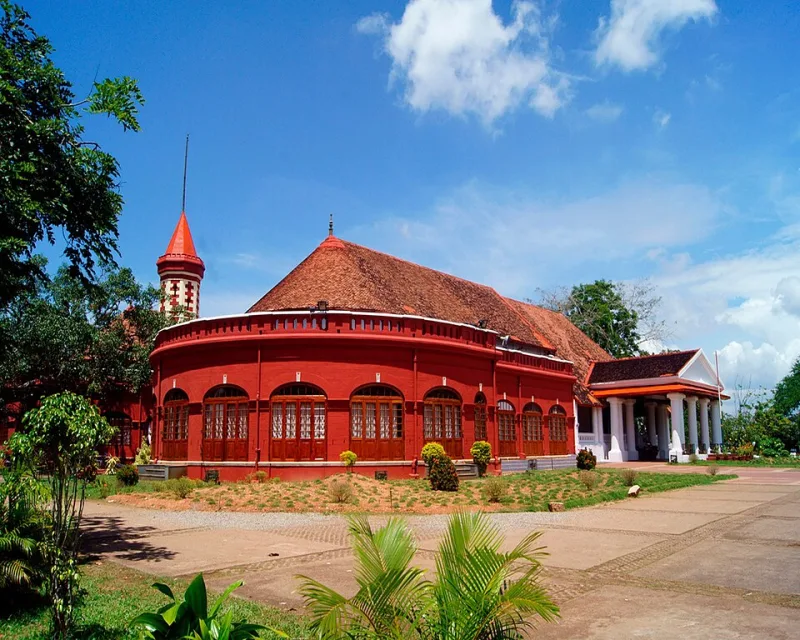
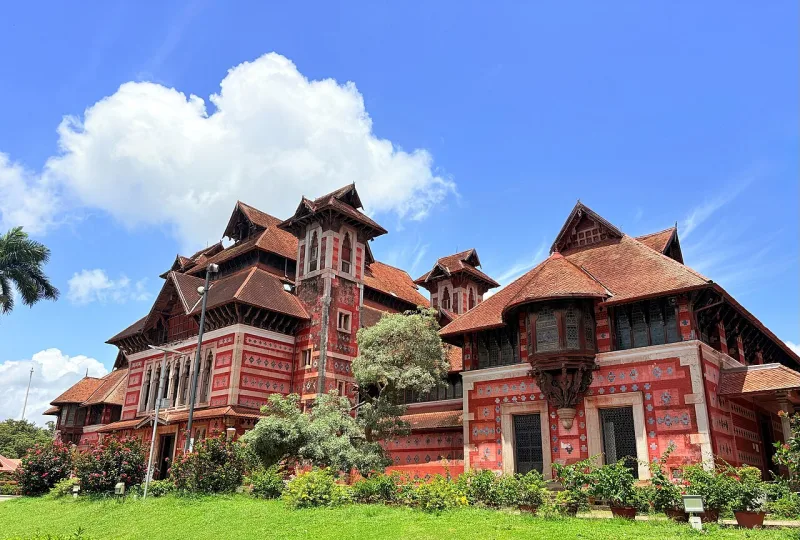
The St. Theresa of Lisieux church at Vellayambalam, Kanakakunnu Palace, the Napier Museum and Kudappanakunnu's hill temple are all close, making an easy half-day round.
Facilities
The surrounding neighbourhood has shops, restaurants, pharmacies and banks. Offerings are booked at the temple counter; there is no entry charge.
An evening visit
The temple is rewarding at dusk, when the rows of oil lamps are lit and the worshippers returning from work gather quietly. The deeparadhana, the waving of lamps before the deity, is the high point; the doors are closed briefly and then opened to reveal the lit image. Stand where the regular devotees stand and do not push forward at that moment.
Royal patronage
Under Travancore, temples visited by the ruling family could receive land, ornaments, festival grants and repairs. Many such endowments were later brought under government supervision, and the Devaswom system grew from that arrangement. The royal connection remembered at Sasthamangalam belongs to this world, in which the state and the shrine were closely bound.
A hill in the city
Open ground and trees around a temple have become precious in a crowded ward. Visitors can respect this by keeping vehicles off the approach where possible, using bins and not nailing banners to trees. The quiet that the old site was chosen for is still worth protecting.
Before you go
Check the festival dates and any change in hours with the temple office, particularly around eclipses and during renovation work.
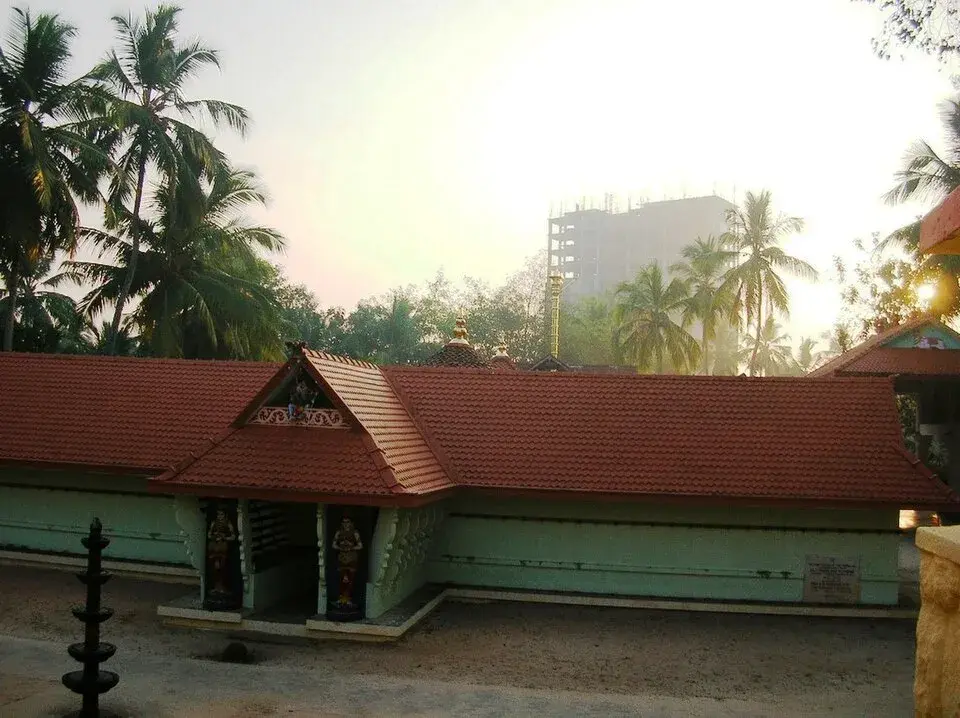 Photo: RajeshUnuppally at Malayalam Wikipedia · CC BY 3.0