A seventeenth century Kerala style palace at Nedumangad, built for Queen Umayamma Rani and now holding folklore and coin museums.
At a glance
What: A former royal house serving as a museum of folk life and coins.
Where: Nedumangad, on the way from the capital towards Ponmudi.
When: Built in the seventeenth century.
How: Take a bus to Nedumangad and walk or ride to the palace.
By whom: Built for Umayamma Rani of the Venad royal family; maintained by the State Department of Archaeology.
For whom: Students, families, coin collectors and lovers of music and folk culture.
About the palace
Nedumangad is a market town where hill produce meets the plains. Within it stands a quiet two storied house with sloping tiled roofs, wooden pillars and a plan suited to heat and heavy rain. This is Koyikkal Kottaram, built in the traditional architectural style of Kerala. The word kottaram means palace, though visitors expecting domes and marble should adjust their picture: royal buildings in Kerala were often modest in height, shaded and finely made in timber.
Today the building has a second life as a museum, so that one visit offers architecture, history, folk arts and the story of money.
History: a queen who ruled
The palace is associated with Umayamma Rani of the Venad royal family, who held power between 1677 and 1684. Venad, the southern kingdom that later grew into Travancore, traced succession through the female line, and senior women of the house could wield real authority. Umayamma Rani ruled in troubled years, when powerful noble families contested royal control and outside forces took advantage of weakness.
Traditional accounts of her time speak of a raider known as the Mughal Sirdar who overran parts of the south, of the queen withdrawing for safety, and of help brought by a relative, Kerala Varma of the Kottayam house of the north, who drove back the invader and was later killed through intrigue. These episodes are recorded in the state's historical tradition with differing details, and readers interested in them should compare accounts. The connection of such stories with particular rooms of this building should not be assumed.
The folklore museum
Folk culture rarely leaves monuments, so a collection of its everyday and ritual objects is precious. Among the exhibits noted at Koyikkal are rare musical instruments. The chandravalam is a small percussion instrument used to accompany the Ramakathappattu, songs that tell the story of Rama. The nanthuni is a small stringed instrument of wood used with Onappattu, the songs of the Onam season. Looking at them, try to imagine a single singer in a courtyard by lamplight, keeping time with one hand and holding an audience through a long narrative.
Household utensils, implements and ritual items in collections of this kind show how people cooked, measured grain, worshipped and celebrated before factory goods became common.
The numismatic museum
Coins are small documents. Their metal, weight, images and inscriptions reveal who claimed to rule, which languages mattered and where trade reached. Kerala's long commerce in pepper and other spices brought money from distant lands to its ports, from the Roman world to Arab, Chinese and European partners, while local kingdoms issued tiny coins of their own. As you move between the cases, notice the differences in size, from pieces hardly larger than a seed to heavy modern issues. Ask the staff which coins in the current display they consider most important.
Stories of the town
People of Nedumangad speak of the palace as a refuge and a seat of a branch of the royal house, and tales of underground passages are told, as they are about many old residences. No source used for this page confirms a tunnel, and visitors should not search for one. The documented attraction is above ground: the building and its collections.
Beliefs and facts
Some descriptions suggest that the museum displays the personal treasures of the queen. The collections are museum assemblages of folklore items and coins, gathered for public education, and should not be mistaken for her belongings unless a label says so. Dates of her reign vary slightly between writers; the range 1677 to 1684 is the one followed here.
Life in a Kerala royal house
A palace of this period was a working household. Rooms for receiving visitors lay towards the front, while private quarters, kitchens and places of worship were set further in. Timber ceilings, carved brackets and slatted windows allowed air to move while keeping out glare and prying eyes. Floors stayed cool underfoot. Furniture was sparse by modern standards: mats, low stools, cots, large chests and tall brass lamps. Messages travelled by runner and were written on palm leaf. Picturing these routines helps a visitor see the building as a home where decisions about land, tax, war and marriage were once made, and where a ruling woman had to weigh loyalty and danger.
The songs behind the instruments
Onappattu are sung to welcome the season that remembers the good king Mahabali, whose reign is imagined as a time without deceit or want, and who returns each year to see his people. Narrative singing about Rama brought the epic to listeners who could not read it. An instrument in a glass case is silent, but the tradition it served depended on memory, voice and a patient audience.
Visiting
Opening hours, weekly holidays and fees follow the Archaeology Department's arrangements, which may change, so confirm before travelling, especially around public holidays. Walk gently on old floors and stairs, watch your head at low doorways, keep hands off exhibits and ask whether photography is allowed. Bags may need to be left at the entrance.
An hour or two is a good allowance. Children enjoy comparing old instruments and coins with modern ones; a notebook for drawing helps.
Questions visitors ask
Is the palace large? It is compact, which makes it pleasant to see without fatigue. Is there parking? Town streets are busy, particularly on market days, so arrive early. Can elderly visitors manage? The ground level is generally easier than the upper floor; ask staff about steps.
Around Koyikkal
From Nedumangad roads lead to the Aruvikkara dam, the Peppara forests, the Ponmudi hills and the Kallar river. The palace makes an excellent first stop on a day trip into the foothills: history in the morning, forest air in the afternoon. Local eateries serve hearty rice meals suited to travellers.
Why visit a small museum
Large galleries can overwhelm. In a house like this one has time to look at a single instrument or coin and ask who held it. That kind of attention is what keeps regional history alive, and entry to such places directly supports the case for preserving them.
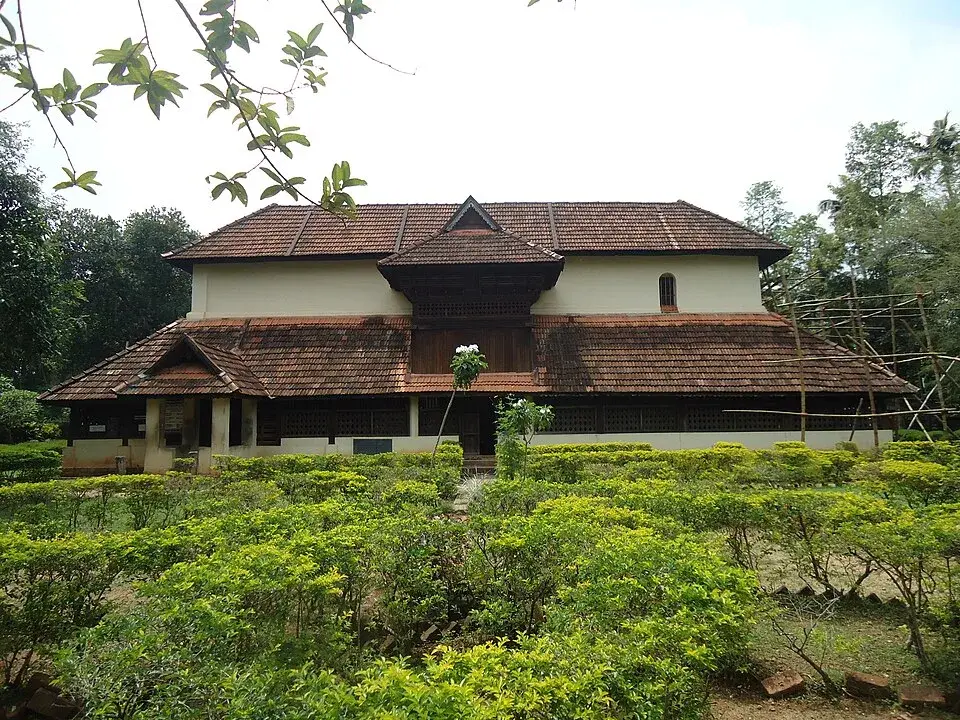 Photo: Ranjithsiji · CC BY-SA 3.0