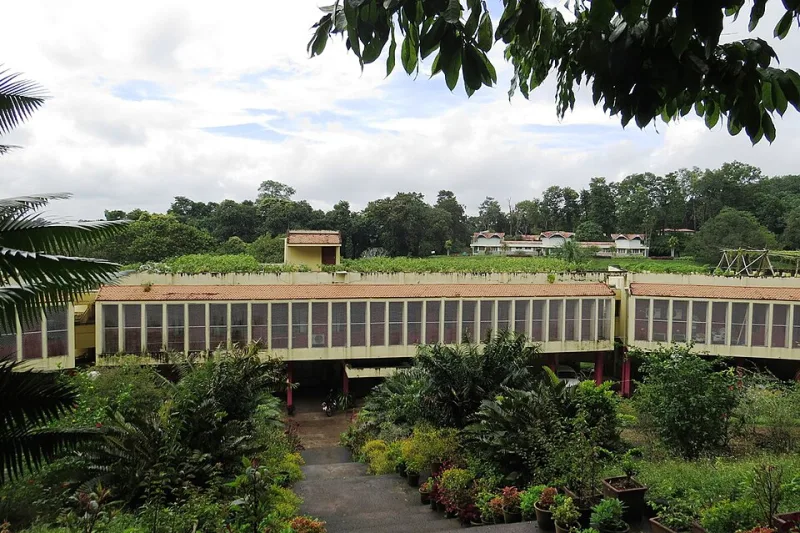
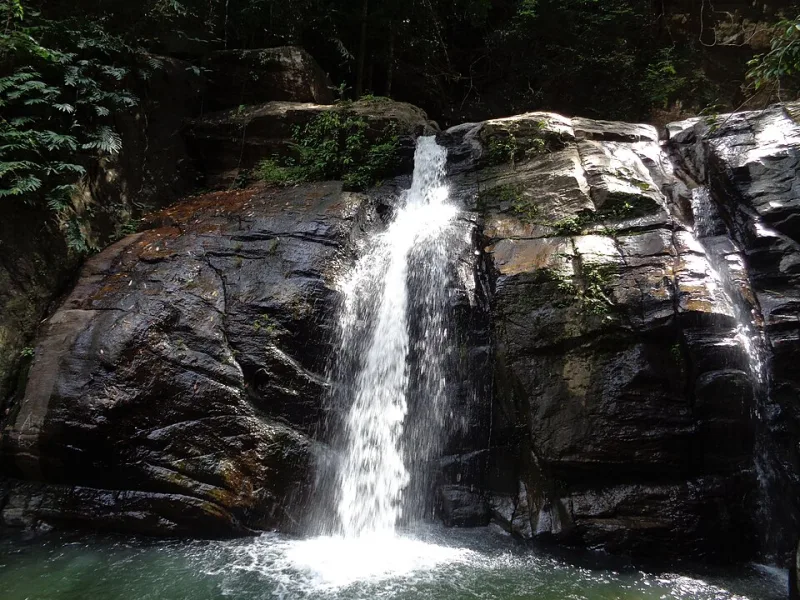
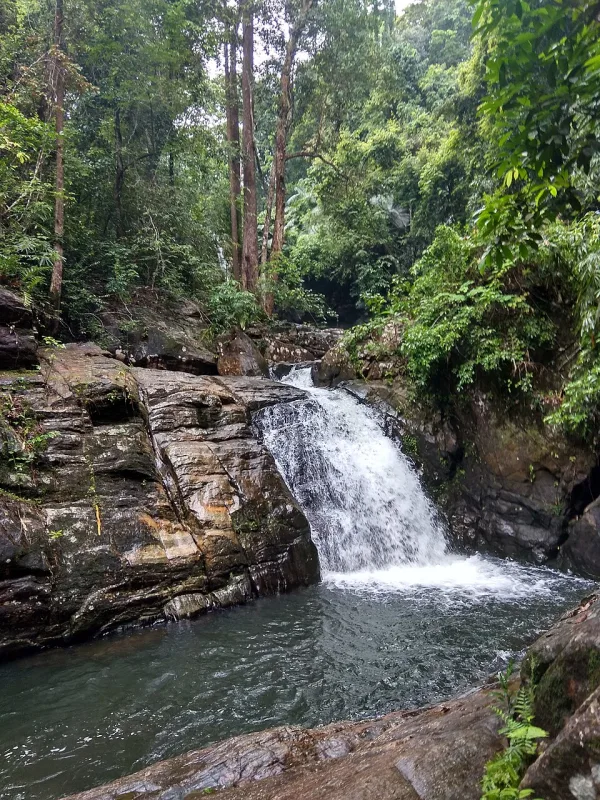
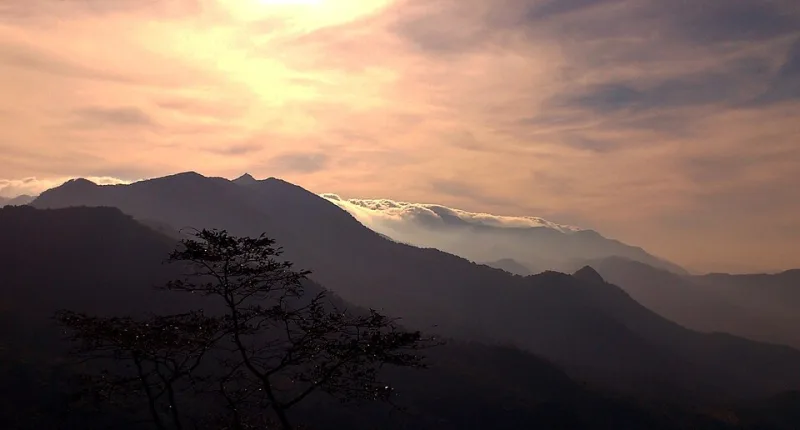
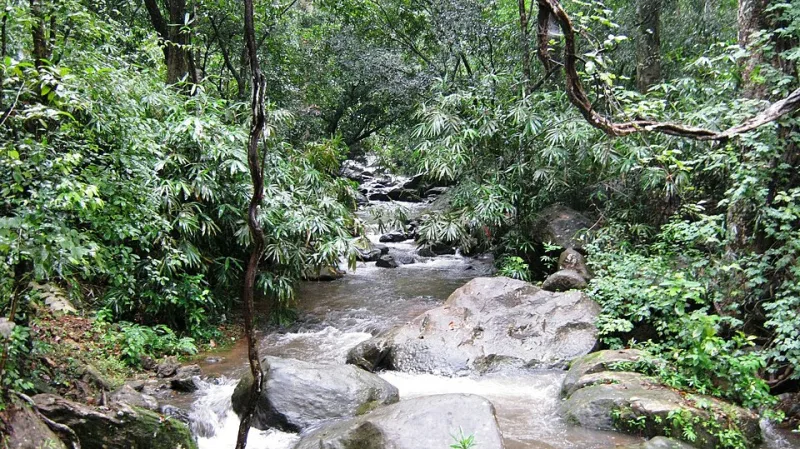
Protected forest in the hills around Palode, noted for freshwater Myristica swamps such as the patch at Ilavupalam.
At a glance
What: A range of reserved forest managed for protection.
Where: Hills and valleys around Palode in the north-east of the district.
When: Public roads can be used all year; forest entry depends on permission.
How: By road through Nedumangad to Palode.
By whom: The Kerala Forest Department.
For whom: Naturalists, researchers and travellers who value forest scenery from permitted routes.
What a reserve forest is
A reserve forest is land notified under forest law, where cutting, hunting, grazing, collection and trespass are controlled. It is not a park with a gate and visiting hours. This listing exists so that travellers understand what surrounds them and why the boundaries matter, not as an invitation to wander inside.
The landscape
Palode sits where the midland farms give way to the western slopes of the Ghats. Streams run down toward the Vamanapuram river system, and natural forest alternates with plantations, rubber estates and settlements, including those of tribal communities. The greenery along the roads is dense and the humidity high.
Myristica swamps
The special treasure of this region is the Myristica swamp, a freshwater swamp forest dominated by wild relatives of the nutmeg. The trees stand in water-logged soil and send out stilt roots and looping knee roots that rise above the mud to breathe. The sight is unlike any other forest in Kerala.
Ilavupalam
A swamp at Ilavupalam in the Palode area is recorded among dozens of patches surveyed in the southern part of the state; one count lists it as one of fifty-three. It is described as linked with the Sasthanada swamps of the Shendurney side, showing that these wetlands form a scattered network along neighbouring valleys.
A relic habitat
Scientists regard Myristica swamps as remnants of a very old type of tropical forest that once covered larger areas. Clearing for paddy, gardens and plantations reduced them to small fragments. Because each patch depends on a steady flow of water, damage upstream can harm a swamp even if its trees are left standing.
Why they matter
These wetlands hold water through the dry months, feed streams, store carbon in their soils and shelter frogs, insects, fishes and plants adapted to constant dampness. Some are known from few other places. Villages downstream benefit from the slow release of water, often without realising its source.
Seeing a swamp legally
Kerala's ecotourism programme has offered a guided trek to the Myristica swamps at Arippa, on this side of the Kulathupuzha forests. Such guided programmes are the right way to see the habitat. Availability, booking and charges change, so confirm them with the ecotourism office before planning a journey.
Wildlife
Forests of the southern Ghats foothills support monkeys, giant squirrels, deer, wild boar and elephants in places, along with hornbills, barbets, trogons and a great variety of butterflies. Sightings are never assured. Early morning on a permitted route gives the best chance of hearing and seeing birds.
The botanic garden
Palode is also known for the Jawaharlal Nehru Tropical Botanic Garden and Research Institute, which keeps large living collections of tropical plants, including orchids, bamboos and medicinal species. It offers a structured way to learn about the flora of these hills. Check its visiting rules separately.
The people
Tribal and farming communities live near the forest and know its seasons well. Respect settlements as private places. Do not photograph residents without consent or buy forest produce of doubtful origin. A local guide arranged through official channels supports livelihoods and keeps visitors safe.
Hazards
Leeches are active after rain, snakes are present, and elephants may appear on forest-edge roads, especially at dawn and dusk. Mobile signals fade in valleys. Streams rise quickly in heavy rain. Never leave a marked or guided route, and tell someone your plan.
Rules to follow
Do not light fires, carry out cutting, collect plants or animals, play loud music or drop waste. Plastic is particularly harmful in wetlands. Drones need official clearance. Officers may refuse entry during the fire season or after storms, and their decision should be accepted.
Getting there
Buses and taxis run from Thiruvananthapuram through Nedumangad to Palode, a journey of about forty kilometres. The nearest main station and airport are in the capital. The position shown on the map marks the Palode area in general, since a forest range spreads over a wide tract.
Nearby places
Ponmudi's hill road, the Kallar river and Meenmutty falls lie to the south-east, subject to opening rules. Thenmala ecotourism centre and the Kulathupuzha forests are to the north. The botanic garden is the easiest addition to a day's drive.
When to come
November to February is the most comfortable period, with water still present in the swamps and fewer leeches than in the monsoon. The swamps show their character best while wet. Summer brings fire risk and possible closures. Monsoon travel is beautiful from the road but difficult on foot.
Facilities
There are no visitor facilities inside the forest. Palode town has shops, eating places and basic services, and Nedumangad offers more. Carry water, rain protection and a simple first-aid kit on any permitted outing.
The nutmeg's wild cousins
The swamp trees belong to the same plant family as the spice nutmeg, with fruits that split to show a seed wrapped in a bright covering. Hornbills and other animals take these fruits. The wild species are not for human collection, and gathering seeds from a reserve forest is an offence.
Water and villages
Wells and streams below forested slopes depend on rain being held and released gradually. Swamp soils act like a sponge. When people talk of protecting such places, they are also talking about drinking water in March and April, long after the monsoon has gone.
Enjoying it from the road
Travellers without permits can still appreciate the range. Drive slowly through the forest-edge stretches in daylight, stop only where it is safe and legal, listen for birds and notice how the air cools near streams. Do not step past boundary markers for a photograph, and keep pets inside vehicles.
Updating this page
If an official programme opens or closes, if a trail is renamed or if rules change, readers can report it here with the source. Forest access is the kind of information that dates quickly.
A last word
The best visit to a fragile forest is often the lightest one: seen with care, from permitted ground, and left exactly as it was found.
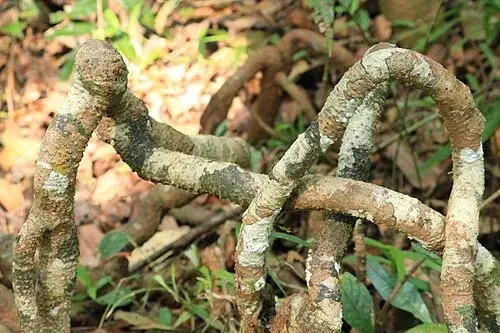 Photo: KannanShanmugam, Shanmugam Studio, Kollam · CC BY-SA 4.0