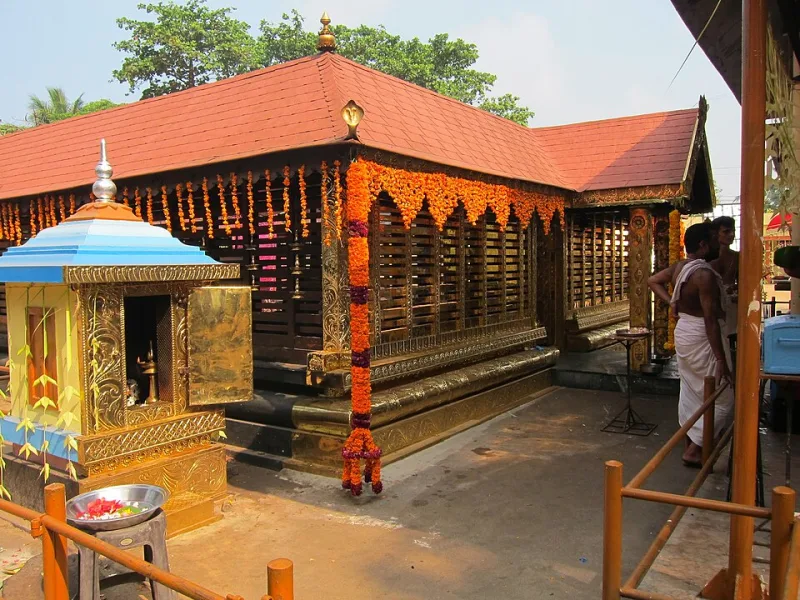
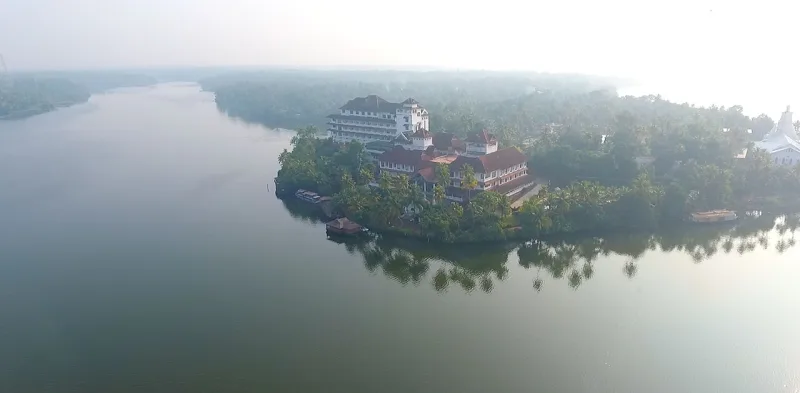
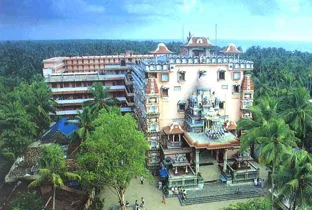
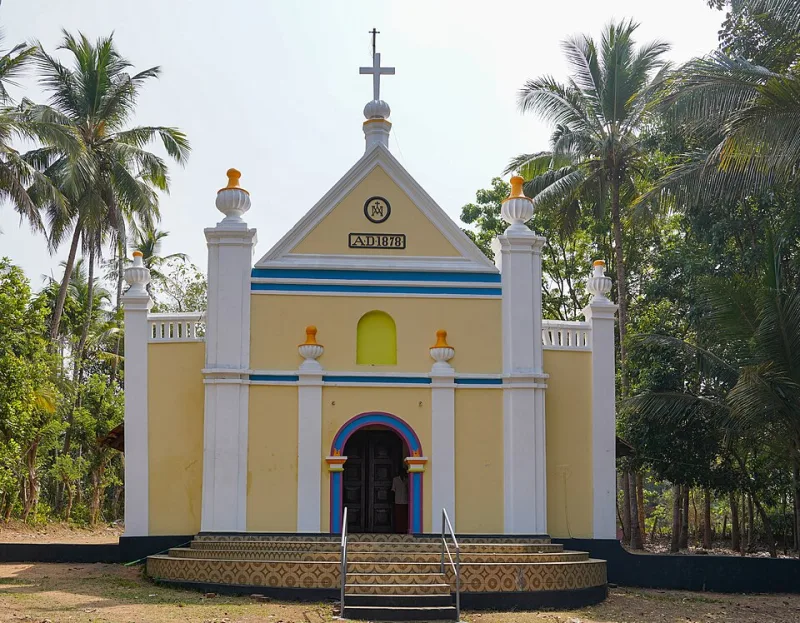
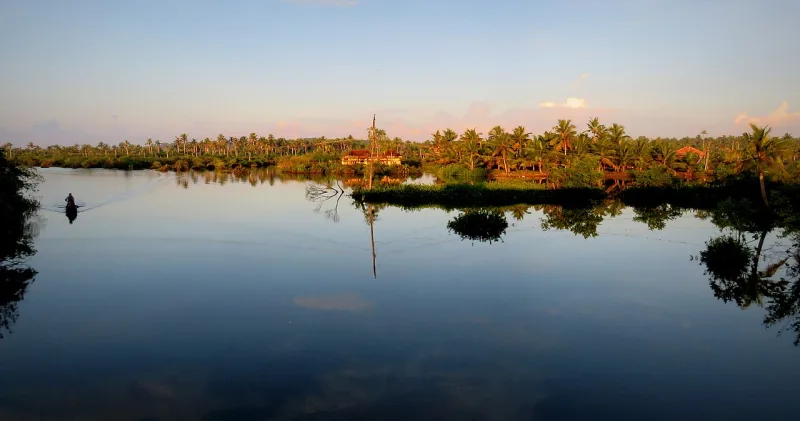
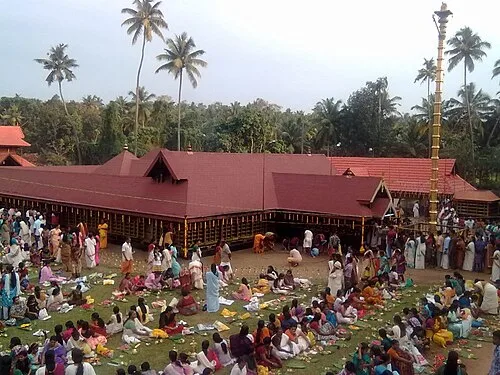
A seaside Bhadrakali temple on a narrow strip between the Arabian Sea and the canal, where devotees tie bells to a banyan tree.
At a glance
What: A temple of Bhadrakali known for its bell tying vow.
Where: Ponmana, on the Kollam coast near Chavara.
When: Daily worship; larger crowds on weekends and festival days.
How: By road to the Chavara side and onward across or along the canal.
By whom: Managed by the temple committee.
For whom: Devotees and visitors who enjoy the coast.
Between two waters
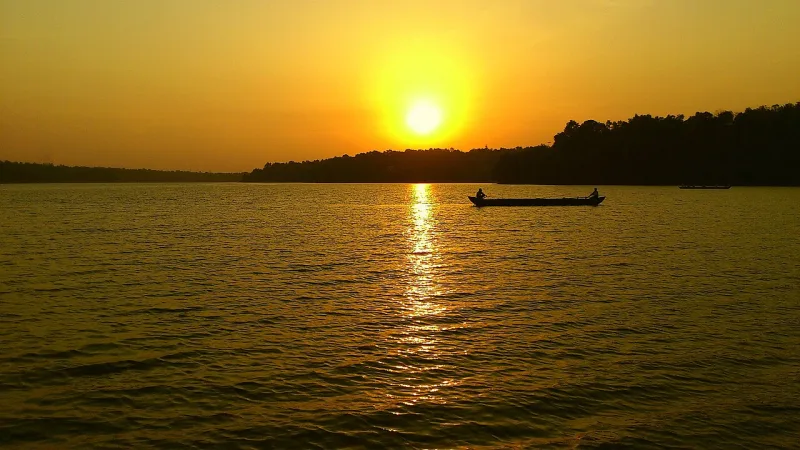
The temple stands on a slim piece of land with the Arabian Sea on one side and the TS Canal, the old inland waterway of Travancore, on the other. The journey there, often involving a short crossing, and the sound of surf around the shrine give the visit a character that inland temples lack.
The name
Kattil Mekkathil refers to the old family or place name of the shrine; kaadu means forest or thicket, and mekku means west. The sources consulted give no firm explanation, so the words are offered only as a guide to their sound.
The goddess
Bhadrakali is the presiding deity. Devotees approach her for protection and the fulfilment of heartfelt wishes. Coastal communities, whose lives depend on a sea that gives and takes, hold such guardians dear.
Bells on the banyan
The temple's best known practice is to circle the sanctum seven times and then tie a small bell to the banyan tree in the compound. Each bell stands for a person's wish. Thousands of bells hang from branches, railings and lines, so that the breeze keeps up a soft ringing.
How the custom began
Accounts differ. Some say bells were tied from the earliest days of worship. Others say the practice became famous only about three decades ago, after a bell fell from the flagstaff during a festival and a priest tied it to the nearby banyan, and then spoke of the blessing that followed. Either way, the custom has grown rapidly and now draws visitors from far away.
The tsunami story
In December 2004 the Indian Ocean tsunami struck this coast with deadly force. The temple is often described as having been spared while much around it was damaged, and some accounts present its fame as a gift of that event. Writers who have looked into it call such a claim an exaggeration, since the shrine and its devotion existed long before. Survival of a building can have physical causes; what devotees make of it is a matter of faith.
A coast that changes
This stretch of Kollam has been reshaped by erosion, mineral sand mining and sea walls. Houses and roads have been lost in places, and many families have moved. The temple's narrow site makes the force of these changes easy to see. It is worth reflecting on them while enjoying the view.
Visiting
Dress modestly, leave footwear where indicated and join the queue. Bells are sold near the temple. Tie them only where permitted and avoid damaging the living tree by pulling branches or driving in nails. Ask before photographing worshippers.
Crossing the water
Where a ferry is used, board only when told, do not overcrowd it, keep children seated and follow the crew. Confirm the hour of the last crossing. In rough weather services may stop.
The sea
Do not bathe on the open beach beside the temple. Waves along armoured and eroding shores are unpredictable, and there may be submerged stones.
Getting there
Chavara is on National Highway 66, north of Kollam. From there local roads lead to Ponmana. Karunagappally and Kollam have the nearest major stations, and Thiruvananthapuram and Kochi the airports. Check locally which approach is open.
Season
October to February brings pleasant mornings. The monsoon makes the sea violent and approaches difficult. Summer sun on the exposed strip is fierce, so carry water and a covering for the head.
Nearby places
The Kottankulangara temple, Kovilthottam church and lighthouse, the Ashtamudi lake, Thirumullavaram and Azheekal beach to the north are all within reach.
Facilities
Stalls selling bells, flowers and refreshments gather near the temple. Toilets and parking are basic and crowded on holidays.
Questions visitors ask
Do I need to make a wish? No, visitors may simply look and pray as they wish. Is there an entry fee? Worship is open; bells and offerings are paid for. How long should I allow? One to two hours including the approach. Is it suitable for elderly people? Ask about the crossing and walking distance first.
The sound that stays
Many remember not a particular image but the continuous gentle chime above the roar of the waves, thousands of small hopes moving in the same wind.
Care for the setting
Old bells and plastic wrappers should not end up on the sand or in the canal. Take packaging home or use the bins, and leave the shore as clean as the temple compound.
Before you travel
Because approach roads and water crossings on this coast can change after storms or public works, telephone someone local or ask at Chavara before setting out. A few minutes of enquiry saves a long detour in the midday heat and keeps older companions comfortable.
A walk of seven rounds
Devotees performing the vow move steadily round the sanctum seven times before going to the tree. On crowded days the line is long and the sand or paving may be hot, so patience and water are needed. Those unable to walk the full number may ask temple staff what is acceptable. Families often tie one bell together, naming their wish silently, and children remember the small ringing sound long afterwards.
The inland waterway
The TS Canal beside the temple formed part of the system of lakes and cuttings that carried boats along the length of Travancore, taking passengers and goods in safety behind the coastline. Parts of it are being restored as a national waterway. Watching a country boat pass, one sees why shrines grew up along its banks: the canal was the high road of its day.
Neighbours of the temple
The people of Ponmana have faced large changes from mining and the sea. A few families and workers remain close by, and the temple's visitors support small trades. Buy from local stalls, respect private ground and do not pick up sand or minerals from the shore.
Heading back
Leave time for the return journey, which can be slow when many families depart together. Keep the receipt of any offering until you have collected it.