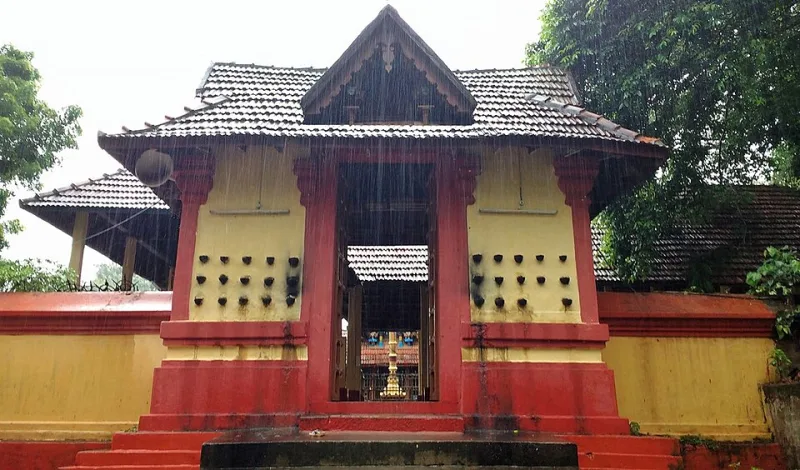
A goddess temple at Chavara famous for Chamayavilakku, the festival night on which thousands of men dress as women and carry lamps in devotion.
At a glance
What: A temple of Durga Bhagavathy with a singular festival.
Where: Kottankulangara, Chavara, north of Kollam city.
When: Daily worship; Chamayavilakku on the 10th and 11th of Meenam, in late March.
How: By road on the coastal highway.
By whom: Run by the temple's own administration with the participation of local divisions.
For whom: Devotees of every background and respectful spectators.
The festival of lamps
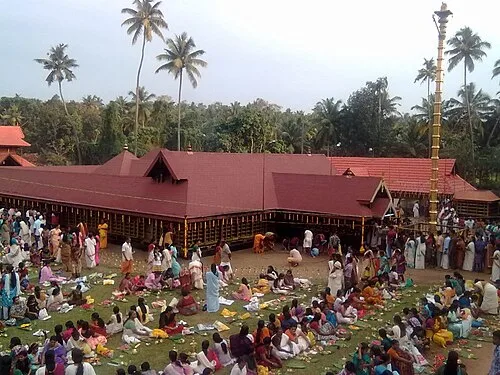
On the last two nights of a long festival, evening brings a remarkable sight. Men who have vowed to the goddess dress in saris or skirts, with jewellery, jasmine garlands and careful make up, and walk bearing the chamayavilakku, a traditional lamp on a staff. They circle the temple and wait to receive her as she passes in procession on a caparisoned elephant. The observance continues until dawn.
Why they do it
The vow is made to win the goddess's blessing: for work, marriage, health, children or thanks for a wish fulfilled. People take part without distinction of caste or creed, and they come from across Kerala and beyond. Fathers, labourers, officials and students may stand side by side, indistinguishable in their finery. For many the transformation is an offering of pride.
The legend of the stone
The temple's account says this land was once a quiet wooded tract with a deep pool called Bhoothakulam and a larger pond that fed a stream, so that cowherds brought their cattle to graze. One day some boys found a coconut and struck it against a stone to remove the husk. Drops of blood appeared on the stone. The elders consulted an astrologer, who declared that divine power dwelt in it and advised that worship begin. A shelter of poles and coconut leaves became the first temple.
Why women's dress
In old custom, young girls prepared garlands and lit lamps at family shrines. Following it, the cowherd boys put on girls' clothes to make their offerings. The festival repeats their gesture. Other tellings vary the details, as living legends do.
The offering called kottan
From coconut milk the boys prepared oil, and the solid residue, called kottan, they offered to the goddess. The temple's name is commonly connected with this offering and with the pond, kulam.
Kakkavilakku
In the daytime, boys under about ten take part in a smaller observance, dressed as girls and carrying lamps. Families treat it with affection and care.
A space of acceptance
The state tourism department notes that the festival has become one of the largest gatherings of transgender people in Kerala, who find here a place to celebrate their identity. The mood is generally festive and devout. Visitors share responsibility for keeping it safe and dignified for all.
Watching respectfully
This is worship, not a costume show. Ask before photographing anyone closely, never touch a participant or their ornaments, avoid comments on appearance and follow police and volunteers. Women in the crowd and men taking part both deserve courtesy. Do not publish close images of children.
If you wish to take part
Those making the vow should ask the temple about the rules. Dressing rooms and make up services operate nearby at festival time. Fasting or other observances may be customary.
Chavara
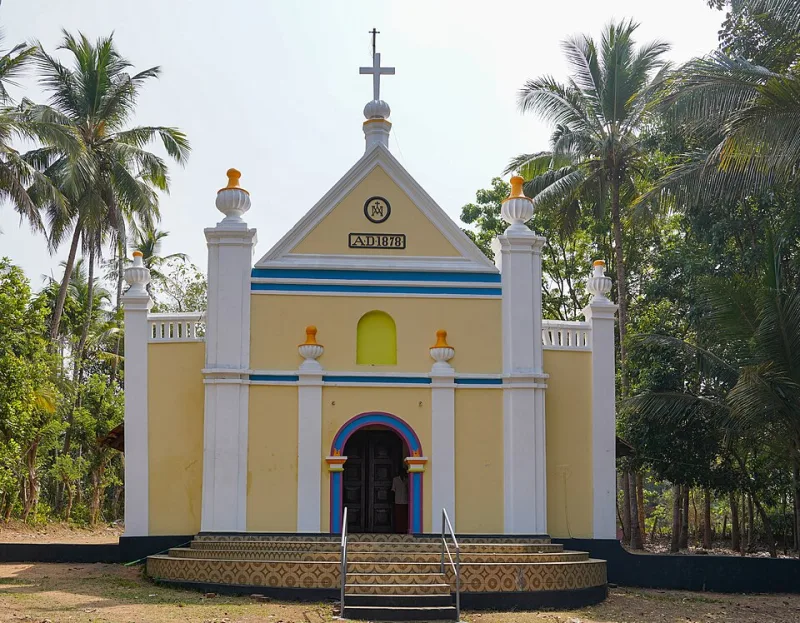
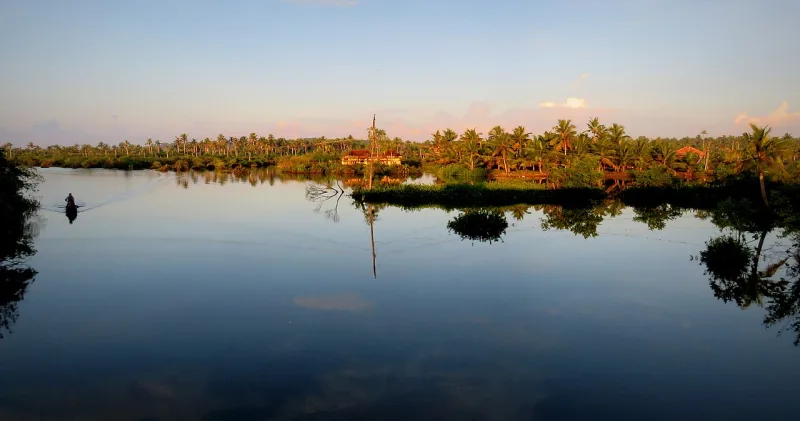
Chavara lies between the Arabian Sea and the Ashtamudi lake. Its beaches hold heavy mineral sands rich in titanium, which support large industries. The old Travancore Sirkar canal runs through the area, and nearby are the Kovilthottam church and lighthouse and the Kattil Mekkathil temple.
Getting there
The temple is close to National Highway 66, about 15 to 20 kilometres north of Kollam city and south of Karunagappally. Buses stop nearby day and night during the festival. Thiruvananthapuram and Kochi have the closest airports.
Festival practicalities
The nights are warm and extremely crowded. Wear light clothes and comfortable footwear that is easily removed, carry water, keep valuables secure and fix a meeting point. Book rooms well ahead or travel from Kollam.
Ordinary days
For the rest of the year the temple is a calm neighbourhood shrine, with morning and evening worship. A short visit then lets one see the setting that disappears under crowds in March.
Season
The festival falls in the hot season. November to February is more comfortable for a quiet visit. Monsoon rain from June can flood low ground.
Nearby places
Combine a visit with the Kattil Mekkathil temple, Thirumullavaram beach, boat rides on the Ashtamudi or the Sasthamkotta lake and temple.
Questions visitors ask
Do participants have to be Hindu? Accounts describe people taking part regardless of religion; ask the temple about customs. Can tourists watch? Yes, respectfully. Is it safe at night? Crowds are managed, but ordinary care is needed. How long does it last? The lamp observance runs from evening to dawn on each of the two main nights.
The lamp itself
The chamayavilakku is a lamp mounted on a wooden staff, its flame carried at about shoulder height. Participants hold it steady for long periods while waiting for the procession. The line of flames, lighting faces, silk and flowers along the road to the temple, is what gives the night its unforgettable appearance. Hired lamps are generally available near the grounds. Anyone near them should keep loose cloth and hair away from the flames and give the bearers room.
Meaning for those who take part
Participants speak in different ways of what the night means. Some fulfil a promise made by a parent; some give thanks for recovery or employment; some say that for a few hours they feel closer to the goddess by becoming like her attendants. Transgender devotees often describe a rare experience of being welcomed openly. An observer need not settle which meaning is the true one. All of them are present in the same crowd.
Planning from outside Kerala
Fix the dates with the temple office, which follows the Malayalam calendar, reserve rooms in Kollam or Karunagappally early and arrange return transport before nightfall.
After the night
By morning the grounds are strewn with flowers and tired devotees head for home. Visitors can help by carrying their litter away, giving priority on buses to those who have walked all night and being gentle in what they share online. A photograph of a lamp or of the procession from a distance conveys the beauty of the observance without exposing any one person who may prefer privacy.
Remember
Courtesy is the one offering every visitor can bring.
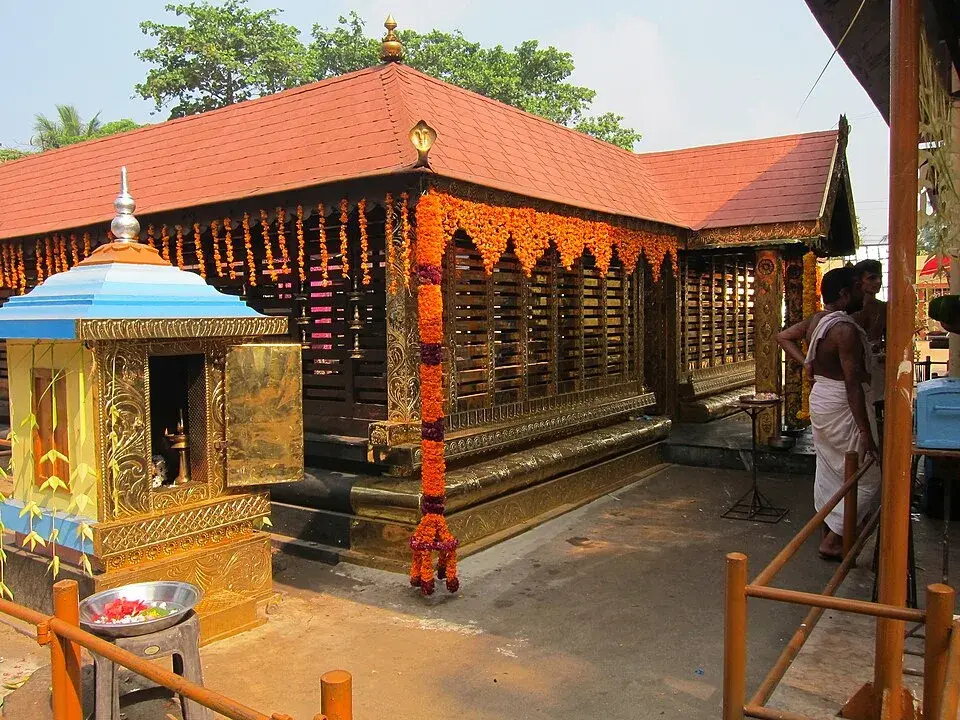 Photo: Gangadharan Pillai · CC BY-SA 3.0