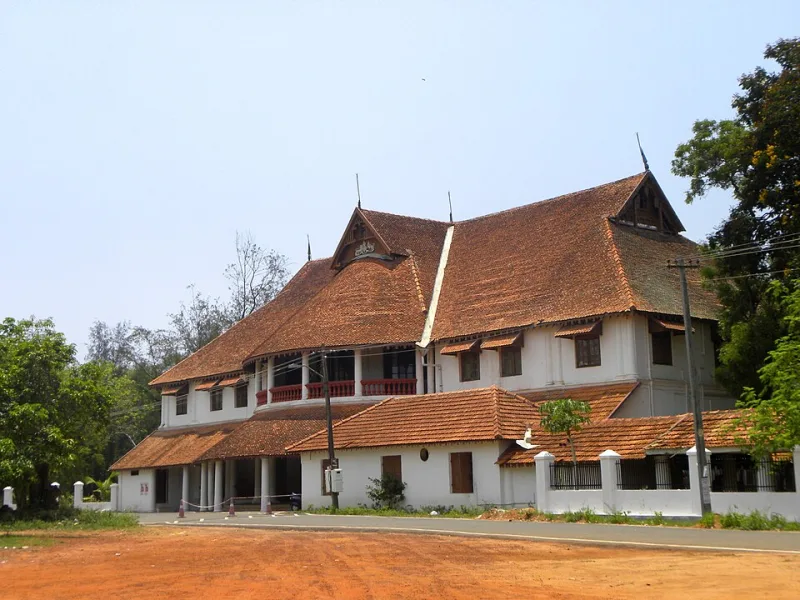
An early nineteenth century lakeside palace of the Travancore rulers, now used as a National Cadet Corps headquarters and seen best from the water.
At a glance
What: A former royal palace on the lake shore.
Where: Thevally, Kollam.
When: Built between 1811 and 1819.
How: Seen by boat on the Ashtamudi or from nearby public roads.
By whom: Built in the reign of Gowri Parvati Bayi; now owned by the Public Works Department.
For whom: Heritage lovers and boat travellers.
The palace
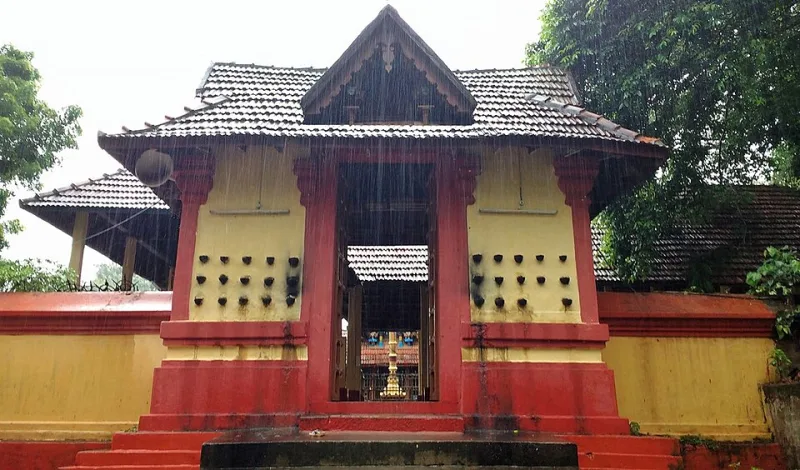
Thevally Palace stands on the bank of the Ashtamudi, its walls and roofs reflected in the water. Its design is described as a mixture of British, Dutch and Portuguese manners, and its structure is largely of laterite stone and lime plaster, the traditional materials of the coast. A temple of Sastha belongs to the premises.
Royal use
Travancore's rulers used the palace on visits to Kollam, particularly to meet the British Residents, whose own house stood across the water at Asramam, and to confer with officials. It also served administrative purposes at a time when Kollam was a principal centre of the state. The two buildings facing the same lake form a quiet picture of the politics of the age.
The builder's time
Gowri Parvati Bayi governed as regent from 1815, following her sister Gowri Lakshmi Bayi, for a young nephew who later became the celebrated ruler and composer Swathi Thirunal. The years given for the palace fall across these two regencies. Colonel John Munro held office in the state during part of the period.
Present use
The palace now houses the group headquarters of the National Cadet Corps for the Kollam area and belongs to the Public Works Department. It is a working establishment. Visitors cannot assume entry to the building or grounds, and uniformed activity should not be photographed without permission.
The best view
The lake gives the finest sight of the palace. Public ferries and tourist boats pass along this arm of the Ashtamudi. Ask the operator to point it out, and have the camera ready, since the view lasts only a short while.
The Ashtamudi
Ashtamudi means eight braids or arms, a good description of a lake that branches in many directions before reaching the sea at Neendakara. It is recognised as a wetland of international importance. Clams, fish, mangroves and a large human population depend on it. Pollution and encroachment are serious concerns, so boat passengers should keep all waste aboard.
Laterite and lime
Laterite is soft when cut and hardens in air, which made it the favourite building stone of Kerala. Lime plaster breathes, letting damp escape, an advantage in a climate of heavy rain. Repairs with cement can trap moisture and harm such walls, one reason heritage experts urge care in maintaining buildings like this.
Getting there
Thevally is a few kilometres from Kollam Junction, along the road that rounds the lake's northern side. City buses and autorickshaws reach the area. The boat jetty in town is the starting point for water trips. Thiruvananthapuram airport is about 70 kilometres away.
Season
October to March offers calm water and clear light. Monsoon boat services may be curtailed in storms. Summer evenings on the lake are pleasant after hot days.
Nearby places
The British Residency and Asramam maidan, Anandavalleeswaram temple, Thangassery and the Munroe Island backwaters are natural companions.
A heritage circuit by boat
A boat journey from the Kollam jetty towards Munroe Island passes shorelines where coir is worked, Chinese nets are raised and old buildings appear among the palms. Adding the palace and the Residency to such a trip turns scenery into history.
Courtesy
Keep a respectful distance from the premises, do not disturb cadets or staff and follow any signs restricting access or photography.
Protecting the view
The charm of the palace depends on the open water around it and the greenery beside it. Support efforts to keep the lake clean and the banks free from debris.
Questions visitors ask
Can I tour the rooms? Not as a regular tourist attraction; enquire with the authority. Is there an entry fee? None recorded. What is it used for? NCC headquarters. Is the Sastha temple open? Ask locally about access.
Looking across
Stand at Asramam on a still evening and look over the water. A century and more ago, boats would have carried messages and visitors between the two great houses. The lake that joined them now carries ferries and fishermen, and the view still explains why both sites were chosen.
For researchers
Dates and uses given here come from brief published accounts. State archives and public works records would repay anyone who wishes to trace alterations to the building over two centuries.
A name worth keeping
Neighbourhoods often take their identity from a great house, and Thevally is no exception. Schools, offices and ferry stops use the name daily, so that the palace remains present in ordinary speech even for people who have never seen its inner rooms.
The lake as a road
Before motor roads, the quickest and most dignified way between important places in Kollam was by water. Rulers and officials travelled in rowed barges, and landing steps served as front doors. This explains why the palace turns towards the lake and why its finest appearance is still from a boat. Imagining arrival by water helps a visitor understand the placing of verandahs, rooms and approaches that might seem odd from the road behind.
Youth and service
The National Cadet Corps, which now occupies the building, gives students training in discipline, outdoor skills and public service. Its presence keeps the old rooms in daily use, which is often the best protection against decay, though use also brings alterations. Heritage groups can help by documenting original features in cooperation with the occupants.
An evening on the water
Choose a short boat trip towards dusk. The breeze rises, fishing canoes head home and the roofs along the bank darken against the sky. Keep seated, wear the life jacket and ask the boatman to slow near the palace.
If you cannot go by boat
A view across the water from the Asramam side still gives the outline of roofs among trees. Carry binoculars, choose a clear morning and avoid pointing long lenses at people working on the premises.
Respect for a working place
Cadets and officers use these rooms and grounds. Keep the approach road clear and move along if asked.
Weather
Haze after midday can soften the view across the lake, so mornings are usually clearer for sightseeing and photographs alike. In heavy rain, postpone the boat and see the other city monuments under an umbrella instead.
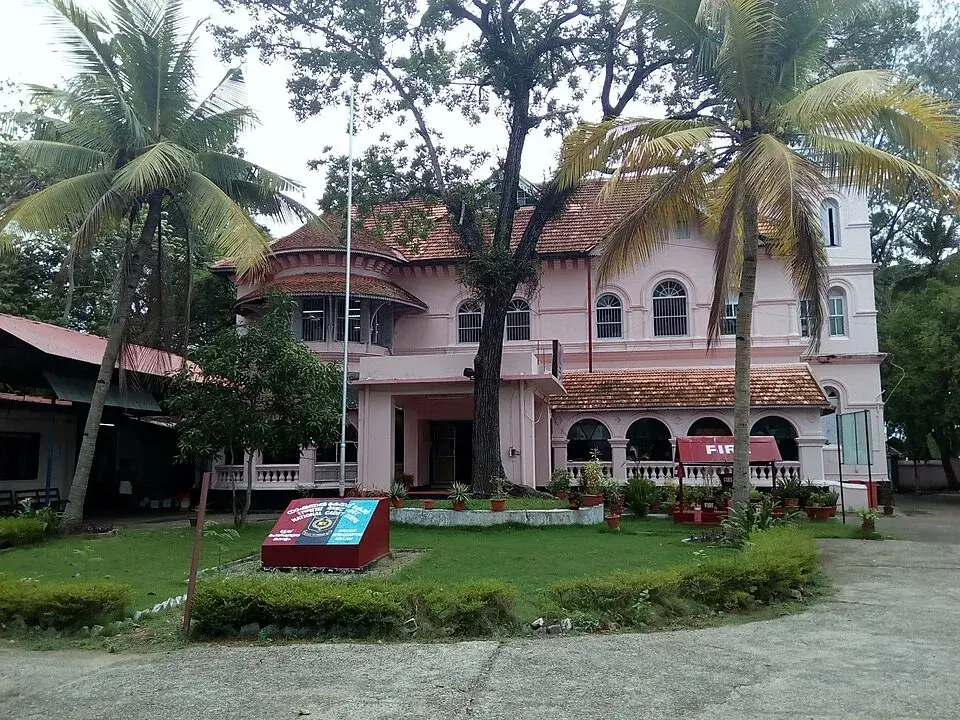 Photo: Akhilan · CC BY-SA 3.0