A museum in south Mumbai tracing more than a century of Indian film, set partly in the nineteenth century Gulshan Mahal bungalow and a modern annexe.
India makes more films than almost any other country, and Mumbai is the best known centre of that industry. The National Museum of Indian Cinema, inaugurated by the Prime Minister in January 2019 on the Films Division campus off Pedder Road, tells how moving pictures arrived in the country and grew into a vast popular art in many languages.
The museum occupies two spaces with very different characters. Gulshan Mahal is a graceful nineteenth century bungalow that has been restored to house galleries arranged broadly by period. Beside it, a modern multi storey building provides larger thematic displays, with theatres and activity areas.
The journey begins with early visual devices and the first film shows in Bombay in 1896, only months after the Lumiere brothers presented cinema in Paris. Exhibits then turn to the pioneers, above all Dadasaheb Phalke, whose Raja Harishchandra of 1913 is regarded as the first full length Indian feature film. Visitors move through the silent era, the arrival of sound with Alam Ara in 1931, the studio system, the achievements of celebrated directors and stars in the decades after Independence, and the development of cinema in regions across the country.
Cameras, projectors, editing and recording equipment, gramophone discs, posters, booklets, costumes, photographs and awards illustrate the story. Screens play clips, and interactive exhibits let visitors experiment with sound, picture and effects, which appeals strongly to children and students. One section explores the influence of Mahatma Gandhi on films, and others explain the technical crafts behind the screen.
The collection is most enjoyable if you give it time. Start in Gulshan Mahal to follow the chronology, then visit the modern building. Film lovers could easily stay half a day. Families can share memories: grandparents often recognise songs and posters that younger visitors know only by reputation.
Tickets are inexpensive, with different rates for adults, students, children and foreign visitors. Opening days and hours, including the weekly closure and public holidays, should be confirmed on the official website or by telephone, as schedules have changed from time to time. Security checks apply because the museum shares a government campus. Photography may be limited, food stays outside the galleries and exhibits should not be touched. Ask about lifts and ramps if needed.
The location in south Mumbai makes it easy to combine with other sights. The Mahalakshmi temple and the Haji Ali dargah are close by on the seafront. Mani Bhavan, Gandhi's Mumbai base and now a memorial museum, is near Grant Road, and Marine Drive offers a pleasant evening walk. Further south, the Chhatrapati Shivaji Maharaj Vastu Sangrahalaya presents art and history, and the old cinema houses of the Fort area recall the age of grand film theatres.
Mumbai's climate is humid, and the monsoon from June to September can flood roads, so an indoor museum is welcome then, provided transport is running. November to February is the most comfortable period for walking between attractions.
For anyone who has hummed a film song or waited for a first day show, this museum connects personal memory with national history. It reminds visitors that the glittering industry began with a few determined individuals, hand cranked cameras and audiences willing to be amazed, and that preserving old films and equipment is essential if later generations are to understand that beginning.
Ask at the ticket desk whether any screening or talk is planned that day. Even a short clip shown on a large screen helps visitors feel the difference between early silent pictures and the colour spectacles that came later.
Before leaving, choose one old film mentioned in the galleries and watch it at home. It is a pleasant way to continue the visit and to hear the songs and see the style that earlier generations loved.
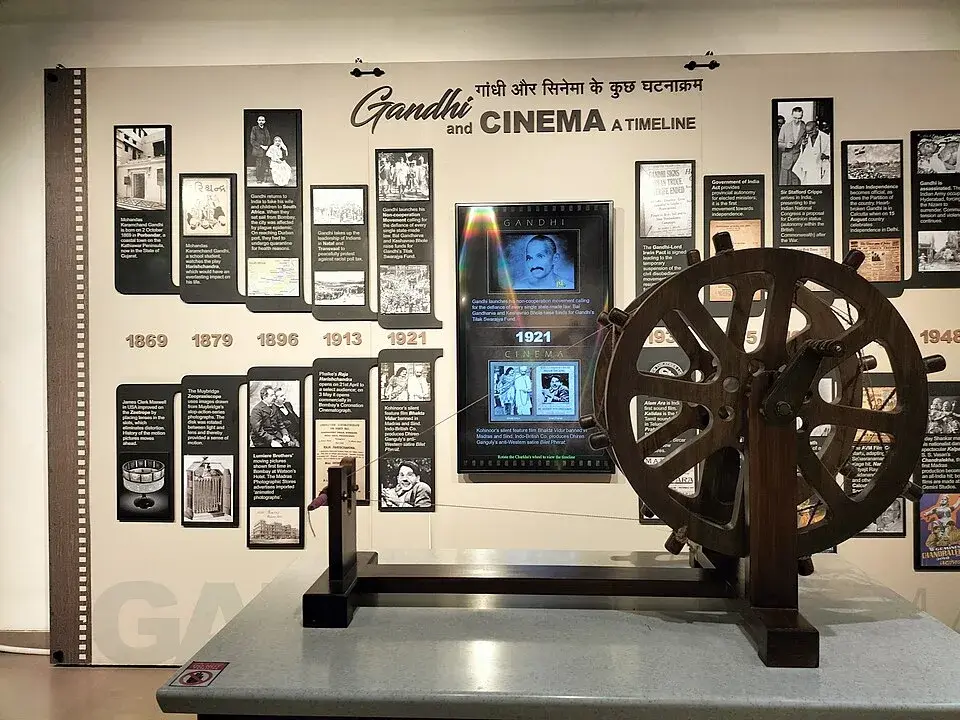 Photo: Khushi Vaishya · CC BY-SA 4.0