One of India's oldest mosques by tradition, admired for Kerala woodcraft, teak carving and a stone water tank beside the Meenachil.
On the bank of the Meenachil river in the old quarter of Thazhathangady stands a mosque whose sloping roofs and carved timber might at first suggest a Kerala mansion or temple. This is the Thazhathangady Juma Masjid, regarded as one of the oldest mosques in India and a treasured example of how Islam took root in the architecture and culture of the Malabar and Travancore coasts.
Tradition holds that the mosque was completed around 824 CE by Habib Dinar, a son of Malik Dinar, who is remembered as an early preacher of Islam in Kerala. Dates of such antiquity rest on community tradition, and the building has been repaired and extended over the centuries, but its long standing place in the life of the town is beyond doubt. The surrounding area is recognised as one of Kerala's heritage zones, where old trading houses recall the days when boats carried spices along the river to the coast.
The architecture follows thachu shastra, the traditional science of carpentry and building practised in Kerala. Steep tiled roofs shed the rain, timber columns and beams create cool shaded halls, and teak wood carvings of great delicacy decorate ceilings, screens and doorways. Visitors are often shown a concealed passage and, most memorably, a water tank carved from a single block of stone, holding about two thousand litres and used for the ritual washing before prayer. The main two storeyed structure rises about eleven metres.
Like many living places of worship, the mosque has had to find room for a growing congregation. In 2012 the southern part was removed and extended with modern materials and minarets, a change that visitors will notice beside the older work. The contrast is a reminder that heritage buildings are also in daily use and that conservation involves choices made by communities.
A visit should be arranged with courtesy. The mosque is first a place of prayer. Avoid the five daily prayer times and especially the Friday congregation unless you are attending to pray. Approach a caretaker or committee member and ask whether you may enter, which areas are open and whether photography is allowed. Access rules for women and for visitors of other faiths may apply to particular parts. Wear loose, modest clothing, cover your head if requested, leave footwear outside and speak quietly. A small contribution to the maintenance of the building is appreciated where a box is provided.
Reaching the mosque takes only minutes from central Kottayam. Autos are readily available from the railway station and bus stands, and Cochin International Airport is the usual gateway for travellers arriving by air. The streets nearby are narrow, so walk the last stretch if driving is awkward.
Take the chance to stroll along the river road. The old houses of Thazhathangady, with their wooden gables and verandahs, show the domestic version of the same craft seen in the mosque. The river is also the venue for a popular boat race held around the Onam season, when banks fill with spectators; confirm dates locally.
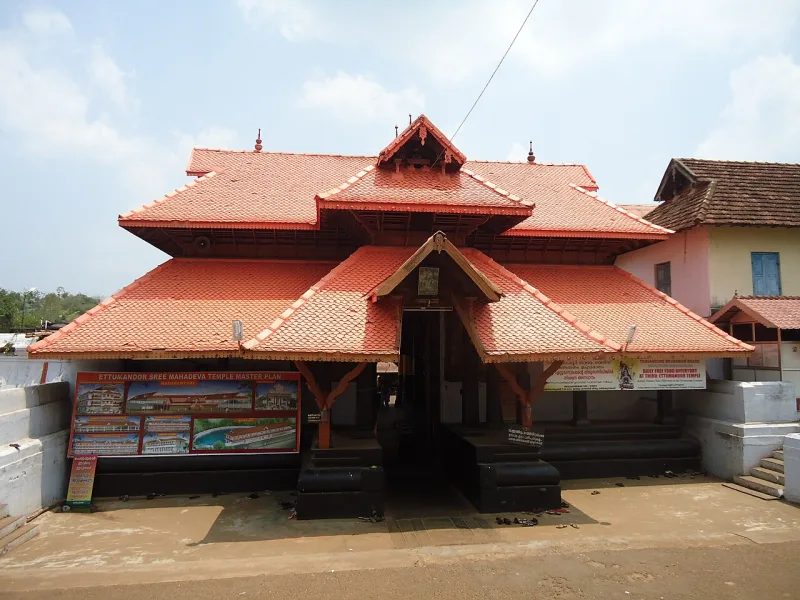
Kottayam is rich in religious heritage. Within a short drive are historic churches, the Shiva temple at Ettumanoor and the shrine at Bharananganam, while the backwaters of Kumarakom lie to the west. A day linking several of these gives a fine picture of the district. October to March offers the most comfortable weather, but the mosque is equally atmospheric in the rain, when water drips from the broad eaves and the carved wood darkens. An unhurried, respectful visit leaves a lasting impression of craftsmanship passed down through generations and of a community that continues to care for it.
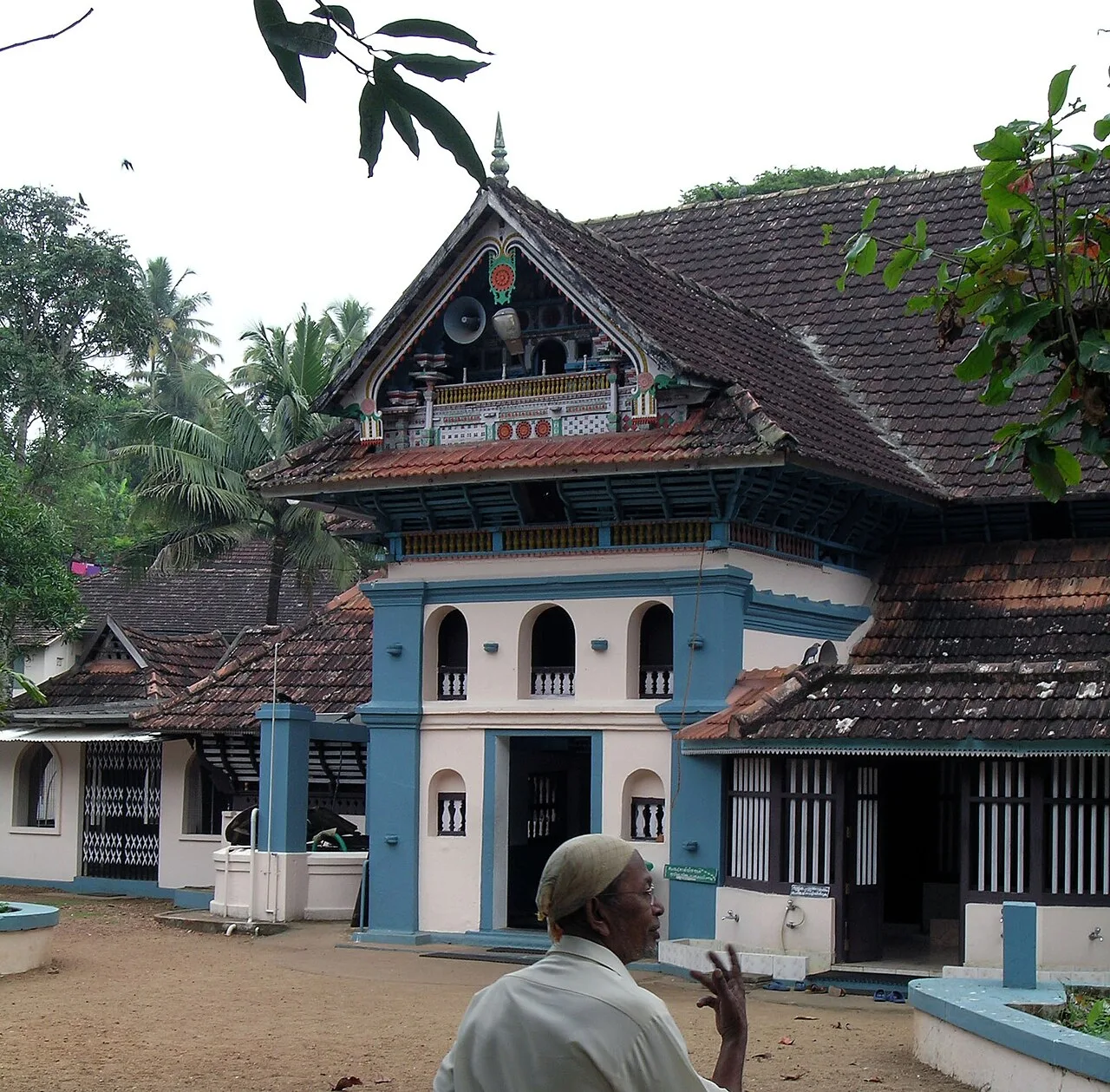 Photo: Aryaabraham · CC BY-SA 3.0