A seaside Shiva temple known for its 18 metre Gangadhareshwara sculpture on the rocks above the Arabian Sea.
At a glance
What: A Shiva temple with the tallest Shiva sculpture in Kerala.
Where: Pulinkudi, on a rocky shore near Vizhinjam, south of Thiruvananthapuram.
When: The great sculpture was built from 2014 and opened on 31 December 2020.
How: Leave the Vizhinjam to Poovar road and follow the short approach to the coast.
By whom: The sculpture is the work of P. S. Devadathan, a native of Aazhimala; a temple trust manages the shrine.
For whom: Devotees, families, and travellers interested in sacred art and sea views.
About the temple
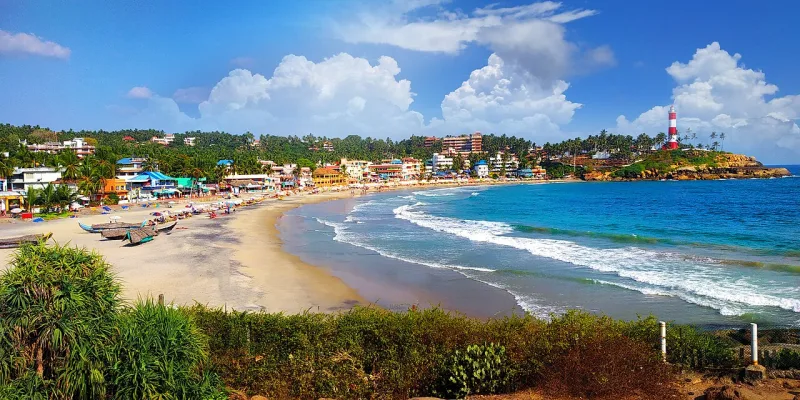
South of Kovalam the coast breaks into dark rocks and small coves, and on one of these heights stands the Aazhimala Shiva Temple. Many people now come first to see the immense figure of Shiva that rises beside the sea, and then discover a lively temple with its own long routine of prayer. The meaning of the place name is often linked by visitors to the ocean and the hill, which describes the setting exactly.
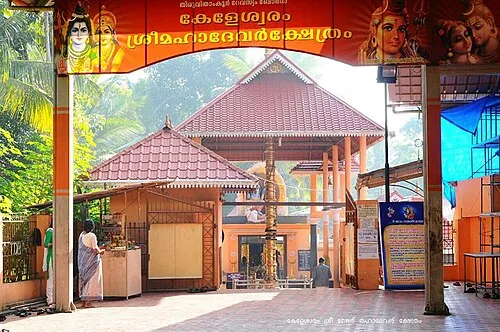
In appearance the temple follows the manner familiar from Tamil Nadu more than the sober wood and tile of traditional Kerala shrines. The outer wall and the gateway tower carry brightly painted sculptures of Ganesha, Ayyappa, Vishnu, Kartikeya, Hanuman and others. The shrines of the presiding deity and the subsidiary gods are also decorated with carvings and painting. The Aazhimala Shiva Temple Devaswom Trust looks after the institution, takes decisions on its affairs and organises the annual festival.
The great sculpture
The sculpture shows Shiva as Gangadhareshwara, the Lord who bears the river Ganga. It is 18 metres, about 58 feet, tall, made of concrete and set on a rock some six metres above its surroundings. The god sits with four arms. One back hand holds the damaru, the small drum associated with the rhythm of creation, and the other holds the trident. A front hand rests on the right thigh, while the other is raised to the matted locks, in which Ganga is received.
Work began on 2 April 2014 and the figure was completed and opened to the public on 31 December 2020. That long span reflects the patience needed to model such a form in the open, exposed to salt wind and monsoon. It is described as the tallest Gangadhareshwara sculpture in India as well as the tallest Shiva figure in the state. Seen from below, with the sky behind and waves beneath, the composition appears to grow out of the rock itself.
The story of Ganga's descent
The image illustrates one of the most loved narratives of Hinduism. King Bhagiratha performed long austerities to bring the heavenly river to earth, so that her water could purify the ashes of his ancestors and release their souls. The gods agreed, but the force of her fall would have shattered the world. Bhagiratha then prayed to Shiva, who stood to receive her on his head. The proud river was caught in the coils of his hair, where she wandered until he let her flow out gently in streams. Following Bhagiratha's chariot, she reached the sea and fulfilled his hope. A task of great persistence is still called a Bhagiratha effort in Indian languages.
Setting this scene beside the ocean is apt, since the story ends with the river meeting the sea.
Worship and festival
Daily rituals follow the usual order of a Shiva temple, with bathing of the deity, offerings, lamps and recitation. The annual festival is held in the Malayalam month of Makaram, in January and February, and Maha Shivaratri, a night of fasting and wakeful prayer falling in February or March, is another major occasion. On these days the approach road and the temple grounds become very busy.
Popularity, rumours and good sense
Photographs of the sculpture travel widely, and some posts describe Aazhimala as an ancient marvel. The figure is recent, completed in 2020, even though worship at the site has its own earlier life. Others present the rocks below as a perfect place for dramatic pictures. This is dangerous advice. The Arabian Sea along this shore is deep and rough, waves can sweep over rocks that looked dry a moment earlier, and wet stone is extremely slippery. Heed barriers, boards and guards, and never go down to the water's edge for a photograph. In the monsoon from June to August the risk is greatest.
Sculpture on a sacred coast
Large outdoor images of deities have appeared at many Indian pilgrim places in recent decades, made possible by reinforced concrete, which lets an artist build forms that stone could hardly support. Such a work needs a hidden frame, careful layering, weatherproof paint and regular maintenance, particularly where salt spray corrodes metal. What distinguishes the Aazhimala figure is the way it is composed with its rock: the god does not stand on a formal pedestal in a square but appears to rest on the headland, his hair loose in the sea wind. Pause at different points and watch how the expression and outline change.
Visiting
Remove footwear before entering and wear modest clothing; the temple may expect traditional dress inside the inner area. Photography of the outdoor sculpture is popular, but ask before photographing worshippers and follow rules within shrines. Silence your phone, keep the premises clean and do not carry plastic towards the sea.
The open ground and stone become hot in the middle of the day, so morning and late afternoon are best. Evening light on the figure and the water is especially fine, though crowds gather then and on holidays. One to two hours is comfortable. Carry water, wear a hat while outdoors where permitted, and allow time for parking, which is limited near the shore.
Questions visitors ask
Is there a fee? Charges for offerings or parking may apply and can change, so check on arrival. Can elderly people see the sculpture? Much of it is visible from the temple level, but there are slopes and steps. Is swimming possible? Not here; choose a patrolled beach. Can non devotees come? Visitors who respect temple custom commonly come to see the setting, and should follow any instructions about restricted areas.
Around Aazhimala
Vizhinjam harbour with its lighthouse and rock cut shrine is a short drive north, followed by the beaches of Kovalam. To the south lie the Poovar estuary and the road to Neyyattinkara and Kanyakumari. A day along this coast can combine a temple morning, a seafood lunch and an evening boat ride on the backwater, with enough time to return to the city before night.
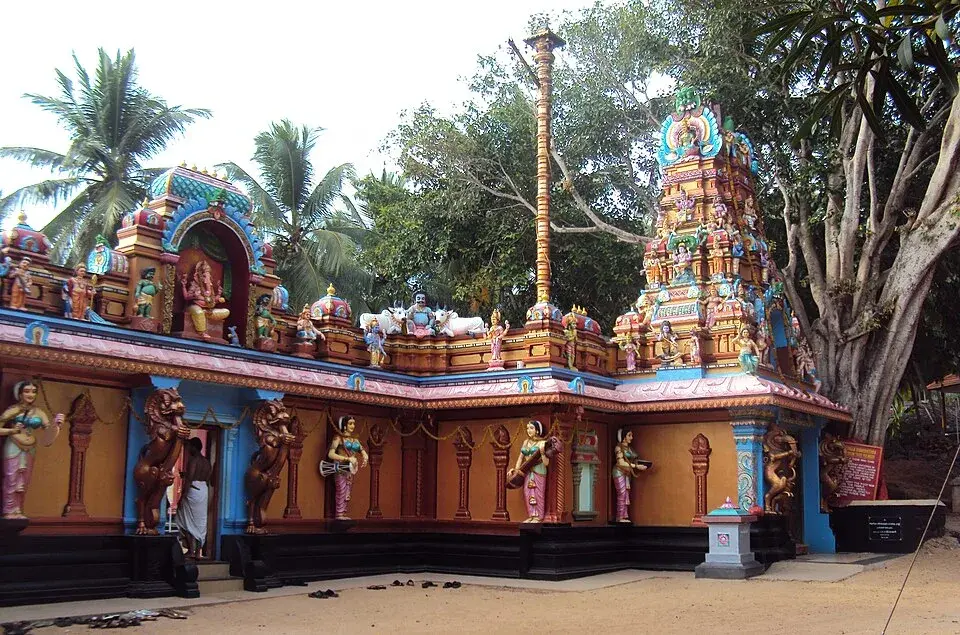 Photo: Vinayaraj · CC BY-SA 3.0