Temple
Vellayani Devi Temple
Thiruvananthapuram, Kerala
📍 1.5 km away from Vellayani Lake
A major Bhadrakali temple beside Vellayani lake, famous for a festival held every three years that lasts more...
Read more →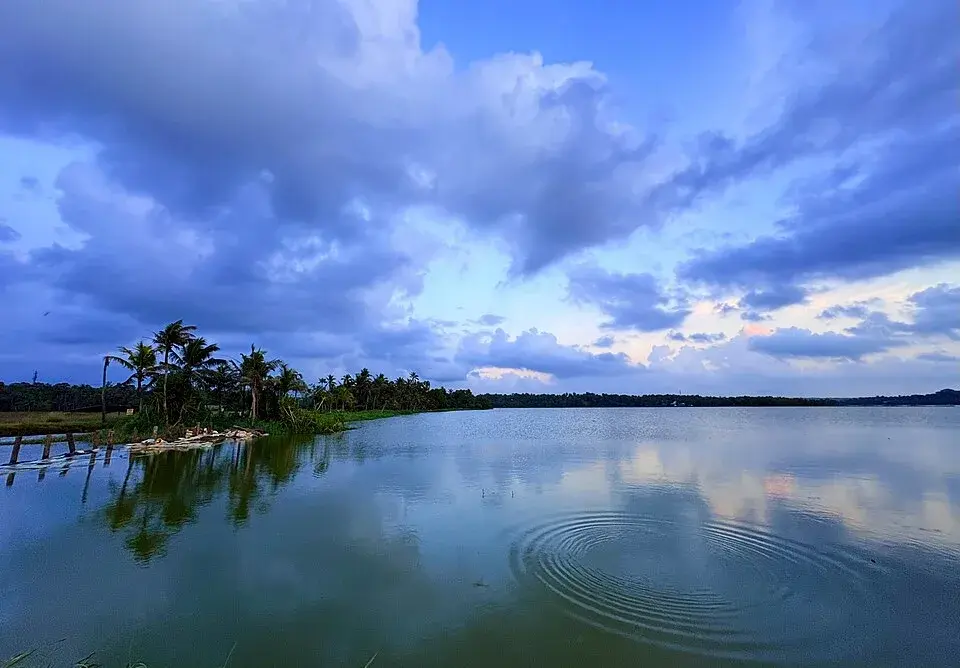 Photo: Shagil Muzhappilangad · CC BY-SA 4.0
Lake and Backwater
Kerala · ThiruvananthapuramAlso known as Vellayani Kayal
A large freshwater lake on the city's southern side, known for lotus blooms, birds and a boat race honouring the reformer Ayyankali.
About Vellayani Lake
A large freshwater lake on the city's southern side, known for lotus blooms, birds and a boat race honouring the reformer Ayyankali.
What: One of Kerala's largest freshwater lakes.
Where: South of Thiruvananthapuram, between the city and Kovalam.
When: Open scenery all year; birds are more numerous in the cooler months.
How: Travel by bus or autorickshaw to the lake shore and bund road.
By whom: A natural water body shaped and used by surrounding communities.
For whom: Nature lovers, photographers, cyclists, birdwatchers and families.
Only a few kilometres from heavy traffic, the land opens into a long sheet of fresh water fringed with coconut palms and fields. This is Vellayani Kayal, described as the second largest freshwater lake in Kerala. The word kayal usually suggests the brackish backwaters of the coast, but here the water is fresh, supplying drinking water schemes and irrigating farms. Lotus and lilies spread across parts of it, and the morning surface mirrors hills and clouds.
A bund road on the northern side, between Kakkamoola and the city road, gives some of the best open views. The campus of the College of Agriculture lies on the western shore.
In earlier times boats laden with goods travelled the Vellayani waterway as far as Chala, the great market of the old city. Before roads dominated, water was the cheapest way to move rice, coconuts and firewood. The agricultural college campus includes a palace building associated with the princely era. The lake has also been the centre of arguments about land: a proposal to drain it and reclaim the bed for cultivation met resistance from residents and environmentalists and was dropped.
Each year a boat race on the lake commemorates Ayyankali, one of the foremost social reformers of Kerala. Born in 1863 in Venganoor, close to this lake, into the Pulaya community, which suffered extreme caste oppression, he defied the ban on his people using public roads by driving a bullock cart along them. He organised labourers to demand schooling for their children, including a famous refusal to work in the fields until the demand was addressed, and founded the Sadhu Jana Paripalana Sangham in the early twentieth century. He later sat in the Travancore legislative assembly. Holding a race in his name on these waters joins celebration with remembrance.
The Vellayani Devi temple on the eastern bank preserves the tale of a blacksmith who saw near the lake a frog imbued with the presence of the goddess and caught it with his helper, an event leading to her worship there. The temple's great festival, held every three years, draws the surrounding villages into a cycle of ritual that has long connected people with this landscape.
The Vellayani and Punchakkari wetlands have been much loved by birdwatchers, with visitors such as the glossy ibis, spot billed pelican, painted stork and Pacific swallow recorded among many others. Herons, egrets and cormorants are familiar sights in such habitats. Observers report that the number of migratory birds has declined, with plastic pollution and loss of habitat among the reasons.
Studies using maps and satellite data report a serious shrinkage: about 559 hectares in 1973, about 268 hectares in 1992, about 267 in 2011 and 222 in 2019. Reclamation, sand mining and pollution are named as threats. These figures turn a pretty view into a public question. A lake supplies water, cools the neighbourhood, absorbs floods and feeds livelihoods, and each encroachment reduces all of these.
Social media posts sometimes advertise the lake as a boating resort with many facilities. Do not assume that regular tourist boating is available; ask locally and use only authorised, properly equipped services. Calm water is not necessarily safe water: depth changes sharply and weeds can trap swimmers. Opinions about development projects around the lake vary, and current plans should be checked with official sources.
Fields beside the lake follow the rhythm of the two monsoons, the southwest from June and the northeast from October. Paddy, vegetables and plantains are grown in the surrounding lowlands, ducks may be seen feeding in wet plots and small canals carry water between lake and field. The agricultural college uses this landscape for teaching and research. Watching a farmer open a channel or a flock of egrets follow the plough shows that the lake is a working system.
Visitors bring income to tea stalls and drivers, but crowds can also leave bottles and noise behind. Choose quiet enjoyment: switch off loud music, keep vehicles off the grass and support local clean up efforts. If you notice fresh dumping or filling of the shore, report it to local authorities instead of confronting people yourself. A lake that took ages to form can be lost within a single generation of neglect, and the figures on its shrinkage show how quickly that can happen.
The first hour after sunrise often brings still water and soft mist, while sunset paints the western sky behind the palms. A modest zoom lens helps with birds without disturbing them. Ask permission before photographing people at work.
During the monsoon the lake fills, edges spread into low ground and the greens become intense. Views can be dramatic, but paths turn muddy, snakes may move to higher ground and sudden heavy showers reduce visibility on the narrow roads. Wear closed footwear, carry rain protection, drive slowly and stay clear of flooded margins where the ground cannot be seen.
Morning and late afternoon offer the best light and mildest heat. Wear a hat, carry water, take your waste back and keep a respectful distance from birds and their roosts. Do not pluck lotus or step into farm plots. Park without blocking the narrow bund. Avoid isolated stretches after dark.
An hour suffices for views; birdwatchers may spend the morning.
Is there an entry fee? The open shore is not a ticketed attraction, though events may have their own arrangements. Are there toilets and shops? Facilities along the water are limited; nearby junctions have tea stalls. Can I cycle? The quieter stretches are popular for easy rides.
Vellayani Devi Temple, the Thiruvallam temple, Kovalam's beaches, Vizhinjam harbour and the birthplace area of Ayyankali at Venganoor are all near, allowing a day that links nature, worship and the history of social justice.
+ Add your photos Been here? Share what you saw.
Instagram Reels and YouTube Shorts by vloggers and visitors.
Space for a Reel or Short
Space for a Reel or Short
Space for a Reel or Short
Space for a Reel or Short
Full videos, guides and walkthroughs.
No reviews yet. Be the first to share your experience. Reviews appear here once a moderator approves them.
None listed yet.
Address: Vellayani, south of Thiruvananthapuram city
Where the details on this page come from. Timings, fees and phone numbers change, so confirm them before you travel.
Distances are in a straight line from Vellayani Lake; travel by road is longer.
Thiruvananthapuram, Kerala
📍 1.5 km away from Vellayani Lake
A major Bhadrakali temple beside Vellayani lake, famous for a festival held every three years that lasts more...
Read more →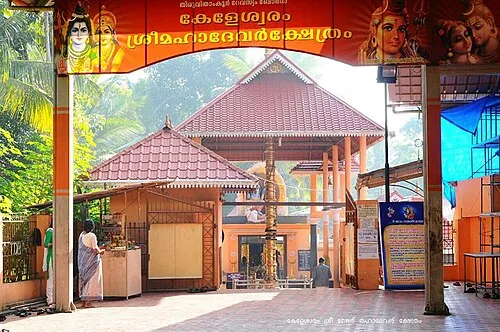
Thiruvananthapuram, Kerala
📍 About 1.9 km away from Vellayani Lake
A Travancore Devaswom temple at Keleswaram where, unusually, the Shivalinga faces west.
Read more →Thiruvananthapuram, Kerala
📍 2.7 km away from Vellayani Lake
A Travancore Devaswom temple of Shiva at Nemom, close to the well known Vellayani Devi temple, with its festiv...
Read more →Thiruvananthapuram, Kerala
📍 2.8 km away from Vellayani Lake
A Shiva temple at Nemom whose name carries the old word thali for a temple, with shrines of Ganesha, Ayyappa a...
Read more →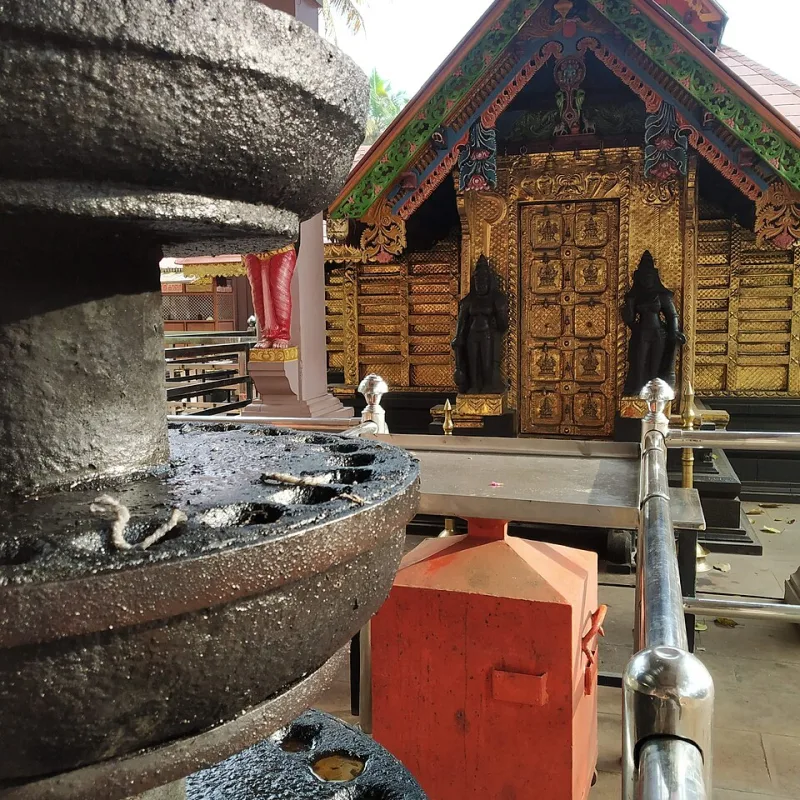
Thiruvananthapuram, Kerala
📍 3.4 km away from Vellayani Lake
An old Bhadrakali shrine of the mudippura kind at Pachalloor, known for its annual vow of thookkam, a calm nor...
Read more →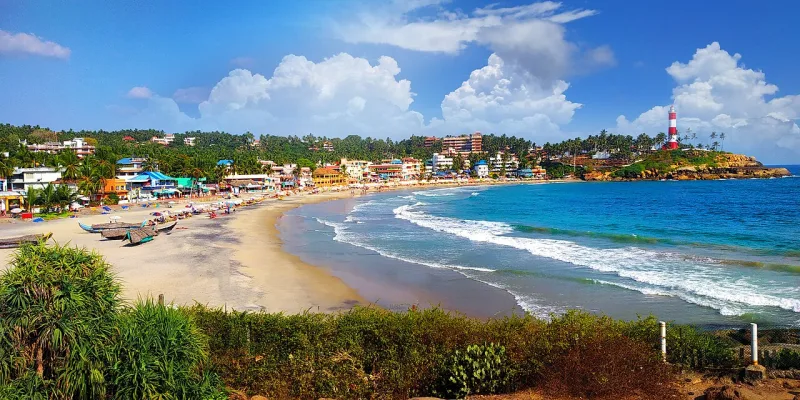
Thiruvananthapuram, Kerala
📍 3.9 km away from Vellayani Lake
A crescent of three small beaches below a red and white lighthouse, Kerala's best known seaside resort, a shor...
Read more →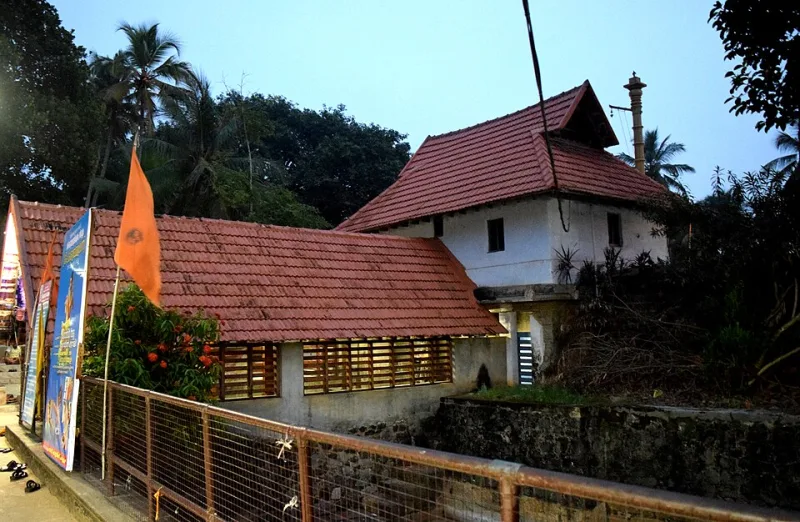
Thiruvananthapuram, Kerala
📍 4.4 km away from Vellayani Lake
An old riverside temple, the only one in Kerala dedicated chiefly to Parasurama, and a major place for offerin...
Read more →Thiruvananthapuram, Kerala
📍 5.3 km away from Vellayani Lake
A goddess temple about a kilometre from Attukal, with a ten-day annual festival, Pongala, and ties of processi...
Read more →