An old Bhadrakali shrine of the mudippura kind at Pachalloor, known for its annual vow of thookkam, a calm north-facing goddess and a festival shared by all communities.
At a glance
What: A goddess temple with a grove, a pond and a strong festival tradition.
Where: Pachalloor village on the city's southern edge.
When: Daily worship; the annual festival runs for nine days after the flag is raised.
How: By road from East Fort through Thiruvallam.
By whom: The temple's own organisation, keeping the practice of earlier priests.
For whom: Devotees, people making vows and students of south Kerala ritual art.
The temple
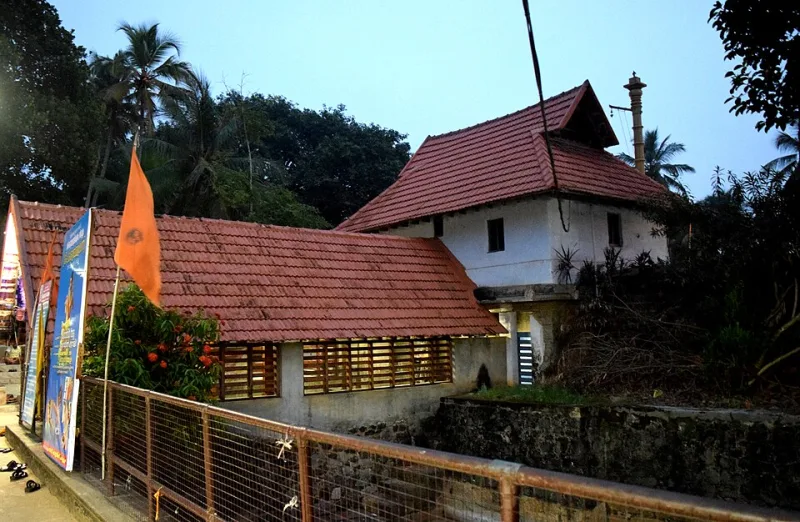
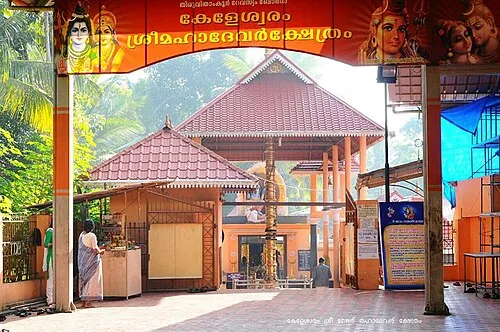
Kulathinkara temple is a mudippura, the kind of goddess shrine typical of southern Travancore in which Bhadrakali is honoured through a sacred headdress or crown-like form called the mudi. The name means the shrine on the bank of the pond. It stands a short way south of Thiruvallam, the place of ancestral rites sometimes called the southern Gaya.
Two travellers
The temple's chief legend tells of a devout elder of the Valiyavila family who was returning home with a learned yogi. Under a great tree they saw two weary women resting. Learning that the women had walked down the western coast from Kodungallur, the men offered them tender coconut, puffed rice and plantains on a plantain leaf.
The lamp flame
When the elder reached home he was astonished to find one of the women seated in the family's place of worship. By the next morning she had vanished, and in her place burned a clear ghee-wick flame of unusual brightness. Over time he received further visions of the goddess, and the shrine took shape in accordance with them.
Offerings that remember
Tender coconut, puffed rice and plantain, the simple food given to the travellers, remain the principal offerings. The worship is described as sattvic, using pure vegetarian substances and gentle rites, and following the manner handed down by earlier masters. A story of hospitality thus survives every day in what is placed before the deity.
Kodungallur and Kannagi
Because the visitor came from Kodungallur, famous for its Bhagavathy temple linked with Kannagi, the goddess's festival songs here narrate the Kannagi story as Bhadrakali pattu. This is a fine example of how a tradition travels: a legend of origin explains why a particular epic is sung, season after season.
Another account
A second legend says that the land lay under the curse of a Brahmin woman and was protected by the grace of the goddess. Both stories circulate. Each presents the Devi as a power who arrives in time of need, one through a welcome offered to strangers and the other through the lifting of a curse.
The ancient sanctuaries of Vizhinjam
Tradition counts this temple among the chief of sixty-four Shaiva sacred sites that surrounded Vizhinjam, once the capital of the Ay kingdom, before the area passed into Venad by about the fourteenth century. The list is a traditional one. It recalls the political and religious weight of the Vizhinjam coast in earlier ages.
Ayyippilla Asan
In the fourteenth century or thereabouts, by this account, the poet Ayyippilla Asan lived at Avaduthura near Vizhinjam and composed the Ramakathappattu, a song version of the Ramayana. Village masters presented its battle of Rama and Ravana at the temple festival in the villadichan pattu style. Scholars differ on the poet's exact date.
The bow song
Villadichan pattu, or bow song, is performed by a troupe around a long bow whose string is struck with sticks, setting small bells ringing, while a pot and other instruments keep time. A lead singer narrates and the others answer. It is a distinctive art of the Kanniyakumari and south Thiruvananthapuram region, now performed less often than before.
The sanctum and its neighbours
In the sanctum Bhadrakali, in a peaceful form, faces north. Ganapati is placed in the south-west corner with Sastha beside him, and the serpent deities have their grove. The calm aspect of the goddess is worth noting, since many visitors expect Kali to be shown only as fierce.
The tree platform
In the courtyard several banyans and related trees grow from a common base, carefully enclosed by a platform. Here Kandakarnan, regarded as the brother of the goddess, is present, and Veerabhadra and Yogishwara receive worship. Such platforms are meeting places of nature and devotion and deserve to be approached without footwear.
Kandakarnan
Kandakarnan, the bell-eared, is a guardian figure invoked especially against infectious disease. In stories he was created to relieve the goddess when she was struck by smallpox. His worship belongs to an age when epidemics terrified villages, and it survives as a plea for health. Medical care and vaccination now do the practical work of prevention.
Grove and pond
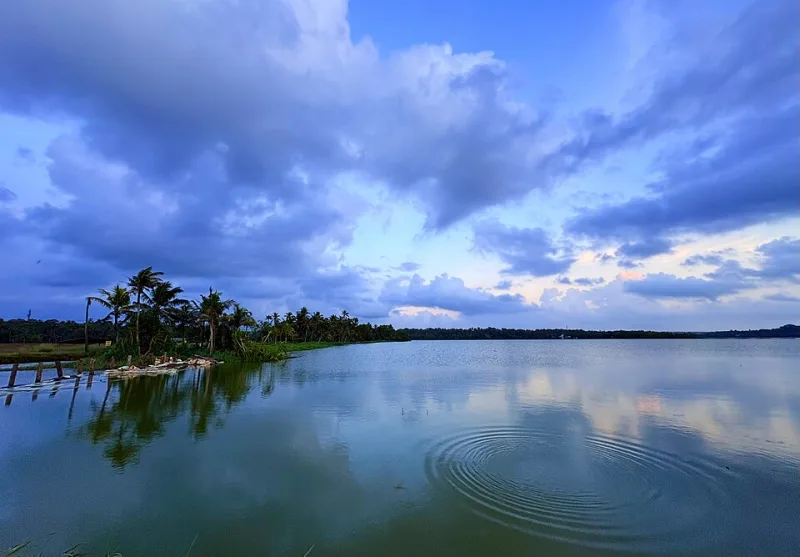
A grove rich in medicinal herbs and uncommon trees, with a pond, completes the premises. These form a small ecological refuge close to a growing city. Visitors should pick no leaves, whatever their medicinal fame, and should keep soap, oil and waste away from the water.
The thookkam vow
The temple is well known for its yearly nercha thookkam. In thookkam, a devotee who has observed a period of austerity is suspended from a pole or beam carried on a frame, as the fulfilment of a vow, often for the birth or recovery of a child. Forms differ from temple to temple. Child safety rules and court directions apply to such rites.
Nine days for everyone
Once the flag is raised, the following nine days draw the whole neighbourhood into celebration without regard to caste or religion. A published account says proudly that while people elsewhere build walls, Pachalloor lives together. This shared festivity is perhaps the most attractive feature of the temple's life.
Visiting with respect
Dress modestly, remove footwear, keep silent at the sanctum and ask before photographing any ritual. During processions follow volunteers and stay clear of the thookkam frame.
Getting there
Buses from East Fort toward Pachalloor and Kovalam pass through Thiruvallam. Thiruvananthapuram Central station is about eight kilometres away and the airport about seven. Autorickshaws are available at Thiruvallam junction.
When to come
Choose the festival for atmosphere or an ordinary morning for quiet. The cool months are the most comfortable. In heavy rain the pond is full and paths may be slippery.
Nearby places
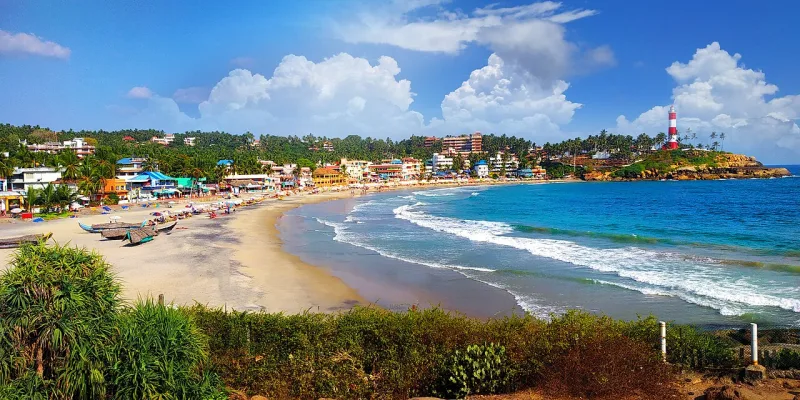
Thiruvallam Parasurama temple, Vellayani lake, Kovalam beach, Vizhinjam's rock-cut shrine and lighthouse coast are all close.
Facilities
Village shops are near; Kovalam and the city offer lodging and food. There is no entry fee.
A closing note
Ask for the year's festival notice before planning the visit.
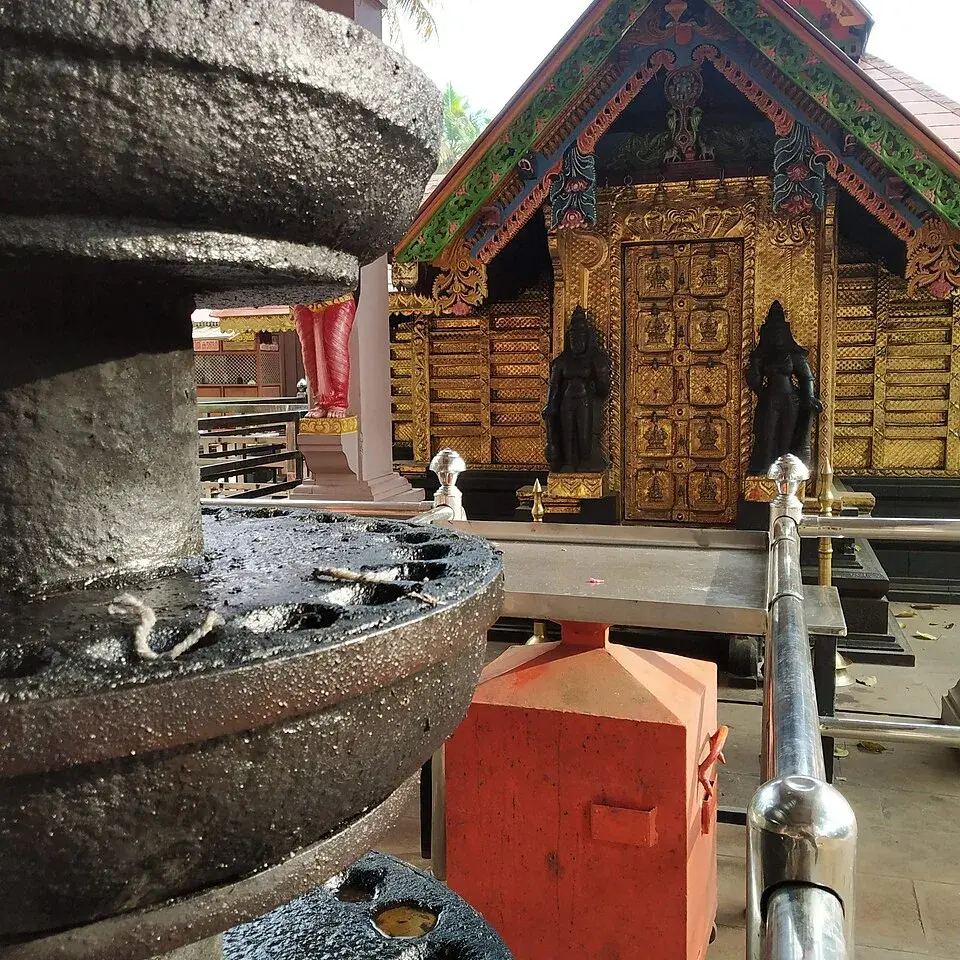 Photo: A.messy.shawarma · CC BY-SA 4.0