A goddess temple of the southern city, said to be about 700 years old and founded by a yogi, with a serpent grove and a monthly full-moon worship.
At a glance
What: A temple of the Devi as a form of the primal goddess.
Where: Between Ambalathara and Paravankunnu in Thiruvananthapuram.
When: Reported darshan 5.30 to 10.00 and 5.00 to 8.00; festival in Meenam.
How: By bus or autorickshaw from East Fort toward Ambalathara.
By whom: Temple management; confirm the body on site.
For whom: Devotees, residents of the southern wards and visitors on a temple round.
The temple
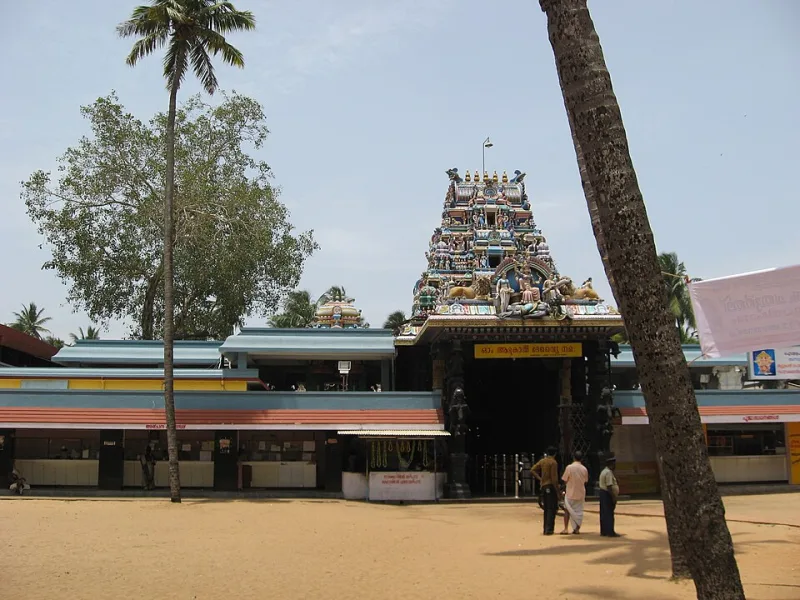
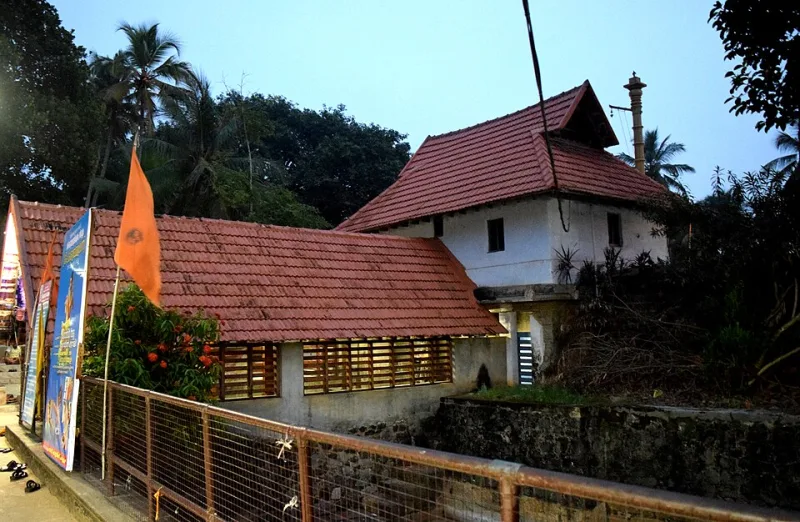
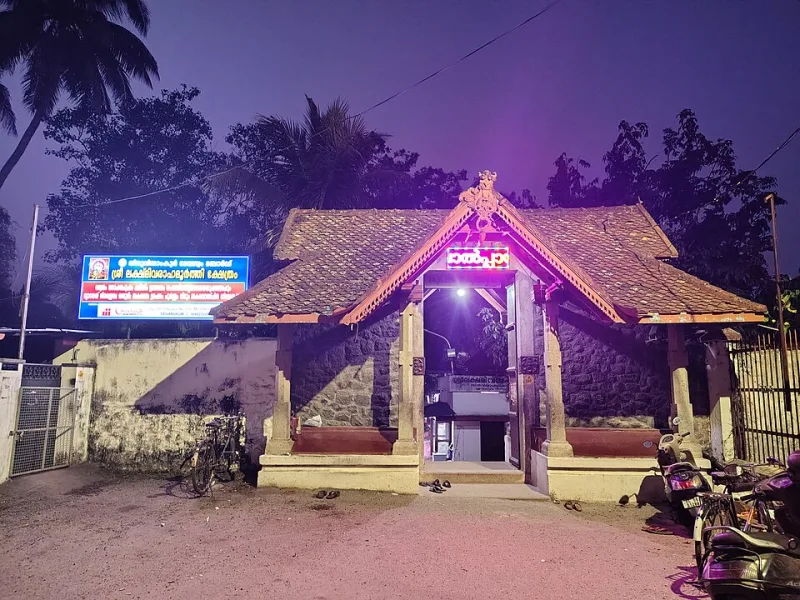
Pazhanchira is described as one of the most ancient temples of its area. The Devi is the principal deity, regarded as a manifestation of Adi Parashakti, the first power. The shrine sits in a thickly settled part of the capital, not far from the airport and the roads that lead to Thiruvallam and Kovalam.
Seven hundred years
The temple is said to be almost seven hundred years old. That would place its beginnings in the fourteenth century, when the Venad rulers held the far south. The figure comes from the temple's tradition as published; no dated record is cited with it.
The yogi
A siddha yogi, a person believed to have gained spiritual attainments through discipline, is said to have installed the Devi whom he worshipped. In time the place of his devotion became a temple, and a place was given to the yogi on the western side of the sanctum, where he is still honoured.
The siddha tradition
Southern India remembers many siddhas, ascetics skilled in yoga, medicine and mantra. Tamil literature preserves songs ascribed to eighteen of them. Local shrines to a yogi or yogeshwara keep the memory of such teachers, whose practice is held to have awakened the sanctity of a spot before any temple stood there.
The name
Chira is a pond or embanked water and pazham can mean old, so the name may suggest the old pond. It may also have another origin preserved in local speech. No documented explanation was found, and this reading should be taken only as a possibility.
The grove
A kavu with the serpent deities adds shade and atmosphere. Kerala's serpent groves are among the oldest forms of conservation, protected by reverence. In a city ward, even a small cluster of trees and creepers gives refuge to birds, lizards and insects.
Attendant deities
The subsidiary deities are Yogishwaran, Ganesha, Raktha Chamundi, Nagaraja, Brahmarakshas, Madan Thampuran and the nine planets. Their arrangement was renewed in line with an astrological enquiry held by experts, the customary way of deciding such questions.
Raktha Chamundi
Raktha Chamundi is a fierce form of the goddess associated with the destruction of the demon Raktabija, from each drop of whose blood a new demon arose until the goddess drank it up. The story is read as the need to stop an evil at its source before it multiplies.
The new gallery
The temple has been renovated with a new chuttambalam, the enclosure that surrounds the sanctum, built in the manner of Kerala temple architecture. Such work, financed by devotees, allows more people to worship under cover and renews the setting while the sanctum remains the focus.
Makayiram
Makayiram, or Mrigashira, is considered the star of the deity. Devotees born under it often treat the temple as their own, and monthly observances on that day are common. The annual festival begins on this star in the month of Meenam, around March or April.
Full-moon worship
On every full moon a special rite called Aishwarya Mahalakshmi Puja is performed from five to six in the evening. Women commonly participate, sitting with lamps before them and reciting together for the prosperity and peace of their households. Arrive early to find a place.
Other observances
The temple holds a collective recitation with a lakh of offerings, observes the Mandala season linked with Sabarimala, marks Vinayaka Chaturthi for Ganapati and keeps Pooja Vaypu during Navaratri, when books are placed before the goddess and taken up again on Vijayadasami.
A claim to treat carefully
One online description speaks of the temple as a heritage structure listed among monuments of national importance. That status was not confirmed against an official list for this page. Treat it as unverified until checked with the archaeological authorities.
The neighbourhood
Ambalathara means the temple ground or platform, and the surrounding wards hold temples, mosques and schools within a few streets. The Attukal temple is about three kilometres away, and the area shares in the great Pongala day, when streets fill with cooking hearths.
Thiruvallam nearby
Two kilometres or so away, the Parasurama temple at Thiruvallam stands by the Karamana river and is known for rites for ancestors. A pilgrim can visit both in one morning, moving from the remembrance of forebears to the blessing of the mother goddess.
Offerings
Lamps, red flowers, kumkumam, archana and payasam are typical. Serpent offerings are made at the grove. Check the counter for timings of special rites and keep receipts for prasadam.
Visiting with respect
Wear modest dress, leave footwear outside, keep the grove undisturbed and do not photograph inside. On full-moon evenings, sit where directed and avoid walking between the rows of lamps.
Getting there
Buses from East Fort run toward Ambalathara and Poonthura. Thiruvananthapuram Central station is about four kilometres away, the airport about four, and Kovalam about eight. Because the map point is approximate, ask for the temple by name.
When to come
Evenings at full moon are the most atmospheric. The cool months are comfortable. The Meenam festival shows the temple at its liveliest in warm weather.
Nearby places
Attukal, Thiruvallam, Sree Padmanabhaswamy temple, Vellayani lake and Kovalam beach make useful additions.
Facilities
Neighbourhood shops and transport are at hand. There is no entry fee.
Joining a full-moon evening
Those wishing to take part in the full-moon rite should ask a few days ahead whether registration or materials are needed. Come bathed and modestly dressed, sit where shown, follow the leader's words as best you can and remain until the closing lamp. Visitors who only wish to watch should stand at the back. The glow of many small flames and voices in unison make it a gentle and memorable hour.
Keeping the history straight
Three statements travel together here: great antiquity, a founding yogi and official monument status. The first two belong to the temple's tradition; the third is checkable and has not been checked. Keeping them apart protects the temple's reputation.
A closing note
Check the full-moon date before you set out.