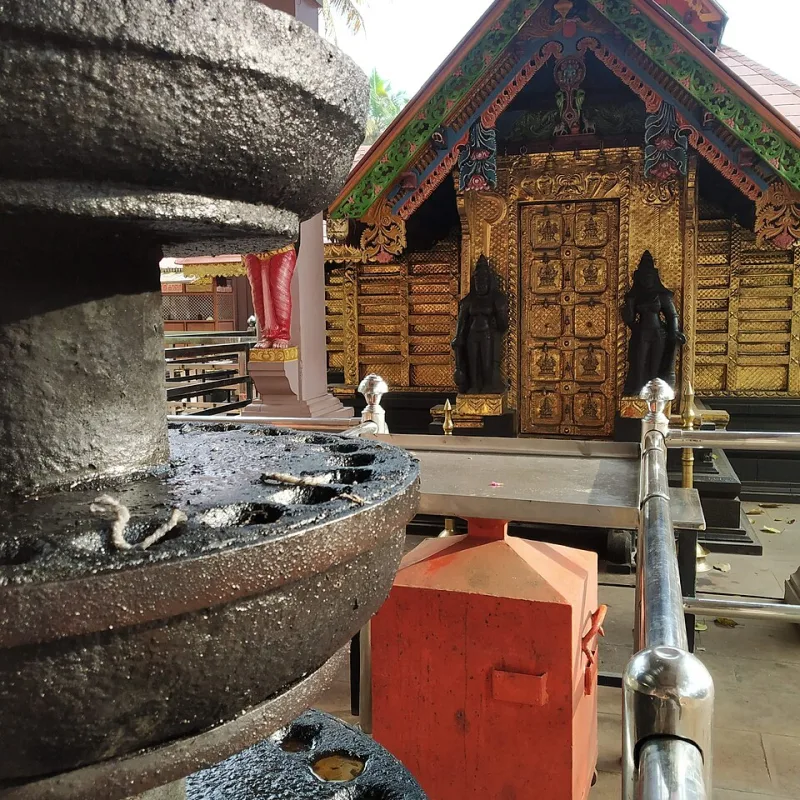
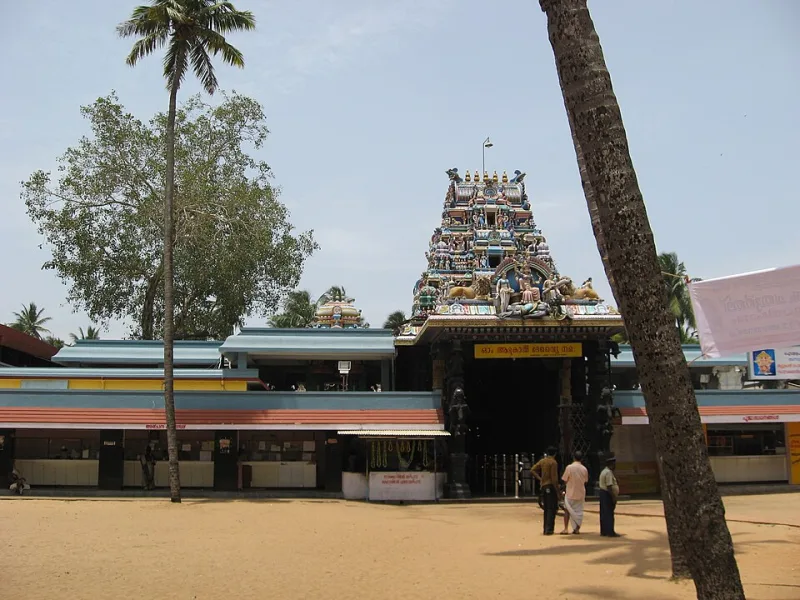
An old riverside temple, the only one in Kerala dedicated chiefly to Parasurama, and a major place for offerings to ancestors.
At a glance
What: A historic temple dedicated to Parasurama, with equal reverence for Shiva.
Where: Thiruvallam, beside the Karamana river on the southern side of Thiruvananthapuram.
When: Believed to be very ancient; renovation is placed around the twelfth to thirteenth century.
How: A short ride from East Fort or the airport.
By whom: Legend links the place with Parasurama; the structure is a protected monument.
For whom: Devotees, families performing rites for ancestors and lovers of heritage.
About the temple
Where the Karamana river slows near the coast, a stone temple has long received people who come to remember their dead. Thiruvallam Sree Parasurama Temple is described as the only temple in Kerala dedicated principally to Parasurama, the axe bearing sage counted as the sixth avatar of Vishnu. Shiva is worshipped here with equal importance, and the complex also has shrines to Brahma, to the Matsya form of Vishnu, to Subrahmanya, to the sage Vyasa, and to Ayyappa, Krishna and Ganapathi. A shrine to Brahma is uncommon anywhere in India.
The temple is listed among a traditional group of one hundred and eight esteemed Vaishnava shrines. Its old stonework and compact plan give it a different feeling from the busy city temples a few kilometres away, and the presence of the river is constant.
History
No founding date is recorded. Accounts call it one of the most ancient temples of the south, and it is believed that the last substantial renovation took place around the twelfth or thirteenth century. Carved stone, mouldings and inscriptional interest led to its protection by the archaeological authorities, so that it is both a living temple and a monument. Its position on an old route between the capital and the southern coast brought a steady stream of worshippers over the centuries.
The legend of Parasurama and the land from the sea
Few stories are better known in Kerala. Parasurama, having carried out his violent campaign against unjust warrior kings, sought land to give away in atonement. He threw his axe across the ocean, and the sea drew back as far as it flew, revealing a strip of land from Gokarna to the southern cape. For this reason Kerala is sometimes called the land of Parasurama.
The new soil was salty and unfit to live upon. The sage prayed to Vasuki, king of serpents, who released his venom to transform the earth, making it fertile and green. In gratitude, serpents were honoured as guardians of the land, which explains the snake groves still found beside many Kerala homes and temples. Geologists describe the formation of the coast in other terms, over immense spans of time, but the legend expresses how people understood a narrow, rich land between mountain and sea.
Another tradition links three temples as parts of one vision of the reclining Vishnu: the head honoured at Thiruvallam, the body at the Padmanabhaswamy temple and the feet at Thripadapuram. Devotees try to visit all three in one journey.
Offerings for ancestors
Thiruvallam is among the principal places in southern Kerala for bali tharpanam, the offering of rice balls, water and prayers for departed relatives. The rite may be performed on many days, but the new moon of the Malayalam month of Karkidakam, in July or August, draws enormous numbers, who begin arriving before dawn. Priests guide groups through the words and gestures, after which the offerings are taken to the water. For many families it is an annual duty and a moment of shared memory.
Beliefs and facts
It is believed that these offerings bring peace to ancestors and well being to descendants. This is a matter of faith. Practical rumours also circulate each year about the best hour or about closures; the auspicious time is announced by temple authorities, and police publish traffic arrangements. Nobody needs to pay an intermediary for a place in the queue.
Understanding the offering to ancestors
The rite of bali rests on an old idea that the living owe a debt to those who came before them. The person making the offering usually bathes first, wears a damp or freshly washed cloth, sits facing the direction the priest indicates and shapes rice, sesame and other items on a plantain leaf. A ring of sacred grass is worn on a finger. Names of the departed and their family connections are remembered, water is poured, and at the end the leaf and rice are carried to the river without looking back. Practices differ between families and communities, so follow your own custom where you have one.
Some people perform the rite on the death anniversary of a particular relative, others on any new moon, and very many on Karkidaka Vavu. First time visitors need not feel anxious: the priests are used to guiding beginners. Carry a change of clothes and a bag for wet garments. Buy tickets and materials only from authorised counters, and keep plastic away from the water.
The river and the setting
The name Thiruvallam is attached to this bend of the Karamana, one of the main rivers of the capital district, which rises in the forested hills to the east and reaches the sea near here through a network of backwaters. The same waters shaped the settlements, fields and boat routes of the southern city. Coconut palms still frame parts of the bank, although roads and houses have crowded in. After the monsoon the river runs high and brown; in the dry months it is quieter and the reflections are clearer. Pollution is a concern for all urban rivers in India, and devotees can help by keeping offerings biodegradable and small.
Questions visitors ask
Is Brahma really worshipped here? Yes, a sub shrine is dedicated to him, which is one reason students of temple iconography come. Can visitors who are not performing rites enter? Yes, subject to temple custom. How long does the rite take? Often less than an hour on a quiet day, but far longer with waiting on the great new moon.
Visiting
Men are expected to remove shirts inside, women to wear modest dress, and everyone to leave footwear outside. Photography within the shrine is generally not allowed, and mourners at the riverside should never be photographed without permission. The steps can be slippery and the river deep after rain, so supervise children and bathe only where officials allow. Check the temple's hours, which include a break in the middle of the day.
An hour or two is usually sufficient. On Karkidaka Vavu, allow much longer, carry water and use public transport.
Around the temple
Sree Padmanabhaswamy Temple and East Fort are a few minutes away, as are the Attukal temple and the Vellayani lake. Kovalam's beaches lie to the south, and the Veli and Shanghumugham shores to the north.
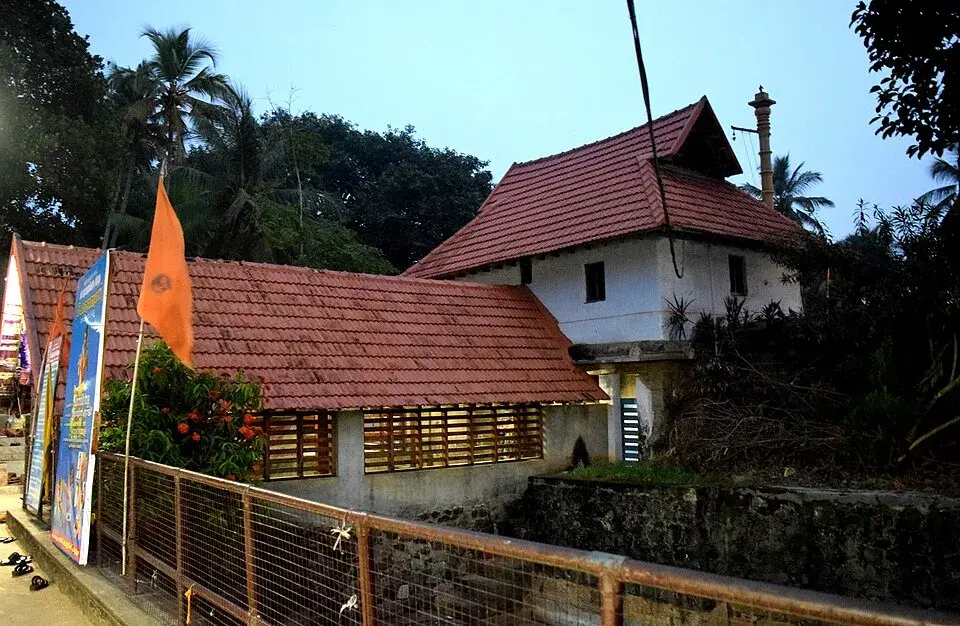 Photo: Ranjithsiji · CC BY-SA 4.0