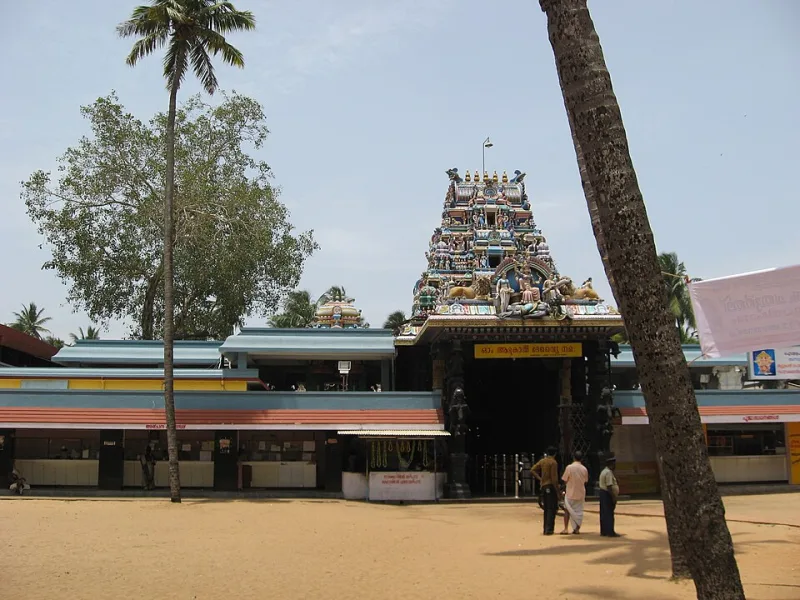
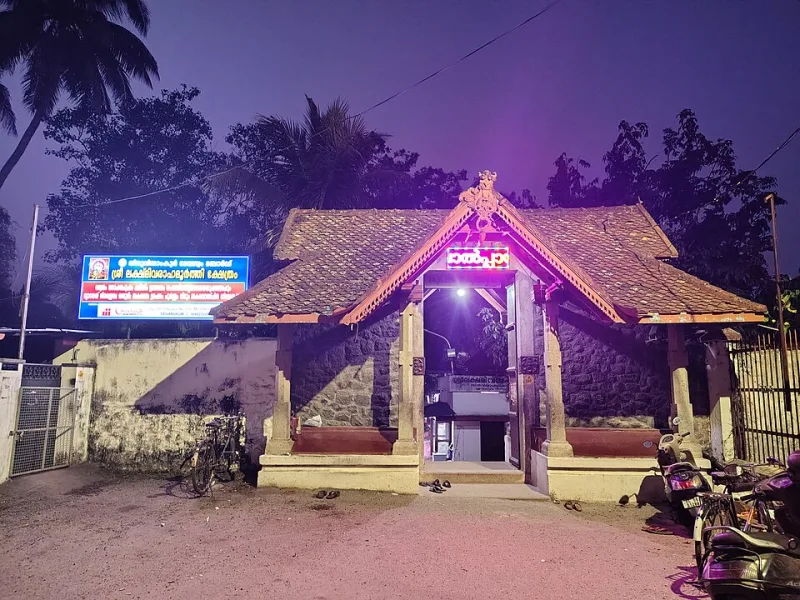
A neighbourhood Shiva temple at Kamaleswaram, between Kallattumukku and Manacaud in the south of the old city.
At a glance
What: A temple of Lord Shiva.
Where: Kamaleswaram, between Kallattumukku and Manacaud in Thiruvananthapuram.
When: Open mornings and evenings; sources give different hours.
How: By autorickshaw or bus from East Fort toward Manacaud and Thiruvallam.
By whom: Reported to be managed by the Travancore Devaswom Board.
For whom: Local worshippers and visitors making a round of the old city's temples.
The temple
Kamaleswaram Mahadeva temple stands close to a well known government school, in a thickly populated quarter south of the fort. It is a working neighbourhood shrine: people stop on the way to work, children pass it daily and elders gather in the evening. The surrounding locality bears the same name, a sign of how long the temple has served as its landmark.
The name
Kamaleswaram can be read as the abode of the lord of the lotus, from kamalam, lotus, and ishwara, lord. The lotus, rising clean above muddy water, is a favourite image of purity across Indian traditions. This explanation follows from the words. A temple legend that formally accounts for the name was not found, and none is supplied here.
Timings
One listing gives darshan from twenty past five until ten in the morning and from five until eight in the evening. Another states half past nine to half past one and half past four to half past seven. Such disagreement is common in online listings. The notice board at the gate, or a telephone enquiry to the Devaswom office, should settle the matter before a special journey.
The deity
Shiva, worshipped as Mahadeva, the great god, is approached as destroyer of ignorance and as a gracious householder with Parvati, Ganesha and Murugan for family. His signs include the crescent moon, the river Ganga in his matted hair, the trident and the little drum. Temple images and paintings tell these ideas to the eye, even for those who cannot read the texts.
Daily worship
Kerala temple worship follows a careful order set down in tantric manuals. The priest purifies himself, opens the sanctum, removes the old garlands, bathes the deity, adorns it and offers food, with the doors closed at certain moments. Percussion may accompany particular stages. Devotees time their visits to see the sanctum opened after adornment, when the image is considered most graceful.
Ash and sandal
At Shiva temples the devotee may receive vibhuti, sacred ash, along with sandal paste and flowers. Ash applied on the forehead in three lines recalls that all things return to it, and so encourages humility. It is customary to apply it oneself, and not to drop the remainder on the ground or wipe it on temple walls and pillars.
Shivaratri
The February or March night of Shivaratri brings fasting, continuous worship and a vigil. Neighbourhood temples are decorated with lamps and receive a steady stream of families. In the capital many devotees walk between several shrines. If you do so, wear comfortable clothing, carry water for those who are not keeping a strict fast and keep an eye on traffic.
The Manacaud neighbourhood
Manacaud is an old residential and trading quarter on the way from East Fort to Thiruvallam. Hindus and Muslims make up much of the local population, and temples and mosques stand within hearing of one another. The area shares closely in the rhythm of the great Attukal festival nearby, when streets for kilometres around fill with women cooking offerings.
Attukal Pongala
On the Pongala day of the Attukal temple, in February or March, hearths of bricks are set out in lanes, compounds and roadsides, and households open their gates to strangers. Neighbourhoods such as Kamaleswaram become part of one vast outdoor kitchen. Travel is restricted that day, so plan any temple visit with this in mind.
The Karamana and Thiruvallam
A little farther south the Karamana river approaches the sea at Thiruvallam, famed for its Parasurama temple and rites for ancestors. The land between has canals and low ground that once carried boats. Understanding this watery setting explains why many local place names refer to ponds, banks and crossings, and why heavy rain still tests the drains.
Offerings
Common offerings are abhishekam, bilva garlands, oil and ghee lamps, archana and payasam. Fees are small and displayed at the counter. Devaswom temples issue receipts; keep them to collect prasadam. If you wish to sponsor a particular ritual on a birthday or anniversary, give the name and birth star a day or two ahead.
What is not recorded
No dependable account of the temple's founding date, architecture or legend turned up. Those who speak of it with certainty may have family or temple records, which would be valuable additions. Until then it is better described as a respected local shrine than clothed in borrowed history from other temples with similar names.
Visiting with respect
Observe the dress custom, remove footwear, speak softly and keep cameras away. Follow the Shiva temple practice of not crossing the drain from the sanctum. Houses crowd around, so avoid horns and loud talk early in the morning, and park where you will not block a gate or lane.
Getting there
East Fort, the city's busiest bus terminus, is the starting point; Kamaleswaram is a short ride south. Thiruvananthapuram Central station is a few kilometres away and the airport is close to the west. Autorickshaws are plentiful, and the walk from Manacaud junction is easy in the cool hours.
When to come
Morning visits are cooler and calmer. Mondays and Pradosham evenings are more devotional and fuller. The months from November to February are best for walking the old city.
Nearby places
Attukal Bhagavathy temple, Sree Padmanabhaswamy temple, Konchiravila, Irumkulangara and the Thiruvallam Parasurama temple make a compact circuit.
Facilities
Shops, tea stalls, banks and clinics surround the temple. No entry fee applies.
Visiting with children
A small neighbourhood temple is a gentle place to introduce children to temple manners. Explain beforehand why footwear stays outside, why voices are lowered and why one waits when the doors are shut. Let them watch the lamps and listen to the bell, and leave before they tire. Early evening, after school, usually suits families well.
Help complete this page
Correct opening hours, festival days and the temple's own account of its past are especially wanted. Send them through the links on this page.