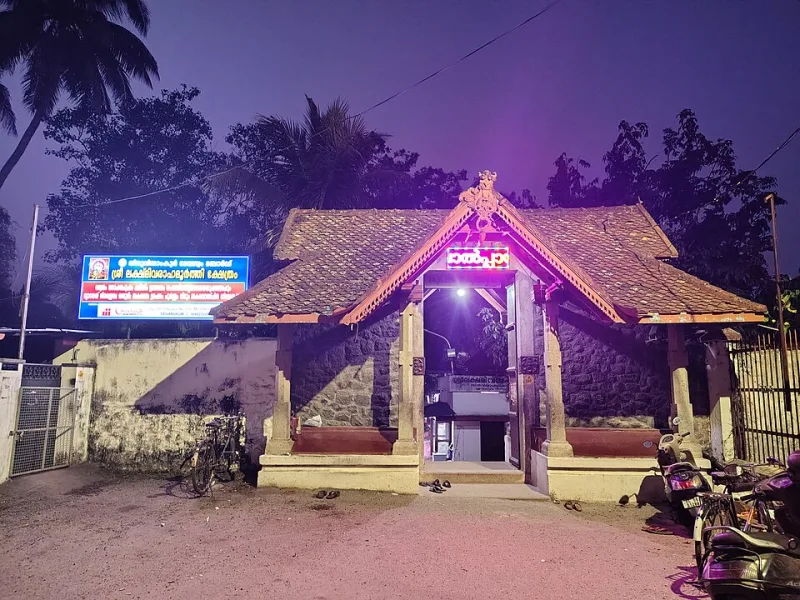
A Durga temple between two ponds at Manacaud, known for its own flower rules, a prize-winning serpent grove and a ten-day Painkuni festival.
At a glance
What: A temple of the goddess Durga with a sacred grove.
Where: Thottam, Manacaud, in south Thiruvananthapuram.
When: Reported darshan 5.00 to 10.00 and 5.00 to 8.00; main festival in Meenam, around March.
How: By autorickshaw or bus from East Fort.
By whom: The Sree Irumkulangara Durga Devi Temple Trust.
For whom: Devotees of the goddess and visitors interested in temple groves and architecture.
The temple
Irumkulangara is one of the older goddess shrines of the city's southern quarters. The principal deity is Durga, worshipped as Durga Bhagavathi, a form of the primal power called Adi Parashakti. Karthika is regarded as her birth star. The temple is compact, carefully maintained and closely bound to the households around it.
Two ponds
The name explains the site: irum means two and kulam means pond. The shrine stands on the banks of two ponds, and the one before the temple holds a calm reflection of the buildings. Water bodies once threaded this low-lying part of the city, serving bathing, gardens and the drainage of monsoon rain.
The link with Padmanabhaswamy
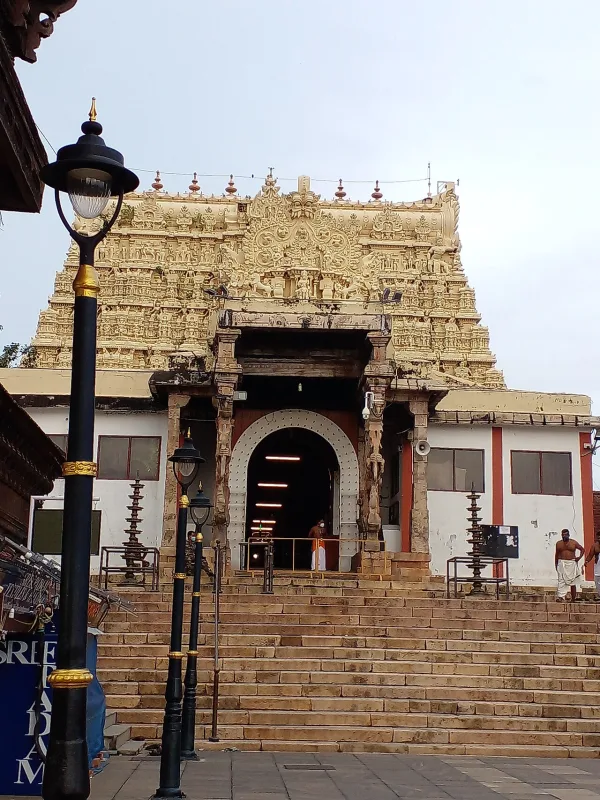
It is believed that the temple had a connection with the Sree Padmanabhaswamy temple, and that priests from there used to come by country boat to perform rites. The memory evokes a time when canals and paddy channels could carry a small craft from near the fort to this shrine, where roads now run.
Distinctive customs
Rituals found at many other goddess temples, namely the thottam pattu song cycle and the ottam, are not performed here. Red flowers are not accepted, with the single exception of thetti, the jungle geranium. Tulsi, jasmine, lotus and nandiarvattom are among those used. Check before buying a garland elsewhere.
Why rules differ
Each Kerala temple follows its own tradition, set by its tantri and by long practice, and a custom honoured at one shrine may be avoided at another. The reasons are often given in terms of the mood in which the deity is worshipped. A calm or gentle conception of the goddess shapes what is brought to her.
The serpent grove
A kavu, a small patch of forest housing the serpent deities, forms part of the temple. The Kerala Forest and Wildlife Department has recognised it as one of the best maintained. In a crowded neighbourhood, such a grove cools the air, shelters birds and reptiles and keeps an old relationship between worship and nature alive.
The star garden
In 2011 the temple created a nakshatravanam, a garden of the trees associated with the twenty-seven birth stars. In traditional lists each star has its own tree, such as the strychnine tree, the gooseberry or the jackfruit. Devotees enjoy finding and watering their own. It doubles as a living lesson in botany.
Attendant deities
The subsidiary deities include Ganesha, Nagaraja, Brahmarakshas, Bhairava Moorthy, Madan Thampuran and the nine planets. The arrangement of the shrines was revised following a deva prashnam, an astrological enquiry into the deity's wishes that Kerala temples commonly hold before major works.
Madan Thampuran
Madan Thampuran is a guardian figure of south Kerala popular religion, honoured with his own rites. Deities of this kind often have local narratives and are approached for protection of households and land. His presence beside the pan-Indian gods illustrates the layered character of southern temple worship.
Renovation
A new surrounding gallery, the chuttambalam, and a processional hall, the sivelippura, were built in the traditional science of Kerala architecture. The consultant was Kanippayyur Krishnan Namboodiripad, of a family well known for that learning, and the temple architect was Manacaud S. Narayanamoorthy.
A royal inauguration
The renovated structures were inaugurated on 25 December 2009 by Uthradom Thirunal Marthanda Varma, then head of the former Travancore royal house. The occasion linked the temple's present with the long custom of royal attention to the shrines of the capital.
The tantri
Ritual authority rests with the Tharananalloor family of tantris, the same line associated with the Sree Padmanabhaswamy and Koodalmanikyam temples. The tantri decides matters of consecration and ritual correctness, while day to day worship is performed by the appointed priest.
Painkuni festival
The major festival, the Painkuni Mahotsavam, usually falls in March. It lasts ten days and ends with Pongala and a procession of the deity. In 2023 it ran from 17 to 26 March. Dates shift every year with the star calendar, so look for the current notice.
Pongala
Pongala is the cooking of rice, jaggery and coconut by women in new earthen pots on open hearths, offered to the goddess. The pots boil over, which is taken as a sign of plenty. The same practice, on an immense scale, makes the nearby Attukal festival famous.
Navaratri
Durga temples are especially busy during the nine nights of Navaratri in September or October, when the goddess's victory over evil is celebrated. In Kerala the season closes with the worship of books and tools and the initiation of children into letters on Vijayadasami. Ask what programme is held here.
Belief and record
The antiquity claimed for the temple and the story of priests arriving by boat are traditions. The renovation, its builders and its inauguration are dated facts. Both deserve a place in the temple's story, so long as each is described for what it is.
Visiting with respect
Dress modestly, remove footwear, keep silent and take no photographs inside. In the grove, touch nothing and leave no lamps or plastic. Do not wash or soak anything in the ponds except where custom allows.
Getting there
East Fort is the nearest major bus terminus; the temple is a short autorickshaw ride toward Manacaud and Thottam. Thiruvananthapuram Central station is about three kilometres away and the airport a few kilometres west.
When to come
Early morning is the calmest. The festival in March is vivid but warm. November to February suits a walking round of temples. After heavy rain the lanes can be waterlogged.
Nearby places
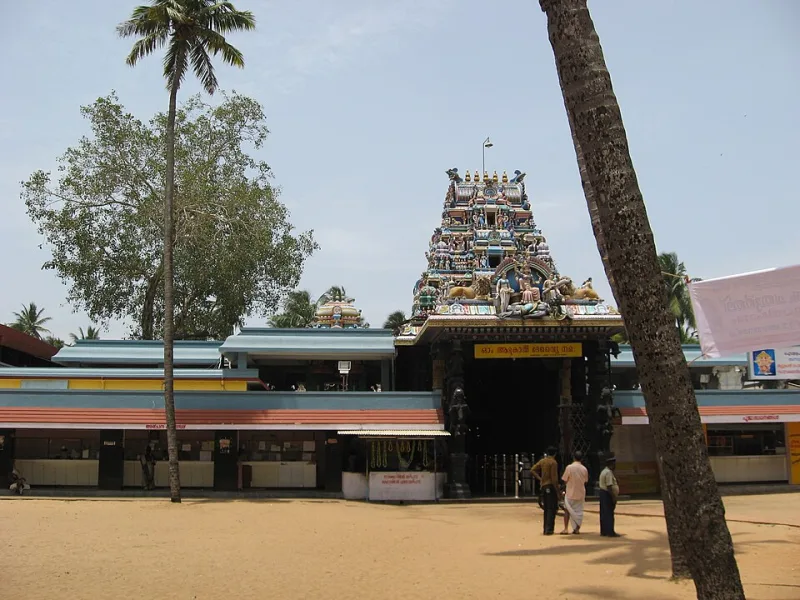
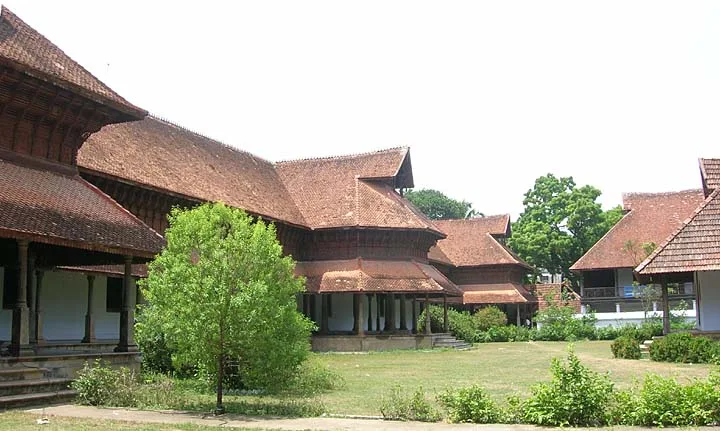
Attukal Bhagavathy temple, Sree Padmanabhaswamy temple, Kuthiramalika palace museum, Kamaleswaram and Konchiravila temples are close.
Facilities
City shops and eating places are plentiful. There is no entry fee.
A walk through the visit
Enter quietly, greet Ganesha, take darshan of the goddess and then move round to the smaller shrines before pausing near the pond. The grove is best admired from its edge. Allow a little extra time on Fridays, when more women come with lamps, and read the notice board for any special rite that may close part of the path.