A major Bhadrakali temple beside Vellayani lake, famous for a festival held every three years that lasts more than two months.
At a glance
What: A temple of Bhadrakali known for one of the longest temple festivals in South India.
Where: Vellayani, on the eastern side of the freshwater lake.
When: Open daily; the great festival comes once in three years.
How: Travel by bus or autorickshaw from the city.
By whom: Managed by the Travancore Devaswom Board.
For whom: Devotees, students of ritual arts and respectful visitors.
About the temple
Between rice land and the broad water of Vellayani lake stands a temple whose goddess is spoken of with deep attachment. The presiding deity is Bhadrakali, understood from scripture as a form born of Shiva's wrath to destroy evil. She faces north. Her image, called the Thirumudi, literally the sacred crown or headpiece, is among the largest of its kind in Kerala, about four and a half feet in both height and breadth, its front adorned with gold and precious stones.
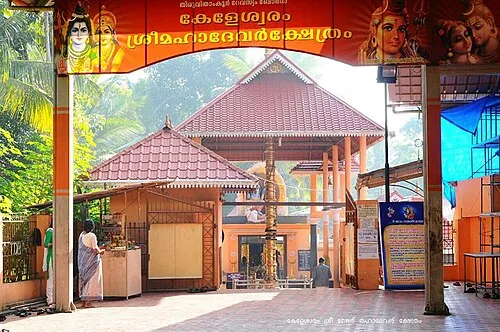
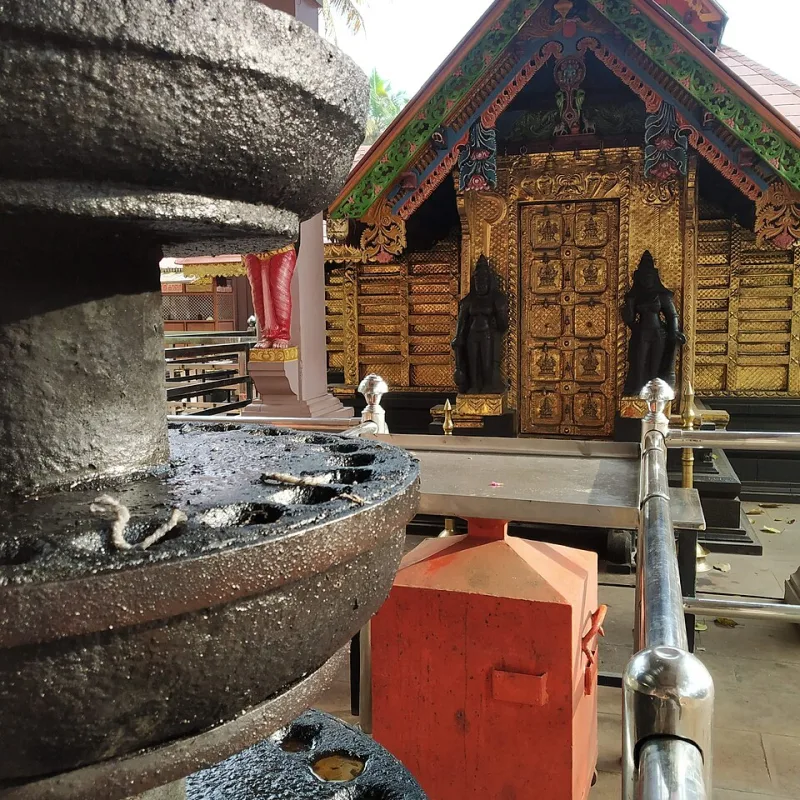
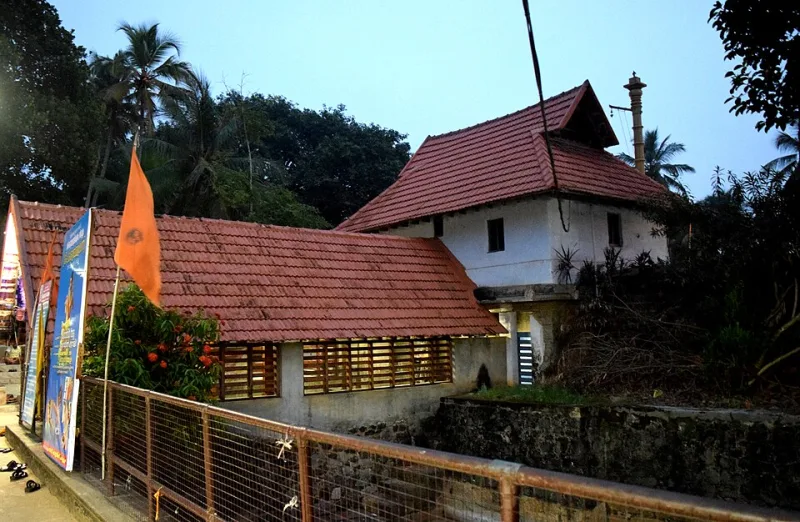
The buildings show a southern Tamil influence, with gateway towers on the eastern and northern sides carrying sculpted figures, and a roof of bronze worked in traditional style. Shiva, Ganesha and the serpent king have shrines, and a small separate shrine honours Madan Thampuran, a guardian deity.
The legend of the frog
The origin story is unusual and charming. A blacksmith named Kelan Kulasekharan saw near the lake a frog in which he recognised a divine presence of the goddess. With the help of his assistant he caught it. The events that followed led to the establishment of the goddess in the form now worshipped, and families connected with the early guardians have continued to hold ritual roles. Local tellers elaborate the pursuit across the fields with many details, and versions differ.
The temple also gives a place to deer antlers kept in the sanctum, which are explained as a medium by which the spirit of the deity could be invoked when a new shrine was founded.
The great festival
Vellayani is celebrated for the festival known as Kaliyoot, held once every three years and lasting roughly sixty five to seventy days, which is described as the longest continuous temple festival in South India. During this period the goddess, carried in the form of the Thirumudi by a priest, travels out to receive offerings from households in the surrounding quarters, in the four directions according to a set order. Families clean and decorate their homes and wait with lamps.
The cycle includes ritual narration and performance of the combat between Kali and the demon Darika, ending with her victory staged on an open ground, followed by a ceremonial bath and return. Music, ancient songs and long preparation make it a school of ritual art passed between generations. Dates are announced well in advance; check which year the next one begins.
Beliefs, rumours and facts
Devotees believe that welcoming the goddess to the home brings protection from disease and misfortune. This is faith expressed in hospitality. Stories of dramatic events during the processions circulate each cycle; weigh them gently and do not add to them. Safety arrangements, routes and timings come from the temple and police.
What makes the festival unusual
Most temple festivals bring people to the deity over a few days. At Vellayani the movement is largely the other way for much of the period: the goddess goes to the people. Households prepare an offering of paddy, flowers, coconut and a lit lamp, and streets take turns to receive her. The journey through the quarters in a fixed order ties together many neighbourhoods, and relatives return from distant places so as not to miss the visit to the family home, which will not come again for three years.
Bearing the Thirumudi requires strength and preparation. It is large and heavy, and the priest who carries it observes strict vows through the festival. Attendants, drummers and singers accompany it, and the old songs narrate the story of the goddess night after night.
The story of Darika
The drama at the heart of the season tells of the asura Darika, who gained from Brahma a boon that made him almost impossible to kill, then troubled gods and humans alike. Bhadrakali, born from Shiva's anger, sought him out. The performance builds from challenge and mockery to pursuit and finally battle. In Kerala telling, the staged combat is carefully controlled by ritual rules, and its conclusion is greeted as a release for the whole community, followed by cooling ceremonies to calm the goddess.
The lake
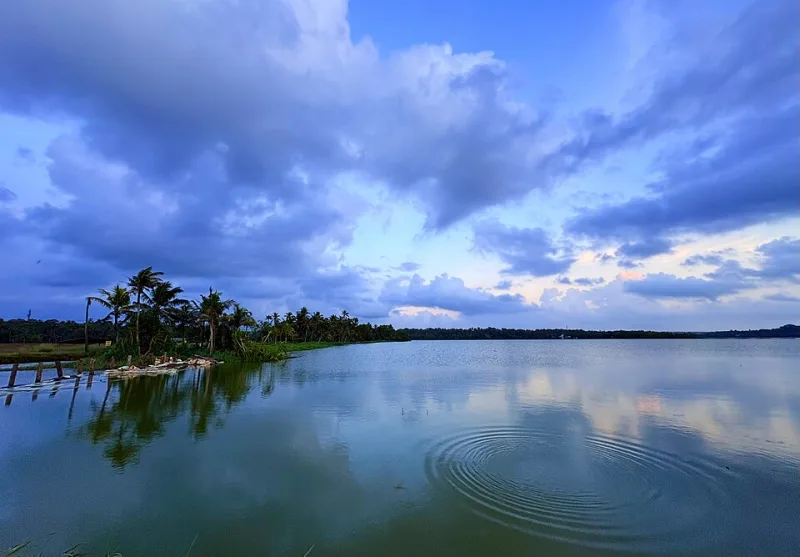
Vellayani is one of the few large freshwater lakes of the district. It supports drinking water schemes, farming and birdlife, and has been the subject of public concern over encroachment, weeds and reclamation. Visitors can help by carrying their rubbish away, especially after festival crowds. Lotus and water lilies colour parts of the surface in season.
Questions visitors ask
When is the next triennial festival? Ask the temple office or check recent announcements from the devaswom board, since this page does not fix a year. Is it possible to see ritual performance at other times? Ordinary days have regular worship and occasional programmes, but the full cycle belongs to the festival season.
Guardians and companions
Kerala temples of the goddess commonly give places to attendant and guardian powers, and Madan Thampuran at Vellayani is one of these. Offerings made to such guardians follow their own customs, which can differ from those at the main sanctum. Visitors need not understand every detail: following the order shown by priests and local worshippers is the courteous approach. The serpent shrine likewise reflects the widespread honouring of nagas as protectors of land, water and family lines.
Visiting
Follow the dress code, leave footwear outside, silence your phone and ask before taking photographs, especially of the sacred image during processions, which is often restricted. On festival days crowds gather quickly; stay clear of the path of the bearers, protect children and obey volunteers.
One to two hours allows worship and a walk towards the water. Evenings are lovely, with the light fading over the lake.
Around Vellayani
The lake itself is a favourite place for photographs and birds, with the agricultural college campus on its shore. The beaches of Kovalam, the Thiruvallam Parasurama temple and the old city temples are all within a short drive, making a varied day of water, worship and heritage.