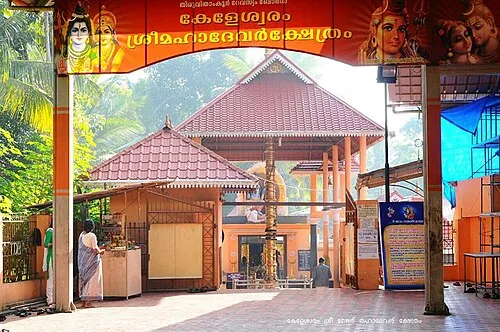
A Travancore Devaswom temple of Shiva at Nemom, close to the well known Vellayani Devi temple, with its festival at Maha Shivaratri.
At a glance
What: A temple of Lord Shiva.
Where: Nemom, on the southern side of Thiruvananthapuram.
When: Daily worship, with the main festival on Maha Shivaratri.
How: By bus or train to Nemom and a short local ride.
By whom: The Travancore Devaswom Board.
For whom: Devotees and travellers exploring the temples around Vellayani.
The temple
Nemom Mahadeva temple is a well regarded shrine of an old locality that now forms part of the greater city. Its chief deity is Shiva, and its management lies with the Travancore Devaswom Board. A published Malayalam note points out that the celebrated Vellayani Devi temple lies close by, so pilgrims often speak of the two in one breath.
Nemom in history
Nemom is an old name in the south of the district. The region formed part of Venad, the kingdom that grew into Travancore, and lay on the route between the capital area and Neyyattinkara, Padmanabhapuram and Kanniyakumari. Travellers, bullock carts and royal processions used that line long before the modern highway and railway followed it.
An old connection with learning
Historians of Kerala Jainism have associated the name Nemom with Neminatha, one of the Tirthankaras, and with a temple quarter of medieval times. Such readings of place names are debated. They are mentioned here as a reminder that the religious past of a locality may have had more layers than its present shrines show. No claim about this temple's own origin rests on them.
Shiva as Mahadeva
The title Mahadeva means the great god. Shiva is worshipped as ascetic and householder, as the dancer whose movement sustains the world, and as the teacher who instructs in silence. Most devotees meet him very simply, with a pot of water, a few bilva leaves and a murmured name. The ease of that worship is part of its appeal.
Maha Shivaratri
The temple's festival is observed on Maha Shivaratri, the fourteenth night of the waning moon in the month usually falling in February or March. Devotees fast through the day, bathe the linga in successive watches, light long rows of lamps and stay awake. The temple becomes the meeting place of the whole neighbourhood until morning.
Why a night vigil
Several stories explain the night: that Shiva drank the poison from the ocean and the gods kept him awake; that this was the night of his marriage with Parvati; or that he appeared as an endless column of fire which neither Brahma nor Vishnu could measure. Each teaches something different, and devotees are content to hold all of them together.
The column of fire
In that last story, Vishnu took the form of a boar to seek the base and Brahma that of a swan to find the top. Neither succeeded. Brahma claimed falsely that he had reached it and was rebuked, while Vishnu admitted the truth. The linga is said to recall that boundless light. It is a favourite subject of temple carving and of religious discourse.
Daily rites
The day's worship opens with the first sight of the deity before the old garlands are removed. Bathing, ash, sandal, flowers and food offerings follow in order. The sanctum closes late in the morning and reopens at evening, when the lamp worship takes place. Exact hours are set by the Devaswom office and displayed at the gate.
Offerings
Devotees may request dhara, abhishekam with milk or tender coconut, a lamp, a garland of bilva leaves, payasam or archana. Homams are arranged for particular needs. Fees are modest and fixed. Keep the receipt and collect the prasadam at the counter or sanctum as instructed.
The Vellayani connection
The Devi temple at Vellayani is famous for an extraordinarily long festival held once in three years, during which the goddess is carried in procession across the villages. Nemom lies within that cultural landscape. A visit to both shrines shows two very different moods of devotion: the quiet worship of Shiva and the vigorous processional celebration of the goddess.
The lake nearby
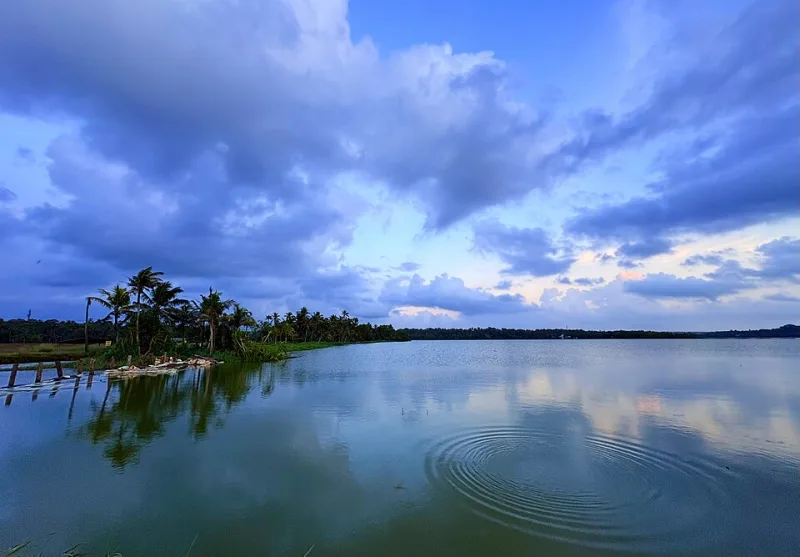
Vellayani lake, one of the few large bodies of fresh water in the district, spreads to the south and west. It supports farming, drinking water and birdlife, and its banks make a pleasant evening drive. Lotus and water lilies bloom in places. Follow local advice about the water and do not litter the shore.
Farming roots
The fields around Nemom and Kalliyoor have supplied the city with rice, vegetables and bananas. Temple calendars grew alongside the farming year: vows before sowing, thanks after harvest and festivals in the drier months, when people had leisure and roads were passable. Remembering this helps explain why so many celebrations cluster between January and April.
The southern style
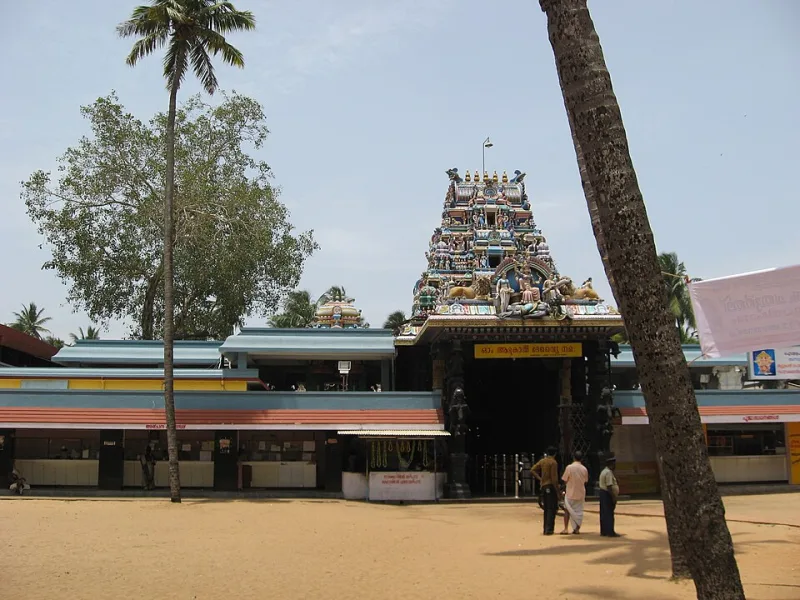
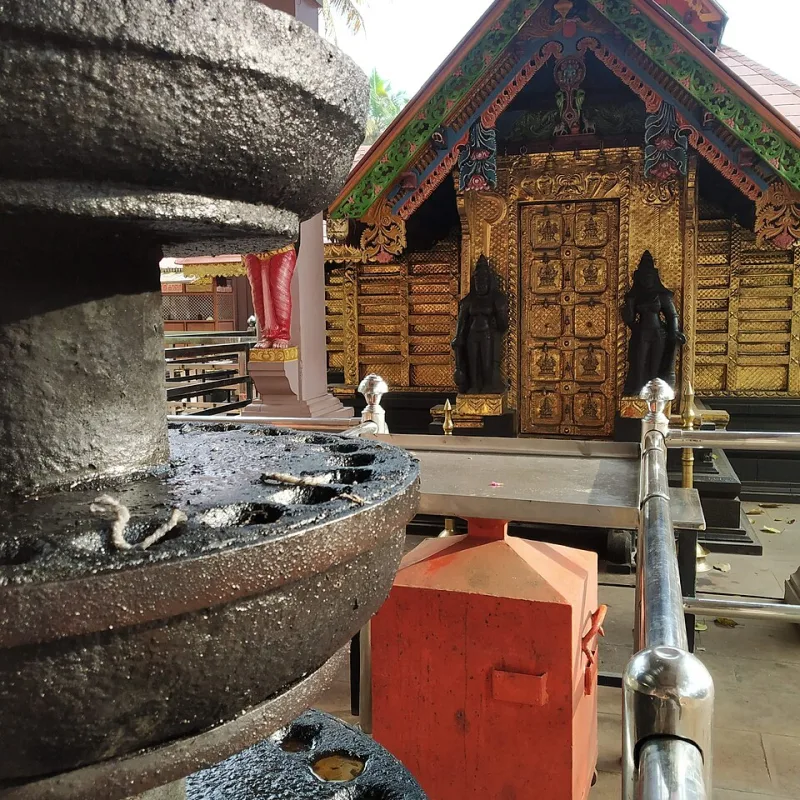
Temples between the capital and the Tamil border often show a blend of features, with Kerala's sloping roofs and wooden lamp frames alongside granite work familiar further east. Look for the vilakkumadam, the frame of oil lamps around the shrine, where present, and the flat sacrificial stones that mark the positions of attendant powers.
Keeping the grounds
A temple compound is a shared open space in a built-up area. Use the bins, do not leave plastic with offerings, and avoid pouring oil where others will walk. Where there is a pond, keep soap out of it. Small habits by many visitors decide whether a shrine remains clean and calm.
What remains unrecorded
The sources consulted give the deity, management, festival and the nearness of Vellayani. They do not give a founding date, a temple legend, the list of attendant shrines or architectural dimensions. Rather than fill those gaps with guesses, this page leaves them open for informed readers.
Visiting with respect
Remove footwear outside the gate, wear traditional modest dress, and keep phones silent. Photography within is not allowed without permission. Do not cross the drain that carries water from the sanctum. Stand to one side of the doorway after darshan so that others may see.
Getting there
Nemom has a railway halt on the Nagercoil line and frequent buses from East Fort along the highway. Thiruvananthapuram Central station is about eight kilometres away and the airport a little more. Autorickshaws cover the remaining distance. Highway junctions are congested morning and evening.
When to come
Morning is the coolest time. The Shivaratri night is the high point. November to February is pleasant for combining several places. In the rainy months the lake country is at its greenest, though lanes may be muddy.
Nearby places
Vellayani Devi temple and lake, Thaliyadichapuram temple, Keleswaram temple, the Karamana river and the sights of the city centre are all within a short drive.
Facilities
Shops, eating places, banks and clinics line the highway. There is no entry fee.