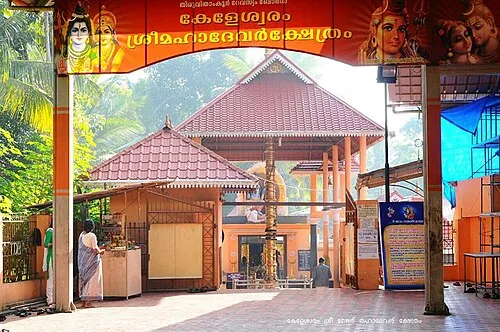
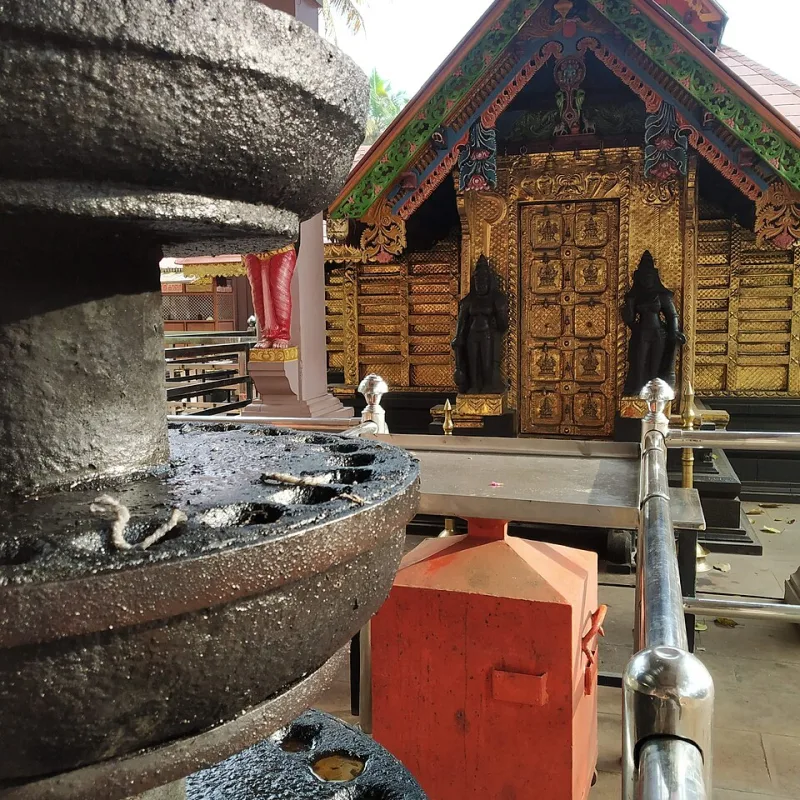
A Shiva temple at Nemom whose name carries the old word thali for a temple, with shrines of Ganesha, Ayyappa and Nagaraja.
At a glance
What: A temple of Shiva with attendant shrines.
Where: Thaliyadichapuram in the Nemom area of Thiruvananthapuram.
When: Daily worship, with Shivaratri as the main festival.
How: By road from Nemom junction.
By whom: Reported in 2014 to be run by the Travancore Devaswom Board; confirm locally.
For whom: Local devotees and visitors interested in lesser known shrines.
The temple
This is a modest Shiva shrine in a locality rich in temples. Its long name catches the ear, and the first part of it is of interest to anyone curious about language and history. Listings describe a main festival at Shivaratri and the presence of Ganesha, Ayyappa and the serpent king within the complex.
The word thali
In older usage in Kerala, thali meant a temple, especially one of Shiva. The word survives in a number of temple and place names. Medieval records speak of the Thali councils of Brahmins connected with the great temple centres of the Chera period. A name beginning this way therefore suggests an old association with a Shiva shrine, though it does not by itself fix a date.
Reading the rest of the name
Local names are built up over time from words for land, residence and direction. Without a documented explanation it would be speculation to say what the remaining syllables once meant. Older residents sometimes preserve such explanations. If you hear one, note who told it and when, since that record may be the only one.
Ganesha
Ganesha, the elephant-headed son of Shiva and Parvati, is saluted first. He removes obstacles and guards beginnings. Devotees tap their temples lightly and bend their knees before him, a gesture peculiar to his worship. Offerings of modakam, appam and flattened rice are popular, and the fire offering called Ganapati homam is performed at dawn.
Ayyappa
Ayyappa, or Sastha, is held to be the son of Shiva and of Vishnu in his enchanting female form, Mohini. His shrine becomes busy in the Mandala season from mid-November, when pilgrims to Sabarimala take their vows, wear a bead chain, dress in dark colours and visit neighbourhood temples to fill their travel bundles.
Nagaraja
The serpent king is worshipped for family welfare, children and relief from skin complaints. Turmeric powder is sprinkled and milk offered, especially on the Ayilyam star. The traditional serpent stone stands in the open, preferably under trees. The belief has protected many small groves, which now serve as refuges for birds and plants in crowded places.
Shivaratri
On the great night of Shiva the temple holds its chief celebration. Fasting, repeated abhishekam, lamps and chanting continue until early morning. Smaller shrines like this one allow a closer and calmer participation than the great city temples. Families often take turns keeping vigil, so that children and elders can rest.
Pradosham
The twilight of the thirteenth lunar day, twice a month, is set aside for Shiva. The belief is that he dances joyfully at that hour and readily grants prayers. A short fast, an evening bath and a visit to the temple make up the usual observance. It is an easy occasion for a visitor to witness.
Worship customs
A devotee salutes the flag post or the lamp stone, approaches the sanctum, offers the prayer silently and circles clockwise. In Shiva temples one turns back at the water channel. Sandal paste, ash and flowers received from the priest are applied or kept with care. Offerings in money are placed in the box or on the step, not handed about casually.
The Devaswom arrangement
An account dated 2014 states that the temple was then run by the Travancore Devaswom Board. Management arrangements can change, and some temples are run by local trusts or families. The notice board or office will show who is responsible now, which matters if you wish to donate or book a ritual.
Caution about sources
The online accounts of this temple cite no references, and the historical background they offer cannot be checked. Claims about great age, royal patronage or miraculous events should not be assumed. What can be said with reasonable confidence is its location, its principal deity, its attendant shrines and the importance of Shivaratri.
The setting
Nemom's lanes combine old houses, new flats, small shops and patches of garden. Temple bells, school assemblies and railway horns share the morning. A visit gives a view of ordinary religious life in the southern suburbs, where a shrine is part of the daily route rather than a destination planned weeks in advance.
Offerings and fees
Small temples usually keep a short list of offerings with fixed charges. Oil for the lamp, a garland, archana and payasam are the likely choices. Buy materials only if you wish to; the priest will accept a simple prayer. Ask for a receipt and wait your turn, because one person may be performing several tasks.
Photographs
Take pictures only of exterior features and only after asking. Do not photograph worshippers, the sanctum or rituals. If permission is given, a clear picture of the entrance with the name board would be a helpful addition to this listing.
Visiting with respect
Dress modestly, leave footwear outside, speak softly and keep the compound clean. Anyone observing a period of ritual impurity by family custom usually stays away, a matter left to personal conscience. Visitors of all backgrounds should follow whatever entry rules are displayed at the temple.
Getting there
Take a bus from East Fort toward Neyyattinkara and alight at Nemom, then use an autorickshaw. Nemom railway halt is close, Thiruvananthapuram Central is the main station and the airport is within about ten kilometres. Lanes are narrow, so two-wheelers and autorickshaws are the easiest.
When to come
The morning opening is ideal. Shivaratri brings the festival. November to February is the comfortable season, which also covers the Ayyappa vow period when evenings are lively.
Nearby places
Nemom Mahadeva temple, Vellayani Devi temple and lake, Keleswaram temple and Pappanamcode lie close together and can be seen in a single morning or evening.
Facilities
Shops and tea stalls are near; larger services are on the highway. No entry fee applies.
Help complete this page
The meaning of the name, the temple's own story and the usual darshan hours are all wanted. Use the suggestion link to send them.
Before you set out
Carry small change for the offering box, and confirm the opening hours with a neighbour or the office.