The riverside temple and royal seat of Pandalam, bound to the story of Ayyappa and the starting point of the sacred ornament procession to Sabarimala.
Pandalam holds a place in the heart of every Ayyappa devotee. According to the tradition that surrounds Sabarimala, the deity spent his childhood here as the adopted son of the king of Pandalam. The town on the Achankovil river is therefore thought of as his earthly home, and it is often described as a cultural capital of central Travancore.
The story is told with affection. A childless king found an infant in the forest and brought him up as a prince. The boy, Manikandan, showed extraordinary qualities, went into the jungle on a dangerous errand, returned riding a tiger and revealed his divine nature. He asked that a temple be built for him at Sabarimala, where devotees would visit after observing vows of discipline. The royal family has continued to hold a ceremonial role in the pilgrimage.
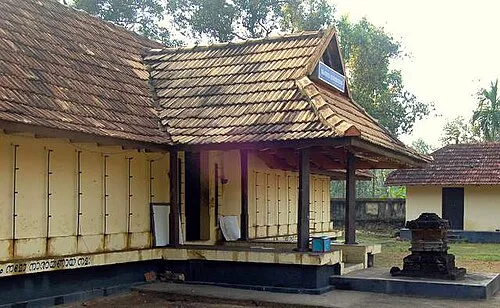
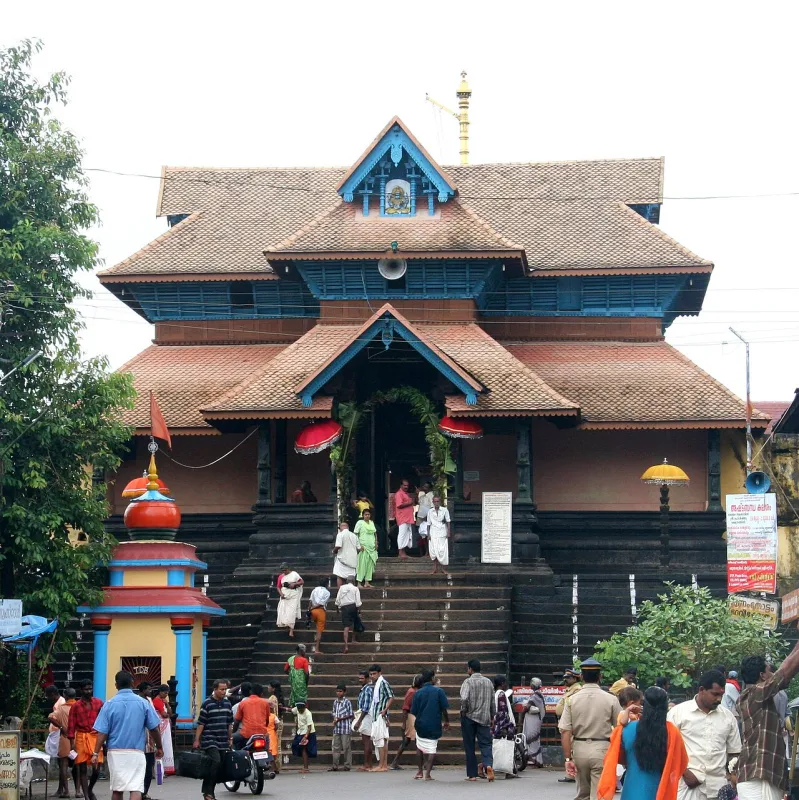
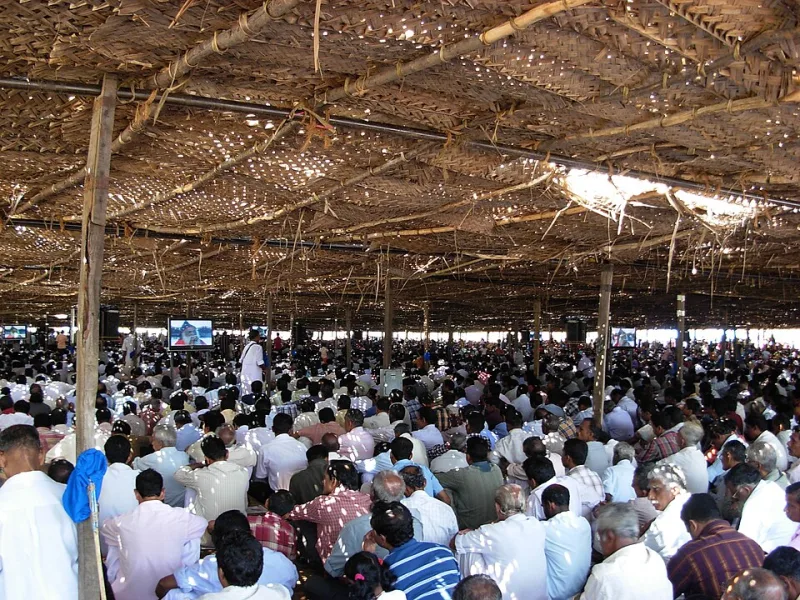
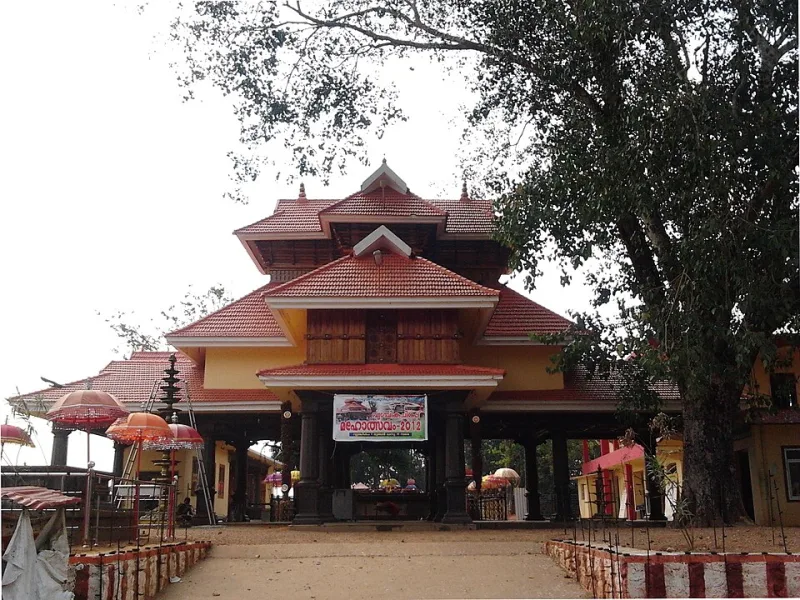
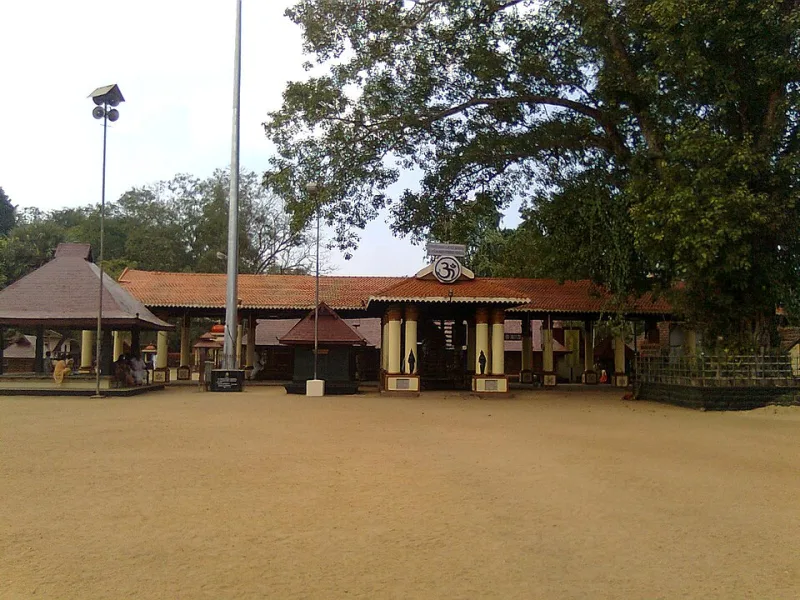
The Valiya Koyikkal temple stands beside the river near the family's residences. It is a Kerala style shrine dedicated to Ayyappa, with lamps, tiled roofs and a courtyard that becomes intensely busy during the annual pilgrimage. Pilgrims travelling to Sabarimala often stop to bathe in the river and offer worship before moving on.
The most celebrated event is the Thiruvabharanam procession. The sacred ornaments of the deity are kept under the care of the Pandalam family. Each January, a few days before Makaravilakku, they are carried in three boxes on the heads of chosen bearers along a traditional route of many kilometres through villages and forest to Sabarimala, where they adorn the image. Crowds line the roads to pay respects, and it is said that a brahminy kite circles overhead as the procession sets out. In the weeks beforehand the ornaments can usually be viewed at set times; confirm the arrangements, which may also be affected by family observances.
For a quieter visit, come outside the main season. Observe customs of dress, leave footwear outside, follow queues and refrain from photography where it is not allowed. During the season, police regulate traffic and parking, and patience is essential. River bathing requires caution, because currents and depth change with rainfall; use designated ghats only.
An hour or two is sufficient. The palace buildings are residences of the family, so view them respectfully from public areas unless invited or a visit is arranged. Local shops sell items used by pilgrims. Simple vegetarian food is widely available, especially in the season, when volunteers also offer meals.
The surrounding district offers much else. The Aranmula temple, famous for its snake boat regatta and metal mirrors, lies to the north west. The Konni forests and elephant training centre are to the east, and the Chengannur Mahadeva temple is near the railway station. Further up the pilgrimage route are Erumely and Pampa.
October to February offers pleasant weather, though the pilgrimage months are the most crowded. The monsoon swells the river and greens the countryside.
Pandalam helps a visitor understand Sabarimala as more than a distant hill shrine. Here the deity is remembered as a child of the household, and the ornaments sent each year express a family's care that devotees share. Standing by the river as bells ring and pilgrims chant, one feels the warmth of a story that has passed from generation to generation. Come with respect, whether or not you are making the journey yourself, and check festival dates in advance.
Travellers who wish to follow part of the ornament procession should learn the route and timings from local authorities, wear comfortable footwear, carry water and move with the crowd without pushing. Watching from a village roadside, where families wait with lamps, is often more moving than standing in the densest crush near the temple, and considerably safer for children and older people.