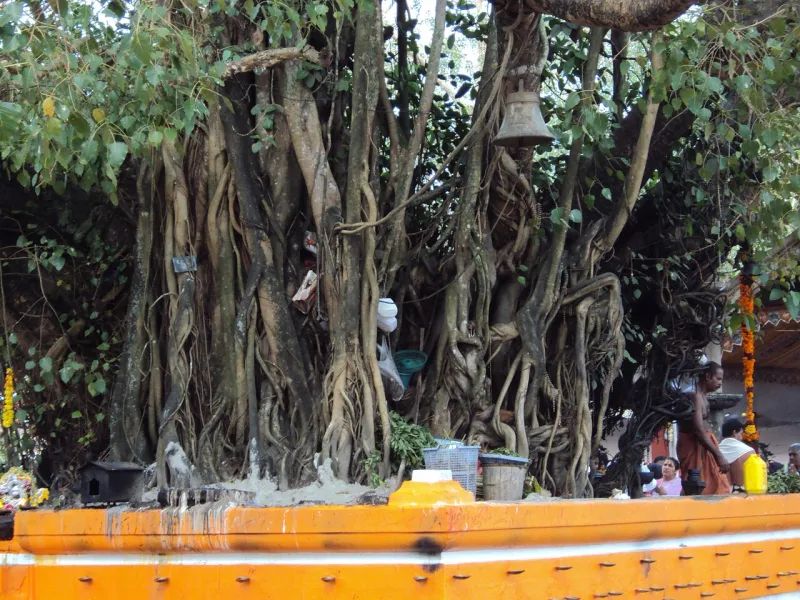
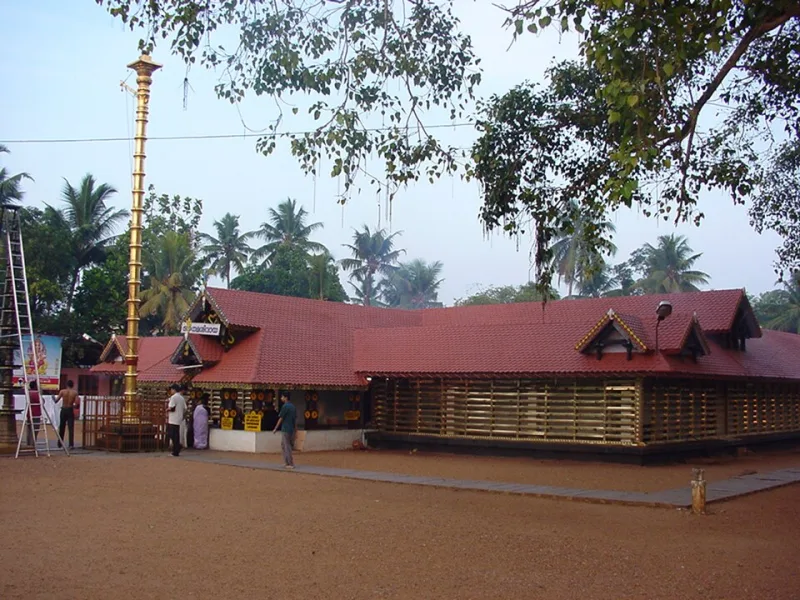
A hilltop shrine without an idol, where Duryodhana of the Mahabharata is honoured, famous for the Malakkuda festival in March.
At a glance
What: A hill shrine where worship is offered to an unseen presence understood as Duryodhana.
Where: Poruvazhy, near the northern edge of Kollam district.
When: All year; the great festival is Malakkuda in the second half of March.
How: By road from Sasthamkotta, Adoor or Karunagappally.
By whom: Run by a committee elected by seven local divisions, with hereditary roles for certain families.
For whom: Devotees and travellers interested in rare traditions.
A temple without an image
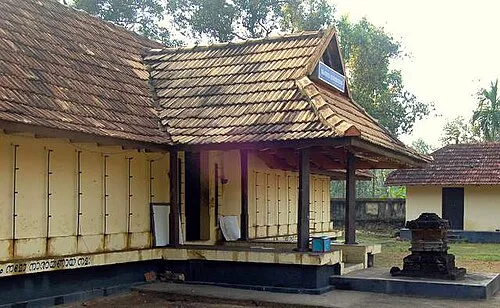
Malanada joins mala, hill, with nada, shrine. Climbing it, a visitor looks for the inner sanctum and finds none. There is no idol, only a raised platform called an althara or mandapam. Devotees approach the divine by sankalpa, the act of holding it in the mind. West and south of the hill lie broad paddy fields; to the east and north, homes and farms.
Why Duryodhana?
The presence worshipped is believed to be Duryodhana, eldest of the Kauravas, usually cast as the antagonist of the Mahabharata. Here he is honoured as a just and generous ruler and addressed with the respect due to an elder, Malanada Appooppan. For visitors raised on a simpler telling of the epic, the temple is a reminder that Indian tradition holds many points of view.
The legend of the toddy
The story told here is that Duryodhana, searching for the Pandavas during their exile, came through these forests tired and thirsty. At a nearby house an elderly woman offered him toddy, the customary welcome. He drank with pleasure and then saw from her ornament that she belonged to the Kurava community. Recognising the spiritual power of the place and its people, he sat on the hill, worshipped Shiva for the welfare of his subjects and gave away extensive lands to the shrine.
Land in his name
A much repeated detail is that land tax on the temple's property has continued to be recorded in the name of Duryodhana. The custom shows how a legend can leave its mark even on revenue papers.
The community and the priests
Priests of the Kurava community serve at this shrine and at related shrines nearby that are dedicated to members of the Kaurava circle, including Gandhari, Dussala, Karna and Drona. The central priest is called the Oorali. A family association among the Kuravas and another among the Ezhavas hold special places in the administration, and community organisations are represented on the committee. The arrangement preserves the role of groups that were excluded from many temples in the past.
Malakkuda
The annual festival is Malakkuda, named from the hill and from the ornamental umbrella carried by the priest. It is held on the second Friday of the Malayalam month of Meenam, in the later part of March, when harvest work is done and the next paddy crop is yet to begin. A flag is raised a week before. On the festival afternoon the Oorali goes to invite the goddess of a neighbouring Bhagavathy shrine, who is brought in procession to take her seat on the platform.
The spectacle
Great decorated effigies of bulls and tall festival structures, carried or drawn by teams from the surrounding divisions, are a famous feature of the day, along with drumming and crowds that fill the hill and fields. Offerings in keeping with local custom have included toddy. Details are fixed by the temple committee and visitors should simply watch and follow guidance.
Getting there
The hill lies in Edakkad ward of Poruvazhy village in Kunnathur taluk, close to where Kollam, Pathanamthitta and Alappuzha districts meet. It is roughly equidistant, about 25 kilometres, from Karunagappally, Kayamkulam and Kottarakkara, with Adoor to the north east and Sasthamkotta to the south east. Sasthamkotta and Karunagappally have railway stations.
Visiting outside the festival
On ordinary days the hill is quiet. One can walk round the platform, look across the fields and speak with those attending the shrine. Dress modestly, remove footwear where others do and make offerings as directed.
Season
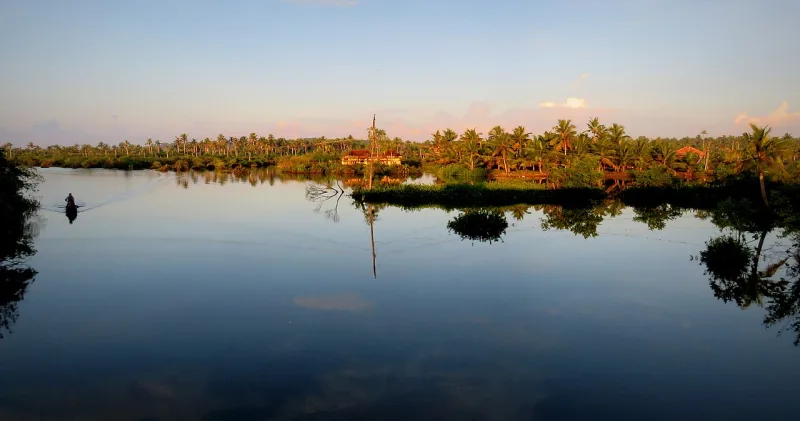
March is hot, and festival crowds make water, a hat and patience necessary. The monsoon turns the paddy fields into mirrors. From October to February the weather is most comfortable.
Crowds and safety
On Malakkuda day roads close and parking is far from the hill. Keep clear of the heavy effigies while they are being moved, hold children's hands and agree on a meeting point. Follow police instructions.
Nearby places
Sasthamkotta's temple and great freshwater lake are close, and make a natural companion visit. Adoor, Kayamkulam and the backwaters lie within a short drive.
What it teaches
The shrine invites reflection on loyalty, hospitality and how communities choose whom to honour. No visitor needs to take a side in the epic quarrel to appreciate the courtesy at the heart of the story: a drink offered to a stranger and remembered ever since.
Questions visitors ask
Is it open to all? Visitors are generally welcome; follow the committee's rules. Is there an idol to see? No. Can one photograph the festival? Public processions are widely photographed, but ask before close portraits. How long is needed? An hour on a quiet day, most of a day at Malakkuda.
Reading the landscape
From the platform the logic of the place becomes visible. The hill stands as a dry island above wet rice land, a natural meeting ground for the villages around it. Seven local divisions share responsibility for the shrine, and their rivalry in preparing the festival structures is balanced by their common duty to the hill. Walking down by a different path takes one past house yards and field edges where much of that preparation happens in the weeks before March.
Speaking about the shrine
Visitors often arrive with a joke or a surprised question about who is worshipped here. It is kinder to ask how people understand the one they honour. Answers usually speak of protection, generosity and fairness to people of every community. Listen without correcting, and remember that the epic itself gives Duryodhana moments of loyalty and largeness of heart, notably in friendship with Karna.
Practical notes
There is little shade on the open hill. Carry water and a cap, wear footwear that slips off easily and keep to public ways. Small shops operate below, with fuller services in the market towns around. Confirm the festival date with local people early in the year, as it follows the Malayalam calendar.
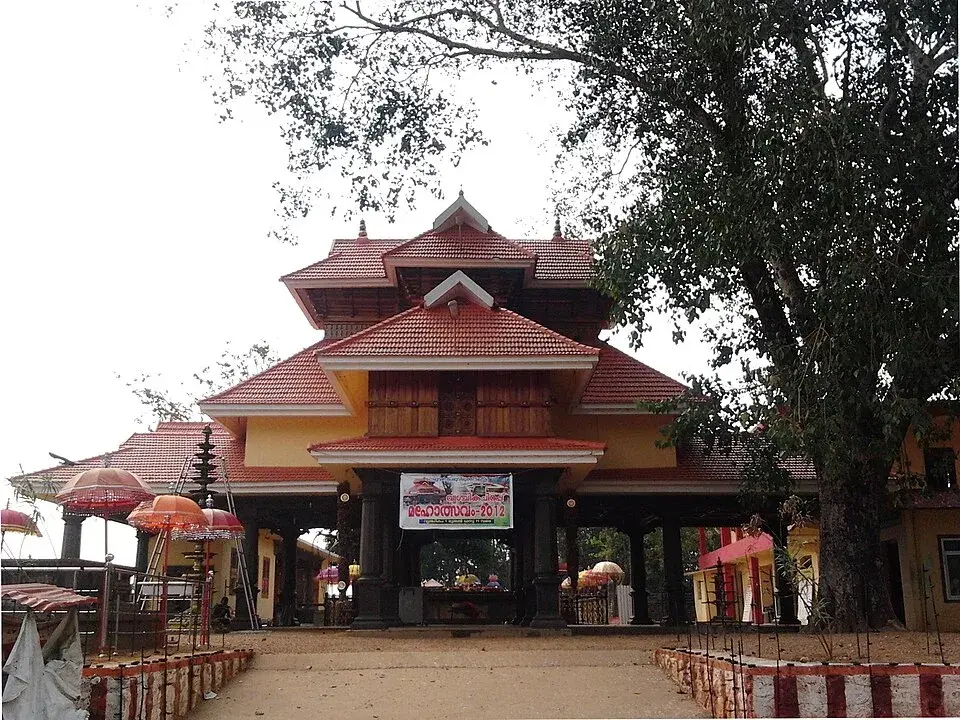 Photo: Akhilan · CC BY-SA 3.0