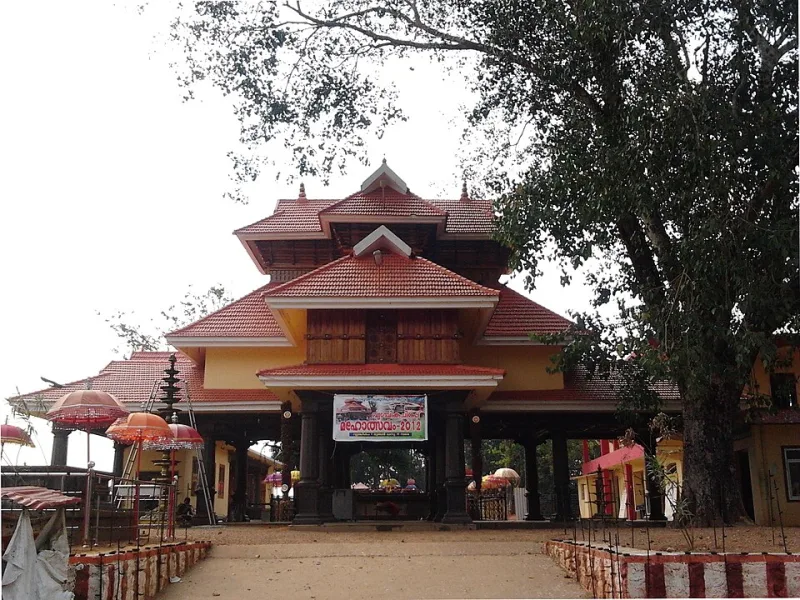
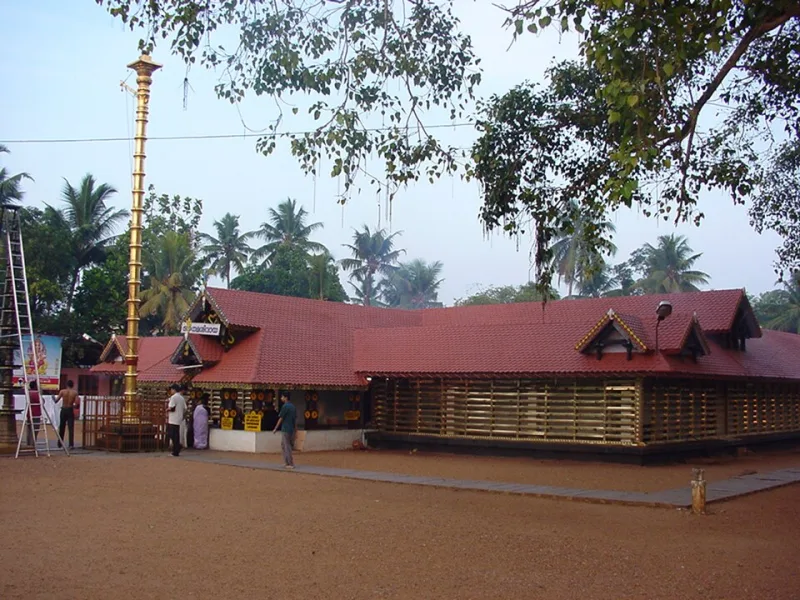
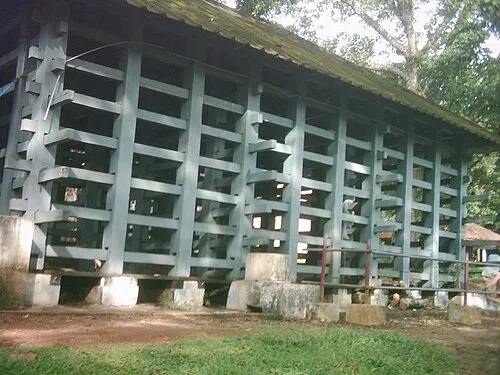
A Vishnu temple at Manakkala near Adoor known for Dasavatara Charthu, ten days on which the deity is adorned as each of the ten incarnations.
At a glance
What: A temple of Maha Vishnu with a festival of the ten incarnations.
Where: Manakkala, near Adoor in Pathanamthitta district.
When: Daily worship; Dasavatara Charthu runs for ten days each year.
How: By road from Adoor.
By whom: Temple management; confirm locally.
For whom: Devotees and visitors interested in temple adornment arts.
The temple
Sreenarayanapuram is described as an ancient Vishnu temple of the Adoor area. Its fame rests on one festival above all, the Dasavatara Charthu. Over ten days the deity is presented in a different incarnation each day, giving worshippers a visual passage through the whole cycle of Vishnu's descents.
A note on location
Published coordinates for this temple fall near Varkala in Thiruvananthapuram district, while the description places it at Manakkala, about four kilometres from Adoor. The written location is followed here. The listing is marked as not yet confirmed until the exact site is verified by someone who knows it.
What charthu means
Charthu is the art of adorning an image, usually by applying sandalwood paste and decorating with ornaments, cloth and flowers so that the deity appears in a particular form. A skilled priest or artist shapes features and attributes on the spot. The work is renewed each day and is seen at its best soon after completion.
Matsya and Kurma
The cycle commonly begins with Matsya, the fish who saves the progenitor of humankind and the scriptures from a deluge, and Kurma, the tortoise whose back supports the mountain used to churn the ocean. Both show preservation in times when the world's foundations are shaken.
Varaha and Narasimha
Varaha, the boar, lifts the earth from the depths on his tusks. Narasimha, the man-lion, appears from a pillar to protect the child devotee Prahlada from his father, defeating a boon that seemed to make the tyrant safe from man and beast alike. The Narasimha day often draws special devotion.
Vamana
Vamana, the dwarf Brahmin, asks King Mahabali for three paces of land and then grows to span the worlds. In Kerala this story is bound up with Onam, when Mahabali is welcomed back to visit his people. The king is remembered with great affection as ruler of an age of equality.
Parashurama
The sixth incarnation, wielding the axe, is the legendary reclaimer of Kerala's land from the sea. His stories explain, in sacred form, how settlements and temples of the region came to be. His own principal temple in the south of the state is at Thiruvallam.
Rama, Krishna and after
Rama embodies duty; Balarama, the plough-bearer, strength and simplicity; Krishna, love, wisdom and play. Lists differ on whether the Buddha or Balarama is counted among the ten. Kalki, the rider on a white horse, is the incarnation yet to come at the end of the present age. Which list the temple follows can be learnt on site.
Seeing the sequence
Devotees try to attend all ten days, while others choose the form dearest to them. The Krishna adornment is often especially crowded. If your time is limited, ask for the timetable and arrive when the sanctum opens after the decoration is done, usually in the evening at such festivals.
Rarity
The temple is noted as one of the relatively few Vishnu shrines in Kerala that hold this festival. Several others also perform forms of the Dasavatara adornment, so it is wiser to call it distinctive than unique. Its continuity depends on patrons, artists and volunteers.
Sandalwood
Sandalwood is costly and the tree is protected by law, with trade controlled by the forest authorities. Temples obtain it through authorised supply. Paste received as prasadam is applied to the forehead and valued for its cool fragrance. Do not buy loose sandalwood of uncertain origin.
Daily worship
Outside the festival, the temple keeps the ordinary round of morning and evening worship with lamps, tulsi garlands, payasam and archana. Thursdays and Ekadashi days are favoured by Vishnu devotees. Check the opening hours before travelling.
Adoor
Adoor is a busy town on the Main Central Road in the south of Pathanamthitta district. The surrounding land grows rubber, paddy and vegetables. It makes a convenient base for visiting temples, churches and the Pamba river country.
Antiquity
The temple is called ancient, but no founding date or inscription is cited. As with many village shrines, long continuity is plausible and unproven. Older priests and families are the best informants on how the festival began.
Visiting with respect
Dress in traditional modest clothes, remove footwear and keep a clean, quiet compound. Photography of the adorned deity is generally forbidden. Wait your turn for darshan and do not linger at the doorway when others are queuing.
Getting there
Adoor is well served by buses from Pandalam, Kottarakkara and Pathanamthitta. Chengannur and Kayamkulam are the useful railway stations. Thiruvananthapuram and Kochi airports are both within a few hours. Autorickshaws go to Manakkala.
When to come
Plan around the ten-day festival if you can. The cool months are best for general travel. Evening visits suit adorned darshan; mornings are quiet.
Nearby places
Adoor's other temples, the Pandalam palace and temple associated with Ayyappa, and the Parthasarathy temple at Aranmula farther north make worthwhile additions.
Facilities
Adoor has lodging, restaurants, banks and hospitals. No entry fee applies.
Help complete this page
Please confirm the position, send festival dates and share photographs through the links here.
Preparing for the festival
Ten days of adornment need planning. A sponsor usually takes responsibility for one day's materials and offerings, so that the cost is shared among many households. The artist works behind closed doors, often for hours, following verses that describe each form. When the doors open, lamps are placed to show the features, and the waiting crowd moves forward in turn.
Meaning of the sequence
Readers have long noticed that the incarnations move from water to land, from animal to human, and from raw force to moral teaching. Devotional writers see in this the Lord meeting each age according to its need. Some modern commentators compare it with stages of life's development, which is an interesting reflection but not the intention of the ancient texts.
If you miss the dates
The temple remains worth a quiet visit at other seasons.
A note for visitors
Carry water and expect a wait on popular evenings; the sight of the adorned form rewards patience.
Confirming the place
Ask at Adoor for the Manakkala temple by its full name before setting out.
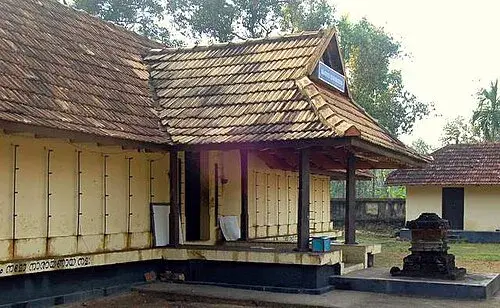 Photo: Sandeep Sukumar · Public domain