A Vishnu temple by the paddy fields at Vadasserikonam, with stone sculpture, an unusual open-centred shrine at its grove and a bronze image of Shiva beside the main deity.
At a glance
What: A temple of Maha Vishnu with an adjoining grove shrine.
Where: Vadasserikonam, near Varkala, beside paddy land.
When: Daily worship; confirm timings locally.
How: By road from Varkala or Kallambalam.
By whom: Temple management; ask on site.
For whom: Devotees, sculpture lovers and travellers staying at Varkala.
The temple
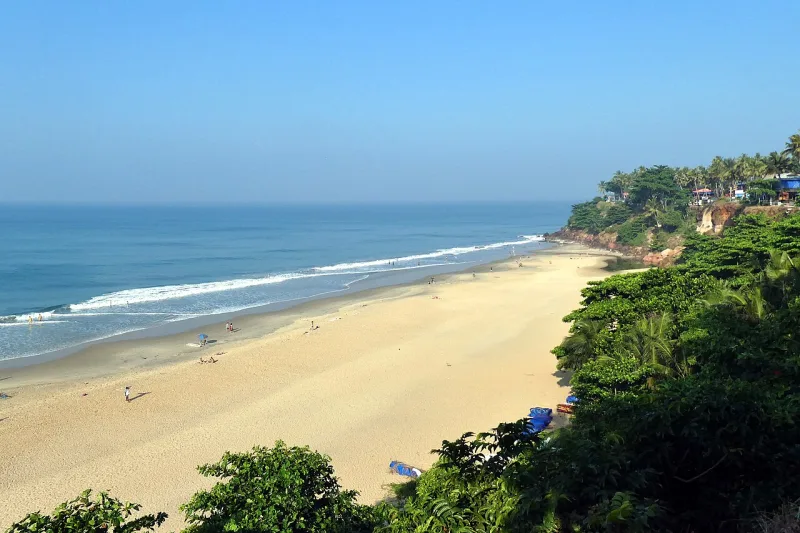
Thirunarayanapuram means the town of the sacred Narayana. The shrine sits at the edge of cultivated fields, a short trip from the beaches and cliff of Varkala. Its sculpture and the form of its grove shrine make it worth a pause for travellers who usually see only the coast.
Narayana
Narayana is a name of Vishnu often explained as the one whose abode is the waters, or the resting place of all beings. The eight-syllable mantra saluting Narayana is central to Vaishnava devotion. As preserver, Vishnu descends in successive incarnations to restore order when it is threatened.
When was it built?
It is believed that the temple was raised in the time of the Pandya kings, who from their base at Madurai at times held sway in the far south. The belief is recorded without a dated inscription. It is a reasonable thing for local memory to preserve, but it should be treated as tradition until evidence is produced.
The sculpture
The stone carvings are described as blending the manner of Vijayanagara building with Chola sculpture. Chola work, at its height from the tenth to the twelfth century, is admired for graceful figures; Vijayanagara work, from the fourteenth to the sixteenth, for richly carved pillars. A mixture of recollections of both suggests craftsmen working within Tamil traditions.
Reading style carefully
Style is a clue and not a date stamp. Sculptors copied older models, and renovations moved stones from place to place. Look at the proportions of figures, the shapes of pillar capitals and any repeated motifs, and enjoy comparing them, while leaving firm dating to specialists.
A Jain story
It is also said that the temple, with its southern stylistic echoes, was built by Jains. Jain communities did live in parts of south Kerala and the neighbouring Tamil country in medieval times, and some sites changed use. The claim here is hearsay in the published note; no Jain image or inscription is reported in support of it.
The mandapam
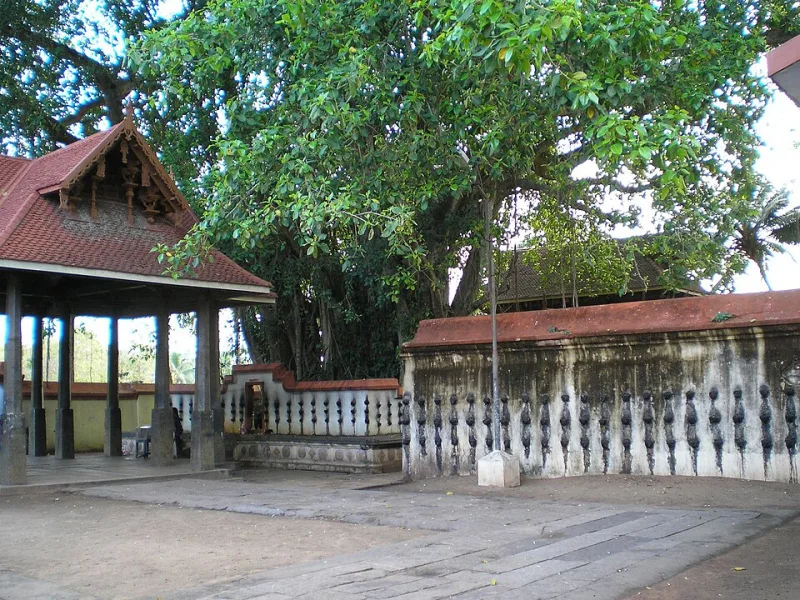
The hall for prostration before the sanctum follows the Kerala pattern, a small square pavilion with a pyramidal roof, where priests chant and perform certain rites. Its presence beside Tamil-influenced carving shows the meeting of two building traditions in this southern district.
Two powers together
Near the principal image a figure of Shiva in panchaloha, the five-metal alloy used for temple bronzes, is also installed. The temple is therefore regarded as a place where Shaiva and Vaishnava presence dwell together. Devotees can honour both in a single visit.
The grove
Close to the temple is a kavu, a sacred grove, whose shrine faces west. Kerala's groves protect old trees, climbers and small creatures in a landscape that is otherwise intensively cultivated. They usually house serpent deities or a form of the goddess. Entry and conduct are governed by custom.
The open shrine
The grove shrine is built in the manner of a jasmine bower, with its centre open to the sky. When it rains, water falls inside, flows over the image and passes out by way of a stone channel at the base. The deity is thus bathed by the sky itself, an arrangement that devotees find moving.
Why open to the sky
Several Kerala goddess and Sastha shrines are deliberately roofless, in the belief that the deity should be exposed to sun and rain like the forest itself. Where such a custom exists, roofing the shrine is considered improper. It also happens to keep builders mindful of drainage and of the trees around.
The fields
Paddy land beside a temple was once its livelihood, supplying rice for offerings and wages for those who served. Land reforms and changing agriculture have altered the arrangement, yet the view of green or golden fields remains one of the pleasures of this visit. Walk only on public bunds and paths.
Worship
Expect morning and evening rites with lamps, tulsi garlands, payasam and archana. Thursdays are popular for Vishnu worship, and Ashtami Rohini and the Vaikuntha Ekadashi observance in December or January are widely kept in Vishnu temples. Ask which are celebrated here.
Offerings
Small offerings at the counter support daily worship. Those wishing to help with conservation of carvings should speak to the committee about proper methods, since cement patching, enamel paint and sandblasting harm old stone permanently.
Visiting with respect
Observe the dress custom, leave footwear outside and do not photograph the images. In the grove, pluck nothing, make no noise and leave no lamps or plastic behind. Watch the ground for roots and, in the wet season, for snakes.
Getting there
Varkala Sivagiri railway station is the closest major stop, and autorickshaws reach Vadasserikonam in a short drive. Buses run between Varkala and Kallambalam on the national highway. Thiruvananthapuram's airport is about forty-five kilometres away.
When to come
October to February brings pleasant weather and green or ripening fields. A rainy day shows the open shrine's design, though paths may be muddy. Morning and late afternoon give the best light on stone.
Nearby places
Varkala cliff and beach, the Janardana Swamy temple, Sivagiri Mutt, Kappil's backwaters and the Sarkara temple are within reach.
Facilities
Simple shops nearby, with abundant lodging and dining at Varkala. No entry fee.
From the beach to the fields
Most travellers to Varkala stay on the cliff, where cafés and sea views fill the day. A morning drive inland shows a different Varkala taluk: rubber and coconut, paddy bunds, small shrines and people going to work. Combining this temple with the Janardana temple on the coast gives two contrasting pictures of Vishnu worship, one celebrated and busy, the other rural and still.
Questions worth asking
Ask the priest which parts of the stonework are considered oldest, whether any lettered stone survives, how the grove is cared for and when the main festival falls. Record the answers with the date and the speaker's role. Such notes are the beginning of proper documentation.
Sharing responsibly
If you photograph the exterior with permission, avoid publishing images that show private homes or worshippers' faces without consent.
A closing note
Check opening hours before leaving the coast.
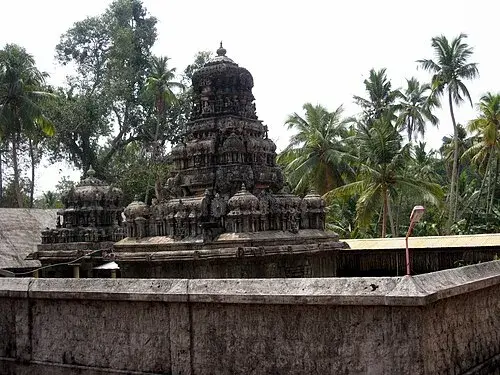 Photo: Sivaprasadsujatha · CC BY-SA 4.0