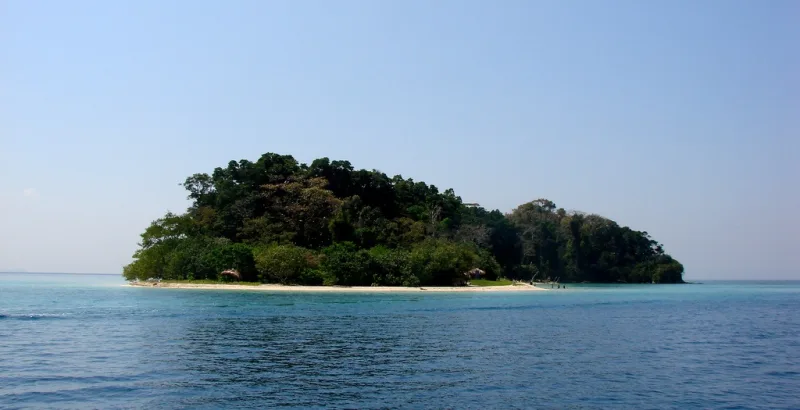
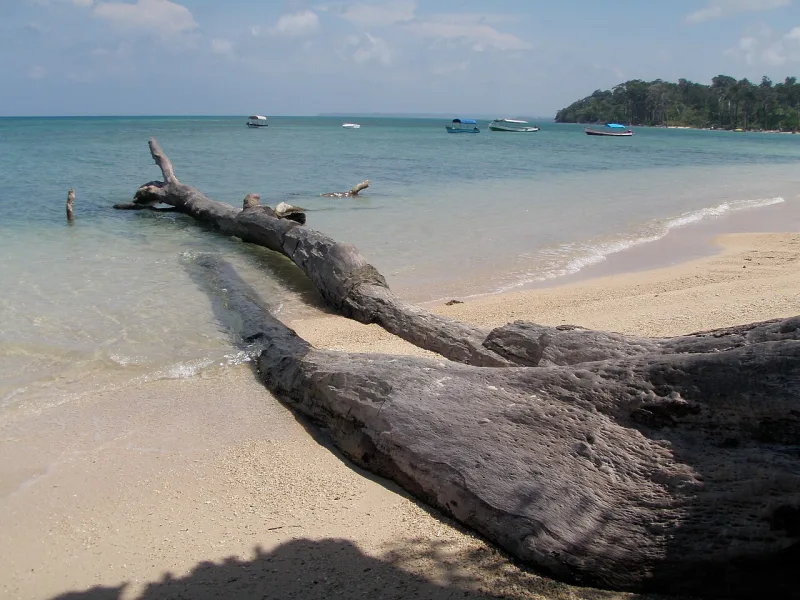
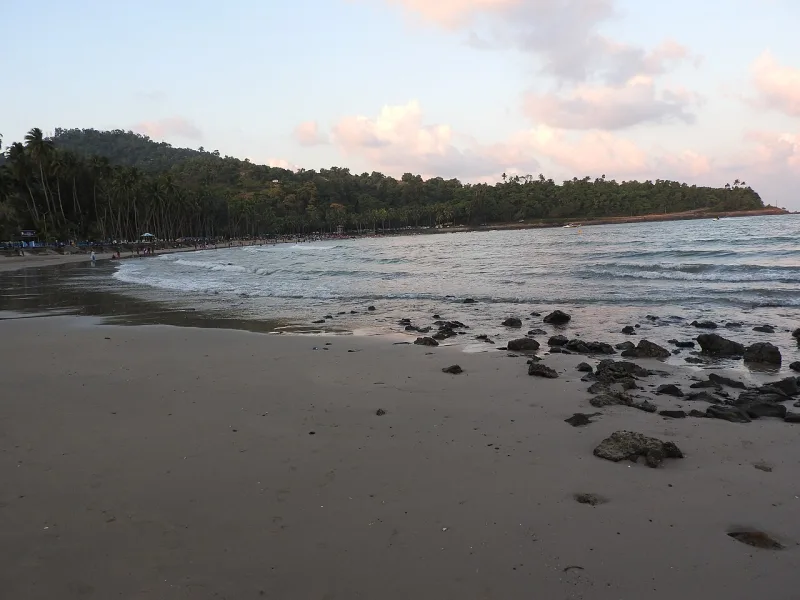
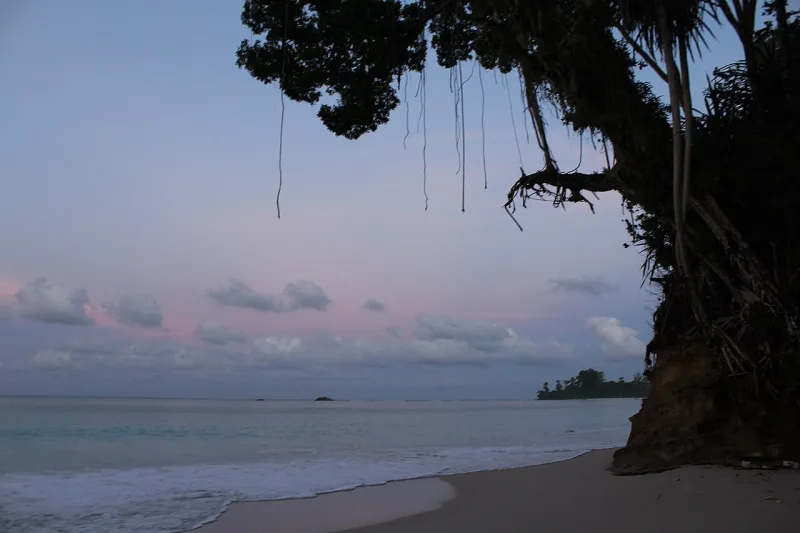
The flat green northern island of the Nicobars, centre of Nicobarese life and culture. Permission is needed to visit.
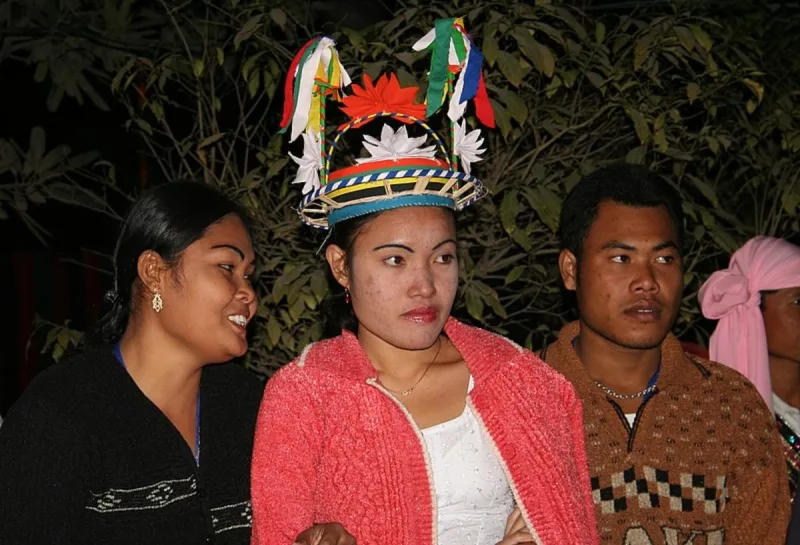
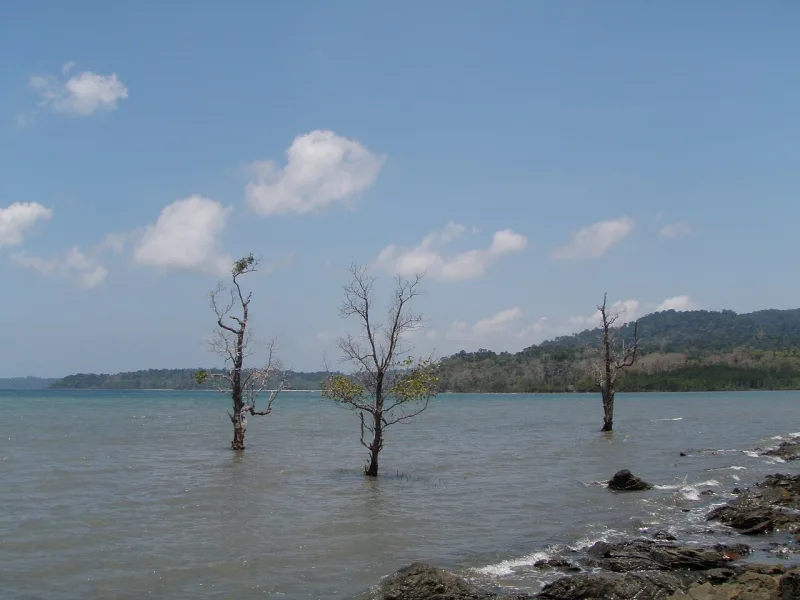
Car Nicobar is the flat, green northern island of the Nicobars and a centre of Nicobarese life and culture, which may be visited only with permission. About one hundred and twenty seven square kilometres of coconut palms and villages rarely rise more than ten metres above the sea. Around seventeen thousand eight hundred people lived here in 2011, most of them Nicobarese. Round houses on stilts, canoe racing, dance and strong village institutions mark a living culture.
The Nicobar Islands are a protected tribal area. People who are not residents need permission from the district authorities before travelling, and no one should book travel until that permission is held. This is not a general tourist destination. The information here is offered so that readers can understand the island, its history and its people, and so that those with a proper reason to go can prepare respectfully.
Denmark claimed the Nicobars in the eighteenth century, and Britain held them from the later nineteenth century until Independence. Each village has elders, and joint family bodies known as tuhet play a central part in social life, electing captains and managing shared matters. Christianity spread widely during the twentieth century, while older customs continued alongside.
One life stands out. Bishop John Richardson, born in 1896 and named Ha Chev Ka, studied in Mandalay and became the first Nicobarese priest. He wrote the first primer in the Car language and worked on translating the Bible. During the Japanese occupation he was jailed, tortured and twice sentenced to death, and two of his sons were killed. He later became bishop, sat in the first Lok Sabha in 1952, founded a cooperative and a sports association, and was awarded the Padma Shri and the Padma Bhushan. He died in 1978.
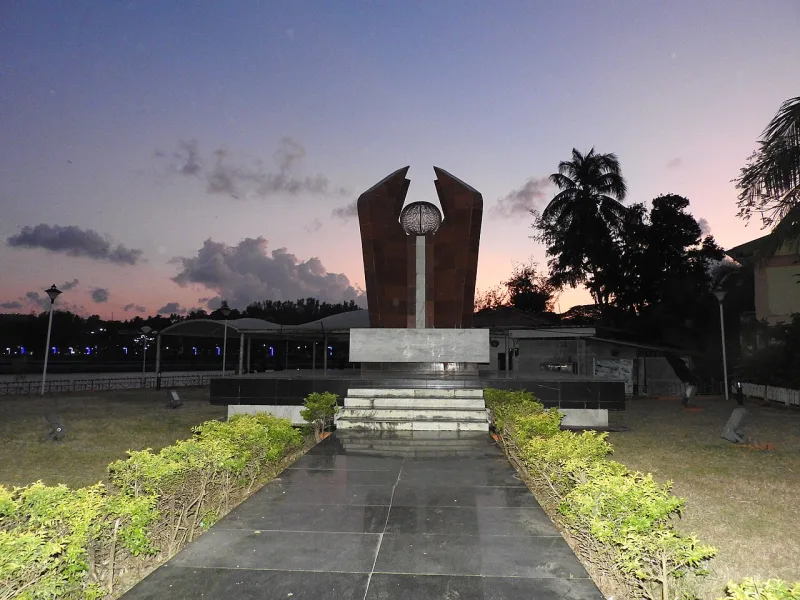
The tsunami of 26 December 2004 was a catastrophe for Car Nicobar. Waves of around nine metres swept the low island within minutes of the earthquake. Whole villages were destroyed and families lost. Memorials at Jayanthi village and Big Lapati are places of annual remembrance. Communities rebuilt with great determination, and the memory remains close.
Those who hold permission should travel with a local host and follow the guidance of village elders. Ask before photographing anyone, any home or any ceremony, and accept refusal without argument. Dress modestly, greet people courteously and do not enter houses, sacred places or gardens uninvited. Do not offer alcohol or other items that might cause harm, and do not remove plants, shells or objects.
There is little tourist accommodation, so arrangements for lodging, meals and transport must be made in advance, usually through the host or authorities. A visit would last several days. Carry identification and the permit at all times, along with essential medicines, drinking water treatment, cash and rain protection. Communication services can be limited.
Travel is by sea or air from Sri Vijaya Puram according to current services, which depend on schedules, weather and official rules. Confirm every detail before departure and keep your dates flexible.
For most travellers, the best way to meet Nicobarese culture is during public festivals in Sri Vijaya Puram, where performers present dances and crafts, and through the Zonal Anthropological Museum, which explains the community's way of life. Learning in these settings respects the purpose of the protections. Car Nicobar reminds us that a place can be deeply worth knowing without being open to casual tourism, and that the wishes of its people come first.
Questions about permission should be addressed to the district administration well in advance, with a clear statement of the purpose of the visit, the name of the host and the intended dates. Rules can change, and an official answer is the only reliable one. Travellers who have no such purpose can still honour the island by learning about it carefully, speaking of its people with respect and supporting the sale of genuine Nicobarese craft through authorised outlets in the capital.
Nicobarese villages and traditional houses
Canoe culture and dance
Tsunami memorials
Photos (2)
An early nineteenth-century view of Car NicobarNicobarese dancers
Photo credits
Photo: James Fittler / After Henry Salt · Public domain · Source
Denmark claimed the Nicobars in the eighteenth century and Britain held them from the later nineteenth century until Independence. Each village has elders, the tuhet, joint family bodies that elect captains. Christianity spread widely in the twentieth century, while older customs continued alongside.
Stories worth knowing
Bishop John Richardson
Born in 1896 and named Ha Chev Ka, he studied in Mandalay and became the first Nicobarese priest. He wrote the first primer in the Car language and worked on translating the Bible. Under Japanese occupation he was jailed, tortured and twice sentenced to death, and two of his sons were killed.
He later became bishop, sat in the first Lok Sabha in 1952, founded a cooperative and a sports association, and was awarded the Padma Shri and Padma Bhushan. He died in 1978.
The tsunami of 2004
Waves of around nine metres swept the low island within minutes of the earthquake. Whole villages were destroyed and families lost. Memorials at Jayanthi village and Big Lapati are places of annual remembrance on 26 December.
The Nicobar Islands are a protected tribal area. People who are not residents need permission from the district authorities before travelling. Do not book travel until you hold it.
Ask before photographing anyone or any ceremony
There is little tourist accommodation
How to reach
Nearest airportVeer Savarkar International Airport
About 260 km south of Sri Vijaya Puram, by inter-island ship or helicopter for those holding permission.
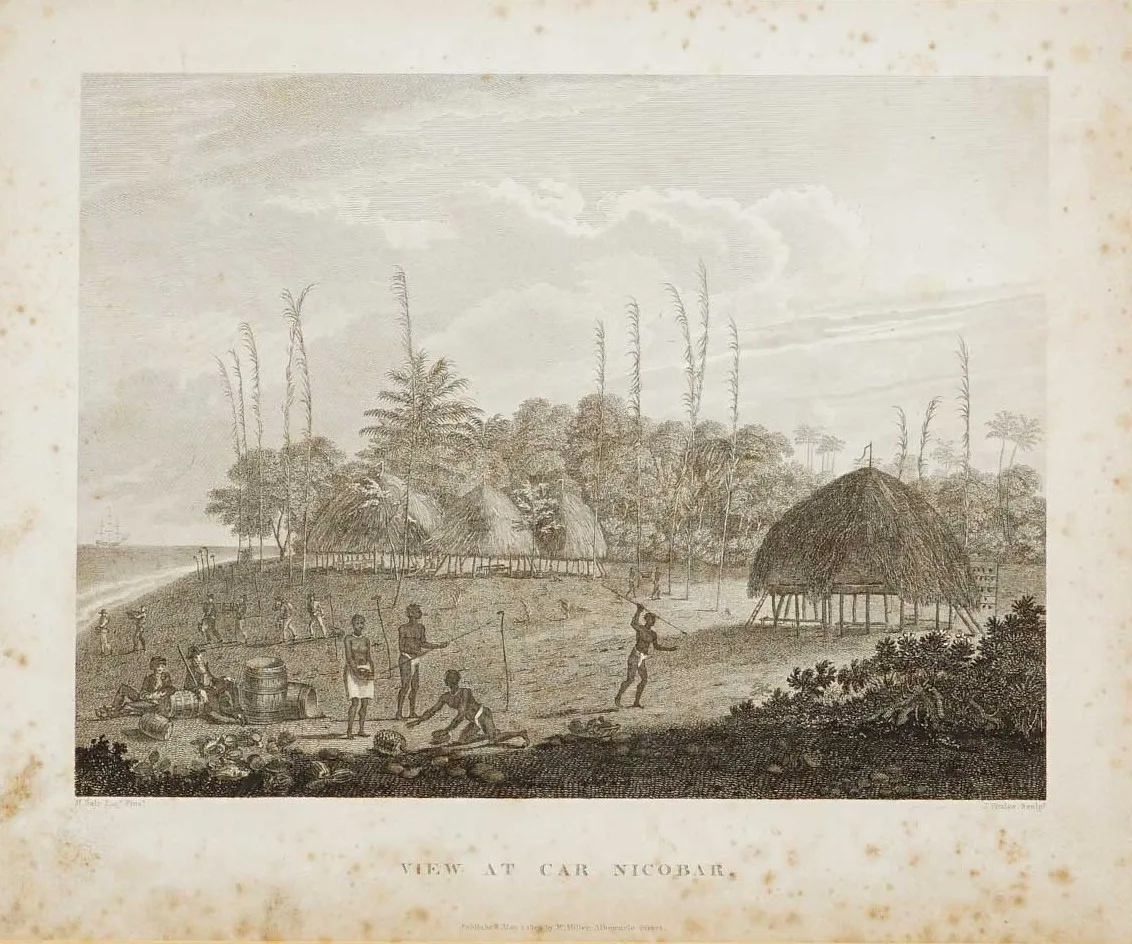 Photo: James Fittler / After Henry Salt · Public domain
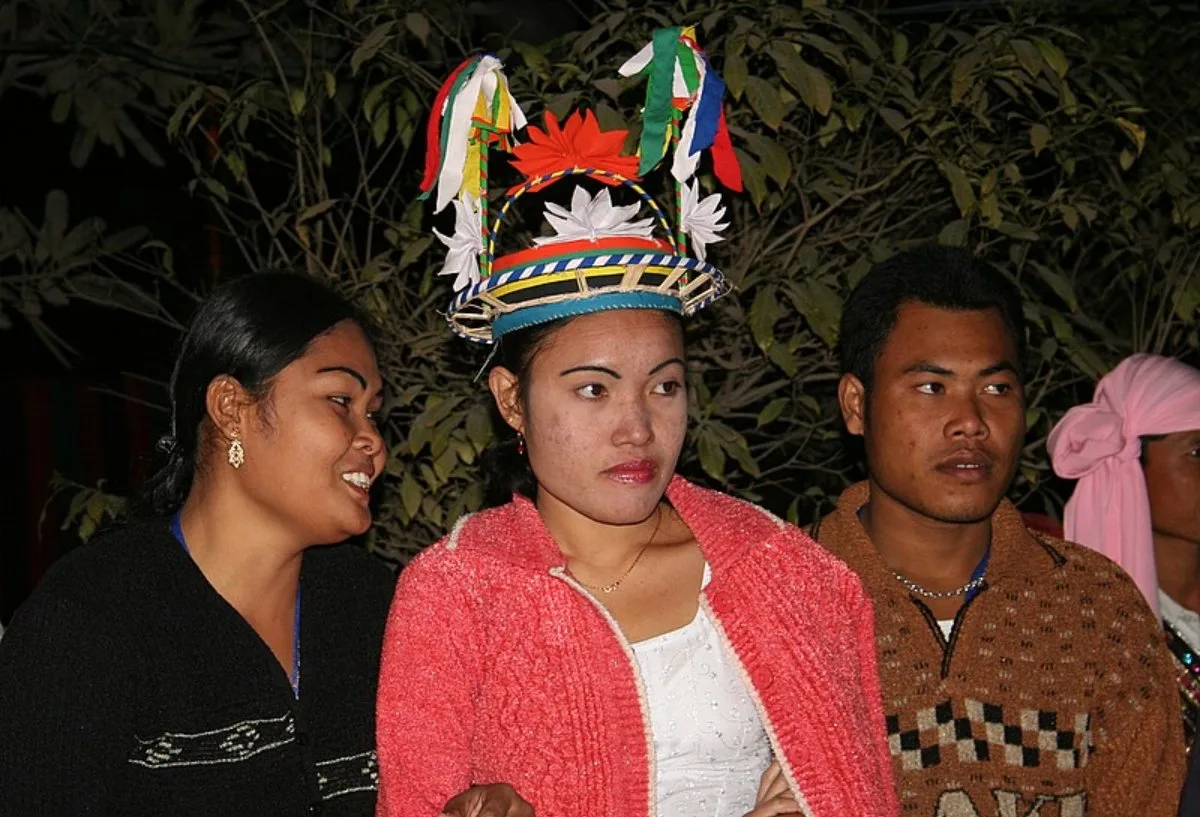 Photo: Ramesh Lalwani · CC BY 2.0