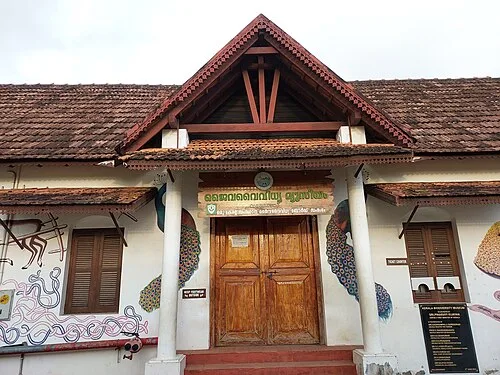
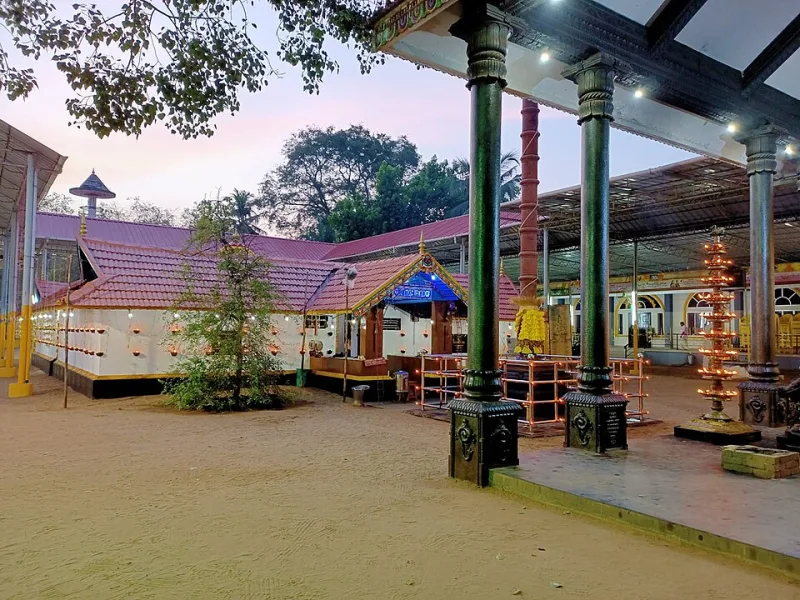
A temple more than six centuries old by tradition, where Chamundi is worshipped in three forms in adjoining shrines.
At a glance
What: A goddess temple dedicated to Chamundi in three aspects.
Where: Karikkakom, on the western side of Thiruvananthapuram.
When: Tradition counts more than 600 years; open daily in sessions.
How: A short drive from East Fort or the airport.
By whom: Maintained by its temple trust and devotees.
For whom: Devotees of the goddess and visitors who respect custom.
About the temple
The Sree Chamundi Temple at Karikkakom enshrines an image of five metals of the goddess affectionately known as Karikkakathamma. Chamundi is a fierce form of Kali, and here she is approached in three ways, each with its own sanctum standing side by side: as Maha Chamundi, as Raktha Chamundi and as Bala Chamundi.
The main sanctum holds the goddess in a calm mood, the mother who listens. In the shrine of Raktha Chamundi there is no sculpted image; instead a wall painting shows the Devi in her fierce aspect, and devotees believe that she acts swiftly to remove obstacles, to counter the harm intended by enemies and to relieve long illness. Bala Chamundi is the goddess as a child, to whom couples hoping for children and families praying for their young often turn. Sastha, Ganapathi, a yakshi, Bhuvaneshwari, Ayiravalli and Yogeeswara are also accommodated.
History and the oath before the goddess
The temple is said to be more than six hundred years old. A striking chapter belongs to the time of the Travancore rulers, when it served in the search for truth. A person accused of certain offences could be brought before the shrine of Raktha Chamundi to declare innocence. After placing a sum of coins at the doorway, the accused swore to speak truthfully. It was believed that the goddess would protect the honest and punish the false, and for that reason, the account says, nobody dared to lie. The door of that shrine was opened specially for this ritual.
The practice shows how law and sacred fear were once linked. Modern courts decide guilt by evidence, and the story is valued today as history and as a reminder of the weight people attached to an oath.
Stories of Chamundi
In the narrative of the Devi Mahatmya, the goddess in battle brought forth from her brow a terrible dark form who destroyed the demon generals Chanda and Munda. Bringing their heads to the great goddess, she received the name Chamunda. Another episode tells how she drank up the blood of the demon Raktabija, each drop of which would otherwise have produced a new enemy. These tales explain both the fierceness of the form and the trust that she will end troubles that seem to multiply.
Rituals and festival
Offerings are numerous and several are tied to particular hopes: for learning, health, marriage, children and the removal of obstacles. Details and charges are listed at the counter. The annual festival in the Malayalam month of Meenam, usually March or April, includes a pongala offering cooked by women in great numbers, processions and cultural programmes.
Beliefs, rumours and caution
Claims that the fierce shrine can be used to injure another person misunderstand the worship, which devotees describe as protection and justice. No ritual can be shown to harm anyone. Be wary of people who warn of curses and then offer expensive remedies. Illness needs medical treatment alongside prayer.
Three ages of one goddess
Placing the goddess in three adjoining shrines invites the devotee to think about different ways of approaching the divine. One may come to a mother for comfort, to a warrior for defence and to a child with tenderness. Hindu worship often does this, honouring the same power as young girl, grown woman and mother. During the Navaratri festival in September or October, young girls are venerated in many places as living images of the goddess, and the autumn days end in Kerala with the beginning of learning for small children on Vijayadashami.
A wall painting serving in place of an image is also meaningful. Kerala has a long tradition of sacred painting in mineral and plant colours, and drawing the goddess in coloured powders on the floor, called kalamezhuthu, is a ritual art in which the form is created, worshipped and then erased.
Pongala
The pongala offering that marks the festival is a sweet porridge of rice, jaggery and coconut cooked in new earthen pots over small brick hearths. Women prepare the ingredients with care, wait for the fire to be passed from the temple and tend their pots until the priest sprinkles holy water to accept them. The most famous pongala in the city is at Attukal, but several temples hold their own, and many women attend more than one in a season. Smoke and heat can be strong, so cotton clothing, drinking water and care with children are sensible, and anyone with breathing trouble should keep a distance.
Questions visitors ask
Do I have to know the rituals in advance? No. State your name and birth star at the counter when booking, and staff will explain what happens and when. Are the three shrines visited in a particular order? Follow the flow of the queue and the guidance of temple staff. Can the oath ritual still be requested? The account used here presents it as a practice of royal times; present arrangements, if any, are a question for the temple office, and legal disputes belong in court.
A neighbourhood temple that grew
Karikkakom lies where the old city gives way to the coastal belt of canals and coconut gardens. As the airport, bypass roads and new housing filled the area, the temple became easier to reach, and its circle of devotees widened far beyond the locality. On the busy days of the week, flower and offering stalls line the approach, and many office workers stop on the way home. The balance between a growing public and the intimacy of a village shrine is something regular visitors speak about.
Visiting
Dress modestly; men usually remove shirts inside. Footwear is left outside, phones kept silent and photography avoided in the shrines. The temple is busiest on Tuesdays, Fridays and Sundays and during the festival, when queues can be long and traffic heavy. Arrive early, carry water and keep valuables secure. Elderly visitors should ask about quicker access arrangements where offered officially.
An hour is a comfortable allowance on a normal day.
Around Karikkakom
The Veli lagoon and Shanghumugham beach are close, as are the Vettukad church on the coast and the Attukal temple towards the city. A visit can easily be combined with East Fort and Sree Padmanabhaswamy Temple, or with an evening on the shore after darshan.
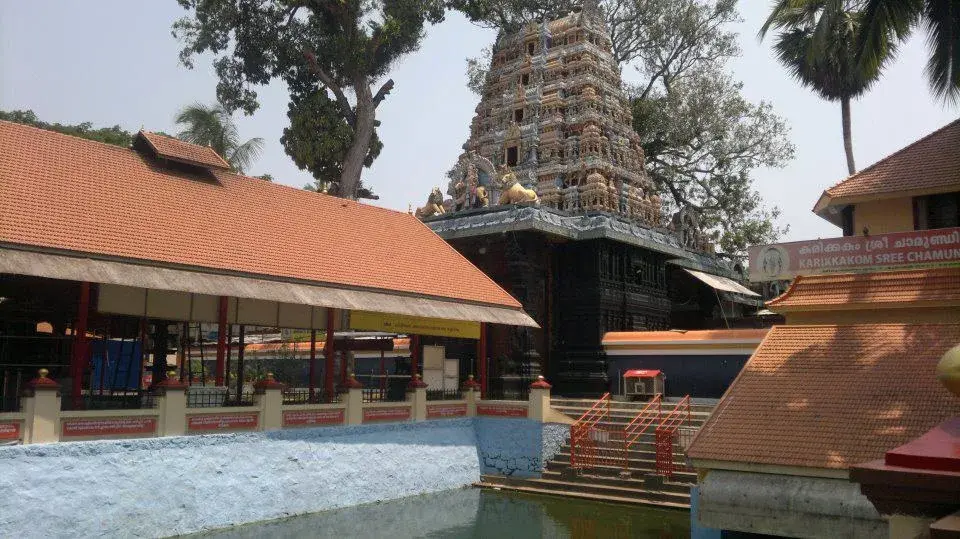 Photo: Vipin 8454 · CC BY-SA 3.0